Artwork
Muhammad Shah
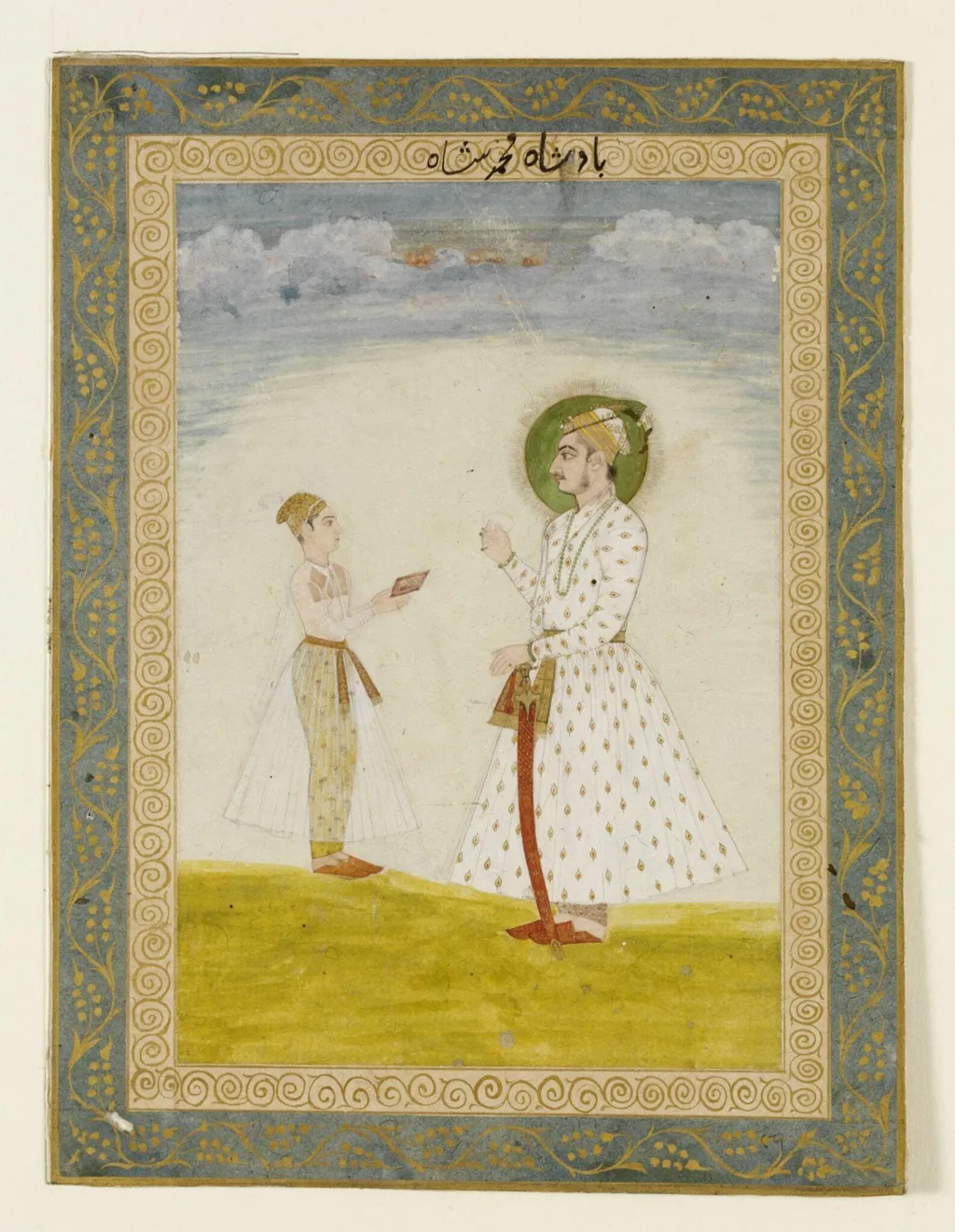
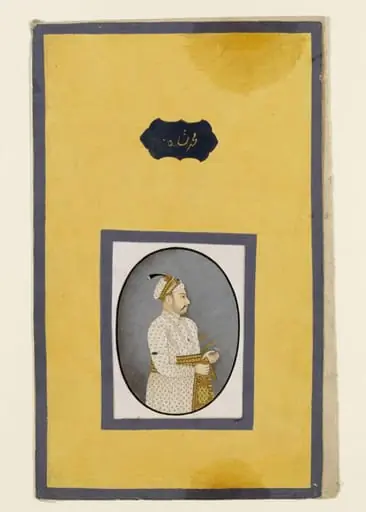
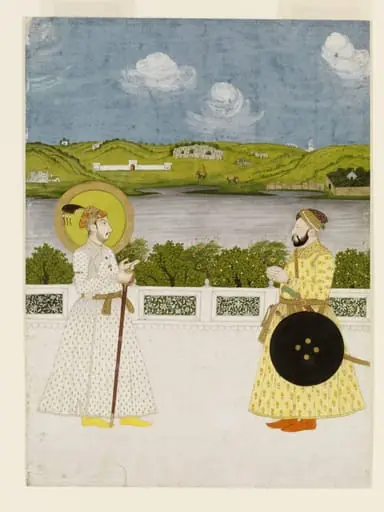
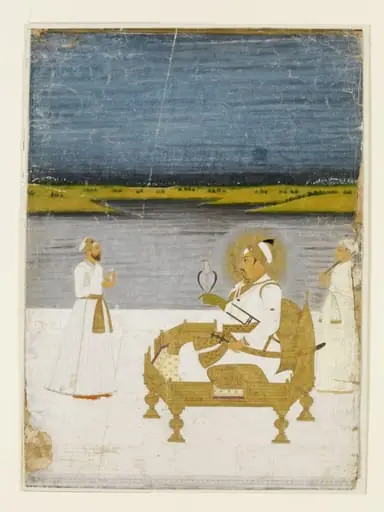
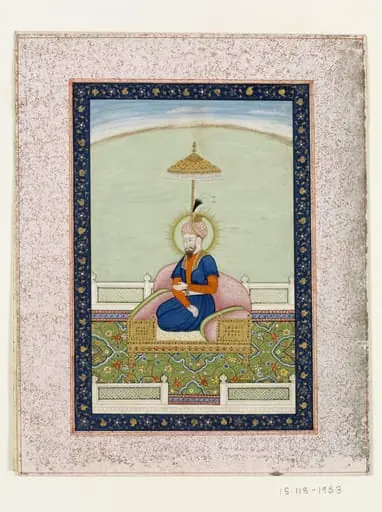
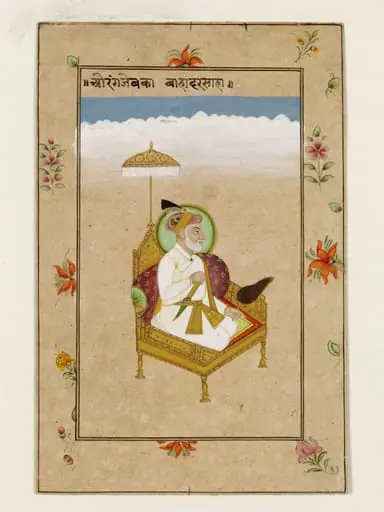
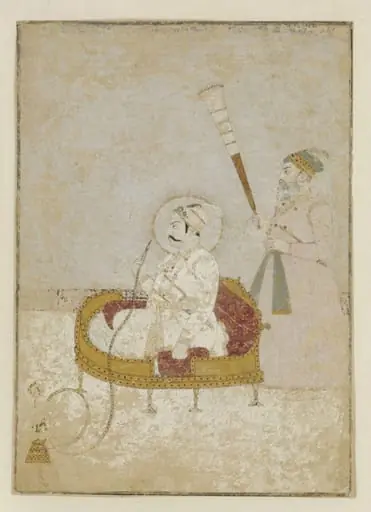
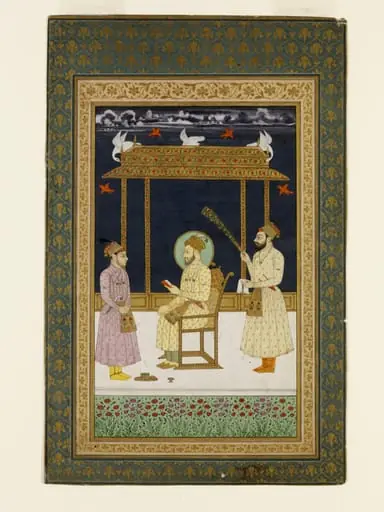
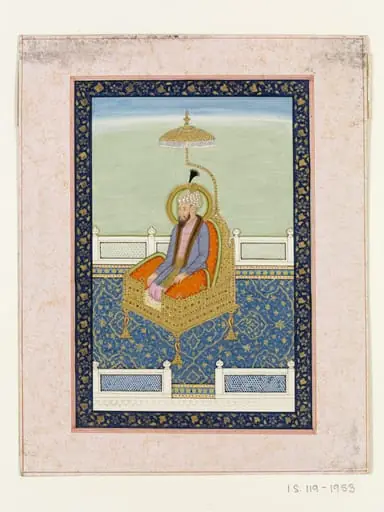
Muhammad Shah is a paint painting by the Baroque artist Unknown. It dates from 1725 and is held in the collection of the Victoria and Albert Museum.
About this work
Overview
The background suggests an open sky with soft cloud forms, grounding the scene in a quiet, elevated atmosphere rather than a formal court setting.
This painting portrays Muhammad Shah, the Mughal emperor who reigned from 1719 to 1748, rendered in opaque watercolour on paper. The composition shows two figures in a naturalistic setting, their attire marked by fine white fabrics and delicate gold embellishments. The background suggests an open sky with soft cloud forms, grounding the scene in a quiet, elevated atmosphere rather than a formal court setting.
Subject & Meaning
The two figures likely represent the emperor and a court scholar or advisor, engaged in an intimate moment of intellectual exchange. The book held by one figure signals learning or governance, while the object in the other’s hand may denote authority or ritual. The pairing suggests a Mughal ideal of rulership rooted in wisdom and refinement, rather than mere display of power.
Technique & Style
Executed in opaque watercolour, the work employs fine brushwork to render textures of fabric and foliage with precision. Gold leaf accents highlight embroidery and accessories, enhancing visual richness without overt grandeur. The landscape is rendered with subtle depth, and the figures are arranged with balanced poise—qualities aligned with Mughal portraiture traditions rather than European Baroque dramatization.
History & Provenance
Created during Muhammad Shah’s reign, the painting likely originated in a Mughal atelier in Delhi or Lahore, where artists produced portraits for imperial patrons. Its survival suggests it was preserved within royal collections, possibly later entering private or institutional holdings through colonial-era acquisitions or family inheritances, though its exact early provenance remains undocumented.
Context
This work emerged during a period when Mughal painting was evolving under Persian and indigenous influences, moving away from earlier grand court scenes toward more personal, contemplative imagery. While European styles were beginning to circulate in India, this painting retains core Mughal conventions—attention to detail, symbolic objects, and restrained composition—reflecting a distinct cultural trajectory.
Legacy
The painting stands as a quiet testament to the aesthetic values of late Mughal court culture, where dignity and intellect were emphasized over spectacle. It contributes to the understanding of how imperial identity was visually sustained during a time of political fragmentation, preserving a refined visual language that influenced later regional styles in northern India.
Artist & collection

 Domestic Scene
 Giacomo and Cardinal Marco, investing Andrea, Abbot of San Zeno, with his Benefice
 The Nymph of Fontainebleau
 Portrait of a Woman
 Madonna and Child with Saints in the Enclosed Garden
 Venus and Minerva
 Family Group of Four on Sofa
 Wall painting from Room H of the Villa of P. Fannius Synistor at Boscoreale