Artwork
Muhammed Haji Khan
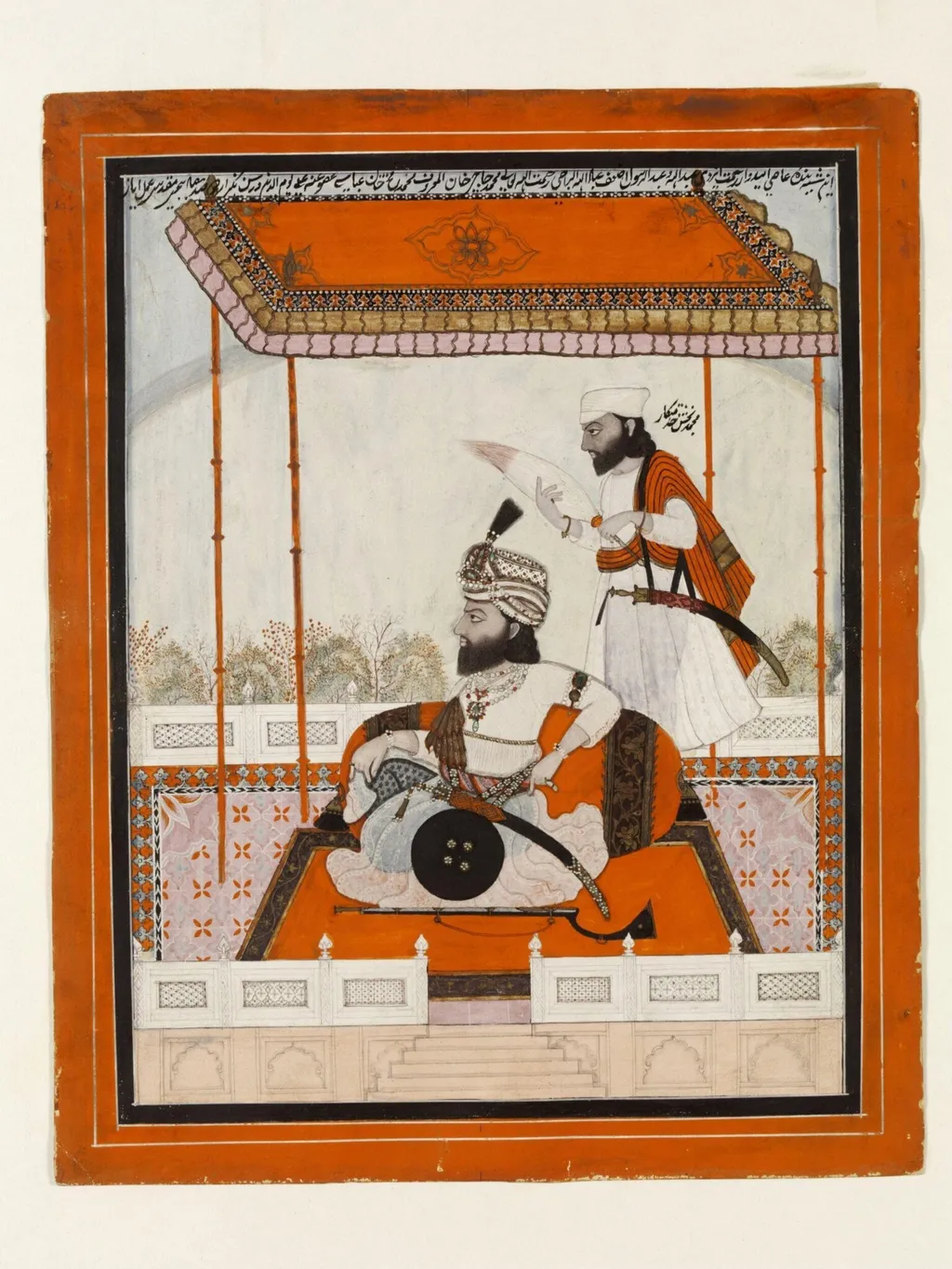
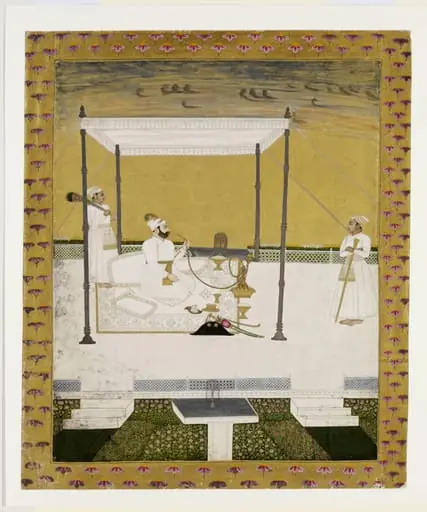
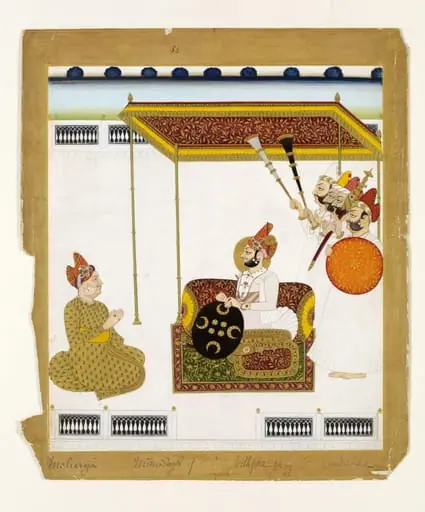
Muhammed Haji Khan is a paint painting by the Mughal Painting artist Unknown. It dates from 1850 and is held in the collection of the Victoria and Albert Museum. This painting portrays Muhammad Haji Khan, a regional ruler, in a formal seated pose beneath a richly decorated red canopy.
About this work
Overview
He is accompanied by an attendant standing behind him, both figures dressed in white garments that contrast with the warm, saturated background.
This painting portrays Muhammad Haji Khan, a regional ruler, in a formal seated pose beneath a richly decorated red canopy. He is accompanied by an attendant standing behind him, both figures dressed in white garments that contrast with the warm, saturated background. Executed in opaque watercolour and gold on paper, the work reflects the refined aesthetic of late Mughal or Deccan court portraiture, emphasizing status through dress, posture, and ornamentation.
Subject & Meaning
Muhammad Haji Khan is depicted as a figure of authority, seated with a sword and shield—symbols of military leadership and sovereign duty. The attendant, similarly armed, reinforces the presence of personal protection and courtly hierarchy. The white attire of both figures suggests purity or ceremonial formality, while the opulent setting underscores the subject’s elevated social position, likely intended for display within a royal or administrative context.
Technique & Style
The painting uses opaque watercolour with gold detailing to achieve luminous, flat planes of colour, typical of Indian miniature traditions. Red and pink dominate the background and canopy, creating a cohesive, immersive field that frames the figures. Fine brushwork defines textile patterns and architectural elements, while the absence of deep perspective and the emphasis on decorative surface reflect stylistic conventions of regional court painting rather than Western naturalism.
History & Provenance
The painting likely originated in a Deccan or post-Mughal court during the 18th or early 19th century, a period when regional rulers commissioned portraits to assert legitimacy and cultural continuity. Its survival suggests it was preserved within a royal collection or among descendants. Exact provenance remains undocumented, but its materials and style align with works produced in centres such as Hyderabad or Bijapur during the decline of centralized Mughal patronage.
Context
During the 18th century, as Mughal authority waned, regional courts in the Deccan and North India increasingly relied on portraiture to affirm political identity. Artists adapted Mughal techniques to local tastes, favoring bold colour, symbolic objects, and hierarchical composition. This painting reflects that shift—its emphasis on regalia and ritualized posture aligns with broader trends in courtly visual culture where imagery served as a tool of legitimacy.
Legacy
Though not widely exhibited or studied, the painting contributes to the understanding of how regional rulers maintained visual traditions in the absence of imperial patronage. It exemplifies the persistence of miniature painting practices into the colonial era, where local aesthetics endured alongside changing political realities. Its preservation offers insight into the continuity of courtly identity through art beyond the Mughal core.
Artist & collection

 Domestic Scene
 Giacomo and Cardinal Marco, investing Andrea, Abbot of San Zeno, with his Benefice
 The Nymph of Fontainebleau
 Portrait of a Woman
 Madonna and Child with Saints in the Enclosed Garden
 Venus and Minerva
 Family Group of Four on Sofa
 Wall painting from Room H of the Villa of P. Fannius Synistor at Boscoreale