Artwork
Emperor Farrukhsiyar
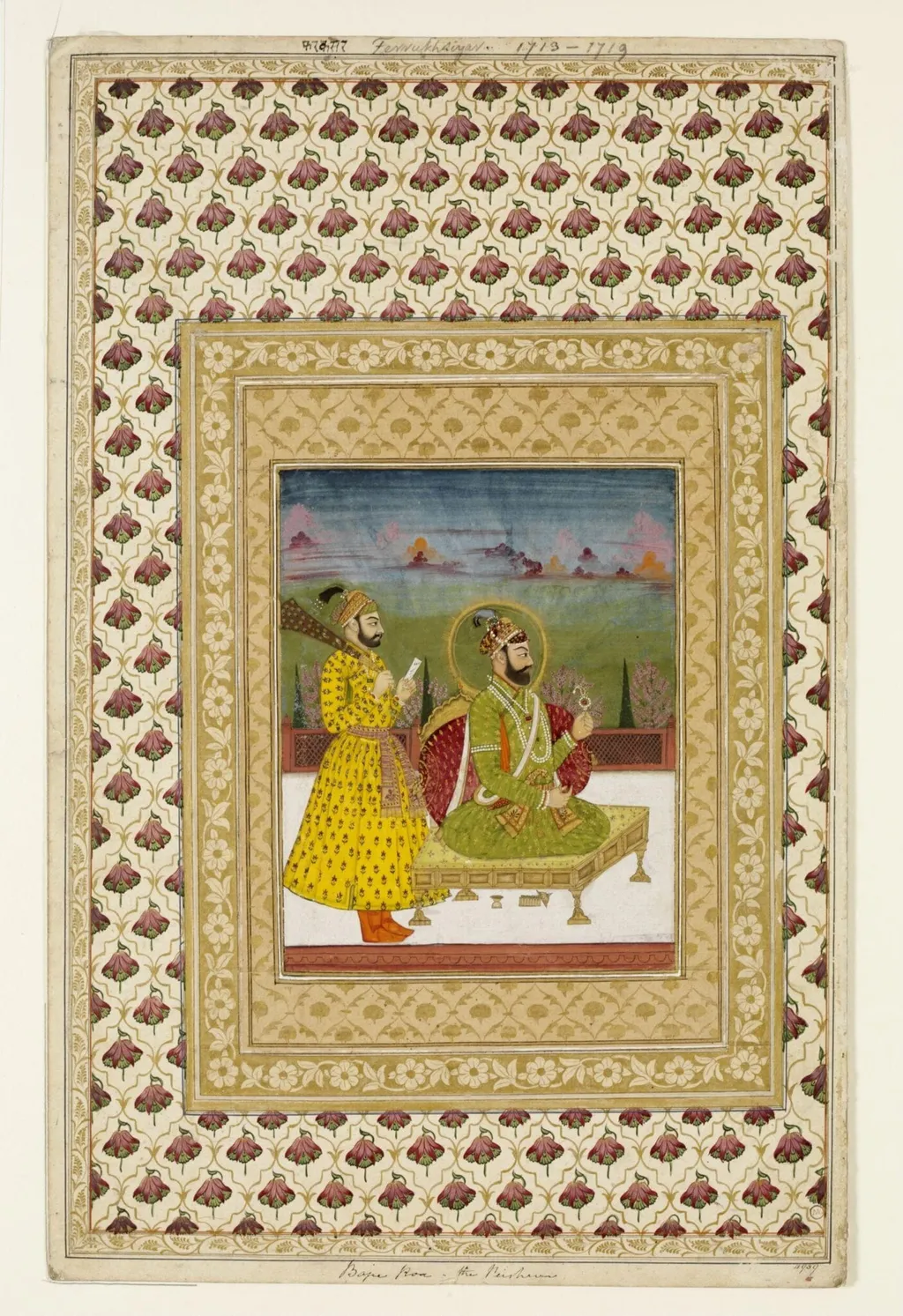
Emperor Farrukhsiyar is a paint painting by the Mughal Painting artist Unknown. It dates from 1750 and is held in the collection of the Victoria and Albert Museum.
About this work
Overview
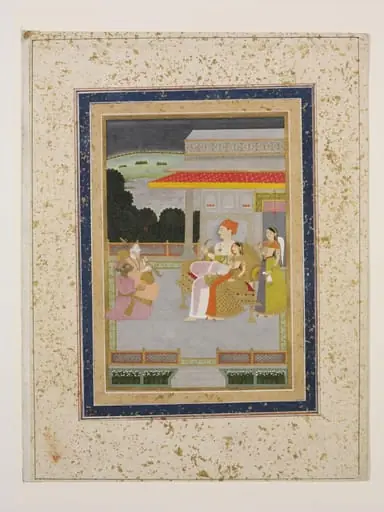
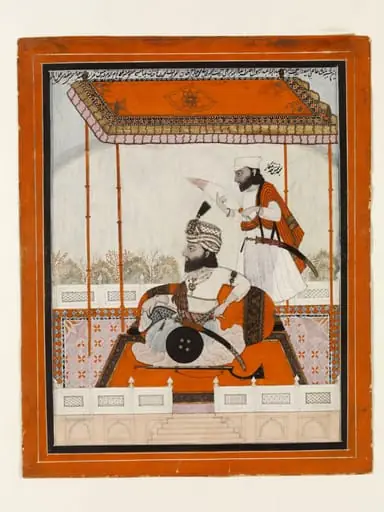
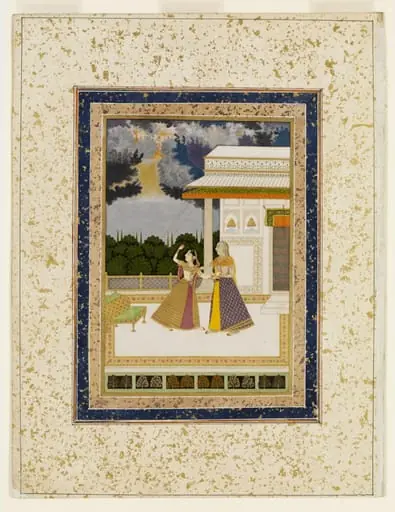
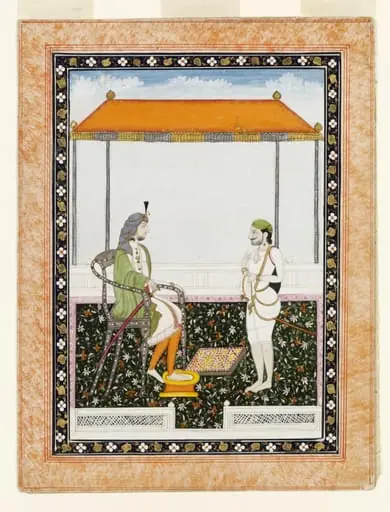
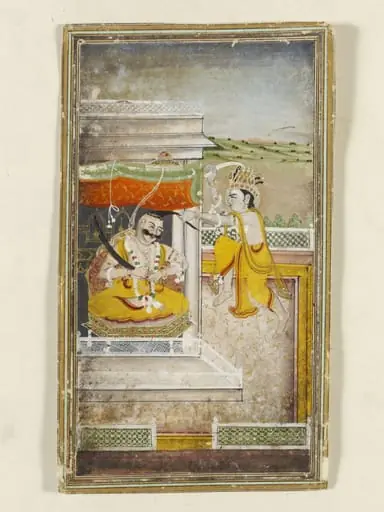
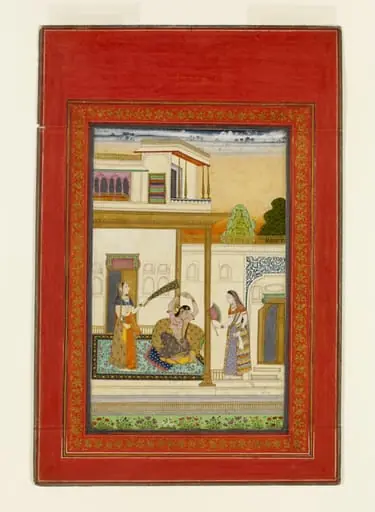
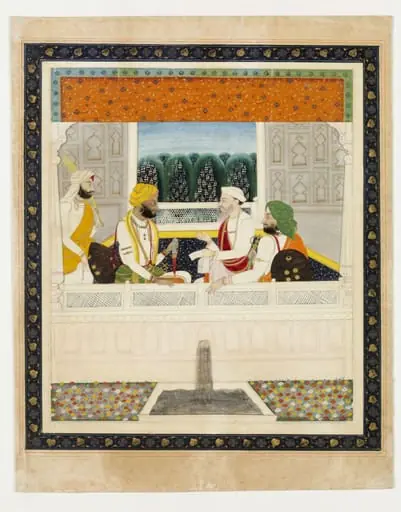
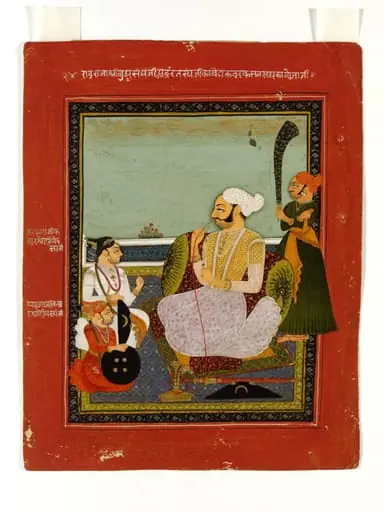
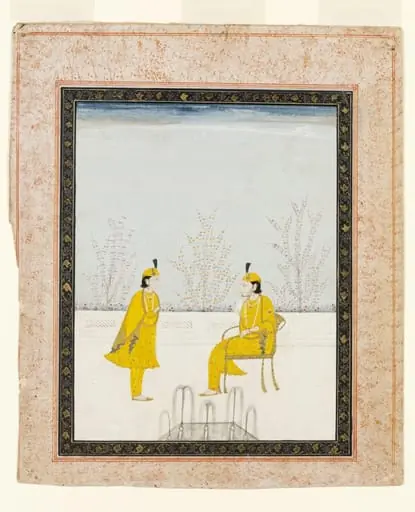
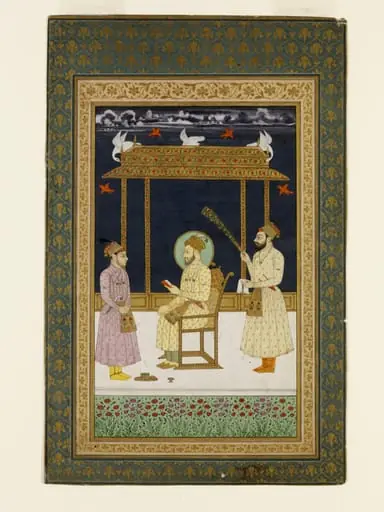
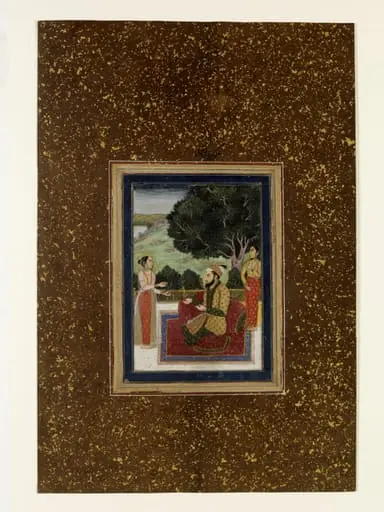
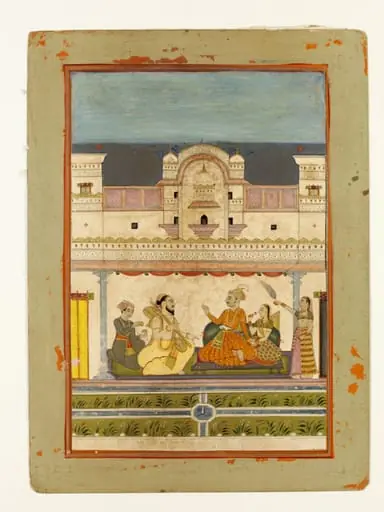
This 18th-century opaque watercolour on paper, circa 1750, portrays Emperor Farrukhsiyar in a garden setting, accompanied by a standing attendant. The composition blends vibrant colours and intricate details within an ornately framed border.
Subject & Meaning
The primary subject is Emperor Farrukhsiyar, seated on a low platform and holding a flower, symbolizing power and serenity. The attendant, dressed in yellow and holding a book, may represent wisdom or scholarly pursuits, underscoring the emperor's patronage of arts and learning.
Technique & Style
Characterized by bold colours (notably greens, reds, and golds) and meticulous attention to detail in textiles and scenery, the painting exemplifies the opulent aesthetic of its time. The border, adorned with tiny pink flowers and gold swirls, adds a layer of decorative complexity.
History & Provenance
Created around 1750 by an unidentified artist, the painting's origins and ownership history prior to its current location are not specified in available records.
Context
This work reflects the artistic conventions of its era, likely influenced by the fusion of Indian and European styles prevalent during the period. The scene's tranquility and the emphasis on natural and architectural details further situate it within the broader tradition of Indian miniature painting.
Legacy
While not attributed to a specific renowned artist, the painting contributes to the understanding of 18th-century Indian art's thematic and stylistic evolution, particularly in the depiction of royal figures within idyllic settings.
Artist & collection

 Domestic Scene
 Giacomo and Cardinal Marco, investing Andrea, Abbot of San Zeno, with his Benefice
 The Nymph of Fontainebleau
 Portrait of a Woman
 Madonna and Child with Saints in the Enclosed Garden
 Venus and Minerva
 Family Group of Four on Sofa
 Wall painting from Room H of the Villa of P. Fannius Synistor at Boscoreale