Artwork
În stânga și-n dreapta pomului cunoștinței binelui și răului sunt reprezentați în picioare Adam și Eva. Scena imortalizează momentul în care Eva îi întinde mărul lui Adam. Șarpele, care e pictat încolăcit în jurul pomului, are capul îndreptat către urechea Evei, ispitind-o . Adam are mână stângă la gât, evidențiind locul unde s-a oprit înghițitura neascultării. Icoana e ornată pe margini cu ruje. Cromatica se compune din tonuri de roșu vermillon, verde, albastru, ocru galben, gri și negru. Rama icoanei e profilată, băițuită, și e formată din îmbinarea a patru baghete de lemn.
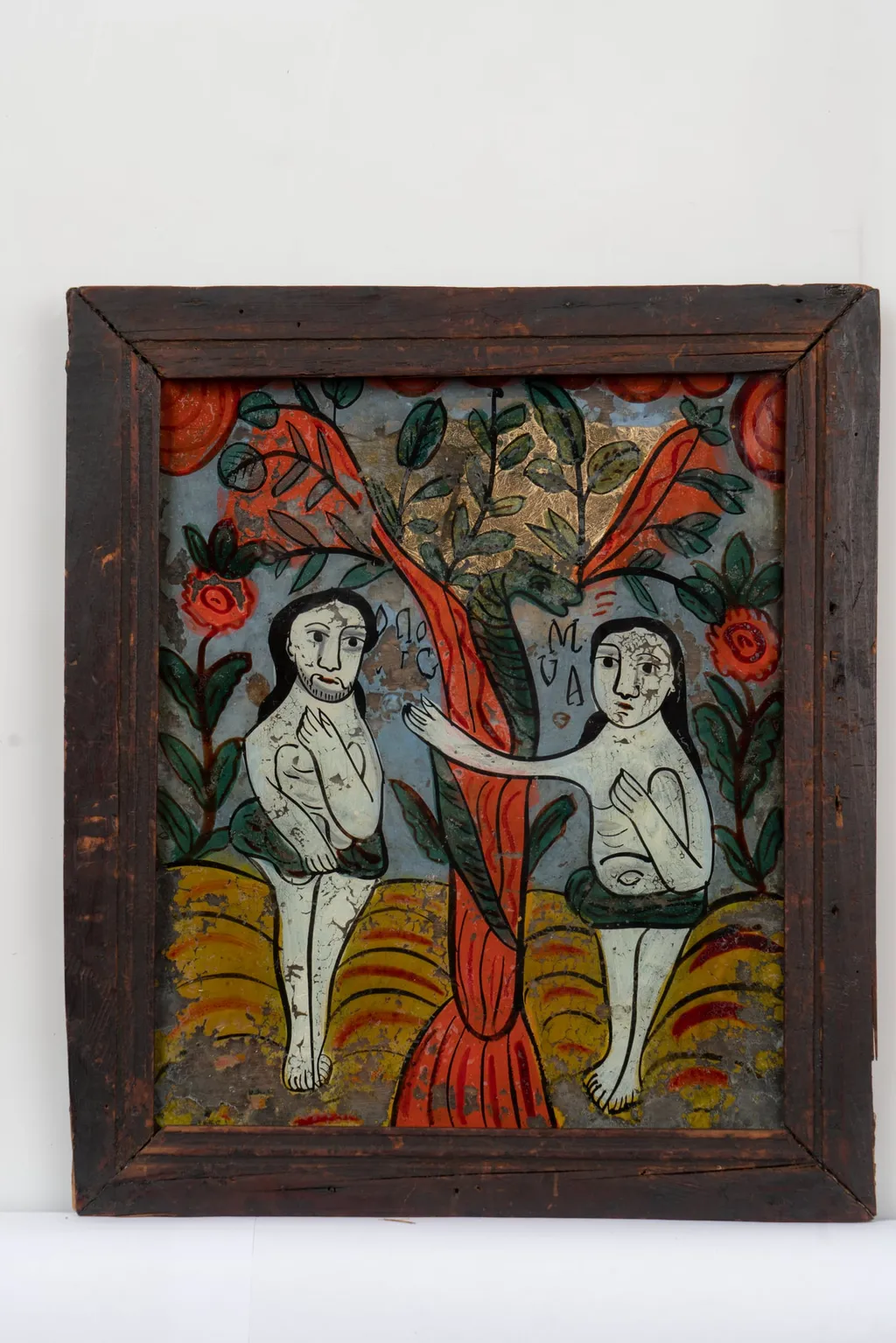
În stânga și-n dreapta pomului cunoștinței binelui și răului sunt reprezentați în picioare Adam și Eva. Scena imortalizează momentul în care Eva îi întinde mărul lui Adam. Șarpele, care e pictat încolăcit în jurul pomului, are capul îndreptat către urechea Evei, ispitind-o . Adam are mână stângă la gât, evidențiind locul unde s-a oprit înghițitura neascultării. Icoana e ornată pe margini cu ruje. Cromatica se compune din tonuri de roșu vermillon, verde, albastru, ocru galben, gri și negru. Rama icoanei e profilată, băițuită, și e formată din îmbinarea a patru baghete de lemn. is a drawing by Unknown. It dates from 1850 and is held in the collection of the Ethnographical Museum of Transylvania. This icon depicts the biblical moment of the Fall, capturing Adam and Eve beside the Tree of Knowledge.
About this work
Overview
The composition is stylized, with flat, saturated colors and minimal spatial depth, typical of devotional imagery from a pre-Renaissance tradition.
This icon depicts the biblical moment of the Fall, capturing Adam and Eve beside the Tree of Knowledge. Eve offers the fruit to Adam, while a serpent coils around the trunk, its head near her ear. Adam’s hand rests at his throat, suggesting the moment of ingestion. The composition is stylized, with flat, saturated colors and minimal spatial depth, typical of devotional imagery from a pre-Renaissance tradition.
Subject & Meaning
The scene illustrates the moment of disobedience that led to humanity’s expulsion from Eden. Eve, influenced by the serpent, initiates the act of transgression; Adam accepts the fruit, his gesture indicating internal conflict. The serpent’s proximity to Eve’s ear underscores temptation as a whispered corruption. The tree, central and unyielding, becomes both symbol and instrument of moral rupture, framing the narrative as a pivotal spiritual turning point.
Technique & Style
The figures are rendered with simplified forms and rigid postures, emphasizing symbolic weight over naturalism. Pigments include vermilion red, ochre, ultramarine, and charcoal black, applied in flat planes without shading. The background features stylized foliage and floral motifs, reinforcing the sacred setting. The wooden frame, composed of four joined staves, is carved and gilded, enhancing the object’s ritual function and material sanctity.
History & Provenance
The icon’s age is indicated by surface wear and the traditional construction of its frame. Its origin likely lies within a Byzantine or Eastern Orthodox artistic milieu, where such images served as aids to contemplation. The presence of ornamental borders and specific pigment use suggests it was produced in a monastic or regional workshop, possibly during the late medieval period, though exact provenance remains undocumented.
Context
In Eastern Christian tradition, icons of the Fall were not merely narrative but theological tools, reminding viewers of original sin and the need for redemption. The serpent’s anthropomorphic form and Eve’s active role reflect interpretations found in patristic writings. Such images were displayed in homes or chapels, functioning as focal points for prayer and moral instruction amid daily life.
Legacy
This icon exemplifies how early Christian art translated complex theological ideas into accessible visual language. Its enduring structure—central tree, poised figures, and whispering serpent—became a recurring motif across Orthodox and later Western traditions. Though stylistically archaic, its emotional clarity and symbolic precision influenced devotional imagery for centuries.
Artist & collection
Museum
Ethnographical Museum of Transylvania
Continue through works from the same source collection.
 Domestic Scene
 Giacomo and Cardinal Marco, investing Andrea, Abbot of San Zeno, with his Benefice
 The Nymph of Fontainebleau
 Portrait of a Woman
 Madonna and Child with Saints in the Enclosed Garden
 Venus and Minerva
 Family Group of Four on Sofa
 Wall painting from Room H of the Villa of P. Fannius Synistor at Boscoreale
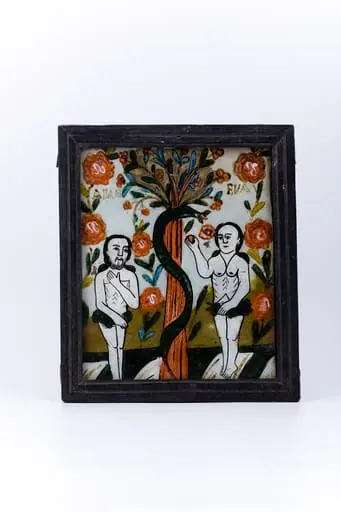 Icoana este o reprezentare narativă, scena centrală arătând căderea în păcat a lui Adam și a Evei și izgonirea lor din Rai. În centrul Grădinii Raiului este pomul cunoașterii, pe care se încolăcește viclenia și minciuna șarpelui gri-antracit, cu nervuri negre. În jurul pomului cunoașterii sunt Adam primind fructul păcatului din mâna Evei. Sunt dezbrăcați, acoperiți fiind doar de țesăturile fitomorfe, din vegetație verde-forest, din jurul mijlocului și a coapselor. Șarpele este încolăcit viclenește pe trunchiul pomului roșu vermillon-orange, zărindu-i-se geu capul printre fructele din coroană - mere sau smochine. Frunzele din pom sunt albastre regal-strălucitoare. Fondul icoanei este format din trei straturi concentrice: în interior este un câmp galben ocru-muștar de lumină - reprezentând frumusețea Grădinii Raiului, central este cerul albastru-alburiu, iar spre exterior este un chenar difuz de alb. În registrul inferior, este o alternanță oblică de verde de China, alb și bej-corai. Cromatica este armonioasă: albastru bleu-ciel-alburiu și regal, roșu vermillon-cărămiziu, ocru-muștar, galben-solar, verde kaki-forest, brun, gri, negru, alb. Inscripția din româno-chirilică se traduce Adam Eva. Icoana este din Nordul Transilvaniei, Nicula.
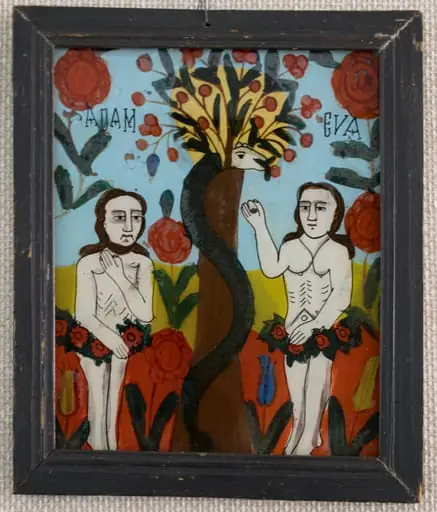 Icoana, întâlnită foarte rar, fiind și o reprezentare a temei "Facerea lumii" este caracteristică pentru pictura târzie de icoane de la Nicula(sticlă și culori industriale, cromatica, abundența florală, compoziția încărcată, câmp policrom). Primii oameni, Adam și Eva, în picioare lângă pomul Cunoștinței binelui și răului(care formează axa verticală a compoziției), după ce Adam a căzut la rândul lui în ispită și a mușcat din fructul oprit, devenind conștienți de goliciunea lor trupească. Au mijlocul înconjurat de câte o ghirlandă de flori roșii cu frunze verzi. Adam ține o mână la gât, gestul vrând să exprime înghițirea mărului, ceea ce a generat, conform legendei, apariția "mărului lui Adam".. Eva e cu mâna dreaptă întinsă spre șarpele care ține în gură mărul, tiparul(aproximativ același în toate icoanele din zonă) vrând să redea simultan succesiunea momentelor. Chipurile sunt expresive, redate din ușor semiprofil, ochii mari, ai lui Adam cu o undă de teamă și vinovăție. Părul le este lung, negru, lăsat pe umeri, Adam are mustață mică și barbă scurtă, Eva sânii accentuați. Corpurile ușor diforme. Pomul, cu tulpină dreptunghiulară, înaltă, în partea de sus având câteva ramuri subțiri cu frunze lanceolate și fructe roșii sugerând coroana. Șarpele de culoare verde, cu capul alb este încolăcit pe tulpină, cu capul întors în dreptul coroanei(iconarul nu a reușit redarea în spațiu). Câmp multicolor, bleu în partea de sus, roșu intens în pătrimea inferioară, ocru galben- banda de la mijloc. În partea de jos pictate flori pe tulpini, sus flori mari, roșii pe tulpini sinuoase. Rama profilată este alcătuită din patru stinghii îmbinate oblic, pictată cu negru. Dosul este din lemn subțire de brad.
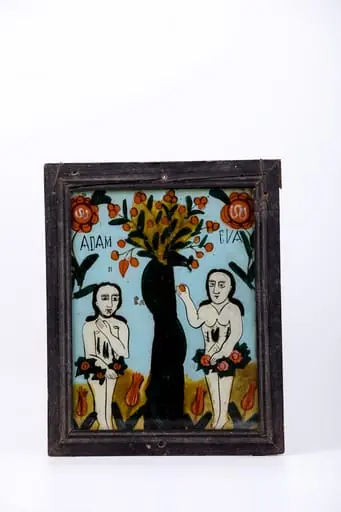 Icoana este o descriere narativă a căderii în păcat a primilor oameni, Adam și Eva, gustând din roadele pomului cunoașterii, reprezentând păcatul. Adam și Eva sunt în Grădina Raiului, lângă pomul cunoașterii, din mijlocul grădinii. Central este copacul plin de roade roșii - mere, din care Eva ia un măr, pe care îl mușcă, la îndemnul vicleanului diavol, sugerat prin prezența șarpelui, încolăcit pe trunchiul arborelui. Adam și Eva sunt redați îmbrăcați doar cu vegetație, în jurul coapselor, fiind conștienți de rușinea păcatului. Fondul icoanei este cerul albastru bleu-ciel senin și galben-ocru în registrul inferior. Inscripția din româno-chirilică se traduce Adam Eva. Cromatica este armonioasă: albastru bleu-ciel, roșu vermillon, galben-ocru, verde brad, negru, alb. Icoana este de Nicula.
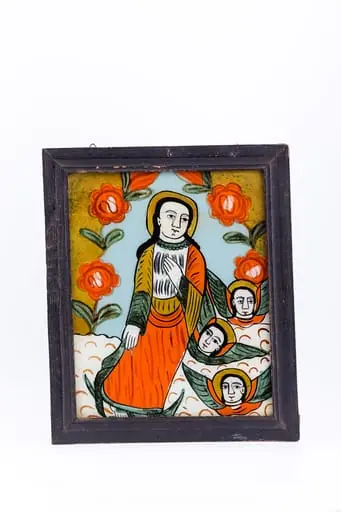 Icoana reprezintă o Sfântă Cuvioasă, împreună cu trei îngeri serafimi și heruvimi. Sfânta este îmbrăcată în veșmânt în combinație de roșu vermillon, orange-ocru, verde-gri, alb. Se observă broderia cămășii interioare. Are mâna stângă ținută în dreptul inimii, în semn de închinăciune. În stânga Sfintei sunt trei îngeri cu aripile verzi-gri, lipiți de poala veșmântului Sfintei, ocrotindu-se reciproc. În registrul inferior, icoana are fondul format din valurile unei mări, alb cu crem-ocru, pe care merg Sfânta și Îngerii. În registrul superior, este cerul albastru bleu-ciel senin, încadrat de lumină de ocru de pe marginile icoanei, pe care este pictată o ghirlandă de ruje, formând un armonios chenar decorativ fitomorf. Icoana este rară, din punctul de vedere al tematicii iconografice abordate. Icoana este de Nicula, având o cromatică armonioasă, caldă și autumnală: roșu vermillon, albastru bleu-ciel, verde-gri, galben-ocru, orange-ocru, bej, crem, alb, negru.
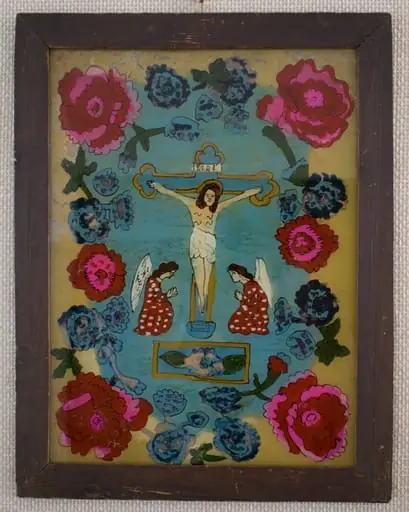 Icoana redă tema Răstignirii combinată cu Plângerea de influență apuseană, catolică. Crucea pe care este răstignit Iisus este plasată la mică distanță deasupra pietrei mormântului(redată ca un dreptunghi plan, decorat cu o floare). La baza crucii de doi îngeri, îngenuncheați, cu profiluri diforme, părul ondulat, negru, înveșmântați cu haine roșii cu buline albe.Isus nu are barbă, părul este bogat, până la umeri, mâinile și picioarele diforme.Elementele anatomice schițate.Crucea treflată este bleu cu chenar ocru galben și inscripția INRI pe fond alb. Scena este încadrată de un o ghirlandă bogată de flori roz, care separă câmpul în dpuă zone de culoare: bleu murdar central, galben ocru în afara chenarului. Florile chenarului au conturul mărunt dantelat, pe colțuri fiind câte o floare roz cu degradeuri de roșu, mai mare, median două mai mici, restul fiind de culoare albastră, ramuri și boboci, sugerând trandafiri. Desenul este foarte naiv. Pe spate a avut lipită o hârtie mai groasă care servea drept dos. Rama este simplă, din lemn de brad prelucrat rudimentar, culoare cafenie. Stratul pictural ușor exfoliat.