Artwork
Nadir Shah
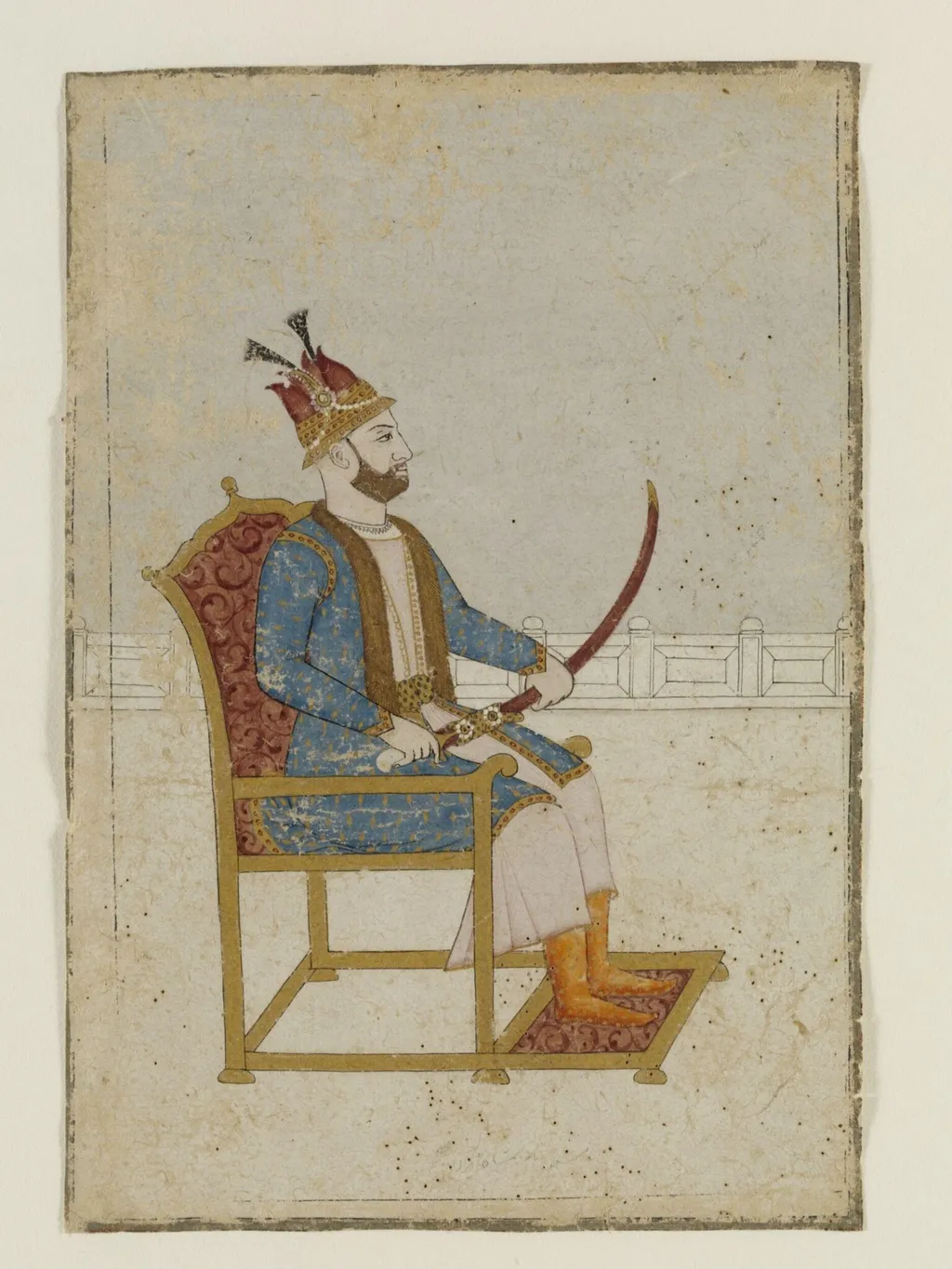
Nadir Shah is a paint painting by the Rococo painting artist Unknown. It dates from 1770 and is held in the collection of the Victoria and Albert Museum.
About this work
You might also want to check out the Romanticism movement, which this painting is a part of.
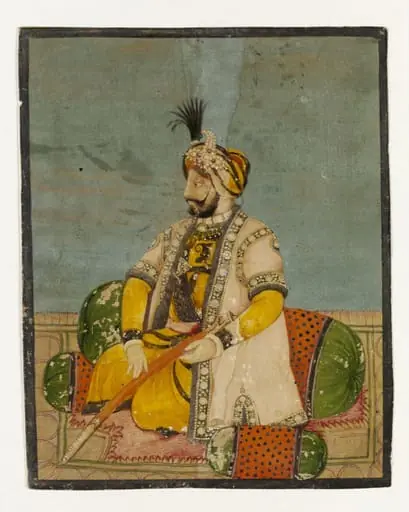
This painting shows a man sitting on a chair. He is wearing a blue robe with gold accents and a red and gold hat. He has a long sword in his right hand.
The man is sitting on a red and gold chair with a patterned back. He is wearing orange boots and white pants. The background is a light color with a darker border around the edges.
The painting has a sense of luxury and power. It is a portrait of a powerful man from the 18th century. You might also want to check out the Romanticism movement, which this painting is a part of.
Overview
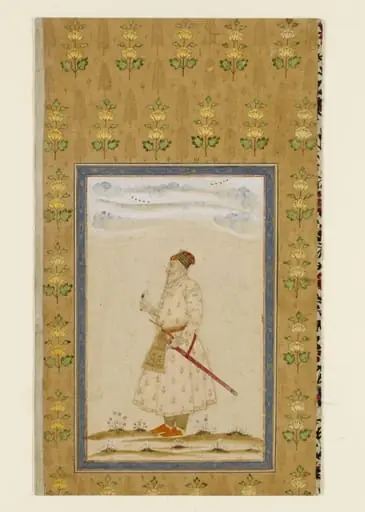
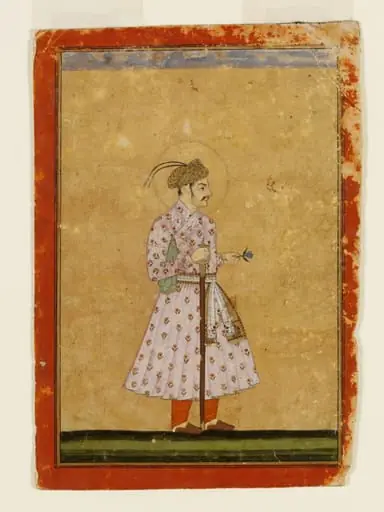
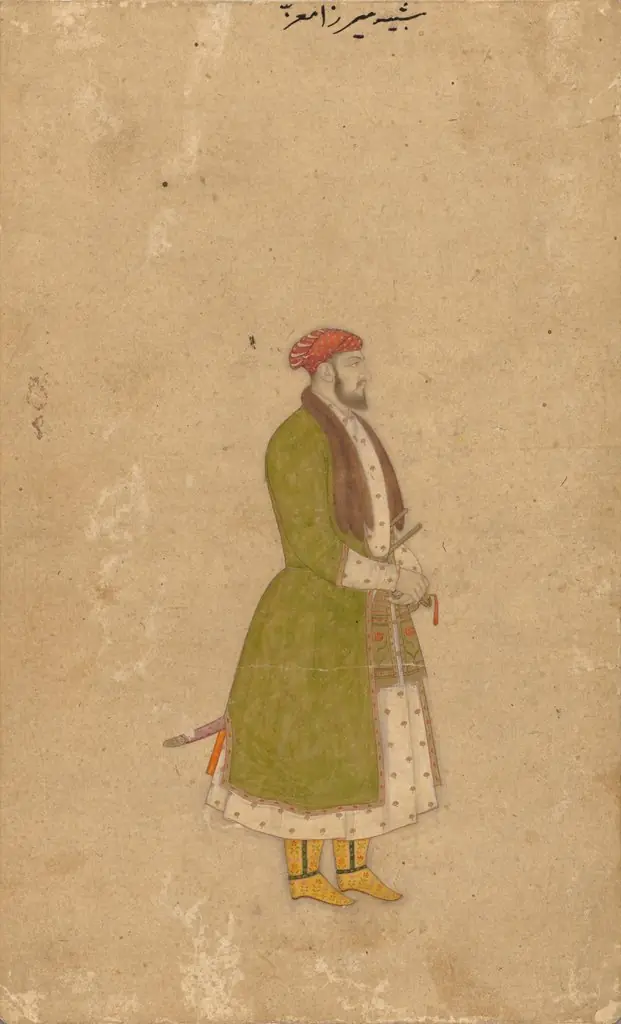
Created in 1770, this painting portrays Nadir Shah, the Persian ruler, in formal regalia. Executed in opaque watercolour and gold on paper, it reflects the refined traditions of Persian court portraiture. The work emphasizes authority through rich materials and precise detail, characteristic of 18th-century Iranian artistic practice rather than European Romanticism, which it does not belong to.
Subject & Meaning
Nadir Shah is depicted seated on an ornate throne, holding a curved sword — a symbol of military power and sovereignty. His attire, including a blue robe with gold embroidery and a red-and-gold headpiece, signals his imperial status. The composition avoids narrative context, focusing instead on the ruler’s presence, reinforcing his role as a figure of centralized authority in post-Safavid Persia.
Technique & Style
The artist employed opaque watercolour with gold leaf to achieve luminous surfaces and intricate patterns. Fine brushwork defines the textures of fabric, metal, and ornamentation. The background, lightly washed and bordered in darker tones, directs attention to the figure. The style is rooted in Persian miniature traditions, emphasizing symbolic detail over naturalistic space or perspective.
History & Provenance
Painted shortly after Nadir Shah’s death in 1747, this portrait likely served as a commemorative or ceremonial object, possibly commissioned by his successors to legitimize their rule. Its survival suggests it remained in royal or aristocratic collections within Iran. No documented European provenance exists, and its creation aligns with regional court workshops rather than foreign artistic movements.
Context
Nadir Shah’s reign marked a brief resurgence of Persian military dominance before fragmentation. Portraits like this one were tools of political memory, reinforcing legitimacy amid instability. While European Romanticism emphasized emotion and nature, this work adheres to Persian conventions of courtly representation, where hierarchy and symbolism outweigh individual expression.
Legacy
The painting endures as a visual record of Persian imperial aesthetics in the 18th century. It reflects the continuity of miniature traditions despite political upheaval. Though not widely known outside specialized collections, it remains a key example of how power was visually encoded in Persian art during a period of transition and decline.
Artist & collection

 Domestic Scene
 Giacomo and Cardinal Marco, investing Andrea, Abbot of San Zeno, with his Benefice
 The Nymph of Fontainebleau
 Portrait of a Woman
 Madonna and Child with Saints in the Enclosed Garden
 Venus and Minerva
 Family Group of Four on Sofa
 Wall painting from Room H of the Villa of P. Fannius Synistor at Boscoreale