Artwork
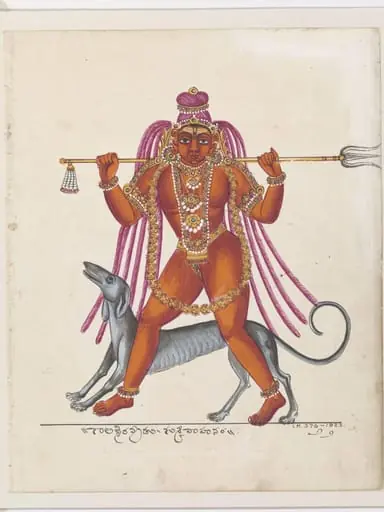
Niruti, the guardian of the south-west, riding on a man's shoulders.
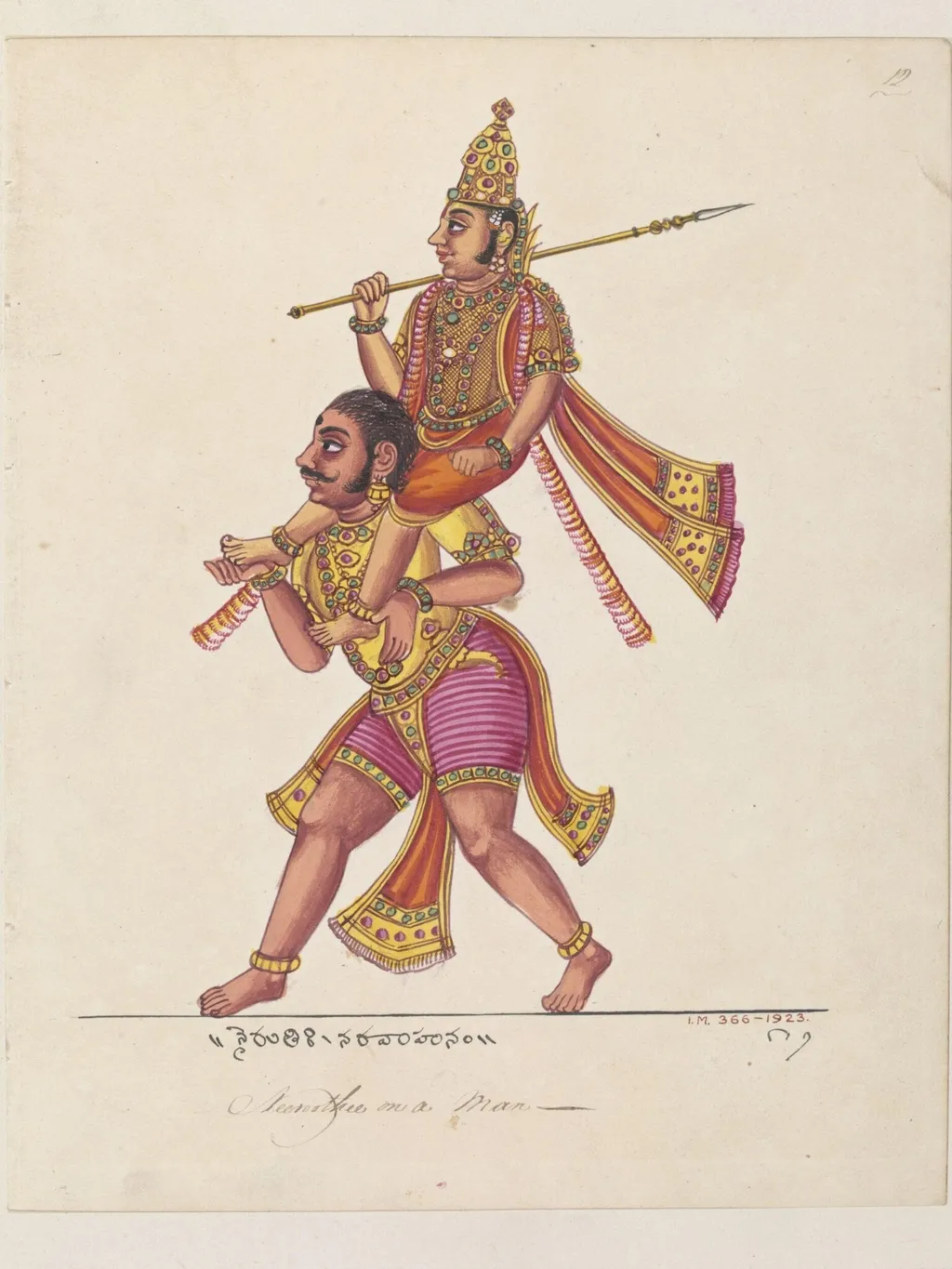
Niruti, the guardian of the south-west, riding on a man's shoulders. is a paint painting by the Romanticist artist Unknown. It dates from 1820 and is held in the collection of the Victoria and Albert Museum.
About this work
Overview
The canvas presents a mythic guardian named Niruti, identified as the protector of the south‑west, perched upon the shoulders of a diminutive, muscular figure. The composition balances the two characters, emphasizing the contrast between the smaller carrier’s bright yellow‑red costume with gold trim and the larger, crowned guardian’s regal red robes adorned with gold motifs.
Subject & Meaning
Niruti is shown holding a spear over the right shoulder, a weapon that underscores the figure’s protective role. The guardian’s light‑brown skin, bare feet, and elaborate jewelry convey a status of both divinity and earthly authority, while the act of riding a human carrier may symbolize the dependence of celestial forces on mortal support.
Technique & Style
Executed in vivid pigments, the painting employs the dramatic lighting and emotive poses characteristic of Romanticism. The strong outlines and detailed ornamentation on both figures highlight the artist’s focus on narrative intensity and visual splendor.
History & Provenance
The work is catalogued under the title “Niruti, the guardian of the south‑west, riding on a man’s shoulders.” Its provenance traces to a collection of mythological paintings, though specific ownership details remain undocumented.
Context
The depiction aligns with regional folklore that assigns directional guardianship to deities, a motif common in South Asian and Southeast Asian artistic traditions. The inclusion of a spear and sword reflects the martial attributes often associated with protective spirits.
Legacy
While the painting is not widely reproduced, it serves as an illustrative example of how Romantic aesthetics were applied to indigenous mythic subjects, bridging European stylistic influences with local narrative content.
Artist & collection

 Domestic Scene
 Giacomo and Cardinal Marco, investing Andrea, Abbot of San Zeno, with his Benefice
 The Nymph of Fontainebleau
 Portrait of a Woman
 Madonna and Child with Saints in the Enclosed Garden
 Venus and Minerva
 Family Group of Four on Sofa
 Wall painting from Room H of the Villa of P. Fannius Synistor at Boscoreale
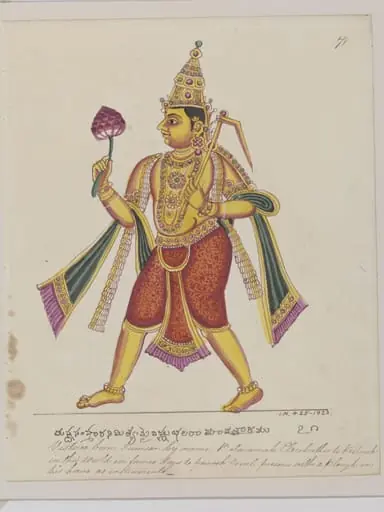 Balarama
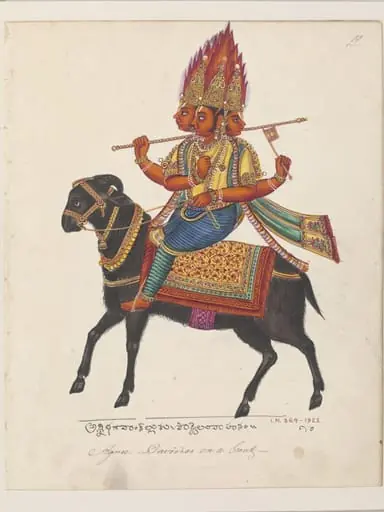 The Vedic god Agni, the god of fire and guardian of the south-east
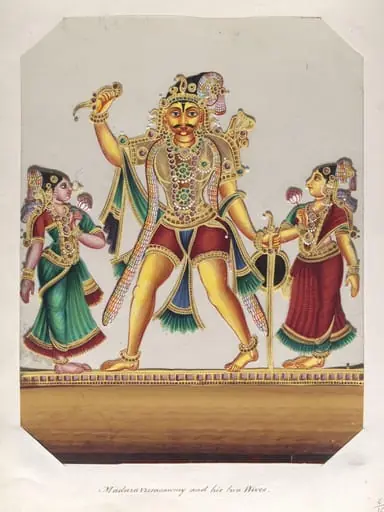 One of sixteen mica paintings depicting Hindu deities and festival processions with decorated cars.
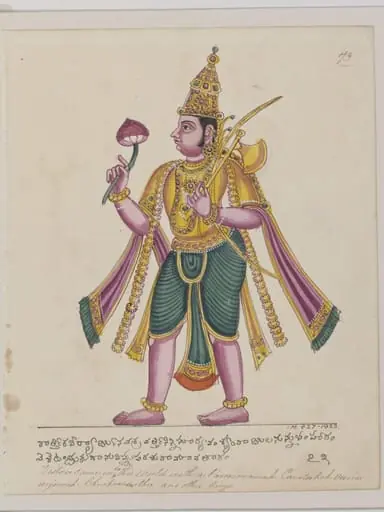 Parasurama Holding an axe and a Lotus Bud
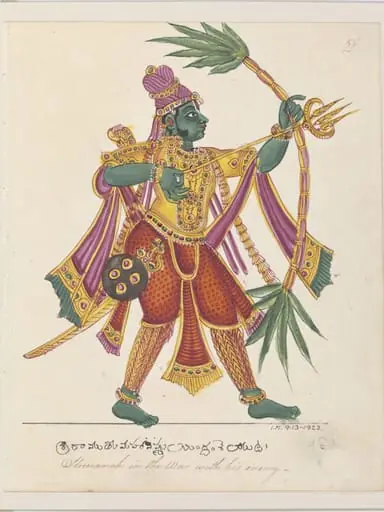 A green-skinned warrior
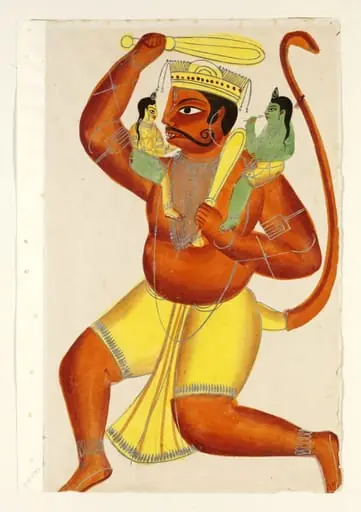 Hanuman, Rama and Lakshmana
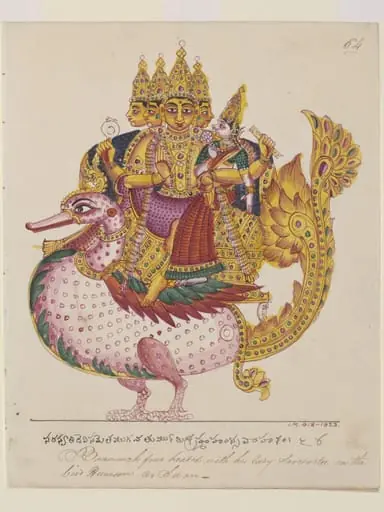 Brahma
 Kala-Bhairava, an emanation of the god Shiva, with trident and hound.