Artwork
Hanuman, Rama and Lakshmana
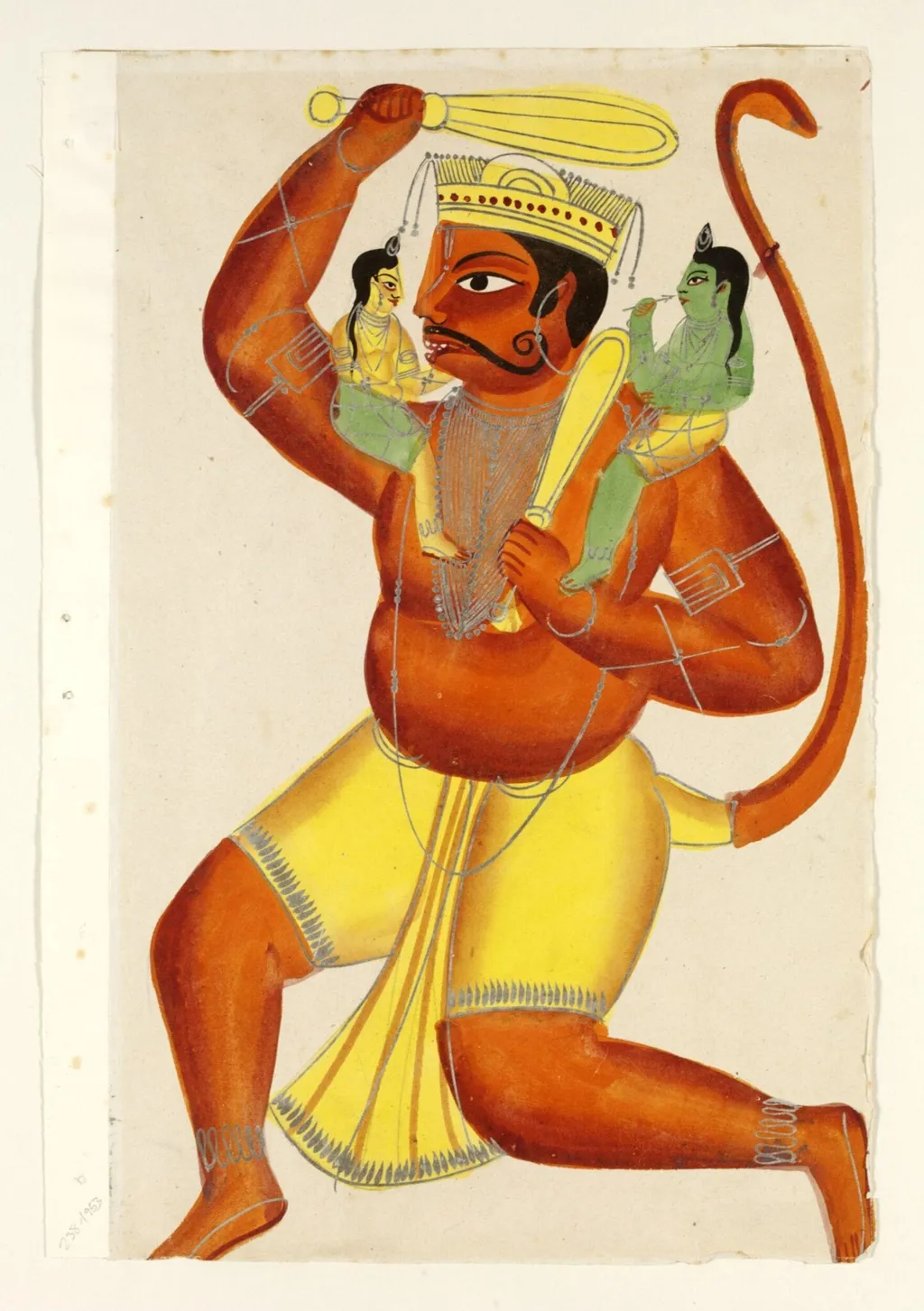
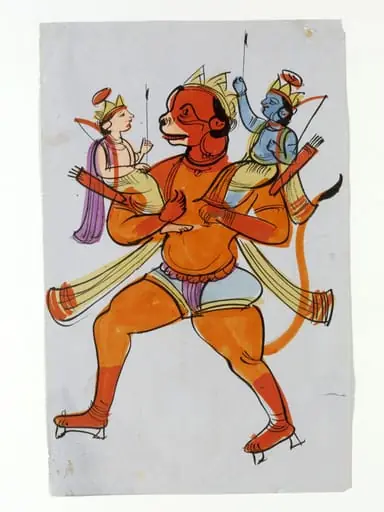
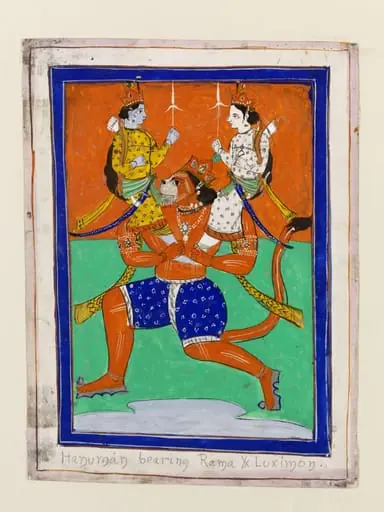
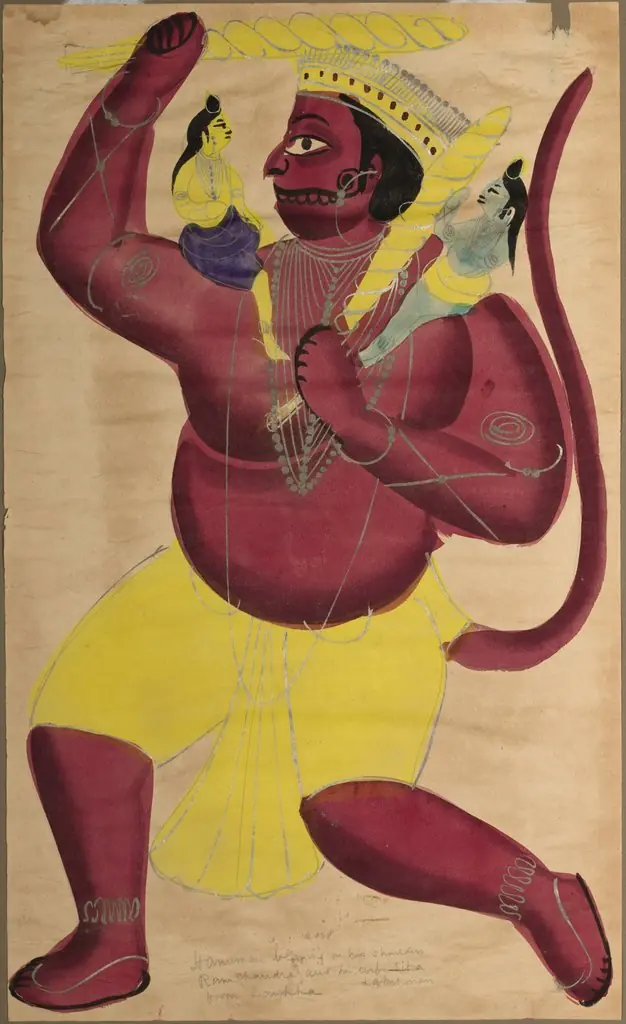
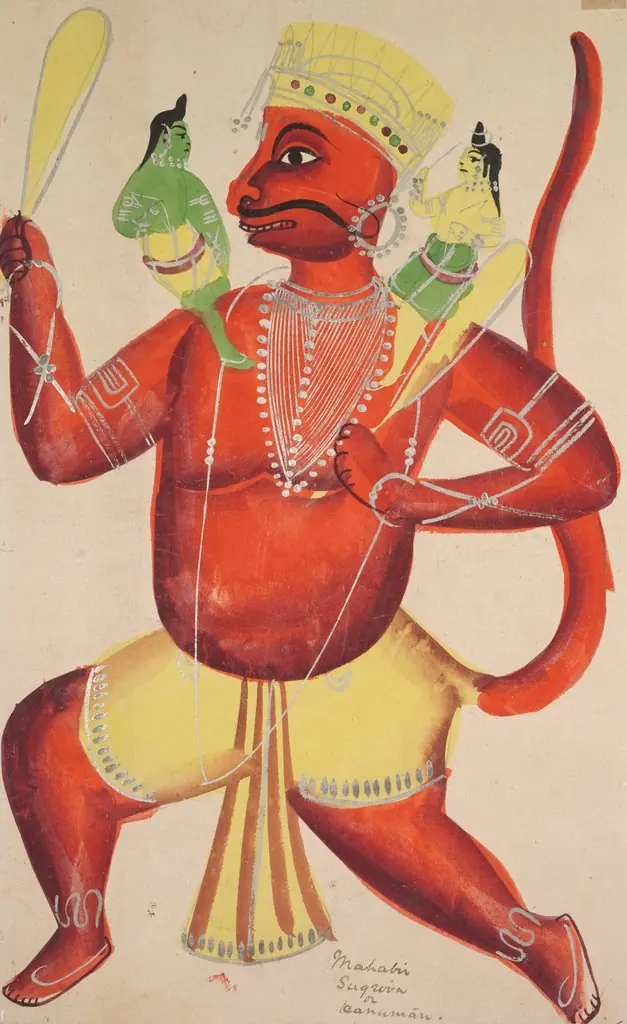
Hanuman, Rama and Lakshmana is a paint painting by the Impressionist artist Unknown. It dates from 1865 and is held in the collection of the Victoria and Albert Museum. Created in 1865, this paper painting combines opaque watercolour with tin alloy to render a vivid tableau from Hindu mythology.
About this work
Overview
Created in 1865, this paper painting combines opaque watercolour with tin alloy to render a vivid tableau from Hindu mythology. The central figure, a muscular deity with a lion’s tail, supports two smaller characters on his shoulders, set against a backdrop of bright hues and defined outlines that emphasize the narrative scene.
Subject & Meaning
The composition illustrates the legendary episode in which Hanuman, portrayed as Mahabir, carries the princes Rama and Lakshmana. The deity’s solemn expression and the positioning of the two attendants convey themes of devotion, strength, and the protective role of the monkey‑god within the epic Ramayana.
Technique & Style
The artist employed opaque watercolour, a medium that allows for saturated pigments, alongside tin alloy highlights that add metallic sheen to elements such as the crown and the golden disc held by the figure. Bold contour lines and a limited palette of vivid yellows, greens, and pale tones give the work a graphic clarity characteristic of mid‑nineteenth‑century Indian illustrative painting.
History & Provenance
The painting entered the collection through a donation by Mrs Western of Langrookside, Havant, in Hampshire. It was subsequently transferred to the University Museum of Archaeology and Ethnology in Cambridge, where it remains part of the museum’s holdings on South Asian art.
Artist & collection

 Domestic Scene
 Giacomo and Cardinal Marco, investing Andrea, Abbot of San Zeno, with his Benefice
 The Nymph of Fontainebleau
 Portrait of a Woman
 Madonna and Child with Saints in the Enclosed Garden
 Venus and Minerva
 Family Group of Four on Sofa
 Wall painting from Room H of the Villa of P. Fannius Synistor at Boscoreale