Artwork
Brahma
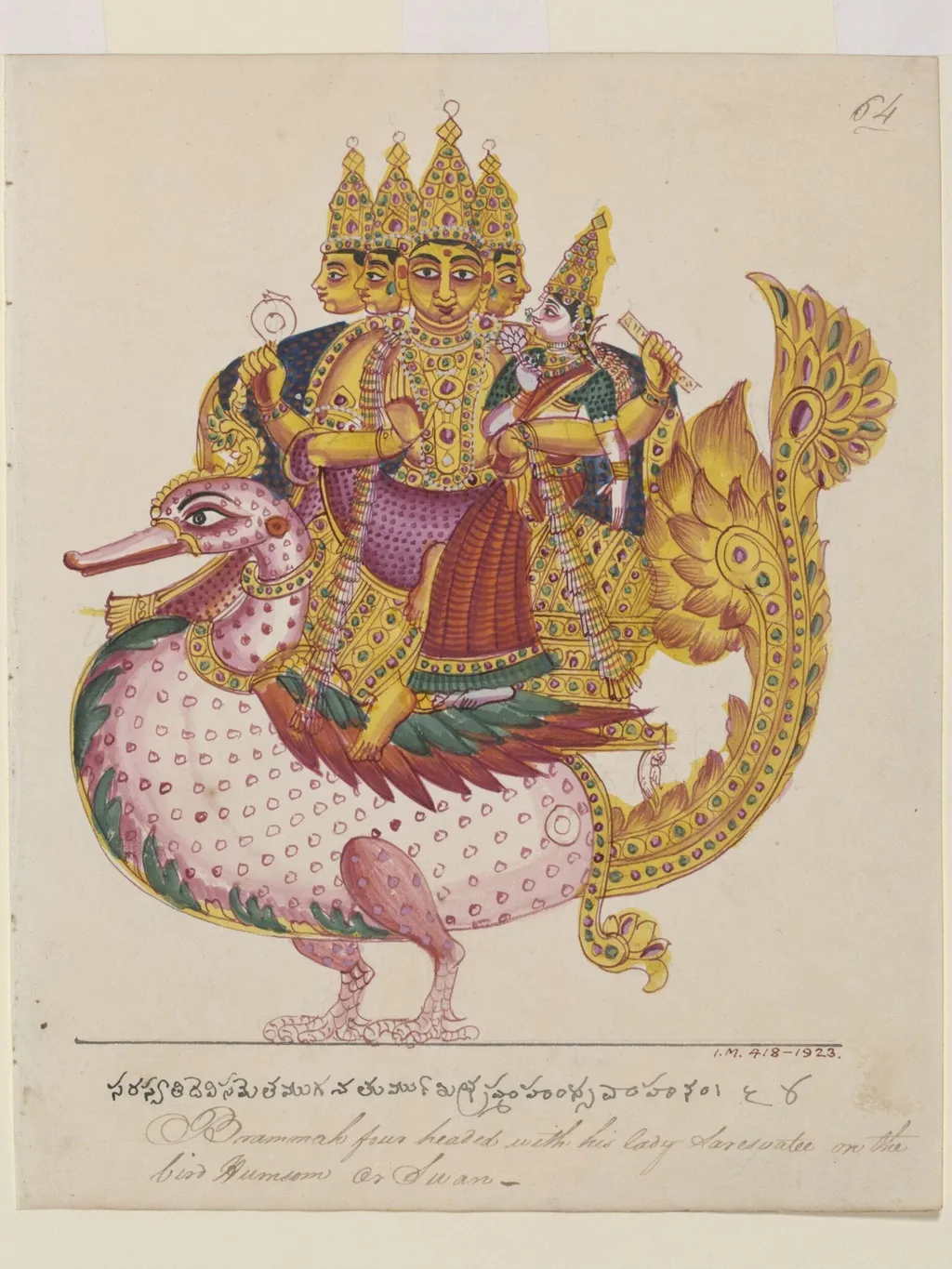
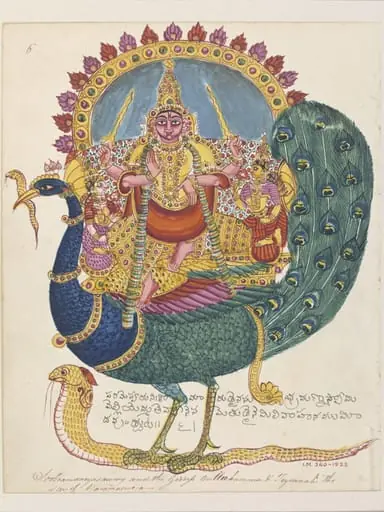
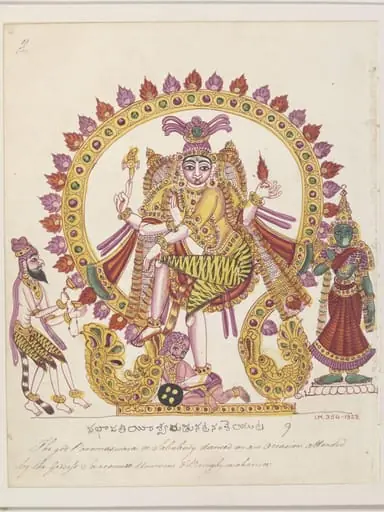
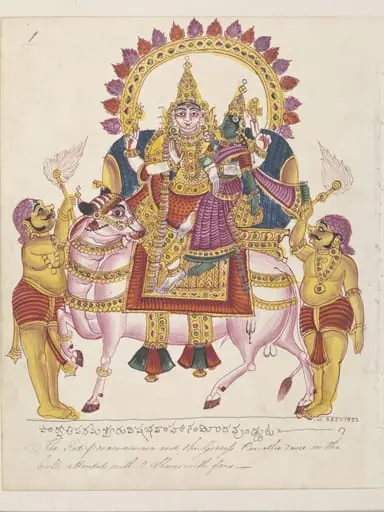
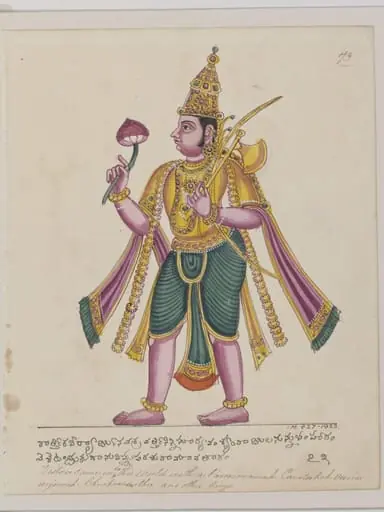
Brahma is a paint painting by the Patna School of Painting artist Unknown. It dates from 1825 and is held in the collection of the Victoria and Albert Museum. This small oil painting belongs to the body of so‑called Company art produced in colonial India for British patrons.
About this work
Overview
This small oil painting belongs to the body of so‑called Company art produced in colonial India for British patrons. It is one of a hundred works in a series that depict Hindu deities, their vehicles, and mythological narratives. The piece portrays the creator god Brahma, distinguished by four heads, a white beard, and a seated pose on a tiger skin, holding a water pot and a string of beads.
Subject & Meaning
The image presents Brahma, the Hindu god of creation, rendered with his characteristic four faces that symbolize the four Vedas. The white beard suggests wisdom, while the tiger skin serves as a throne of power. The water pot (kumbha) and bead necklace (japa mala) are traditional attributes associated with ritual purity and meditation, underscoring the deity’s role in cosmic order.
Technique & Style
Executed in the precise, detailed manner typical of Company paintings, the work combines Indian iconographic conventions with a restrained European compositional sense. Fine brushwork defines the textures of the tiger skin and the gleam of the beads, while a muted palette emphasizes the solemnity of the subject rather than the vivid colors often found in courtly Indian art.
History & Provenance
Created for a British official with scholarly interests, the painting reflects the patron’s desire for authentic Indian religious imagery. It formed part of a curated collection of one hundred such works, likely assembled in the early nineteenth century, and later entered the holdings of the Victoria and Albert Museum, where it remains on display as an example of cross‑cultural artistic exchange.
Context
Company paintings generally favored secular themes—occupations, costumes, and local scenery—catering to the administrative and ethnographic curiosities of the East India Company. This depiction of Brahma is therefore atypical, highlighting a patron’s specific interest in Hindu theology and indicating a deeper engagement with Indian spiritual traditions beyond the usual documentary purpose.
Artist & collection

 Domestic Scene
 Giacomo and Cardinal Marco, investing Andrea, Abbot of San Zeno, with his Benefice
 The Nymph of Fontainebleau
 Portrait of a Woman
 Madonna and Child with Saints in the Enclosed Garden
 Venus and Minerva
 Family Group of Four on Sofa
 Wall painting from Room H of the Villa of P. Fannius Synistor at Boscoreale