Artwork
丹生明神像|Niu Myōjin
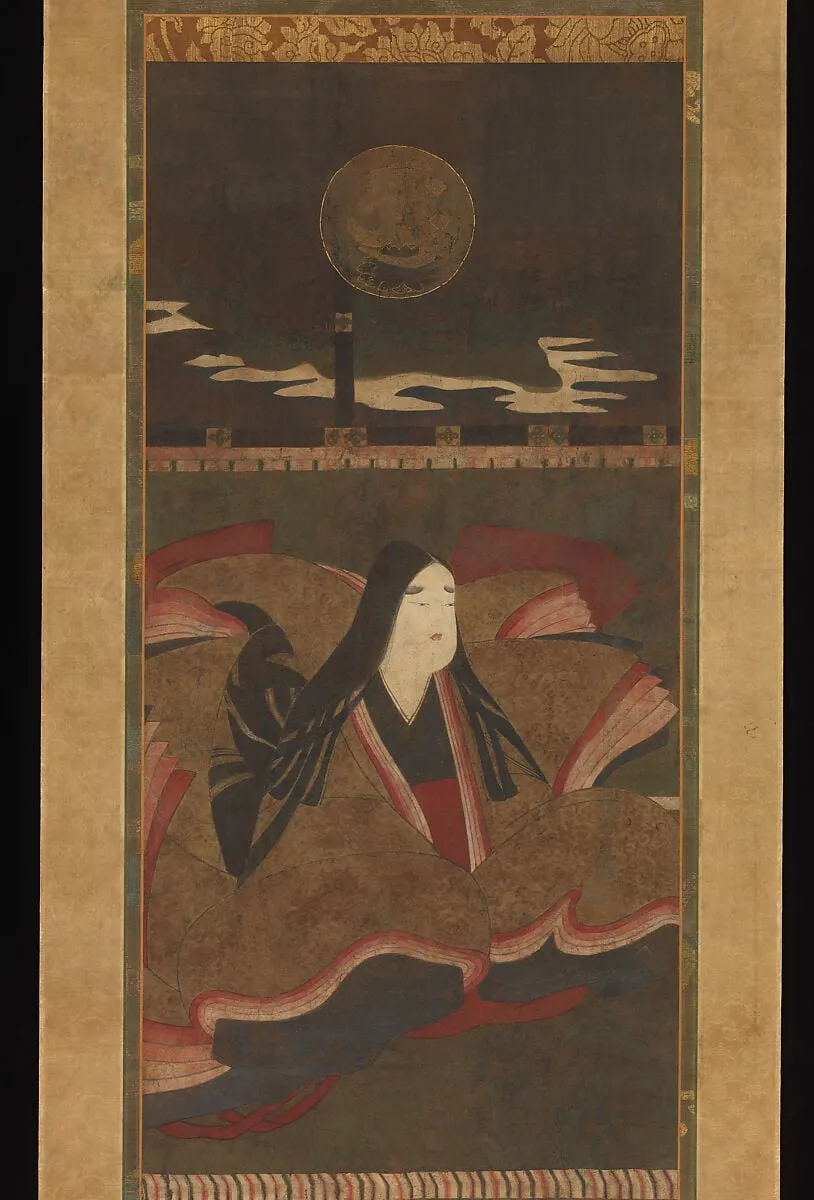
丹生明神像|Niu Myōjin is an ink painting. It dates from 1349 and is held in the collection of the Metropolitan Museum of Art.
About this work
Overview
The hanging scroll, executed on silk with ink, color and gold leaf, depicts a female figure seated upon a cloud while cradling a miniature pagoda. The composition is illuminated by a luminous gold background that catches the light, and the deity’s expression is composed, her face partially obscured by shadow, creating a serene atmosphere.
Subject & Meaning
The figure represents Niu Myōjin, a Shinto deity who was later incorporated into the Buddhist pantheon of Japan. Her posture and the miniature pagoda she holds signify her protective and sacred role, while the surrounding cloud and gold backdrop emphasize her divine nature and connection to the celestial realm.
Technique & Style
The artist employed fine, deliberate lines rather than rapid brushwork, lending the image a sense of stillness and precision. Gold leaf is applied not merely as ornamentation but to evoke a sacred radiance, enhancing the silk’s sheen and reinforcing the spiritual aura of the deity.
Context
The work reflects the syncretic blending of Shinto and Buddhist iconography that occurred in Japan, where native kami were often reinterpreted within Buddhist frameworks. Such representations of divine women were common in religious art, illustrating the fluid exchange between the two traditions.
Artist & collection