Artwork
Untitled
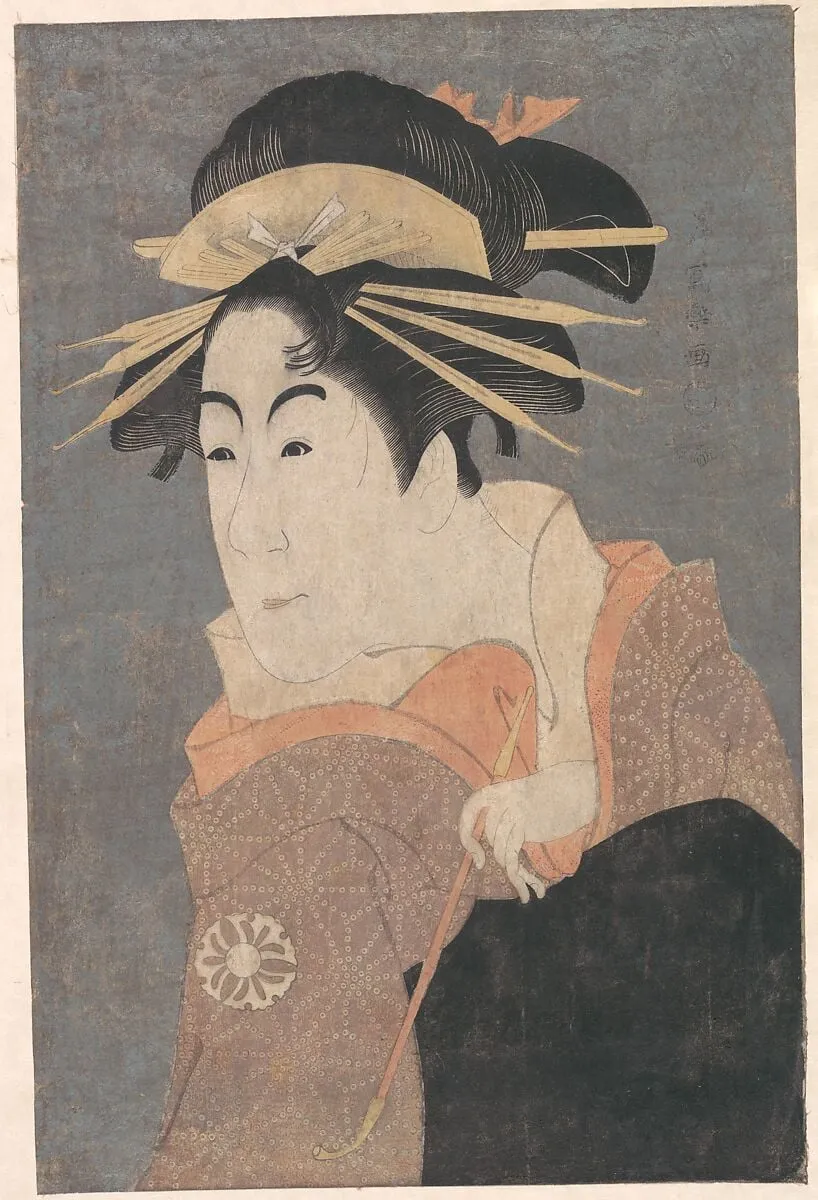
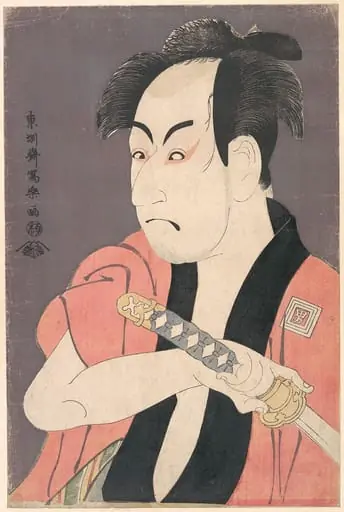
Untitled is an ink print by the Romanticist artist Tōshū. It dates from 1794 and is held in the collection of the Metropolitan Museum of Art.
About this work
Overview
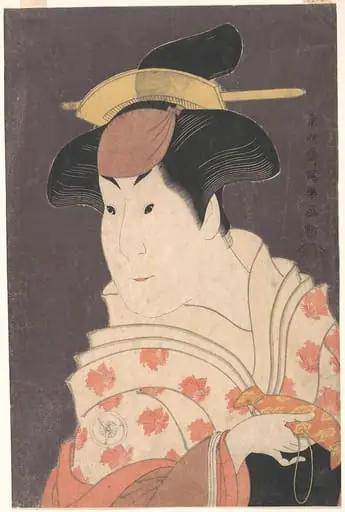
This woodblock print, created around 1794 by the enigmatic ukiyo‑e artist Tōshūsai Sharaku, presents a close‑up portrait of the kabuki performer Matsumoto Yonesaburō I. Executed with ink and color on paper, the work belongs to Sharaku’s brief but intense period of activity, during which he produced a series of striking actor images.
Subject & Meaning
The image captures the actor in a moment of intense expression, his eyes widened and mouth set, suggesting an inner tension or sudden revelation. Sharaku’s portrayal eschews idealisation, instead emphasizing the psychological depth of the performer, hinting at the personal strain that lies behind the theatrical façade.
Technique & Style
Rendered with bold, almost graphic lines, the composition balances stark contouring with subtle ink washes that soften the features. The use of color accentuates the facial expression without overwhelming the starkness of the line work, reflecting Sharaku’s distinctive approach that merges caricature‑like exaggeration with realistic detail.
History & Provenance
Sharaku’s output was confined to a ten‑month span in the mid‑1790s, after which his prints abruptly ceased, leaving scant documentation of his life. This particular portrait, like his other works, was produced for the popular ukiyo‑e market, yet it was not widely circulated during his lifetime.
Context
During the Edo period, actor prints were a dominant genre, celebrating the fame of kabuki stars. Sharaku’s depictions diverge from the conventional flattering portraits, offering a more critical, humanising view of performers, thereby challenging prevailing aesthetic expectations of the time.
Artist & collection