Artwork
North Battery or "Red Fort"
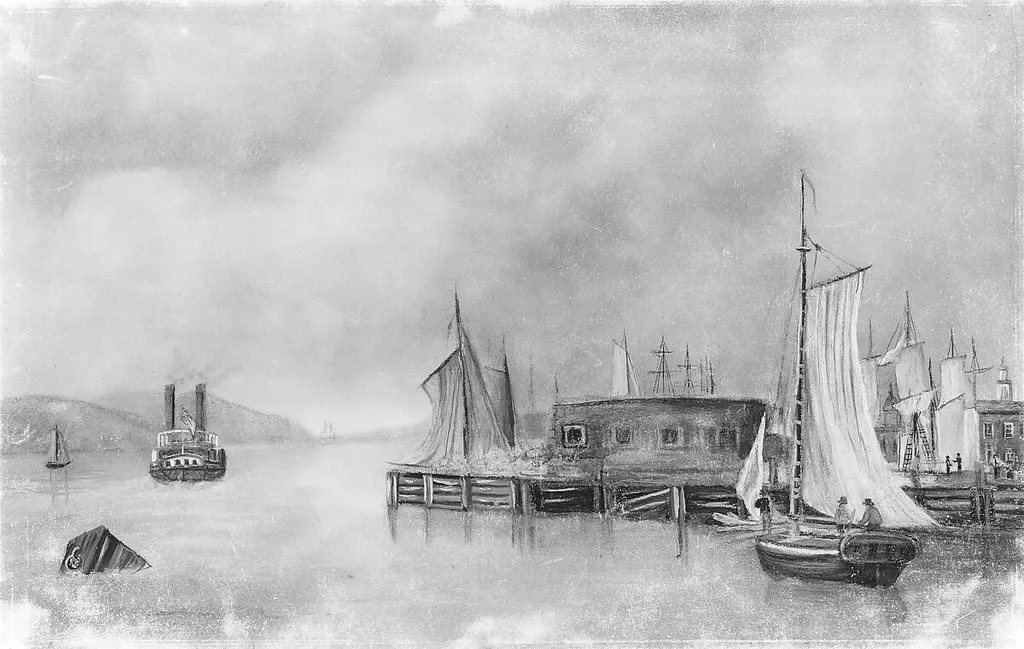
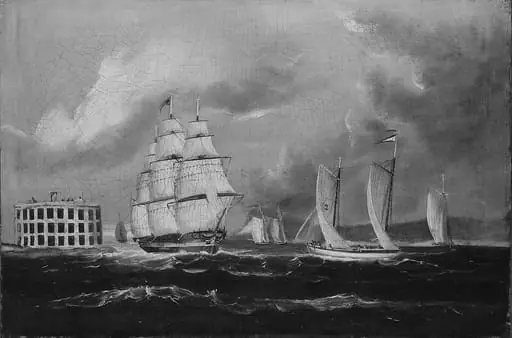
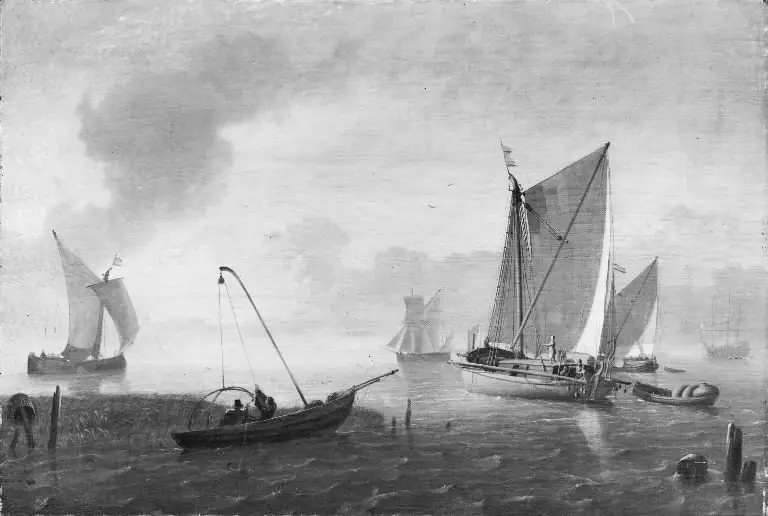
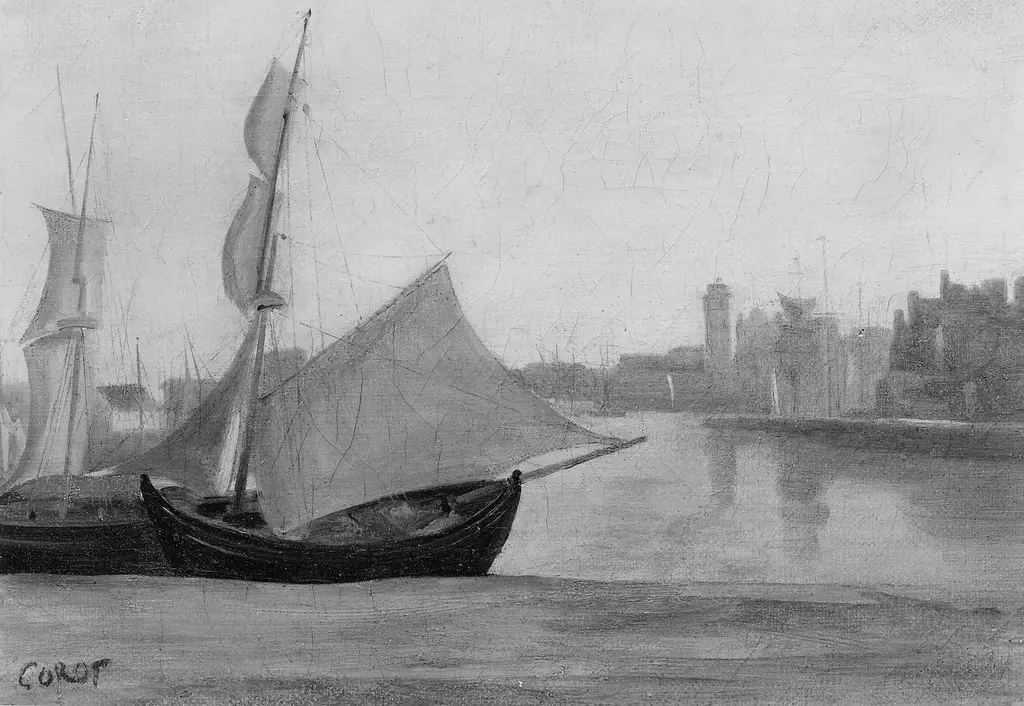
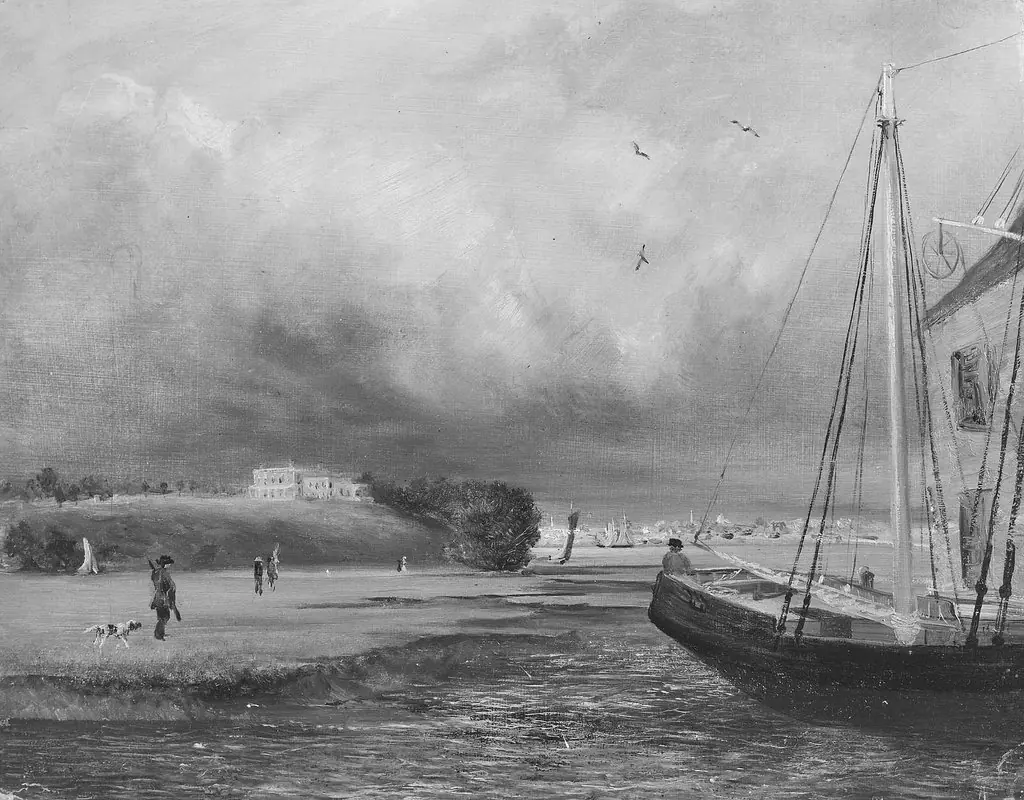
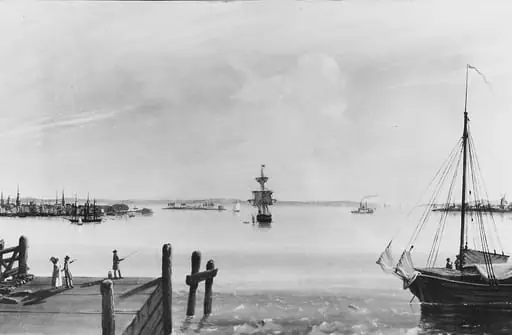
North Battery or "Red Fort" is a gouache drawing by the Romanticist artist Unknown. It dates from 1835 and is held in the collection of the Metropolitan Museum of Art. This small work depicts a harbor scene with two anchored warships, a coastal fort, and minimal human figures.
About this work
Overview
Its unattributed origin and sketchlike quality suggest it was made as a quick observational study rather than a finished piece.
This small work depicts a harbor scene with two anchored warships, a coastal fort, and minimal human figures. Executed on off-white Bristol board treated with pumice to create a gritty texture, it combines paste, gouache, and fixative. The rough surface enabled dense, layered application of pigment, particularly in rendering clouds and water. Its unattributed origin and sketchlike quality suggest it was made as a quick observational study rather than a finished piece.
Subject & Meaning
The scene captures a quiet moment in a military harbor, with vessels at rest and a fort standing sentinel along the shore. The absence of action or narrative detail implies a focus on observation rather than commemoration. Figures are reduced to mere silhouettes, emphasizing the landscape and architecture over human drama. The work may reflect a personal record of a place encountered during service or travel.
Technique & Style
The artist exploited the abrasive texture of pumice-treated board to build up opaque layers of paste and gouache, creating tactile depth in the waves and sky. Brushwork is direct and unrefined, with no fine detailing of hulls or rigging. The palette is restrained, favoring muted tones that enhance the atmospheric mood. The method suggests an improvisational approach, suited to rapid documentation under field conditions.
History & Provenance
The work’s maker remains unidentified, and its early ownership is undocumented. It entered the collection as part of the American Wing’s holdings, likely acquired through donation or transfer. Its materials and execution align with 19th-century military or maritime sketches made by non-professional artists. No inscriptions or markings provide clues to its origin or date.
Context
Created during a period when naval and coastal defenses were actively documented, the piece reflects a broader practice of informal visual recording among soldiers, sailors, and surveyors. Similar sketches survive from the War of 1812 and antebellum coastal garrisons, often made on available materials. This work fits within that tradition—unpolished, functional, and grounded in direct experience.
Legacy
Though unsigned and unremarked in its time, the work survives as an example of vernacular maritime art. Its material innovation—using abrasive board to enhance pigment adhesion—offers insight into resourceful techniques employed outside academic studios. It contributes to understanding how ordinary individuals visually engaged with their surroundings during a formative era in American coastal history.
Artist & collection

 Domestic Scene
 Giacomo and Cardinal Marco, investing Andrea, Abbot of San Zeno, with his Benefice
 The Nymph of Fontainebleau
 Portrait of a Woman
 Madonna and Child with Saints in the Enclosed Garden
 Venus and Minerva
 Family Group of Four on Sofa
 Wall painting from Room H of the Villa of P. Fannius Synistor at Boscoreale