Artwork
Nouveau Théatre Feydeau
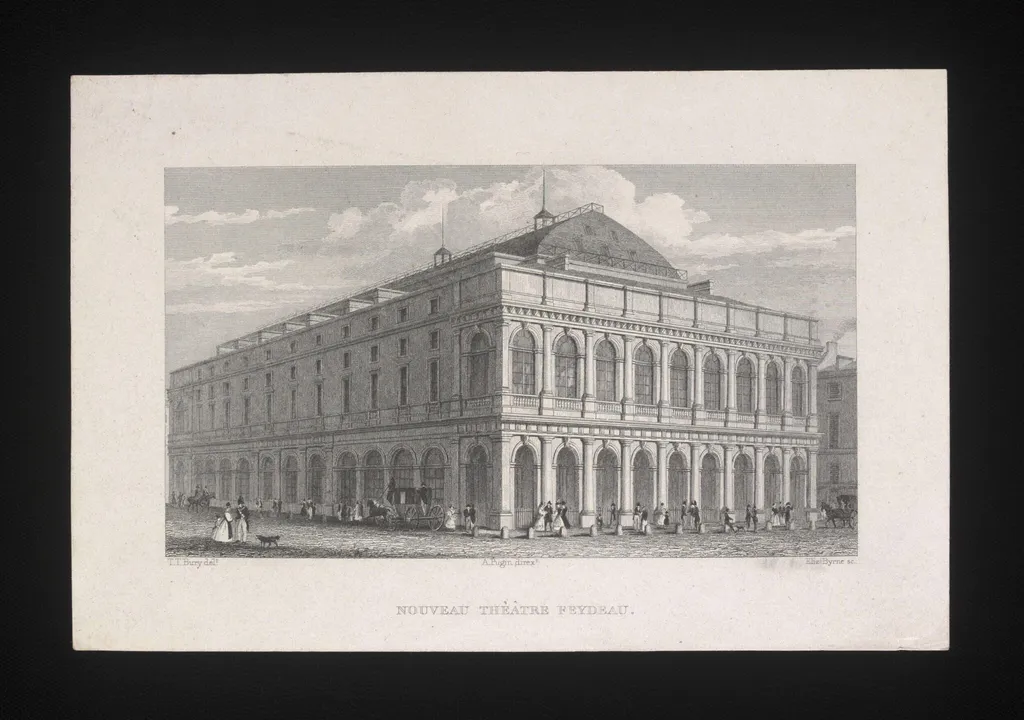
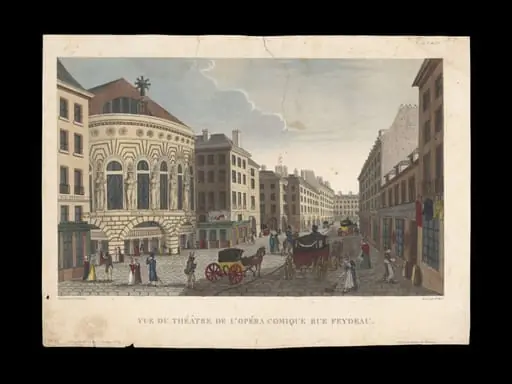
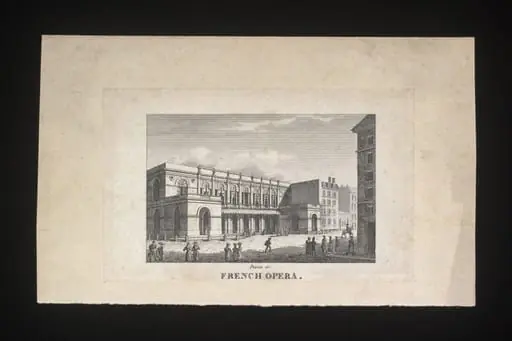
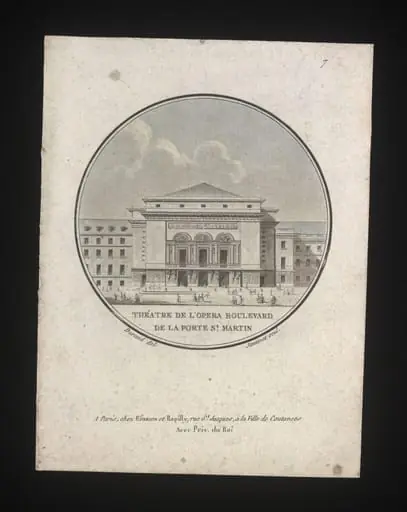
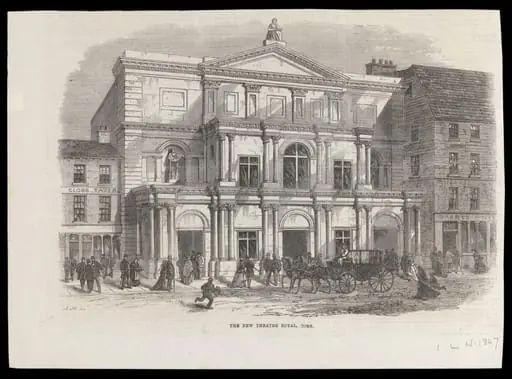
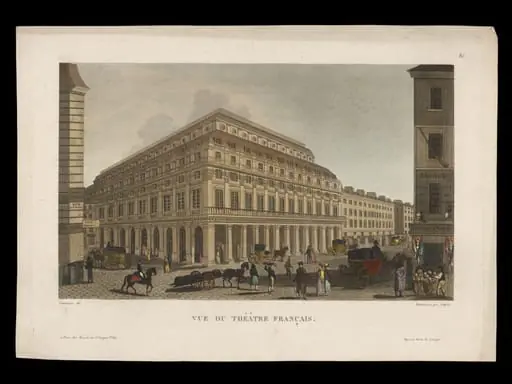
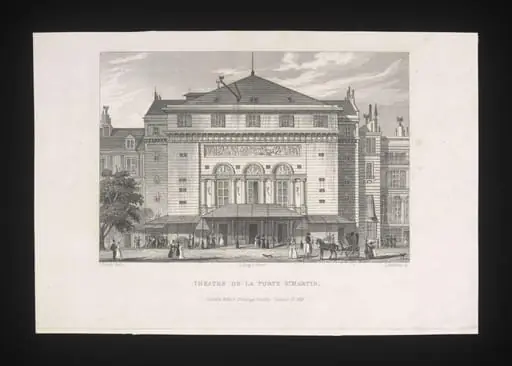
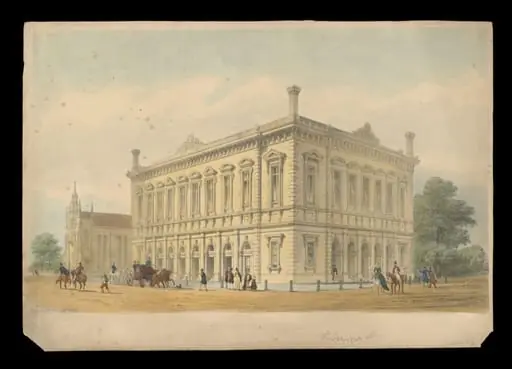
Nouveau Théatre Feydeau is a print by Unknown. It dates from 1750 and is held in the collection of the Victoria and Albert Museum. This print captures the exterior of the Théâtre Feydeau as it appeared shortly after its completion.
About this work
Overview
This print captures the exterior of the Théâtre Feydeau as it appeared shortly after its completion. Produced as part of the Harry Beard Collection, it belongs to a group of 19th-century theatrical illustrations preserved at the Victoria and Albert Museum. The image serves as a documentary record of a building that reflected Parisian cultural ambitions during its era.
Subject & Meaning
The print focuses on the theater’s architectural front, emphasizing its formal symmetry and ornamental detailing. As a venue for operatic and comedic performances, the Théâtre Feydeau symbolized the growing public appetite for refined entertainment in mid-19th century Paris. The depiction avoids human figures, directing attention instead to the building as a cultural monument.
Technique & Style
Executed in fine line work and subtle tonal gradations, the print employs a precise, almost architectural draftsmanship. It avoids dramatic lighting or stylization, favoring clarity and accuracy. The method suggests it was likely produced from a measured drawing, intended for documentation rather than artistic expression.
History & Provenance
The print was collected by Harry Beard, a noted enthusiast of theatrical ephemera, whose holdings formed a significant archive of performance-related imagery. Acquired by the Victoria and Albert Museum, it remains part of a broader collection documenting the evolution of British and French theater architecture in the 1800s.
Context
The Théâtre Feydeau opened in 1789 but was rebuilt in the 1830s to accommodate larger audiences and modern stage technology. This print reflects its post-renovation appearance, aligning with a broader trend of urban renewal in Paris. Similar prints circulated among theatergoers and architects as records of contemporary cultural infrastructure.
Legacy
Though the theater was demolished in the late 19th century, this print preserves its visual form for historical study. It contributes to understanding how performance spaces were designed and perceived during a period of rapid urban and artistic change in Paris, offering insight into the material culture of 19th-century theater.
Artist & collection

 Domestic Scene
 Giacomo and Cardinal Marco, investing Andrea, Abbot of San Zeno, with his Benefice
 The Nymph of Fontainebleau
 Portrait of a Woman
 Madonna and Child with Saints in the Enclosed Garden
 Venus and Minerva
 Family Group of Four on Sofa
 Wall painting from Room H of the Villa of P. Fannius Synistor at Boscoreale