Artwork
Theatre de La Porte St. Martin
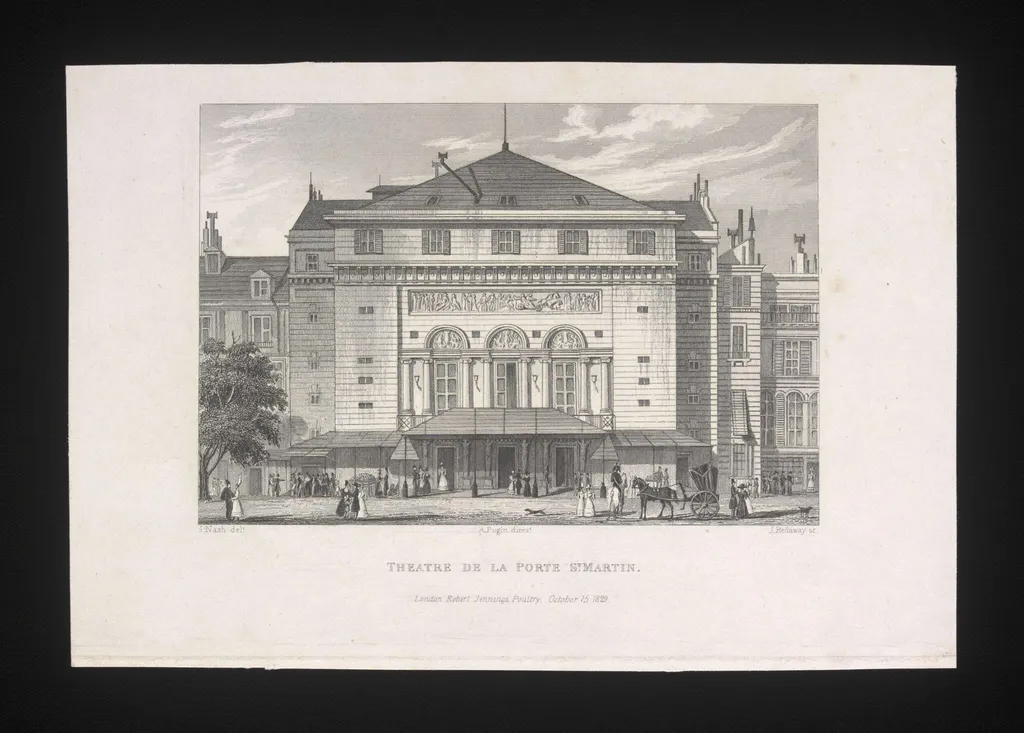
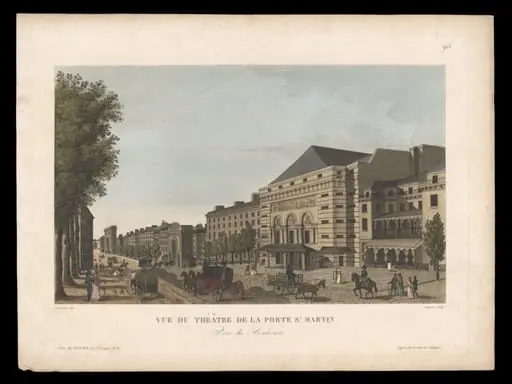
Theatre de La Porte St. Martin is a print by the Romanticist artist Joseph Nash. It dates from 15 and is held in the collection of the Victoria and Albert Museum.
About this work
Joseph Nash sketched this from life, then cut the image onto a metal plate to print many copies.
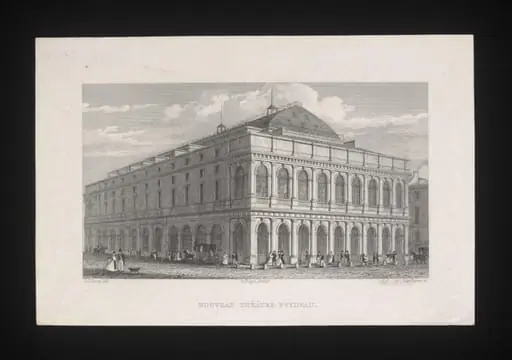
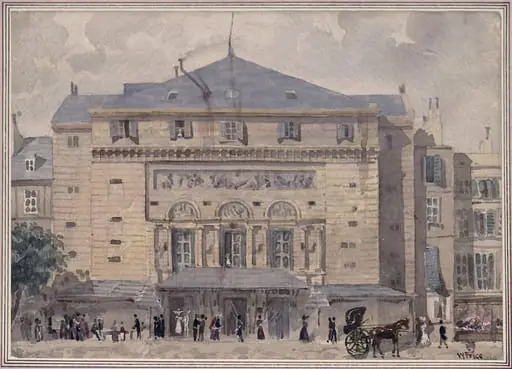
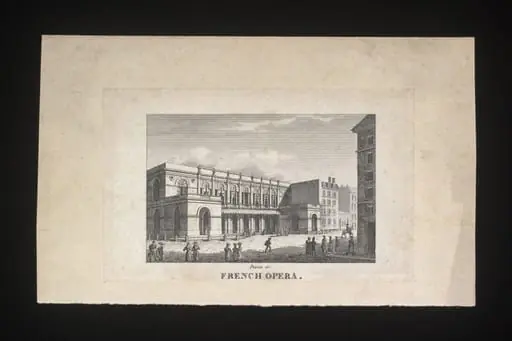
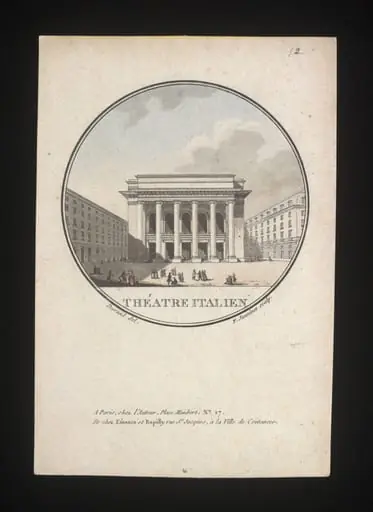
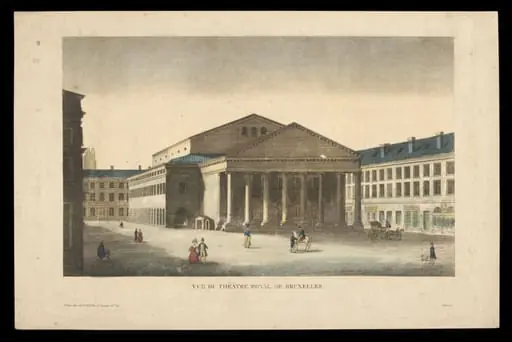
This print shows the front of a Paris theater from 1829. The building stands tall with big columns and arches, lit by gas lamps along the street. The artist used fine lines to catch tiny details like shutters and signs.
Joseph Nash sketched this from life, then cut the image onto a metal plate to print many copies. The print was sold in London just weeks after the Paris opening. You can almost feel the crisp October air.
Compare this to Nash’s later theater scenes. See it at the Victoria and Albert Museum.
Overview
This print captures the façade of the Théâtre de la Porte Saint-Martin in Paris, rendered in fine line work and published in London on October 15, 1829. Produced by Robert Jennings from a sketch by Joseph Nash, it was part of a series documenting contemporary European architecture. The image was made using intaglio printing, allowing for multiple impressions, and entered the Harry Beard Collection before being acquired by the Victoria and Albert Museum.
Subject & Meaning
The print presents the theater’s neoclassical exterior shortly after its reopening in 1829, emphasizing its architectural grandeur through symmetrical columns, arched windows, and ornamental detailing. Gas lamps illuminate the street below, signaling modernization in urban entertainment spaces. The scene reflects public interest in Parisian cultural life during the July Monarchy, offering London audiences a visual connection to continental theater culture.
Technique & Style
Joseph Nash drew the scene directly from observation, translating its textures—shutters, signage, stone surfaces—into precise, delicate etched lines. The metal plate was incised to hold ink, producing sharp contrasts between light and shadow. Fine hatching defines architectural elements, while the absence of color focuses attention on form and structure. The technique prioritizes accuracy over embellishment, aligning with topographical print traditions of the era.
History & Provenance
The print was issued by Robert Jennings in London just weeks after the theater’s 1829 revival, capitalizing on public curiosity about Parisian developments. It was distributed as part of a broader market for illustrated architectural views. The work later entered the collection of Harry Beard, a noted collector of theater memorabilia, and was eventually transferred to the Victoria and Albert Museum, where it remains part of a significant archive of 19th-century performance culture.
Context
In 1829, Paris was reasserting its cultural prominence after years of political upheaval. The reopening of the Théâtre de la Porte Saint-Martin, a venue for melodrama and spectacle, mirrored broader trends in urban entertainment. Simultaneously, British audiences sought visual access to continental institutions. Nash’s print served as both documentation and cultural bridge, reflecting transnational interest in theater architecture during the early Industrial Age.
Legacy
Nash’s series of theater views, including this one, established a precedent for documenting performance spaces with topographical precision. While not widely exhibited during his lifetime, these prints now offer scholars insight into the material culture of 19th-century theater. The work’s survival in the V&A’s collection underscores its value as a record of architectural and social history, rather than as artistic innovation.
Artist & collection
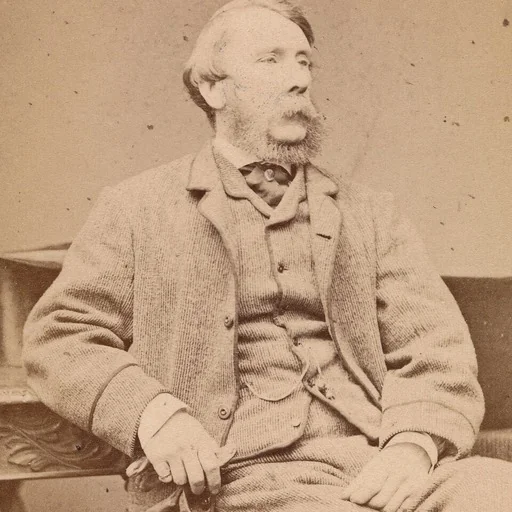
Artist
Joseph Nash (17 December 1809 – 19 December 1878) was an English watercolour painter and lithographer, specialising in historical buildings. His major work was the 4-volume Mansions of England in the Olden Time, published from 1839–49.

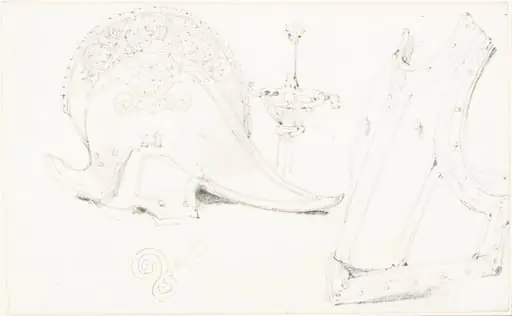 Study of a Helmet, Breastplate, and Rapier
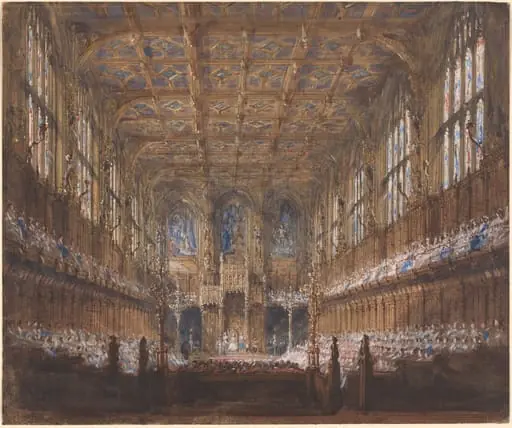 The State Opening of Parliament in the Rebuilt House of Lords
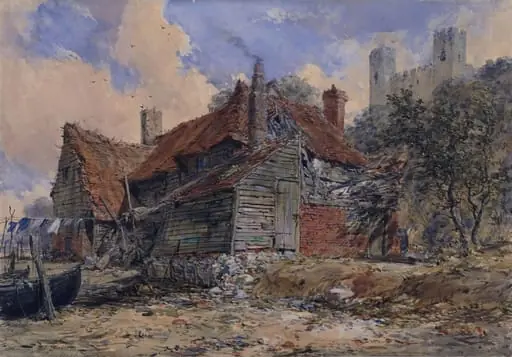 Rochester
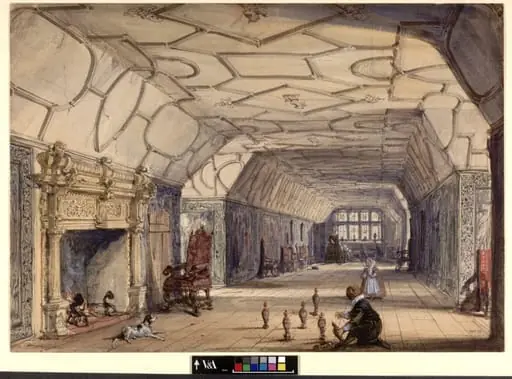 The gallery at Knole House, near Sevenoaks
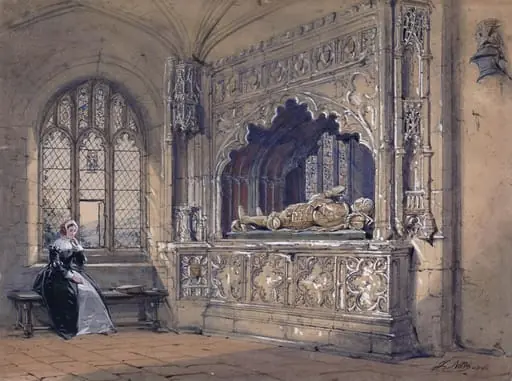 The supposed tomb of Thomas Fiennes, in Herstmonceux Church, Sussex, looking south-east from the North Chapel
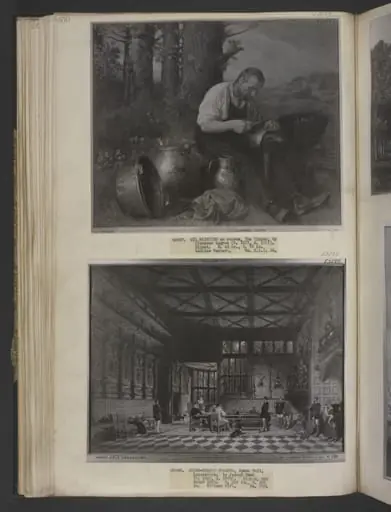 Speke Hall, Lancashire
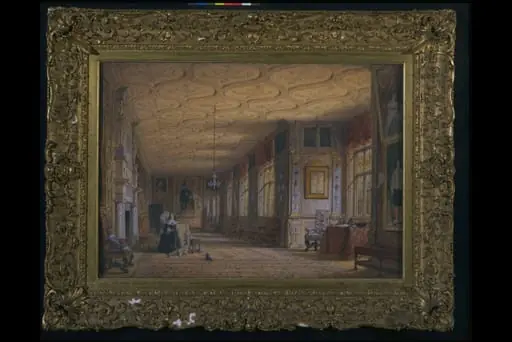 The Cartoon Gallery at Knole
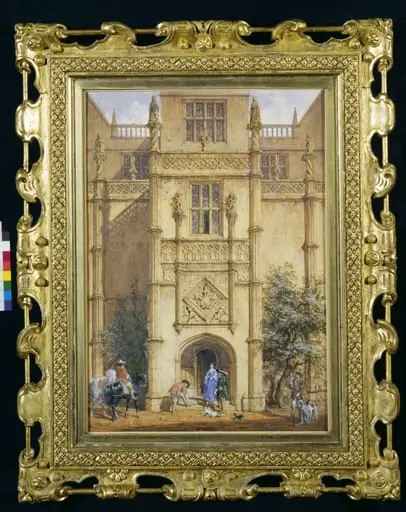 The Porch at Montacute House, Somerset