Artwork
Theatre de L'Opera Boulevard de La Pote St. Martin
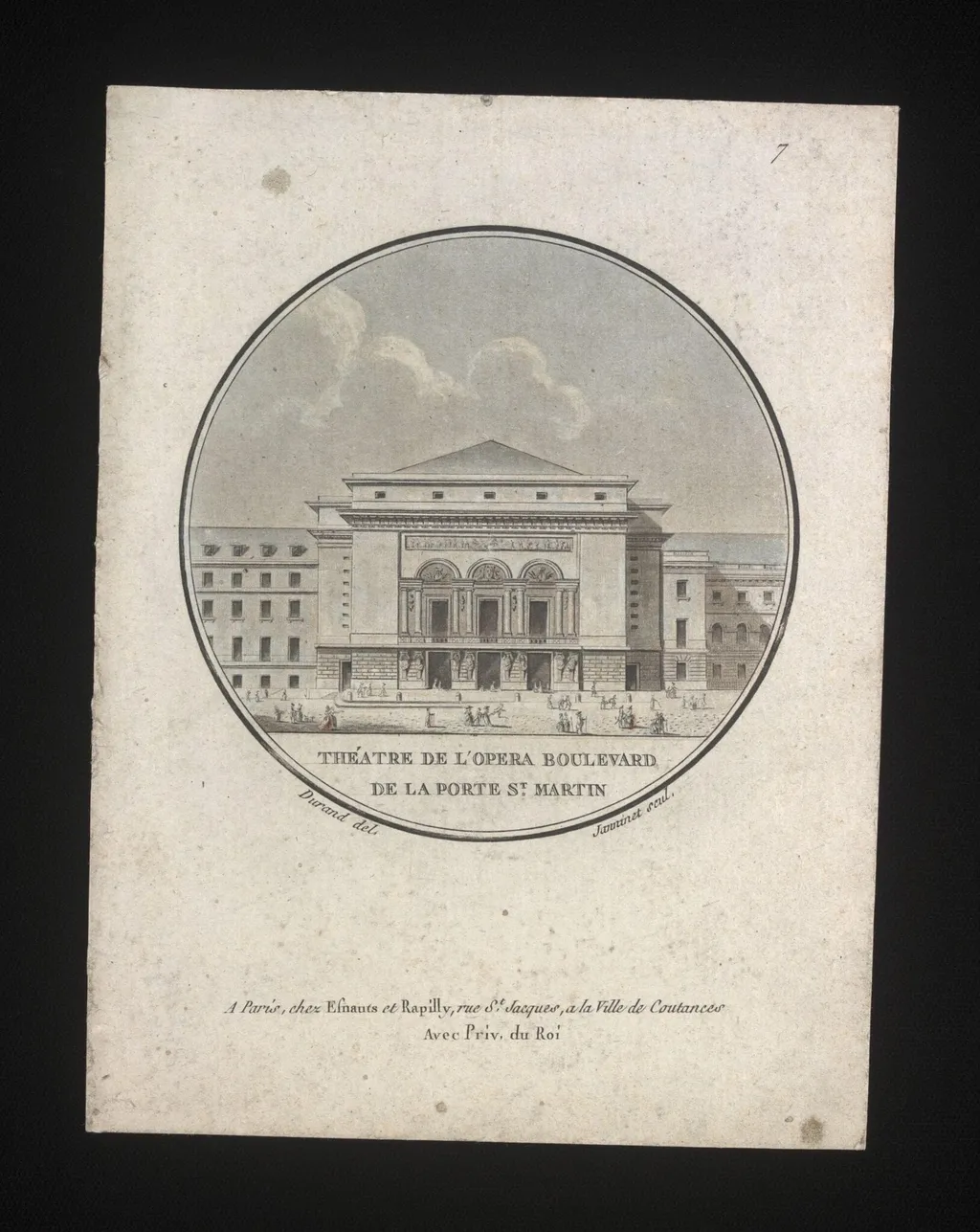
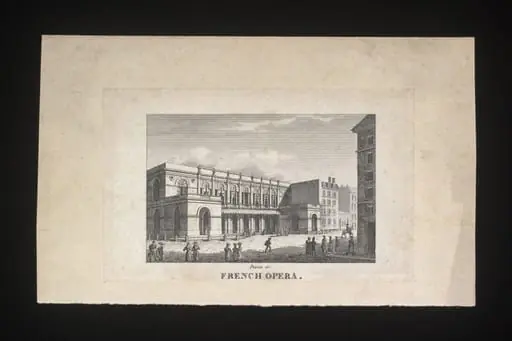
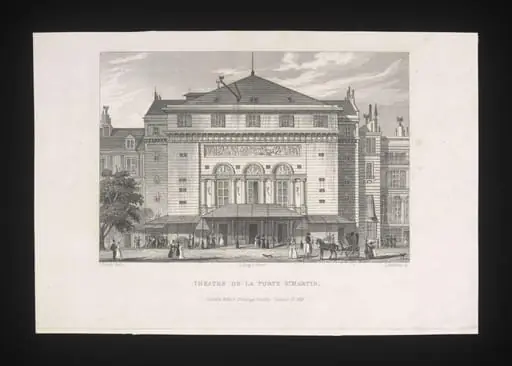
Theatre de L'Opera Boulevard de La Pote St. Martin is a print by Unknown. It dates from 1750 and is held in the collection of the Victoria and Albert Museum. This 18th-century print captures the façade of the Théâtre de l'Opéra on the Boulevard Saint-Martin in Paris.
About this work
Overview
Produced as a commercial engraving, it was part of a broader trend in visual culture that made urban architecture accessible to a wider public.
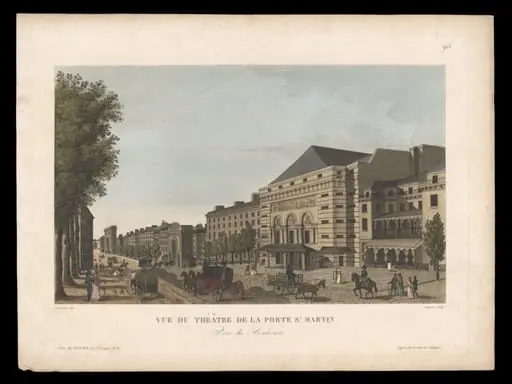
This 18th-century print captures the façade of the Théâtre de l'Opéra on the Boulevard Saint-Martin in Paris. Produced as a commercial engraving, it was part of a broader trend in visual culture that made urban architecture accessible to a wider public. The work originates from the Harry Beard Collection, now held at the Victoria and Albert Museum, and reflects the era’s growing appetite for images of modern civic spaces.
Subject & Meaning
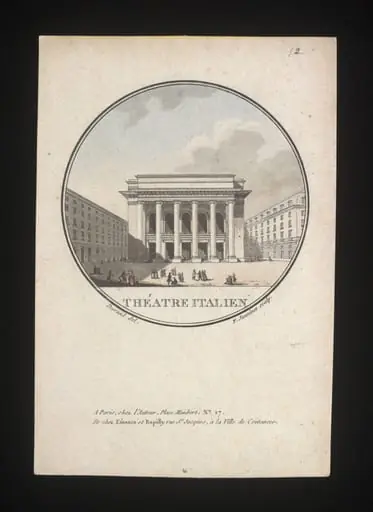
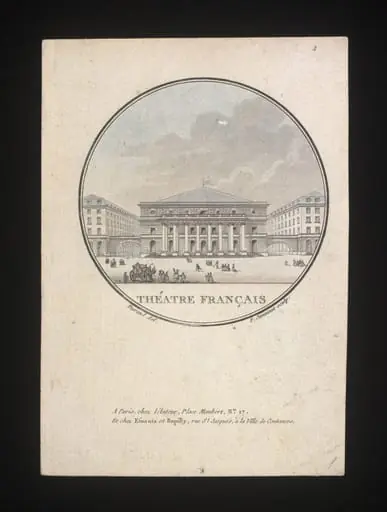
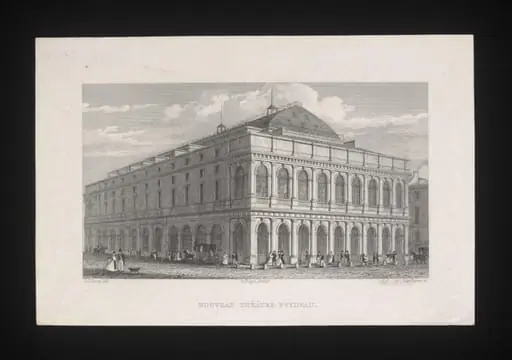
The print focuses on the opera house’s grand architectural elements—tall columns, arched entrances, and symmetrical proportions—emphasizing its role as a cultural landmark. Tiny figures along the sidewalk underscore the building’s monumental scale and suggest its place in daily urban life. Rather than depicting performance, the image celebrates the theater as a symbol of public spectacle and civic pride.
Technique & Style
Executed in fine-line engraving, the print uses contrast between the dark, atmospheric sky and the sharply defined stone façade to create depth. Details are rendered with precision, though figures are minimized to architectural scale. The composition follows classical conventions of perspective and balance, typical of topographical prints intended for clarity and reproduction rather than expressive flair.
History & Provenance
Created around the late 1700s, the print circulated as an affordable visual record of Paris’s evolving cityscape. It entered the Harry Beard Collection, assembled by a 19th-century British enthusiast of theatrical imagery, and was later acquired by the Victoria and Albert Museum. Its survival reflects the value placed on such prints as historical documents of urban development and popular taste.
Context
In an era before photography, printed views of public buildings served as both news and decoration for middle-class homes. The Théâtre de l'Opéra, completed in 1763, was one of Paris’s most prominent new structures, and prints like this helped disseminate its image across Europe. Such images reinforced the connection between architecture, culture, and national identity during the Enlightenment.
Legacy
This print contributes to a broader archive of pre-photographic urban documentation, preserving the appearance of a significant Parisian landmark before later renovations. Today, it remains a resource for historians studying the visual culture of 18th-century France and the role of print media in shaping public perception of architecture and civic life.
Artist & collection

 Domestic Scene
 Giacomo and Cardinal Marco, investing Andrea, Abbot of San Zeno, with his Benefice
 The Nymph of Fontainebleau
 Portrait of a Woman
 Madonna and Child with Saints in the Enclosed Garden
 Venus and Minerva
 Family Group of Four on Sofa
 Wall painting from Room H of the Villa of P. Fannius Synistor at Boscoreale