Artwork
Învierea lui Iisus
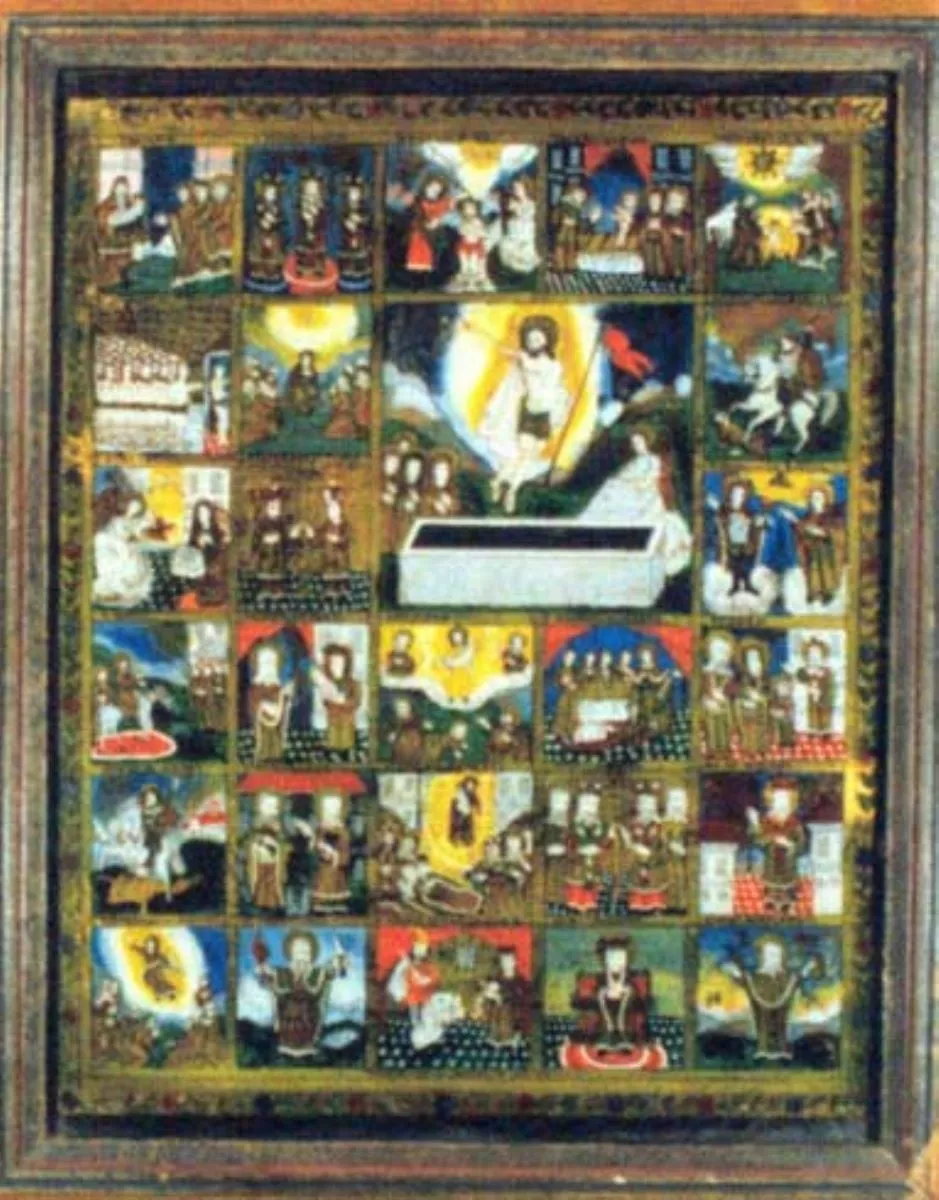
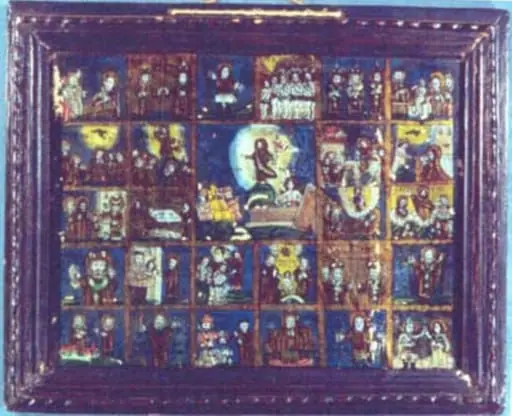
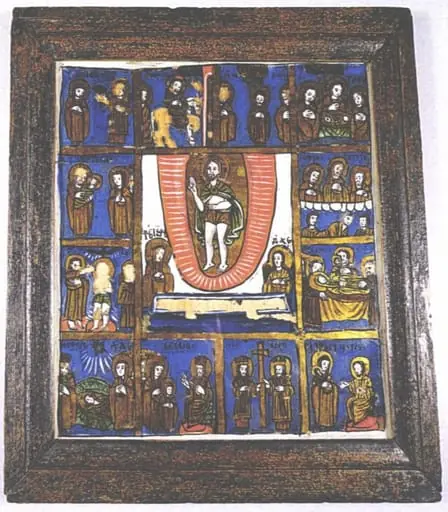
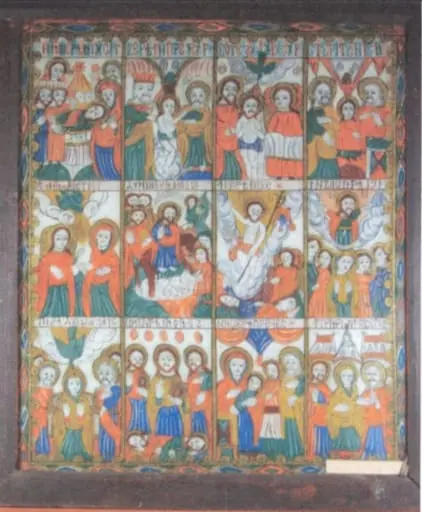
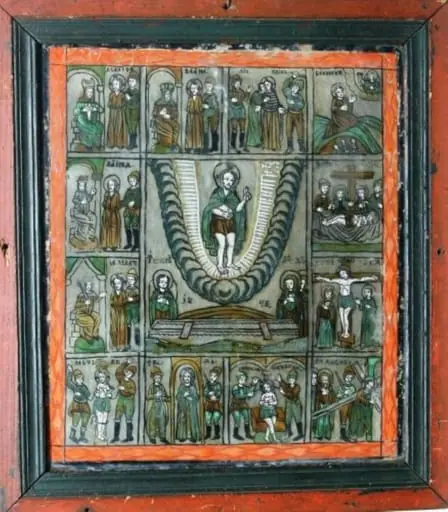
Învierea lui Iisus is a drawing by the Impressionist artist Unknown. It dates from 1898 and is held in the collection of the "Dimitrie Gusti" National Village Museum. This painted panel presents a narrative sequence of Christ’s resurrection through a series of compartmentalized scenes.
About this work
Overview
This painted panel presents a narrative sequence of Christ’s resurrection through a series of compartmentalized scenes.
This painted panel presents a narrative sequence of Christ’s resurrection through a series of compartmentalized scenes. Each section is framed in gold and filled with figures in flowing robes, arranged in orderly groupings. The central image shows a luminous figure emerging from a white form resembling a coffin, anchoring the composition. Bright pigments and sharp outlines distinguish each episode, creating a structured yet vibrant visual rhythm.
Subject & Meaning
The central figure represents Christ rising from the tomb, the pivotal moment of resurrection. Surrounding scenes depict related events: disciples reacting, figures on horseback, and gatherings near thrones or beds, possibly illustrating post-resurrection appearances or divine judgment. The arrangement suggests a theological timeline, emphasizing triumph over death and the unfolding of sacred history through discrete, interconnected moments.
Technique & Style
The artist employs flat, saturated colors and clear, linear contours to define each scene, avoiding depth in favor of symbolic clarity. Gold borders separate the panels, reinforcing their individuality while unifying them as a single devotional object. Figures are stylized, with minimal anatomical detail, prioritizing narrative legibility over naturalism. The composition reflects a medieval or early Renaissance approach to sacred storytelling.
History & Provenance
The work likely originated as part of a liturgical object or altarpiece in a religious setting, possibly from Eastern Europe or the Balkans, given its iconographic conventions. Its panel format and gold framing suggest use in a church or private chapel. Exact origins remain undocumented, but its structure aligns with devotional panels produced between the 14th and 16th centuries.
Context
This image belongs to a tradition of didactic religious art designed to convey biblical stories to largely illiterate audiences. The segmented format echoes illuminated manuscripts and polyptychs, where multiple episodes were shown to reinforce doctrinal themes. Its emphasis on resurrection reflects the centrality of this event in Christian liturgy, especially during Easter observances.
Legacy
Though stylistically distinct from later realism, this work exemplifies how narrative clarity and symbolic color shaped religious art before the rise of naturalism. Its influence can be traced in regional iconography and devotional panels that continued to use compartmentalized storytelling well into the early modern period, preserving medieval visual language within evolving ecclesiastical contexts.
Artist & collection
Museum
"Dimitrie Gusti" National Village Museum
Continue through works from the same source collection.
 Domestic Scene
 Giacomo and Cardinal Marco, investing Andrea, Abbot of San Zeno, with his Benefice
 The Nymph of Fontainebleau
 Portrait of a Woman
 Madonna and Child with Saints in the Enclosed Garden
 Venus and Minerva
 Family Group of Four on Sofa
 Wall painting from Room H of the Villa of P. Fannius Synistor at Boscoreale