Artwork
Obiect compozit din lemn de formă alungită, format din două stinghii articulate printr-o încastrare alungită paralelă care îi permite frângerea prin intermediul unui cui/pene din lemn, în vederea formării unei pârghii cu ajutorul căreia se răsucește țesătura pe sulul dinainte al războiului de țesut, pentru menținerea tensionată a acesteia. Obiectul prezintă la ambele capete canturi metalice cu câte două gheare care facilitează fixarea pârghiei pe sulul de lemn al războiului de țesut. Are suprafața decorată prin incizare și pictare cu pigmenți, cu motive vegetale. Pe una dintre fețele laterale piesa poartă înscris prin incizare anul confecționării acesteia, "A18 79". Cromatica: roșu, verde.
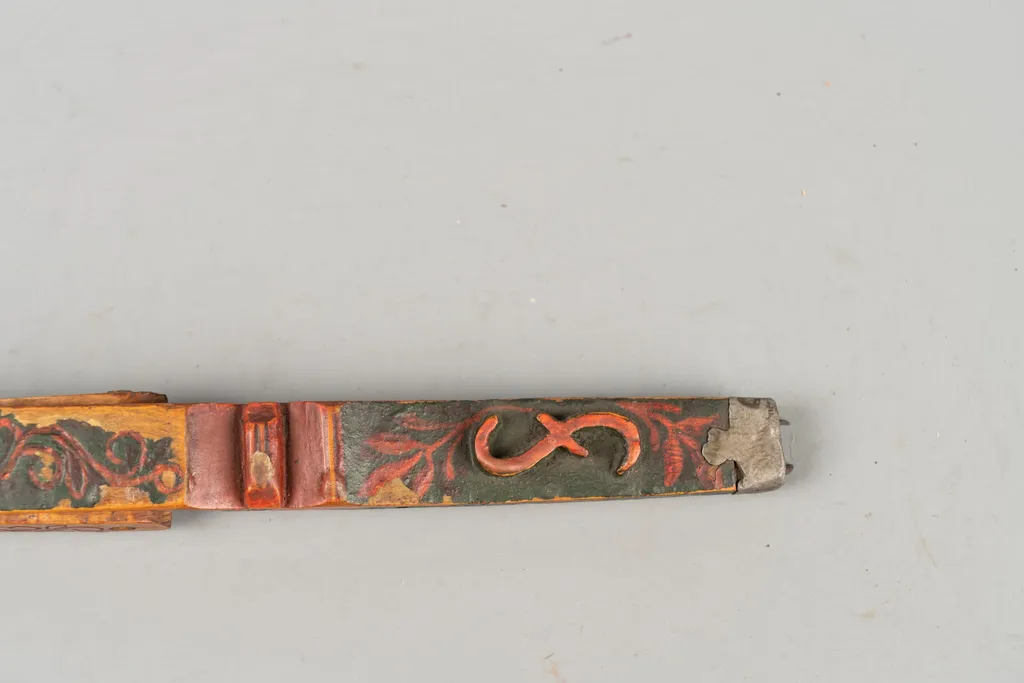
Obiect compozit din lemn de formă alungită, format din două stinghii articulate printr-o încastrare alungită paralelă care îi permite frângerea prin intermediul unui cui/pene din lemn, în vederea formării unei pârghii cu ajutorul căreia se răsucește țesătura pe sulul dinainte al războiului de țesut, pentru menținerea tensionată a acesteia. Obiectul prezintă la ambele capete canturi metalice cu câte două gheare care facilitează fixarea pârghiei pe sulul de lemn al războiului de țesut. Are suprafața decorată prin incizare și pictare cu pigmenți, cu motive vegetale. Pe una dintre fețele laterale piesa poartă înscris prin incizare anul confecționării acesteia, "A18 79". Cromatica: roșu, verde. is a print by the Impressionist artist Unknown. It dates from 1879 and is held in the collection of the Ethnographical Museum of Transylvania.
About this work
One end has metal pieces with sharp points, and the whole thing looks worn but still colorful.
This is a wooden tool with bright red and green painted designs. The shapes look like leaves and swirls carved into the wood. One end has metal pieces with sharp points, and the whole thing looks worn but still colorful.
The year "1879" is carved into the side, showing when it was made. It’s likely used for weaving—those metal points help hold fabric tight.
Look up tool next to see how this fits into daily work.
Overview
This elongated wooden tool consists of two articulated staves joined by a parallel mortise, allowing it to bend when a wooden peg is inserted. Designed as a lever, it applies tension to warp threads on the front beam of a vertical loom. Metal hooks at each end secure the device to the wooden beam, enabling consistent thread tension during weaving. Its surface bears incised and painted vegetal motifs in red and green pigments, with the year 1879 carved into one side.
Subject & Meaning
The tool’s decorative motifs—leaves and swirling patterns—reflect a domestic aesthetic common in rural textile workshops. These designs were not merely ornamental; they signaled craftsmanship and regional identity. The inclusion of the date suggests the maker or user valued record-keeping, possibly indicating personal or familial significance. The object embodies the quiet dignity of everyday labor, where utility and artistry coexisted in routine work.
Technique & Style
The tool was shaped from seasoned wood and joined with precise mortise-and-tenon joinery, ensuring durability under repeated stress. Decoration was executed through incision and hand-applied pigments, likely derived from local minerals or plants. The red and green palette, bold yet restrained, contrasts with the natural wood grain. Metal caps, forged and fitted, were attached to withstand friction against the loom beam, combining practical reinforcement with minimal ornamentation.
History & Provenance
Made in 1879, the tool originates from a region where home-based weaving remained central to household economy well into the late 19th century. Its wear patterns indicate prolonged use, likely within a single family or community workshop. The preservation of its paint and inscriptions suggests it was cared for, possibly passed down or ceremonially retired. No documented provenance exists beyond its physical condition and date, but its form aligns with known tools from Eastern European rural traditions.
Context
In pre-industrial weaving communities, such tensioning tools were essential for maintaining even warp threads on vertical looms. Without mechanical aids, weavers relied on handcrafted devices like this to control fabric tension, directly affecting the quality of the final textile. The presence of decoration indicates that even utilitarian objects were infused with cultural expression, reflecting a broader tradition where labor and art were not distinct spheres but interwoven practices.
Legacy
This object represents a transitional phase in textile production, bridging handcraft and mechanization. While industrial looms eventually replaced such tools, similar devices persisted in remote areas into the 20th century. Its survival offers insight into the material culture of domestic labor, preserving the tactile knowledge of generations of weavers. Today, it stands as a quiet testament to the skill and rhythm of pre-industrial craftsmanship.
Artist & collection
Museum
Ethnographical Museum of Transylvania
Continue through works from the same source collection.
 Domestic Scene
 Giacomo and Cardinal Marco, investing Andrea, Abbot of San Zeno, with his Benefice
 The Nymph of Fontainebleau
 Portrait of a Woman
 Madonna and Child with Saints in the Enclosed Garden
 Venus and Minerva
 Family Group of Four on Sofa
 Wall painting from Room H of the Villa of P. Fannius Synistor at Boscoreale
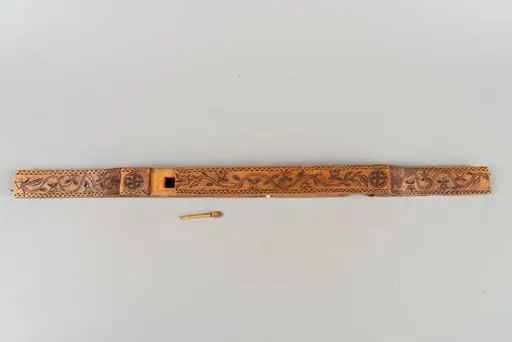 Obiect compozit din lemn de formă alungită, format din două stinghii articulate printr-o încastrare alungită paralelă care îi permite frângerea prin intermediul unui cui/pene din lemn, în vederea formării unei pârghii cu ajutorul căreia se răsucește țesătura pe sulul dinainte al războiului de țesut, pentru menținerea tensionată a acesteia. Obiectul prezintă la ambele capete câte două gheare metalice care facilitează fixarea pârghiei pe sulul de lemn al războiului de țesut. Suprafața piesei este decorată cu motive geometrice mărunte, formând șiruri de linii în zigzag realizate prin încrestare și cu motive vegetale și florale realizate prin incizare și colorare cu culoare neagră formată din cenușă amestecată cu grăsime (untură). Pe una dintre fețele laterale se găsește marcat prin incizare anul confecționării piesei, 1885. Cromatica: culoarea naturală a lemnului, negru.
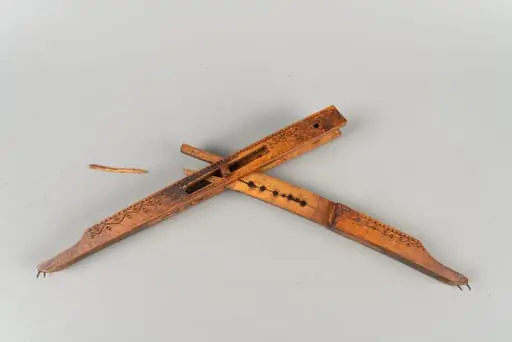 Obiect compozit din lemn de formă alungită, format din două stinghii articulate printr-o încastrare alungită paralelă care îi permite frângerea prin intermediul unui cui/pene din lemn, în vederea formării unei pârghii cu ajutorul căreia se răsucește țesătura pe sulul dinainte al războiului de țesut, pentru menținerea tensionată a acesteia. Obiectul prezintă la ambele capete câte două gheare metalice care facilitează fixarea pârghiei pe sulul de lemn al războiului de țesut. Are suprafața decorată cu motive geometrice: linii în formă de zigzag, șiruri de triunghiuri mici, și cu două motive sub formă de rozetă, realizate prin incizare, încrestare și colorare cu pigment negru. Pe fețele laterale piesa poartă incizat anul confecționăii acesteia, "1877", și inscripțiile: "BC MC" și "…..". Cromatica: culoarea naturală a lemnului, negru.
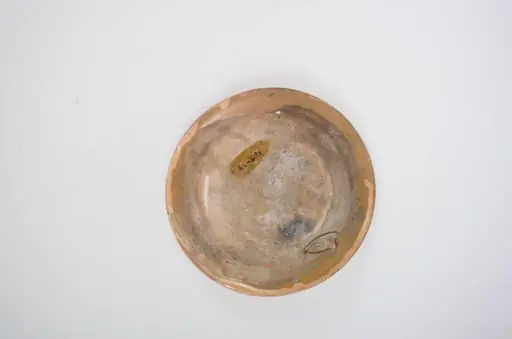 Blid de formă tronconică cu buza îngustă, smălțuit, cu decor floral stilizat amplasat pe fund și motive geometrice formate din două cercuri poziționate la baza buzei și perimetral, la partea interioară a fundului. Cromatică: fond: cărămiziu; decor: alb; verde; maro deschis.
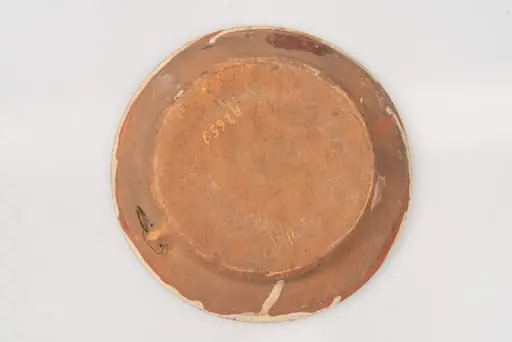 Farfurie de formă aplatizată, angobată cu humă albă pe suprafața interioară și decorată prin pictare cu cornul, cu motive geometrice și vegetale geometrizate, ce acoperă întreaga suprafață a piesei: registrul central de pe fundul farfuriei este decorat cu motivul brăduțului, flori de crin geometrizate și elemente vegetale (vrejuri), iar buza farfuriei cu două linii circulare în formă de zig-zag, intersectate, completate cu puncte albastre mari. Bordura interioară a farfuriei și muchia buzei sunt decorate cu linii circulare simple și linii circulare ondulate. Cromatica: alb, albastru. Suprafața ornamentată a farfuriei este acoperită cu un strat de smalț transparent.
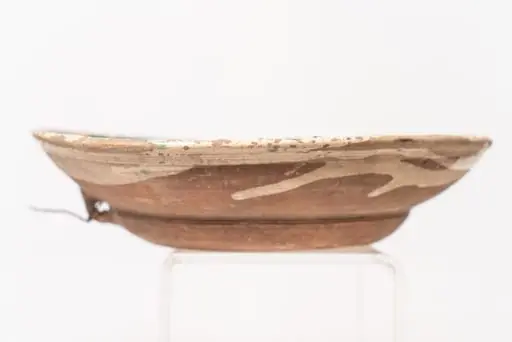 Farfurie adâncă, cu buza răsfrântă; piesa este modelată la roata olarului și angobată pe fața interioară cu humă albă. Decorul este realizat prin pictare cu pensula și cu cornul și se compune din motive florale și vegetale foarte stilizate (registrul central este format dintr-o floare sub formă de rozetă, cu patru petale verzi și patru albastre; buza farfuriei este decorată cu patru flori stilizate, posibil lalele, dispuse diametral opus iar între ele sunt pictate motive formate din linii groase verzi, sub formă de V, decorate pe exterior cu linii mici albastre și linii hașurate în interior). Cromatica: alb, verde, albastru. Fața ornamentată a farfuriei este acoperită cu un strat de smalț transparent.
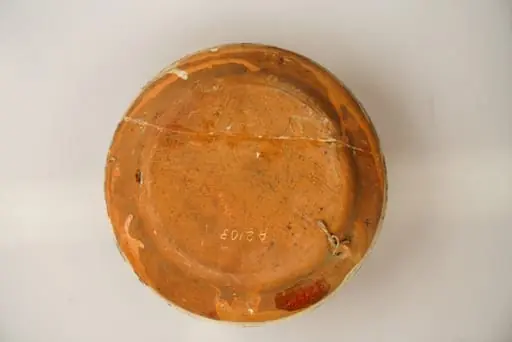 Farfurie de formă aplatizată, cu buza evazată și ușor concavă spre interior; este angobată pe suprafața interioară cu un strat de humă albă peste care este pictat cu pensula și cu cornul decorul format din motive geometrice, dispuse pe întreaga suprafață a piesei: linii groase verzi sub formă de semicerc, cu contur maro; grupuri de linii paralele crescătoare și descrescătoare dispuse pe buză sub formă de triunghi cu vârful orientat spre interior; linii circulare simple și ondulate; linii drepte groase de culoare verde cu contur maro; elemente vegetale geometrizate (frunze?) verzi sau cu linii mici maro în interior; motive sugerând mici flori cu petale rotunde. Suprafața ornamentată a farfuriei este acoperită cu un strat de smalț transparent. Cromatica: alb, albastru.