Artwork
Farfurie de formă aplatizată, angobată cu humă albă pe suprafața interioară și decorată prin pictare cu cornul, cu motive geometrice și vegetale geometrizate, ce acoperă întreaga suprafață a piesei: registrul central de pe fundul farfuriei este decorat cu motivul brăduțului, flori de crin geometrizate și elemente vegetale (vrejuri), iar buza farfuriei cu două linii circulare în formă de zig-zag, intersectate, completate cu puncte albastre mari. Bordura interioară a farfuriei și muchia buzei sunt decorate cu linii circulare simple și linii circulare ondulate. Cromatica: alb, albastru. Suprafața ornamentată a farfuriei este acoperită cu un strat de smalț transparent.
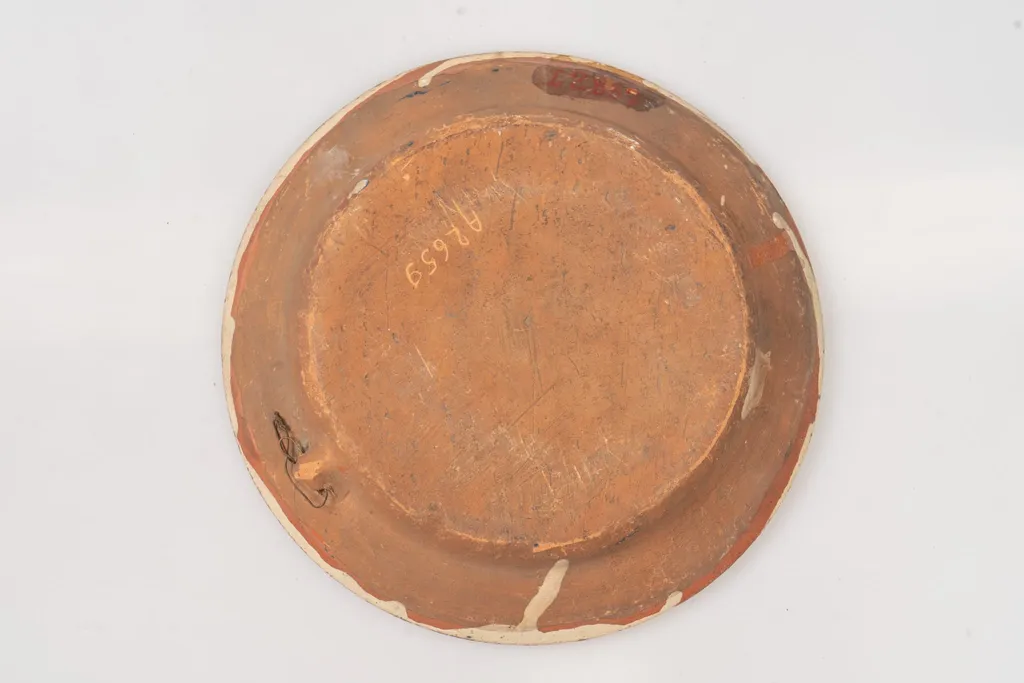
Farfurie de formă aplatizată, angobată cu humă albă pe suprafața interioară și decorată prin pictare cu cornul, cu motive geometrice și vegetale geometrizate, ce acoperă întreaga suprafață a piesei: registrul central de pe fundul farfuriei este decorat cu motivul brăduțului, flori de crin geometrizate și elemente vegetale (vrejuri), iar buza farfuriei cu două linii circulare în formă de zig-zag, intersectate, completate cu puncte albastre mari. Bordura interioară a farfuriei și muchia buzei sunt decorate cu linii circulare simple și linii circulare ondulate. Cromatica: alb, albastru. Suprafața ornamentată a farfuriei este acoperită cu un strat de smalț transparent. is a photography by Unknown. It dates from 1750 and is held in the collection of the Ethnographical Museum of Transylvania. A shallow, flattened plate with a glazed interior displays a dense decorative scheme applied with a corn‑based paint.
About this work
Overview
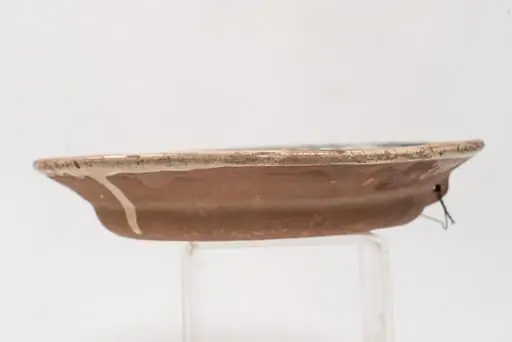
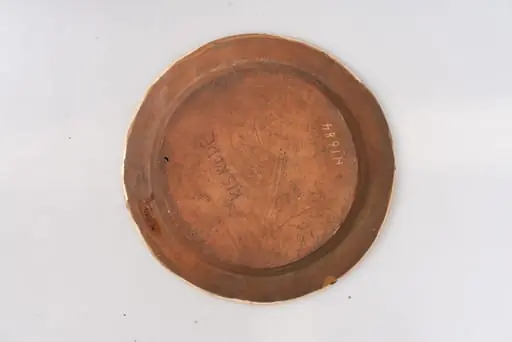
A shallow, flattened plate with a glazed interior displays a dense decorative scheme applied with a corn‑based paint. The entire inner surface is covered in white pigment and transparent glaze, while the exterior shows a reddish‑brown, unglazed ceramic body with a rough, hand‑worked texture.
Subject & Meaning
The central register on the plate’s base features a stylized fir tree surrounded by geometric lily motifs and vegetal scrolls, suggesting a symbolic link to forest and floral elements. The rim is adorned with two intersecting zig‑zag circles punctuated by large blue dots, possibly representing celestial or protective symbols.
Technique & Style
The decoration employs a white ground applied with a corn‑derived pigment, over which geometric and vegetal patterns are painted. Simple circular lines and undulating bands frame the interior border and rim. A clear, transparent glaze seals the painted surface, enhancing the white and blue color scheme.
History & Provenance
The plate is a ceramic object typical of traditional folk workshops, where locally sourced clay was shaped by hand and finished with natural pigments. Its rustic exterior and elaborate interior decoration indicate it was intended for ceremonial or display purposes rather than everyday use.
Context
Such plates belong to a broader tradition of ethnographic pottery in which functional vessels serve as canvases for symbolic motifs. The combination of geometric abstraction and stylized flora reflects regional aesthetic conventions that blend utilitarian craft with decorative storytelling.
Artist & collection
Museum
Ethnographical Museum of Transylvania
Continue through works from the same source collection.
 Domestic Scene
 Giacomo and Cardinal Marco, investing Andrea, Abbot of San Zeno, with his Benefice
 The Nymph of Fontainebleau
 Portrait of a Woman
 Madonna and Child with Saints in the Enclosed Garden
 Venus and Minerva
 Family Group of Four on Sofa
 Wall painting from Room H of the Villa of P. Fannius Synistor at Boscoreale
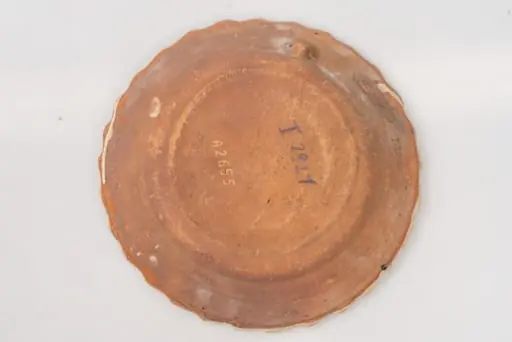 Farfurie semi-adâncă, cu buza evazată și muchia buzei ondulată; este angobată pe suprafața interioară cu un strat de humă albă peste care este pictat cu cornul decorul bogat, ce acoperă întreaga suprafață a farfuriei și este format din motive geometrice și vegetale stilizate: floare cu petale rotunde și mijlocul umplut cu linii hașurate intersectat, semicercuri cu contur albastru și interior verde, linii sub formă de V, linii punctate duble dispuse sub formă de stea, linii circulare, linii groase sub formă de virgulă, grupuri de puncte. Suprafața ornamentată a farfuriei este acoperită cu un strat de smalț transparent. Cromatica: alb, verde, albastru.
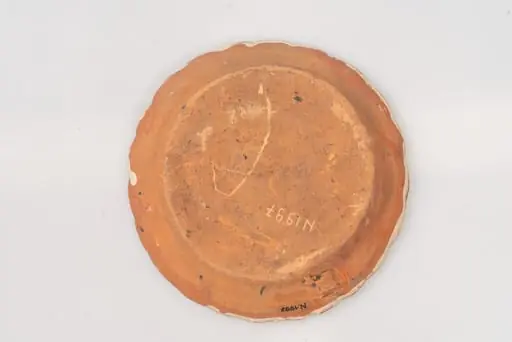 Farfurie de formă aplatizată, cu muchia buzei ondulată. Este acoperită pe suprafața interioară cu un strat de angobă albă peste care este pictat cu pensula și cu cornul decorul monocromatic format din motive geometrice și florale stilizate: registrul central de pe fundul farfuriei, înscris într-un cerc gros albastru, conține patru flori (dintre care două sunt flori de crin) dispuse în formă de cruce pe exteriorul unui cerc ce conține în interior o floare de lalea. Registrul decorativ marginal de pe buza farfuriei este decorat cu un șir continuu de frunze duble între care se găsesc motive punctate (linii). Muchia buzei este marcată cu o dungă albastră. Suprafața ornamentată a farfuriei este acoperită cu un strat de smalț transparent. Cromatica: alb, albastru.
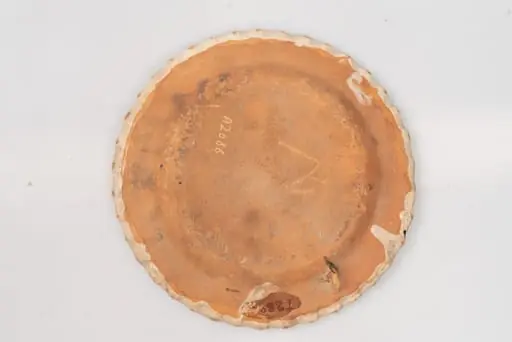 Farfurie de formă aplatizată, cu muchia buzei ușor ondulată; este angobată pe suprafața interioară cu un strat de humă albă peste care este pictat cu cornul și cu pensula decorul monocromatic format din motive florale stilizate și geometrice: pe fundul farfuriei este pictată o tulpină cu frunze și trei flori de crin, ce au centrul format din linii hașurate intersectat. Buza farfuriei este decorată cu un șir continuu de frunze duble. Bordura interioară a farfuriei este marcată cu o linie circulară ușor ondulată iar muchia buzei cu o dungă albastră. Suprafața ornamentată a farfuriei este acoperită cu un strat de smalț transparent. Cromatica: alb, albastru.
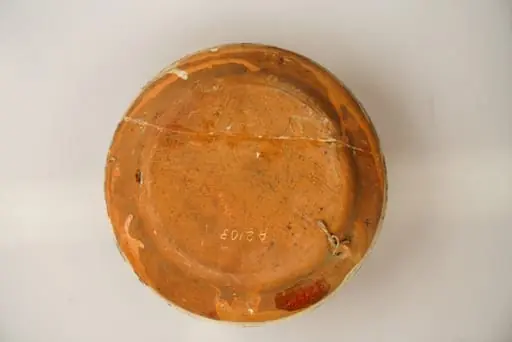 Farfurie de formă aplatizată, cu buza evazată și ușor concavă spre interior; este angobată pe suprafața interioară cu un strat de humă albă peste care este pictat cu pensula și cu cornul decorul format din motive geometrice, dispuse pe întreaga suprafață a piesei: linii groase verzi sub formă de semicerc, cu contur maro; grupuri de linii paralele crescătoare și descrescătoare dispuse pe buză sub formă de triunghi cu vârful orientat spre interior; linii circulare simple și ondulate; linii drepte groase de culoare verde cu contur maro; elemente vegetale geometrizate (frunze?) verzi sau cu linii mici maro în interior; motive sugerând mici flori cu petale rotunde. Suprafața ornamentată a farfuriei este acoperită cu un strat de smalț transparent. Cromatica: alb, albastru.
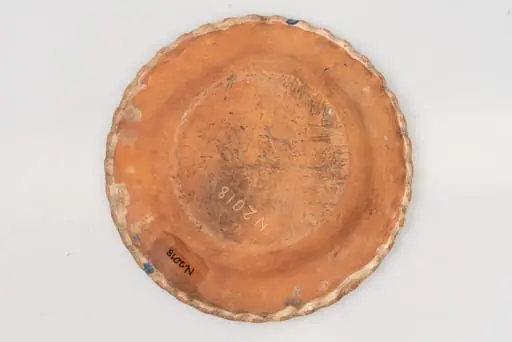 Farfurie de formă aplatizată, cu muchia buzei ușor ondulată. Este acoperită pe suprafața interioară cu un strat de angobă albă peste care este pictat cu pensula monocromatic format din motive geometrice și florale stilizate: registrul central de pe fundul farfuriei conține o tulpină cu trei flori de crin stilizate și două frunze la bază. Registrul decorativ marginal de pe buza farfuriei, înscris între două linii circulare albastre, conține un șir continuu de frunze duble între care se găsesc motive punctate (linii). Suprafața ornamentată a farfuriei este acoperită cu un strat de smalț transparent. Cromatica: alb, albastru.
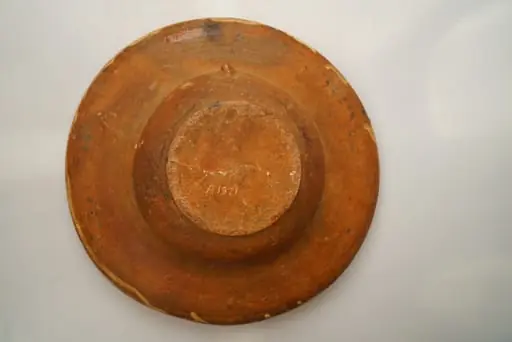 Farfurie mare adîncă, cu corp tronconic ușor rotunjit, buză lată evazată cu muchia buzei verticală; este acoperită pe suprafața interioară cu un strat de angobă albă peste care este pictat cu pensula decorul monocromatic format din motive geometrice și motive florale și vegetale stilizate, dispuse astfel: centrul farfuriei este decorat cu o floare (posibil crin) încadrată într-un cerc dublu, floare care se repetă și pe exteriorul cercului, alternată cu un motiv format din linii hașurate intersectat dispus sub formă de triunghi. Restul suprafeței corpului este decorat cu șiruri de frunze duble, orientate opus. Exteriorul buzei este decorat cu două linii circulare incizate. Suprafața ornamentată a farfuriei este acoperită cu un strat de smalț transparent. Cromatica: alb, albastru.
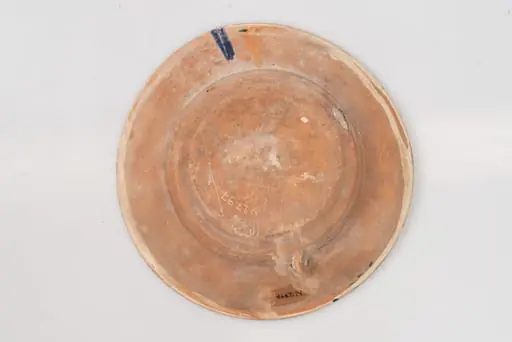 Farfurie semi-adâncă, cu buza lată, evazată; este angobată pe suprafața interioară cu un strat de humă albă, peste care este pictat cu pensula decorul format din motive florale și vegetale stilizate: registrul decorativ central de pe fundul farfuriei conține o floare cu patru petale alungite albastre și patru petale/frunze verzi, încadrată într-un cerc format din două linii ondulate și intersectate, de culoare albastră. Registrul decorativ marginal de pe buza farfuriei este format dintr-o succesiune alternantă a două motive: floarea albastră de lalea și motivul brăduțului, de culoare verde. Suprafața ornamentată a farfuriei este acoperită cu un strat de smalț transparent. Cromatica: alb, verde, albastru.
 Farfurie de formă aplatizată, angobată pe suprafața interioară cu un strat de humă albă, peste care este pictat cu cornul decorul format din motive florale stilizate și geometrice: central pe fundul farfuriei se regăsește o tulpină cu patru flori de crin, cu mijlocul din linii hașurate intersectat, încadrat într-o linie spiralată sub formă de cerc, care delimitează fundul farfuriei. Opt grupuri de linii drepte în formă de V completează decorul din acest registru. Registrul decorativ marginal, de pe buza farfuriei, încadrat între linii circulare simple și linii circulare ondulate, este format dintr-o linie în formă de zig-zag, în triunghiurile căreia sunt pictate linii drepte în formă de V. Suprafața ornamentată a farfuriei este acoperită cu un strat de smalț transparent. Cromatica: alb, albastru.
 Farfurie semi-adâncă, cu fund larg, buza evazată și muchia buzei rotunjită; este acoperită pe suprafața interioară cu un strat de angobă albă, peste care este pictat cu cornul și cu pensula decorul format din motive geometrice și un motiv floral: central pe fundul farfuriei, încadrată între cinci cercuri concentrice albastre, se găsește o tulpină cu două flori albastre și o floare galbenă alungită, așezată într-o vază verde. Buza farfuriei este decorată cu multe linii circulare subțiri, de culoare albastră. Suprafața ornamentată a farfuriei este acoperită cu un strat de smalț transparent. Cromatica: alb, galben, verde, maro.