Artwork
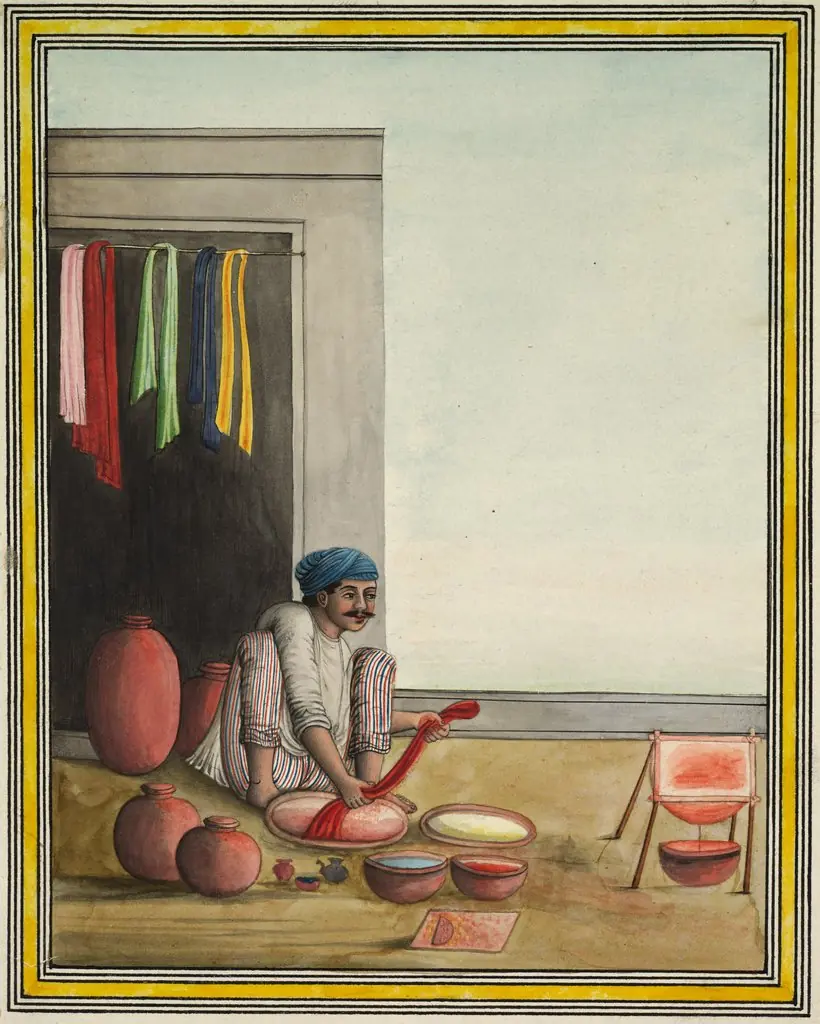
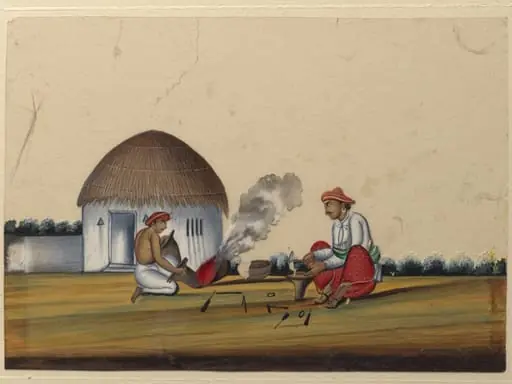
One of eleven paintings depicting craftsmen and their shops.
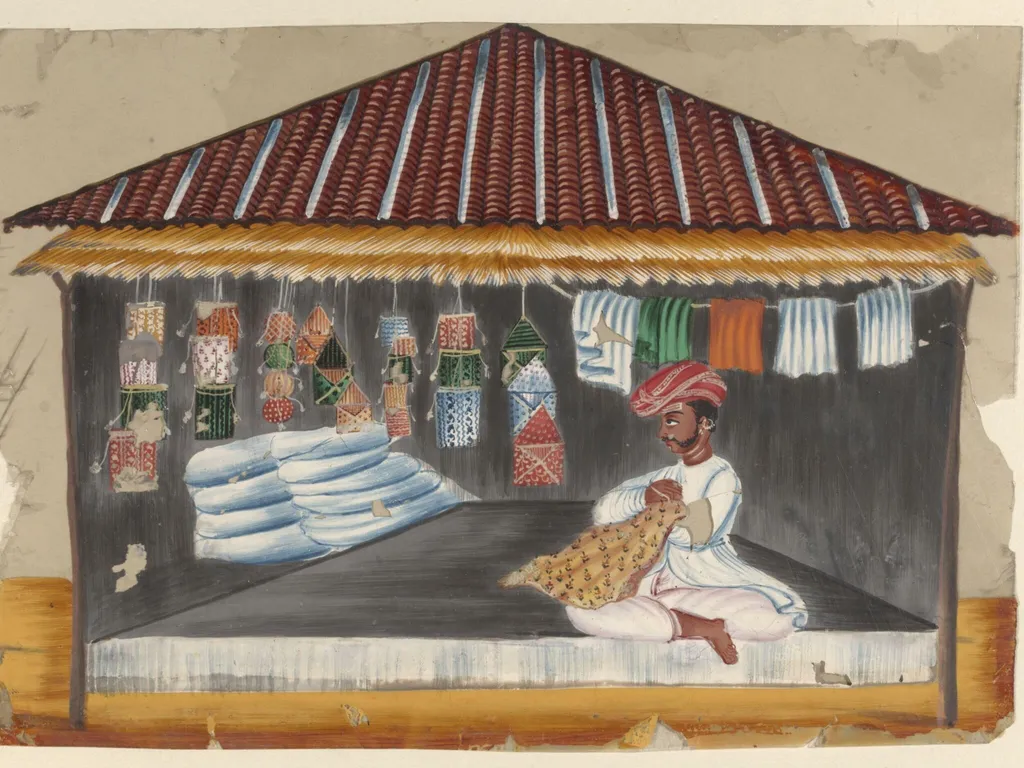
One of eleven paintings depicting craftsmen and their shops. is a paint painting by the Impressionist artist Unknown. It dates from 1860 and is held in the collection of the Victoria and Albert Museum. This painting is one of eleven in a series portraying artisans at work in their workshops.
About this work
Overview
The environment is rendered with subtle detail, suggesting a localized, everyday scene rather than an idealized or ceremonial moment.
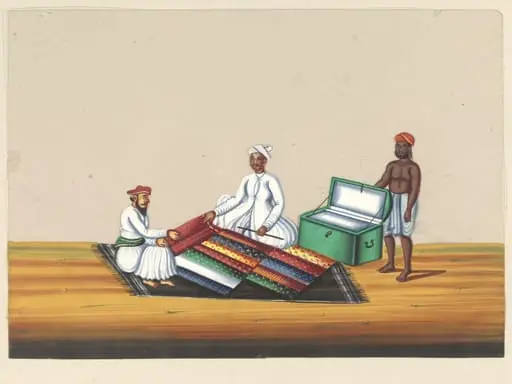
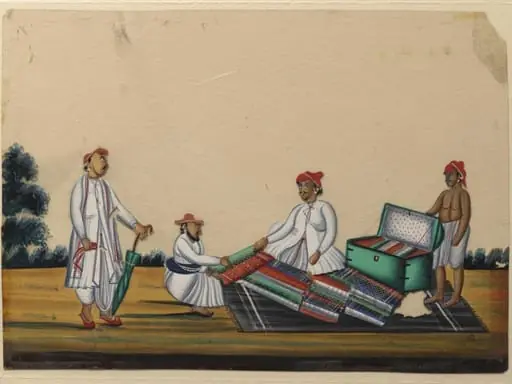
This painting is one of eleven in a series portraying artisans at work in their workshops. It focuses on a single figure engaged in textile handling, set within a modest, enclosed space. The composition emphasizes stillness and routine, avoiding dramatic action in favor of quiet labor. The environment is rendered with subtle detail, suggesting a localized, everyday scene rather than an idealized or ceremonial moment.
Subject & Meaning
The central figure, seated cross-legged and dressed in white with a red turban, appears absorbed in his task, handling a length of fabric with deliberate care. His posture and the surrounding textiles imply a role as a weaver, dyer, or merchant. The scene conveys dignity in ordinary work, reflecting the value placed on skilled craft in its cultural context. No narrative is overt; meaning arises from the intimacy of the moment and the quiet rhythm of labor.
Technique & Style
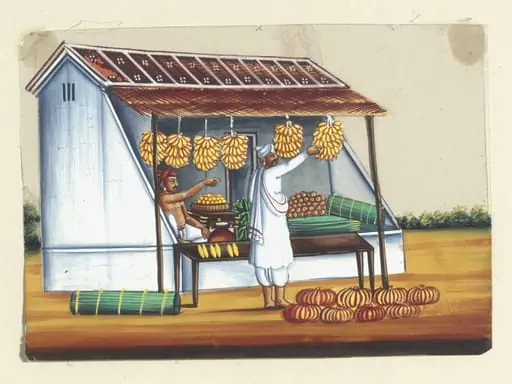
The artist employs muted earth tones and soft, diffused lighting to enhance the sense of enclosure and calm. Textiles are rendered with attention to texture and fold, while the tiled roof and thatched awning are suggested rather than meticulously detailed. Brushwork is restrained, favoring atmospheric harmony over sharp definition. The composition directs focus to the figure and the fabric, minimizing background distraction.
History & Provenance
The painting belongs to a documented series of eleven workshop scenes, likely produced in the late 18th or early 19th century. Its origin is tied to a regional artistic tradition that recorded artisan life, possibly commissioned by a local patron or guild. The work remained within private collections until entering a public institution in the 20th century, where it was recognized as part of a broader ethnographic artistic project.
Context
These paintings emerged during a period when urban artisan communities were central to economic and social life. Rather than glorifying elite subjects, the series documented the daily routines of tradespeople, offering a rare visual record of non-elite labor. The intimate scale and domestic setting reflect a cultural interest in authenticity and the quiet dignity of craft, distinct from grand historical or religious themes.
Legacy
The series has since been studied as an early example of documentary art focused on labor. While not widely known outside regional art histories, it contributes to understanding how non-elite professions were visually represented before the rise of industrialization. Its quiet realism offers a counterpoint to more stylized or romanticized depictions of craft in contemporaneous art traditions.
Artist & collection

 Domestic Scene
 Giacomo and Cardinal Marco, investing Andrea, Abbot of San Zeno, with his Benefice
 The Nymph of Fontainebleau
 Portrait of a Woman
 Madonna and Child with Saints in the Enclosed Garden
 Venus and Minerva
 Family Group of Four on Sofa
 Wall painting from Room H of the Villa of P. Fannius Synistor at Boscoreale