Artwork
Blacksmiths
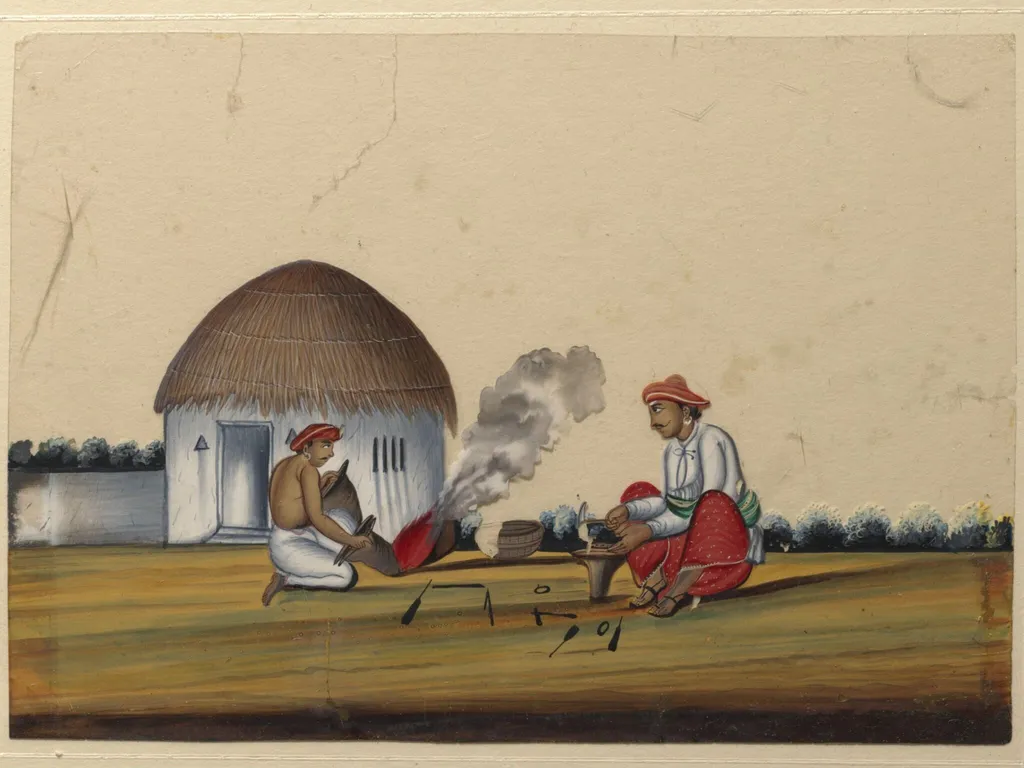
Blacksmiths is a paint painting by the Impressionist artist Unknown. It dates from 1860 and is held in the collection of the Victoria and Albert Museum. This painting captures two laborers at work in a rural forge, their movements focused on shaping hot metal.
About this work
Overview
This painting captures two laborers at work in a rural forge, their movements focused on shaping hot metal. The setting is modest—a thatched shed beside an open field—with natural light emphasizing the physicality of their tasks. The composition centers on the contrast between the standing and crouched figures, grounding the scene in quiet, unromanticized labor.
Subject & Meaning
The two blacksmiths represent the dignity of manual craft in a pre-industrial setting. Their attire and posture suggest regional dress and the physical demands of their trade. No narrative or symbolic elements are present; the meaning lies in the unadorned depiction of daily work, valuing endurance and skill over spectacle.
Technique & Style
The artist employs chiaroscuro to model form and suggest the glow of the forge, with warm tones in the firelight contrasting against cooler shadows. Brushwork is direct and unembellished, favoring clarity over detail. The background is simplified, with loose strokes for trees and field, directing attention to the figures and their immediate environment.
History & Provenance
The painting’s origin is undocumented in public records, and the artist remains unidentified. It likely dates to the late 18th or early 19th century, based on costume and setting. No known exhibition or ownership history precedes its current location, suggesting it was privately held or locally collected.
Context
During this period, rural trades like blacksmithing were common but rarely elevated in art. This work stands apart from idealized genre scenes by avoiding sentimentality. It aligns with emerging interest in everyday labor, though without the social commentary found in later realist movements.
Legacy
The painting contributes to a quiet tradition of vernacular labor imagery, preserved more for its observational honesty than its influence. It remains a modest record of artisanal life, valued for its unembellished portrayal rather than its place in broader artistic movements.
Artist & collection

 Domestic Scene
 Giacomo and Cardinal Marco, investing Andrea, Abbot of San Zeno, with his Benefice
 The Nymph of Fontainebleau
 Portrait of a Woman
 Madonna and Child with Saints in the Enclosed Garden
 Venus and Minerva
 Family Group of Four on Sofa
 Wall painting from Room H of the Villa of P. Fannius Synistor at Boscoreale
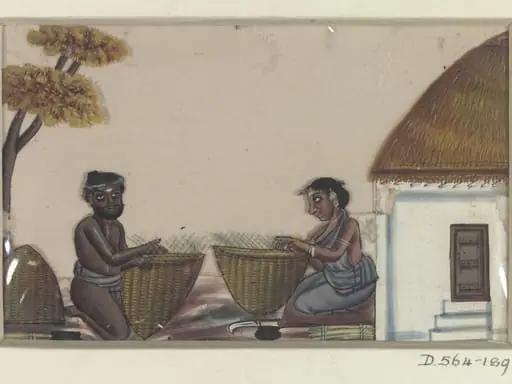 One of twenty-two paintings depicting occupations, methods of transport and local monuments.
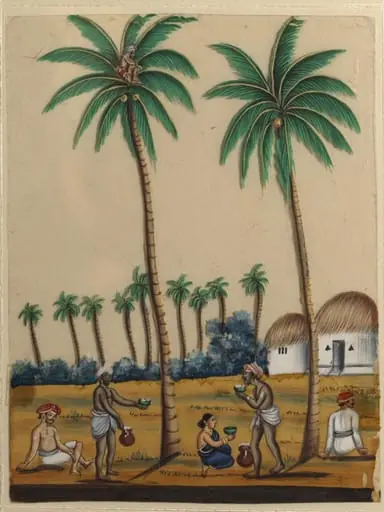 A toddy-tapper
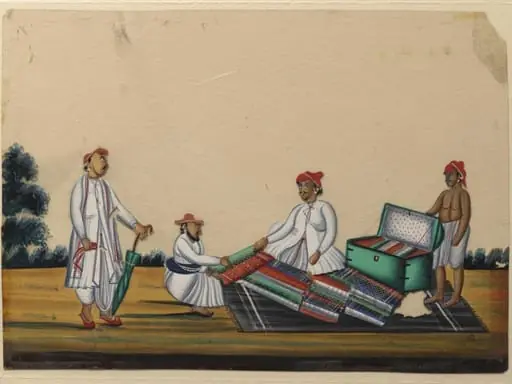 A cloth-seller
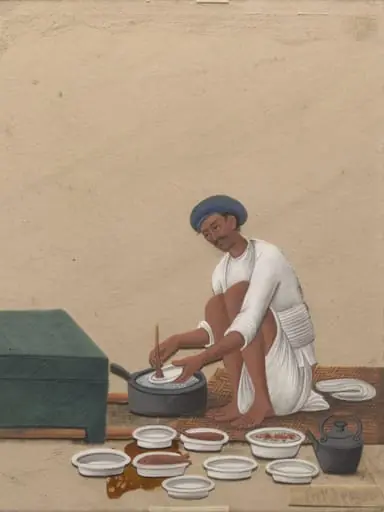 One of Seventeen paintings of domestic servants and tradesmen
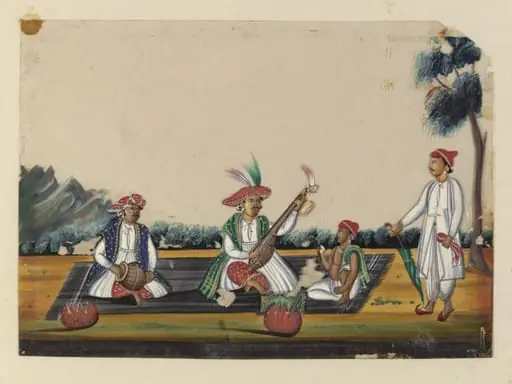 Three seated musicians and an onlooker
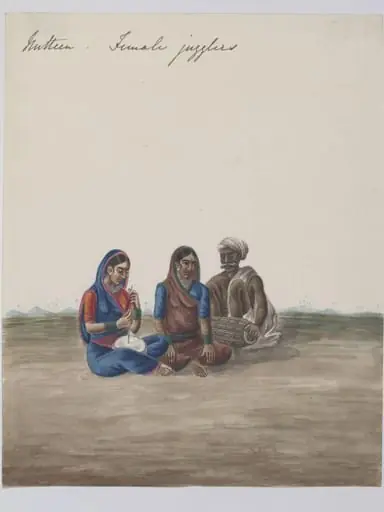 Three entertainers
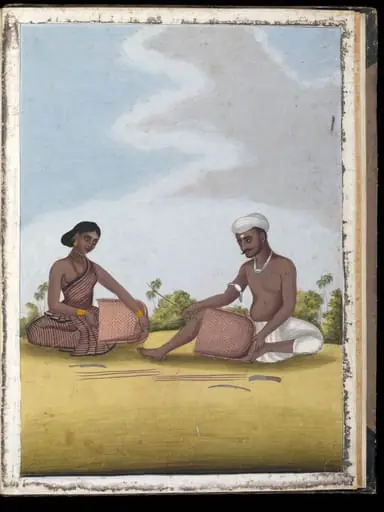 A basket-maker and his wife
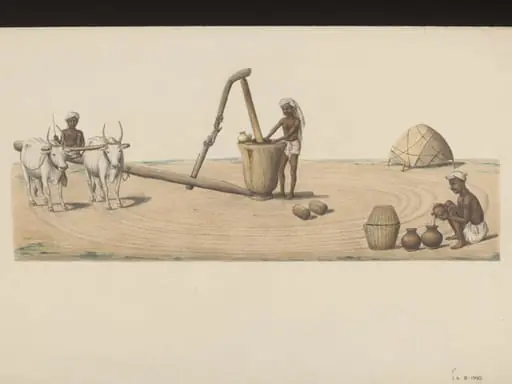 Oil monger pressing good oil
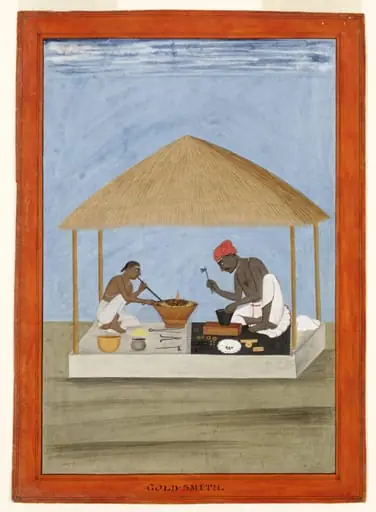 Two goldsmiths
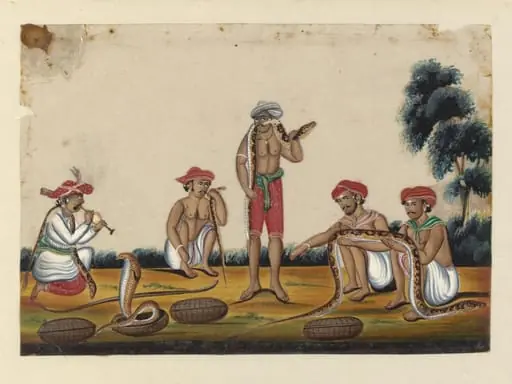 A snake-charmer