Artwork
A cloth-seller
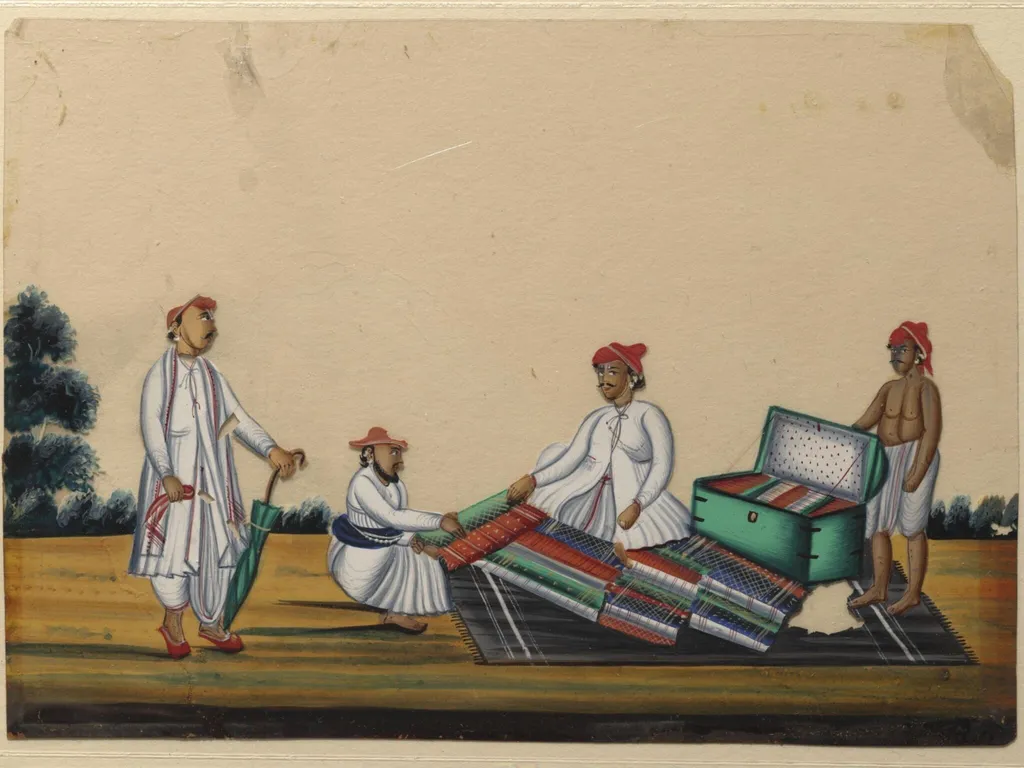
A cloth-seller is a paint painting by the Impressionist artist Unknown. It dates from 1860 and is held in the collection of the Victoria and Albert Museum. The work depicts a group of four men engaged in the trade of textiles in Trichinopoly, dated to around 1860.
About this work
Overview
The work depicts a group of four men engaged in the trade of textiles in Trichinopoly, dated to around 1860. Set against an unadorned backdrop, the figures are arranged around a wooden frame bearing a vivid cloth, while a chest of folded material rests nearby. The composition captures a moment of commercial activity, emphasizing the orderly rhythm of the sellers' tasks.
Subject & Meaning
The scene illustrates a cloth‑seller’s workshop, with each participant occupied in a distinct role: one man holds the stretched fabric, another adjusts its placement, a third leans on a walking stick, and the fourth rests against a chest of folded textiles. The arrangement suggests a coordinated process of measuring, preparing, and presenting textiles for sale, reflecting the everyday economics of a 19th‑century Indian market.
Technique & Style
Rendered in oil on canvas, the painting employs a palette of saturated reds, blues, and greens that contrast with the muted background, drawing attention to the textiles themselves. The brushwork is precise in the depiction of the fabrics and the wooden frame, while the figures are outlined with a modest level of detail, balancing realism with a slightly stylized representation of the commercial setting.
History & Provenance
Created circa 1860, the work originates from the artistic milieu of Trichinopoly, a city known for its textile production. Though specific ownership records are limited, the painting has been documented in collections focusing on colonial-era Indian genre scenes, providing insight into the visual culture of the period and the economic activities it recorded.
Artist & collection

 Domestic Scene
 Giacomo and Cardinal Marco, investing Andrea, Abbot of San Zeno, with his Benefice
 The Nymph of Fontainebleau
 Portrait of a Woman
 Madonna and Child with Saints in the Enclosed Garden
 Venus and Minerva
 Family Group of Four on Sofa
 Wall painting from Room H of the Villa of P. Fannius Synistor at Boscoreale
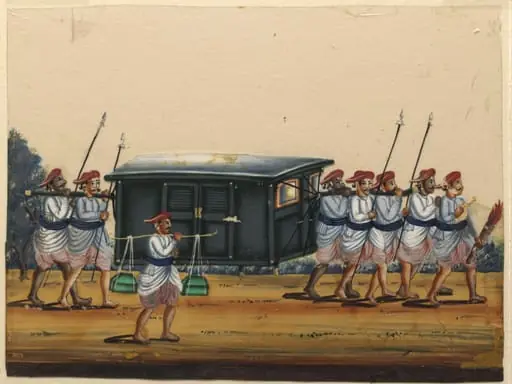 A palanquin with six carriers
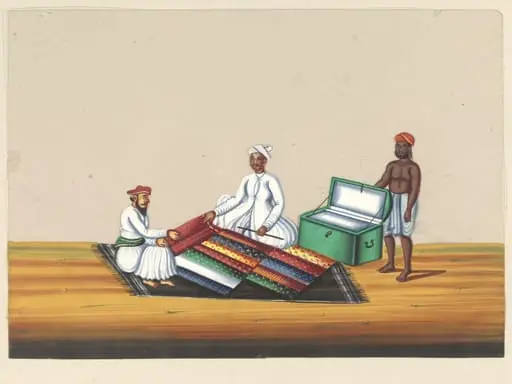 One of eleven paintings of occupations
 One of twenty-eight paintings, fifteen depicting occupations, thirteen depicting deities.
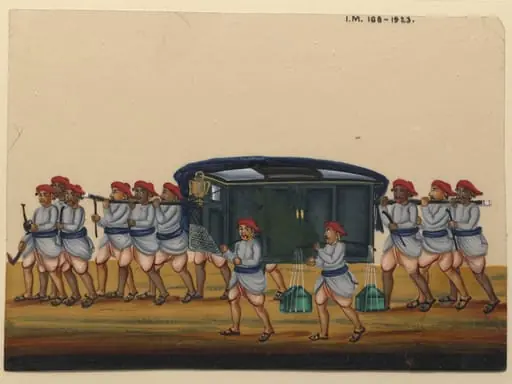
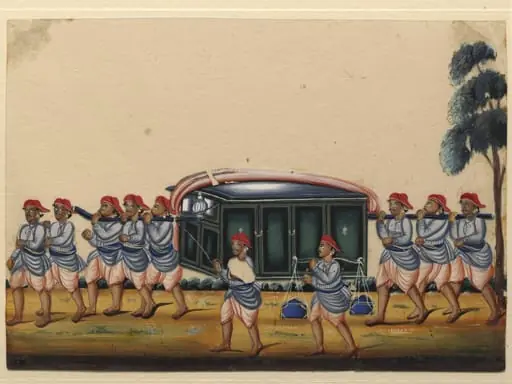 A closed palanquin with six bearers
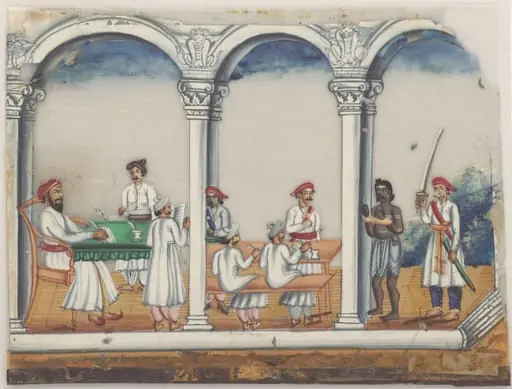 A trail scene in a magistrate's court
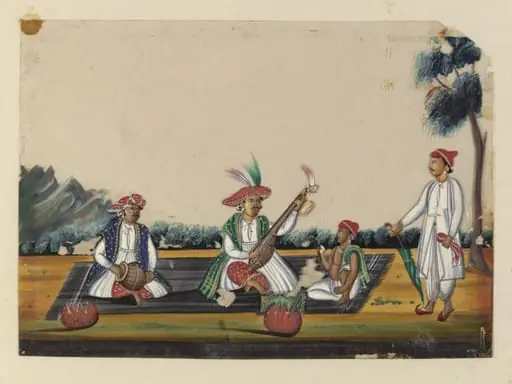 Three seated musicians and an onlooker
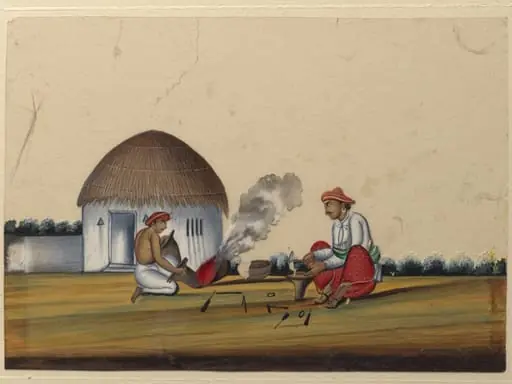 Blacksmiths
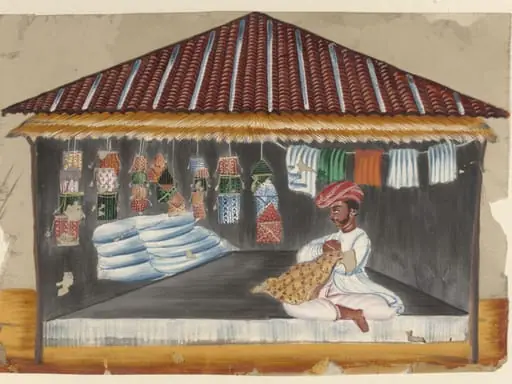 One of eleven paintings depicting craftsmen and their shops.
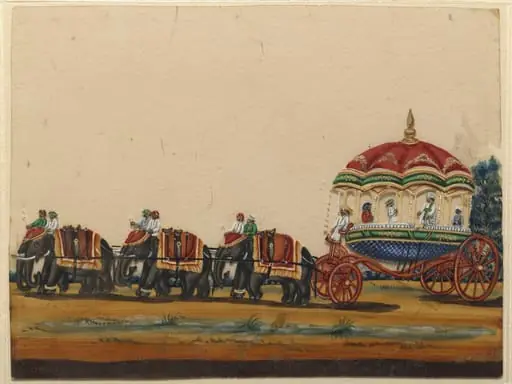 A carriage drawn by six elephants
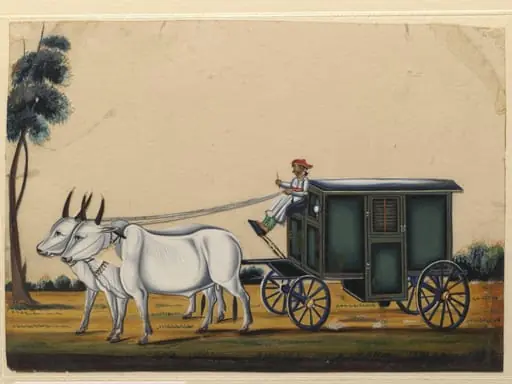 A closed carriage drawn by bullocks
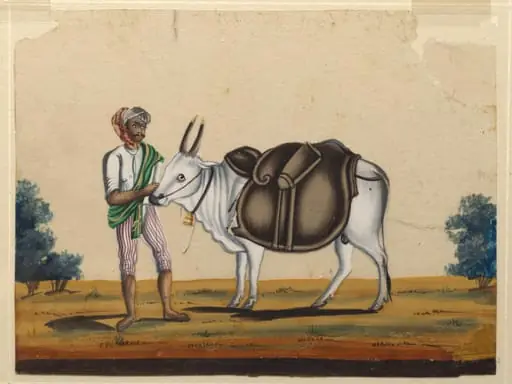 A bullock carrying a leather mussack with a driver
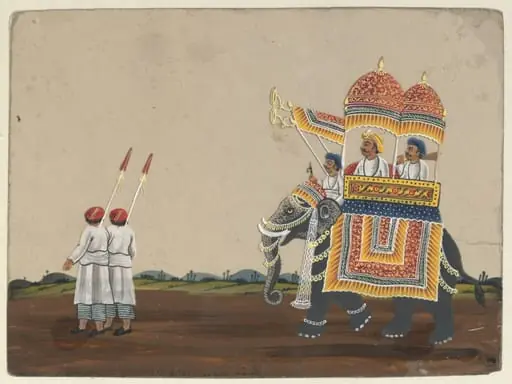 An elephant with a howdah