Artwork
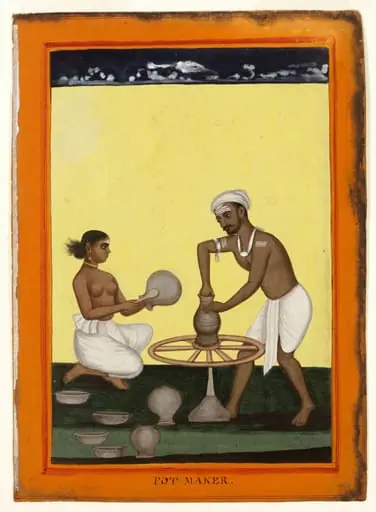
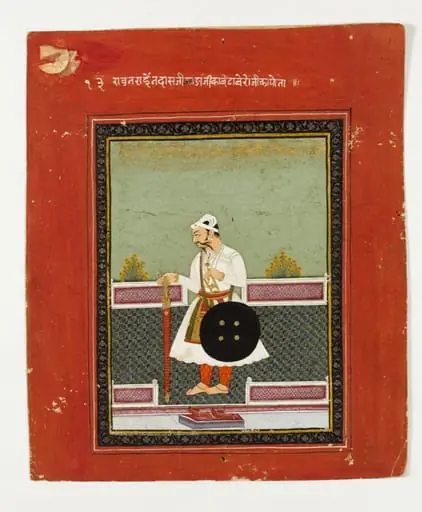
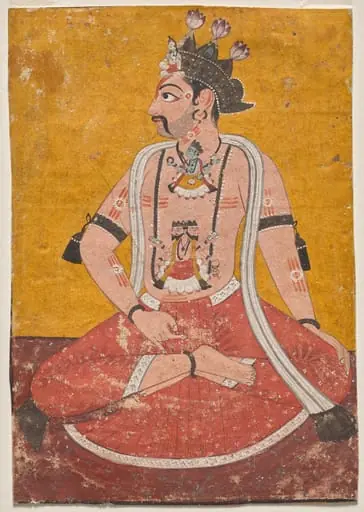
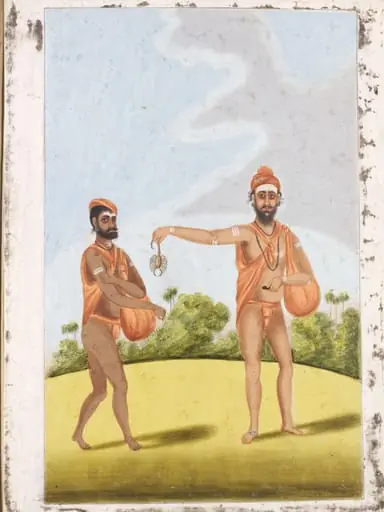
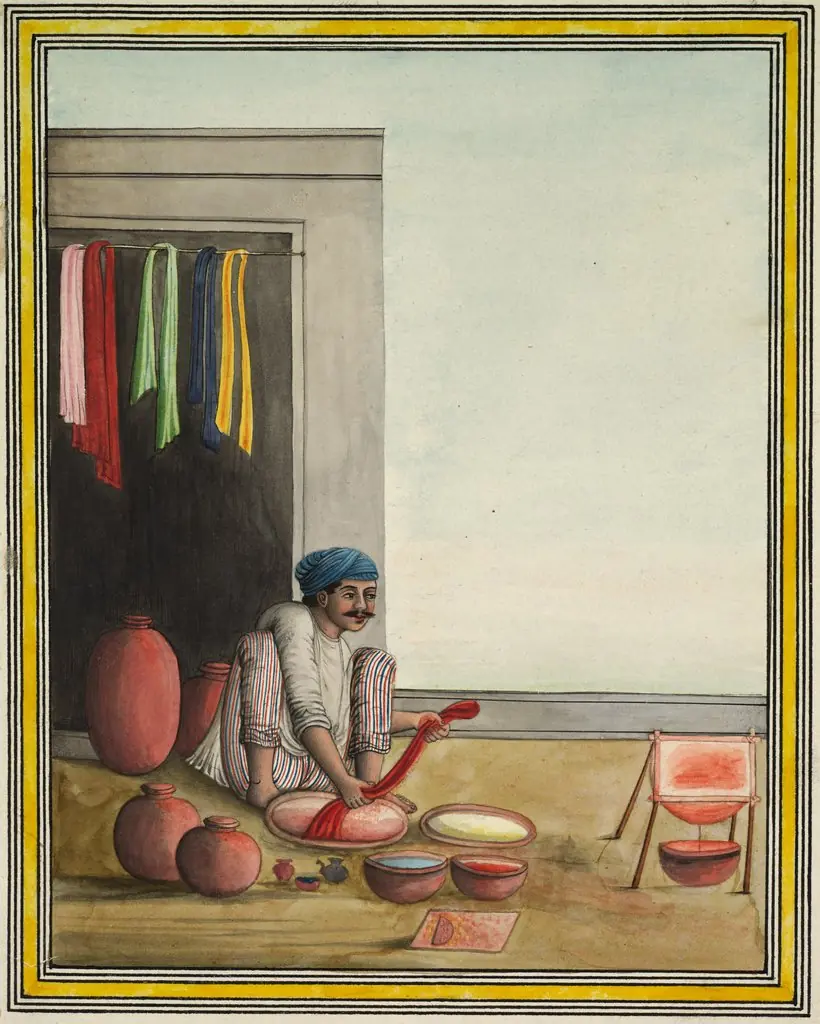
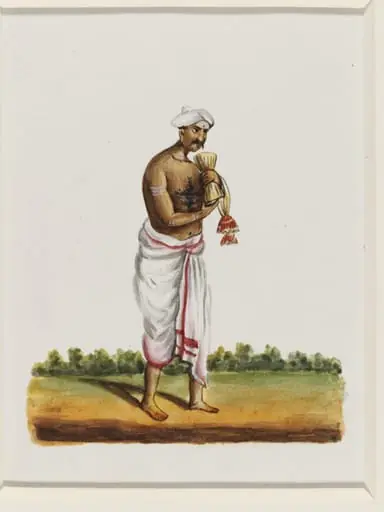
One of forty paintings illustrating modes of transport, occupations, entertainers, ascetics and Muharram subjects.
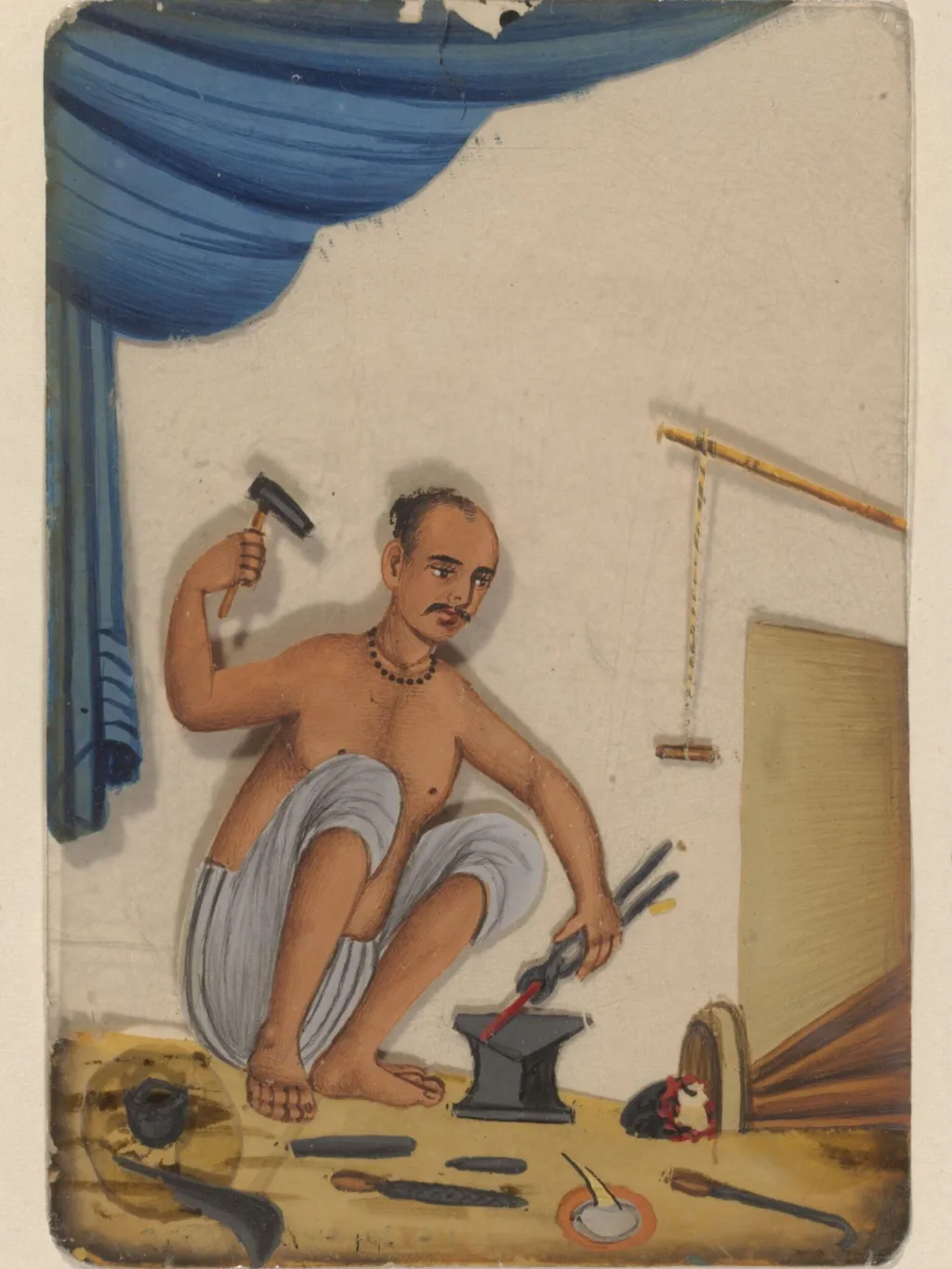
One of forty paintings illustrating modes of transport, occupations, entertainers, ascetics and Muharram subjects. is a paint painting by the Impressionist artist Unknown. It dates from 1870 and is held in the collection of the Victoria and Albert Museum. This painting is one of forty in a series documenting daily life in early modern India, focusing on labor and social roles.
About this work
Overview
This painting is one of forty in a series documenting daily life in early modern India, focusing on labor and social roles.
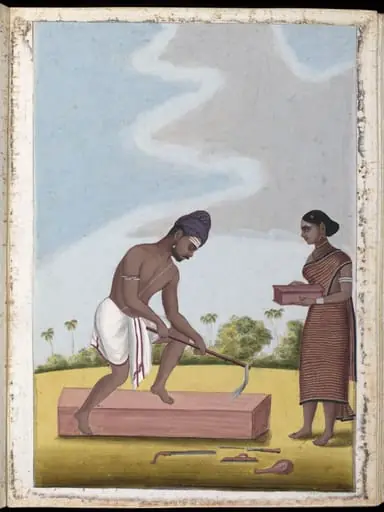
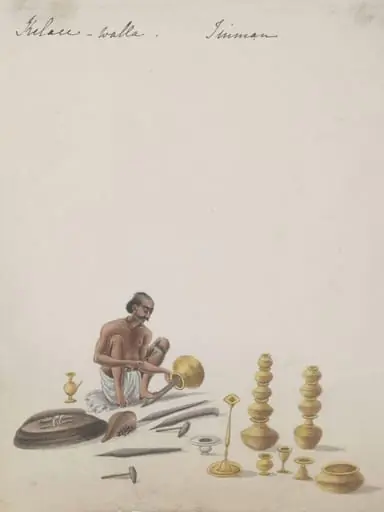
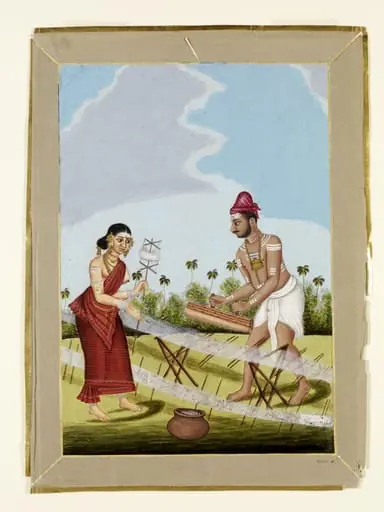
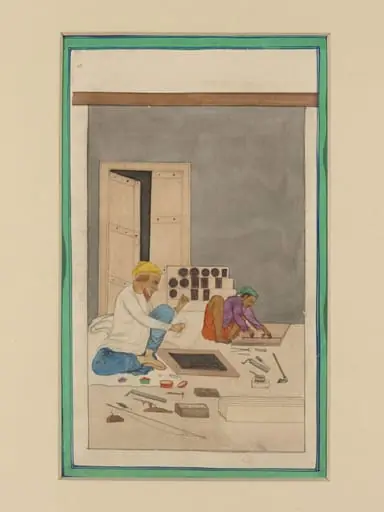
This painting is one of forty in a series documenting daily life in early modern India, focusing on labor and social roles. It depicts a blacksmith at work, rendered with clear, unembellished detail. The composition avoids ornamentation, prioritizing legibility and representation of an ordinary trade. Bright pigments and simplified forms reflect a stylistic choice aimed at accessibility rather than grandeur.
Subject & Meaning
The scene captures a blacksmith engaged in his craft, bare-chested and barefoot, hammering heated metal on an anvil. The presence of tools, a small fire, and a modest interior setting emphasizes the physicality and routine of manual labor. No symbolic or religious elements are present; the focus is on the dignity of work, portraying the artisan as a quiet pillar of community life.
Technique & Style
The artist employs flat planes of vivid color and minimal shading, creating a direct visual language. Forms are outlined with clarity, and spatial depth is suggested through simple overlapping rather than perspective. The lack of intricate detail supports a functional aesthetic, aligning with the series’ purpose: to catalog occupations in a manner easily understood by a broad audience.
History & Provenance
The painting belongs to a larger set commissioned during the late 18th or early 19th century, likely for a regional court or wealthy patron interested in documenting social life. These works were not intended for elite display but as records of everyday existence. Their survival suggests they were preserved as ethnographic documents rather than fine art.
Context
This series emerged during a period of increasing interest in documenting regional customs and labor under colonial and indigenous rule. Similar depictions of artisans, performers, and religious figures appear in contemporary albums from northern India. The emphasis on ordinary people reflects a broader cultural shift toward observing and categorizing social roles with systematic attention.
Legacy
Though not widely exhibited in traditional art histories, these paintings now serve as valuable records of pre-industrial labor practices. Their straightforward style has influenced modern ethnographic illustration and regional art preservation efforts. They remain important for understanding how ordinary lives were visually acknowledged in historical South Asian culture.
Artist & collection

 Domestic Scene
 Giacomo and Cardinal Marco, investing Andrea, Abbot of San Zeno, with his Benefice
 The Nymph of Fontainebleau
 Portrait of a Woman
 Madonna and Child with Saints in the Enclosed Garden
 Venus and Minerva
 Family Group of Four on Sofa
 Wall painting from Room H of the Villa of P. Fannius Synistor at Boscoreale