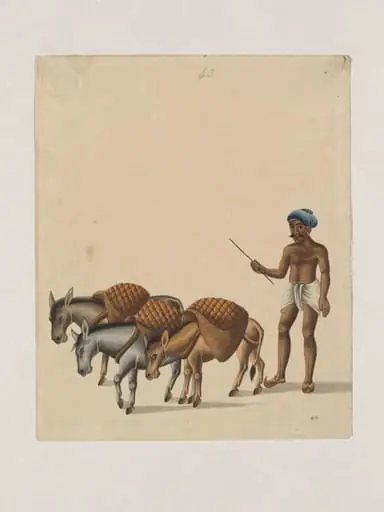
Artwork
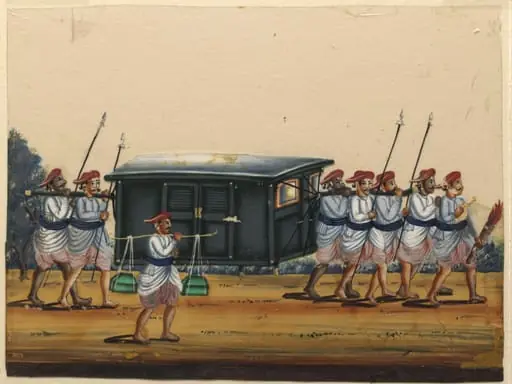
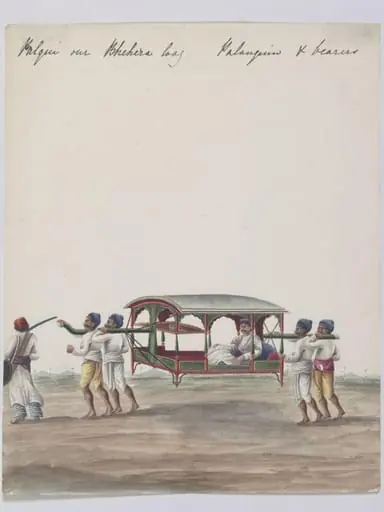
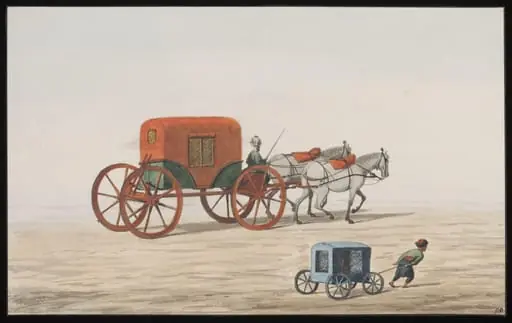
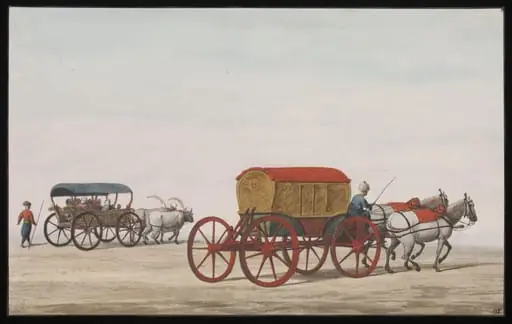
One of Forty-two drawings of occupations and conveyances
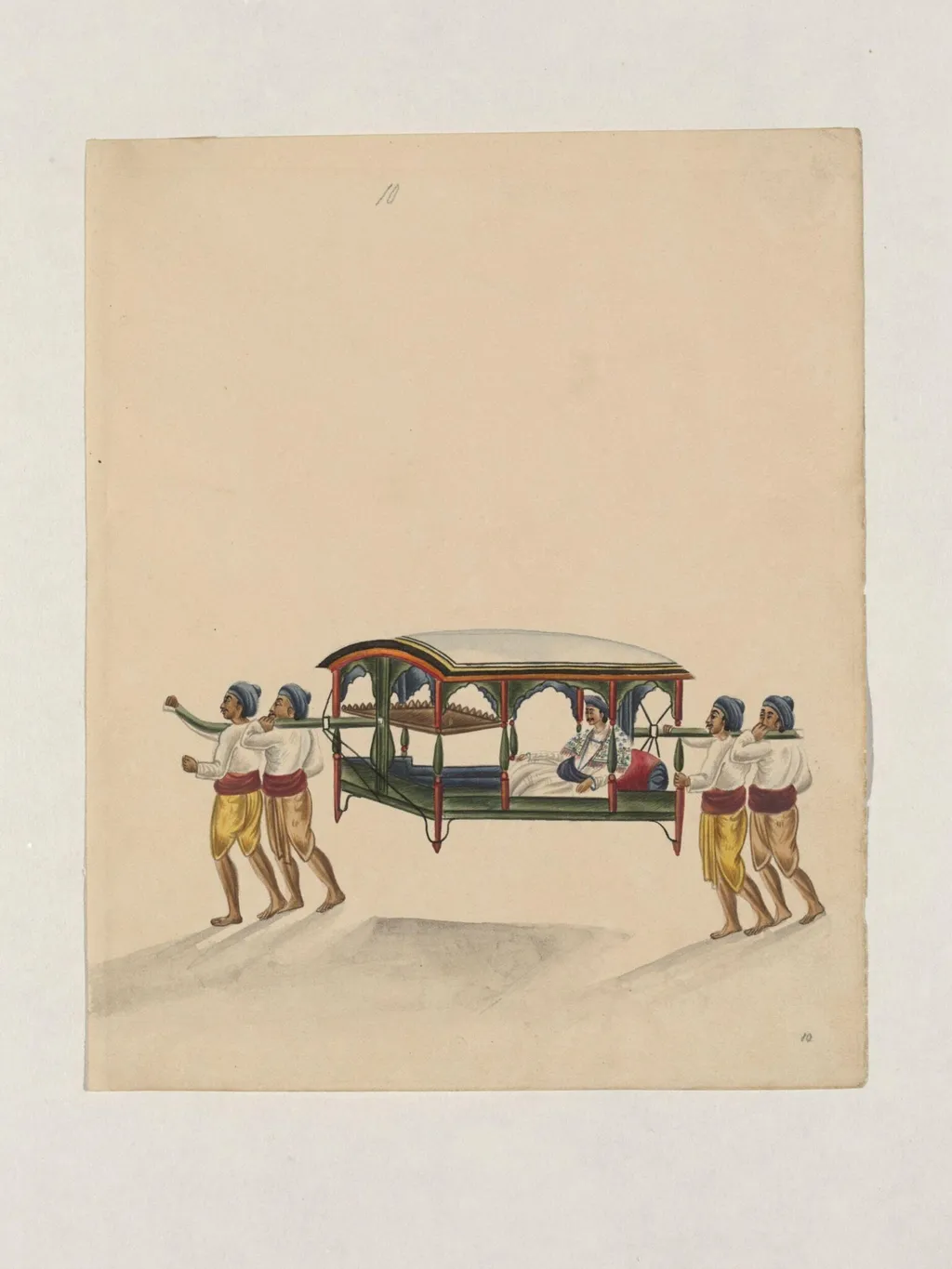
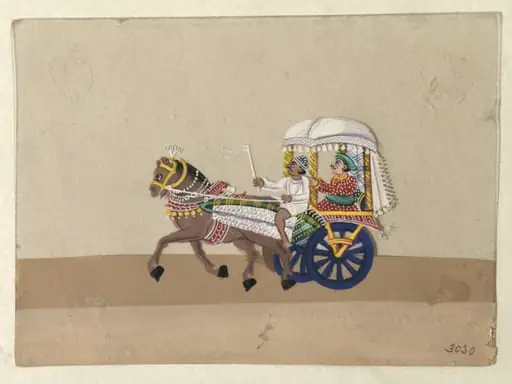
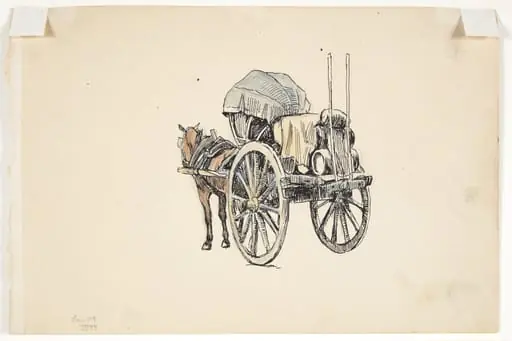
One of Forty-two drawings of occupations and conveyances is a paint painting by the Patna School of Painting artist Unknown. It dates from 1815 and is held in the collection of the Victoria and Albert Museum. This work is one of forty-two ink and watercolor drawings created by Indian artists for British patrons in the early 19th century.
About this work
Overview
This work is one of forty-two ink and watercolor drawings created by Indian artists for British patrons in the early 19th century.
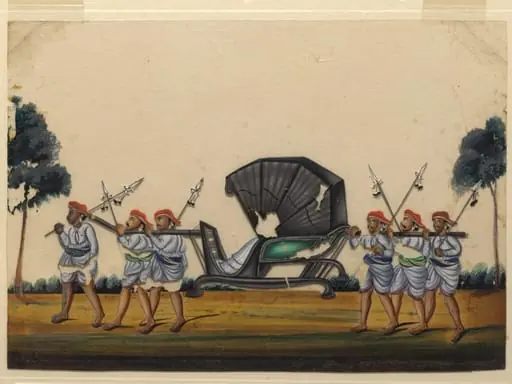
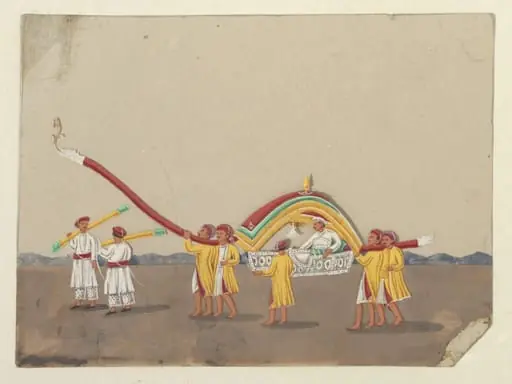
This work is one of forty-two ink and watercolor drawings created by Indian artists for British patrons in the early 19th century. Each piece documents a specific occupation or mode of transport, forming a systematic visual record. The miyana, or box-palanquin, is depicted with attention to structural detail and social context, reflecting a collaborative artistic practice shaped by colonial demand.
Subject & Meaning
The miyana, a covered litter carried by porters, was used by women of higher social standing to travel privately. Its inclusion among other conveyances and trades suggests an interest in documenting social hierarchy and daily mobility. The image does not idealize but rather observes, offering insight into the material culture and gendered norms of movement in colonial India.
Technique & Style
Executed in transparent watercolor and fine ink lines, the drawing employs a restrained palette and precise draftsmanship. Figures and architecture are rendered with clarity rather than dramatic lighting, avoiding European chiaroscuro. The style blends Indian miniature traditions with Western naturalism, tailored to British expectations of documentary accuracy without overt emotional expression.
History & Provenance
The set was likely commissioned by a British official or East India Company employee between 1810 and 1830. These drawings circulated among colonial collectors and later entered institutional holdings. Their survival as a complete group is rare, making this set a valuable record of cross-cultural artistic production during a period of shifting power and aesthetic exchange.
Context
Company paintings emerged as a distinct genre when Indian artists adapted their skills to serve British clients seeking ethnographic documentation. Unlike traditional courtly art, these works prioritized observable reality over symbolism. The miyana’s depiction aligns with broader efforts to catalog Indian society, reflecting colonial interests in classification and control.
Legacy
These drawings remain important sources for understanding colonial-era Indian life and the agency of local artists within a commercial framework. They challenge simplistic narratives of cultural domination by revealing skilled adaptation and quiet resistance through precise, unembellished representation. Today, they inform historical studies of labor, mobility, and visual culture in South Asia.
Artist & collection

 Domestic Scene
 Giacomo and Cardinal Marco, investing Andrea, Abbot of San Zeno, with his Benefice
 The Nymph of Fontainebleau
 Portrait of a Woman
 Madonna and Child with Saints in the Enclosed Garden
 Venus and Minerva
 Family Group of Four on Sofa
 Wall painting from Room H of the Villa of P. Fannius Synistor at Boscoreale