Artwork
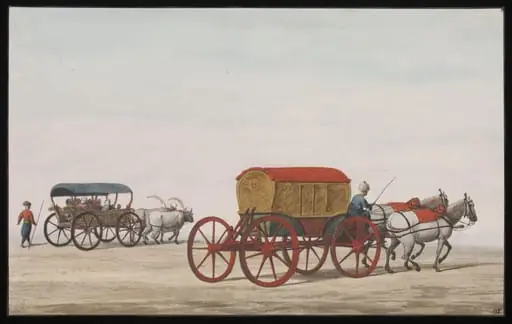
Araba or carriage, and a small araba for children
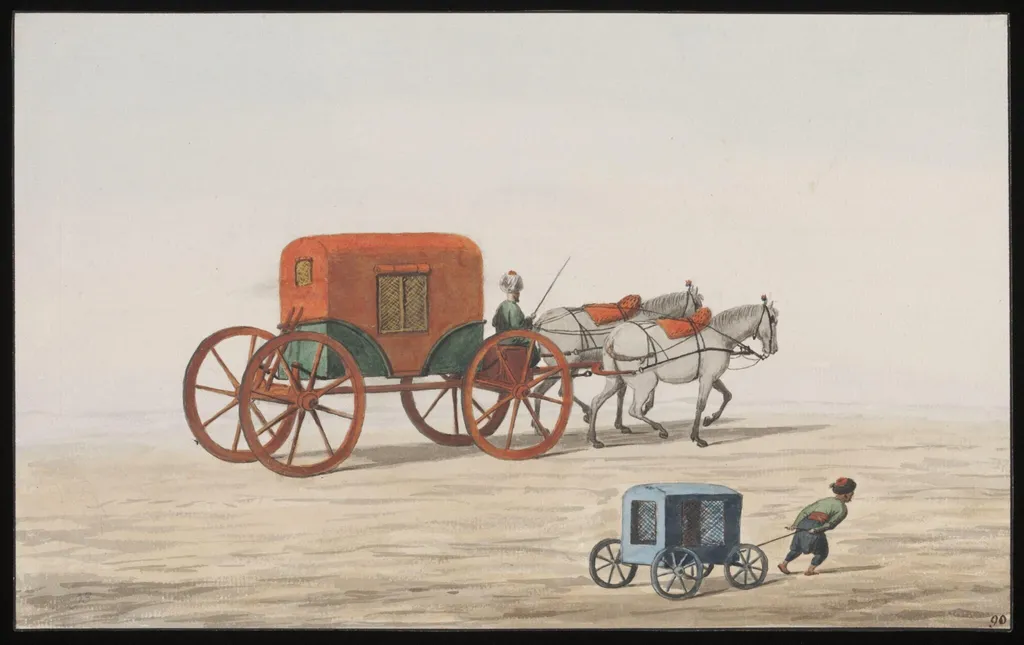
Araba or carriage, and a small araba for children is a watercolor work on paper by the Romanticist artist Anonymous Greek artist. It dates from 1809 and is held in the collection of the Victoria and Albert Museum. This watercolour depicts a closed carriage, or araba, designed for women’s private travel in early 19th-century Greece.
About this work
This watercolor shows a small, closed carriage used by women in early 1800s Greece. It had lattice windows so they could see out, but no one could look in.
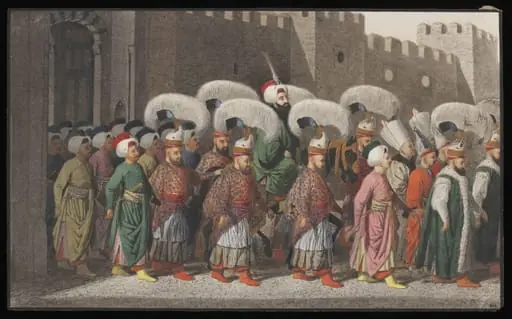
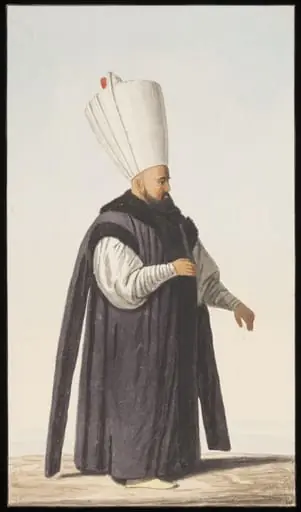
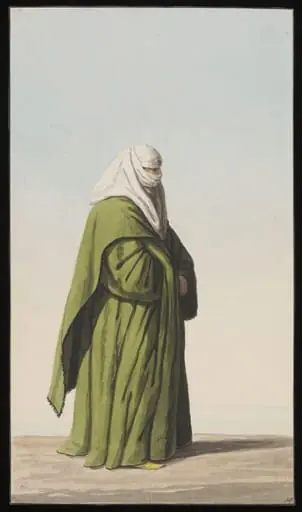
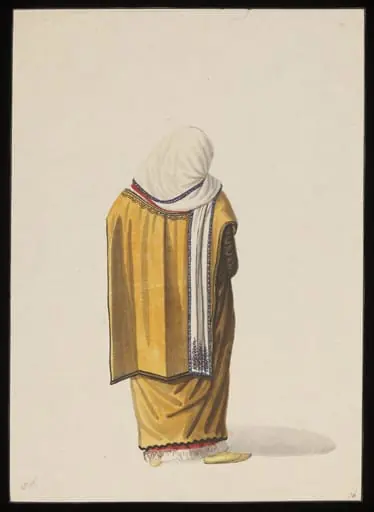
It’s one of many scenes an unknown Greek artist painted for British diplomat Stratford Canning. He traveled Turkey in 1808 and hired locals to document what he saw.
Look up the Victoria and Albert Museum to see more from the series.
Overview
This watercolour depicts a closed carriage, or araba, designed for women’s private travel in early 19th-century Greece.
This watercolour depicts a closed carriage, or araba, designed for women’s private travel in early 19th-century Greece. Its lattice windows allowed occupants to observe the street while maintaining modesty and seclusion. The work belongs to a larger collection of scenes commissioned by British diplomat Stratford Canning during his time in the Ottoman Empire, documenting everyday life through the eyes of a local artist whose identity remains uncertain.
Subject & Meaning
The araba reflects social norms around gender and visibility in Ottoman-influenced regions. By enclosing women in a vehicle with obscured visibility from outside, the design upheld cultural expectations of privacy and decorum. The carriage’s presence in Canning’s collection suggests an interest in domestic life beyond official ceremonies, offering a quiet record of how women navigated public space under restrictive customs.
Technique & Style
The watercolour blends Ottoman traditions of vivid, layered pigments with European techniques in spatial depth and architectural precision. The artist employed fine brushwork to render textures of wood, fabric, and lattice, while maintaining a flattened perspective common in regional illustration. This hybrid style aligns with work produced in Greek artistic circles active in Constantinople during the early 1800s.
History & Provenance
Stratford Canning commissioned the series during his diplomatic posting in Istanbul beginning in 1808. The artist, likely Greek and possibly connected to Konstantin Kapidagli’s studio, created numerous studies of urban and domestic life. British architect Charles Cockerell, who met the artist in 1810, made copies of his architectural drawings, now held by the British Museum. The original set passed to Canning’s daughter Charlotte and entered the Victoria and Albert Museum’s collection in 1895.
Context
Canning’s project emerged during a period of heightened European interest in Ottoman culture, driven by diplomacy and antiquarian curiosity. While many foreign visitors recorded monuments and ceremonies, his commission of local artists to depict ordinary scenes—like women’s transport—offered a rare, grounded view of daily life. These images stand apart from exoticizing orientalist tropes, instead serving as ethnographic records shaped by local sensibility.
Legacy
The series remains a significant resource for understanding material culture in the late Ottoman period. Though the artist’s name is lost, the precision and intimacy of the works have influenced scholarly interpretations of gendered space and urban mobility. The V&A’s holding preserves not only visual detail but also the collaborative nature of cross-cultural documentation during a time of shifting political and social boundaries.
Artist & collection

![A Pasha travelling with his escort[?], by Anonymous Greek artist](https://artifactworldgallery.com/img/anonymous-greek-artist--a-pasha-travelling-with-his-escort--01de32b8fcf30843-w320.webp)
![A Dervish[?], by Anonymous Greek artist](https://artifactworldgallery.com/img/anonymous-greek-artist--a-dervish--3c8916f5a95abb6a-w320.webp)