Artwork
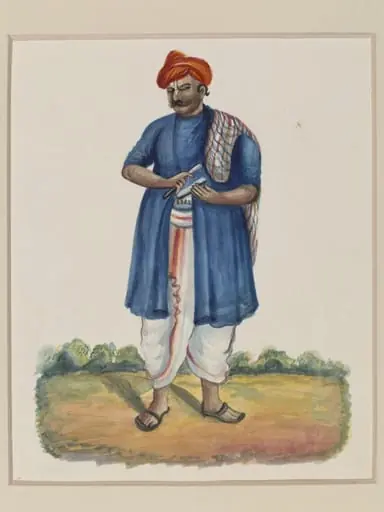
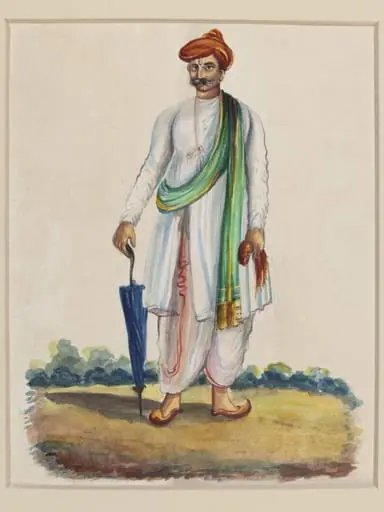
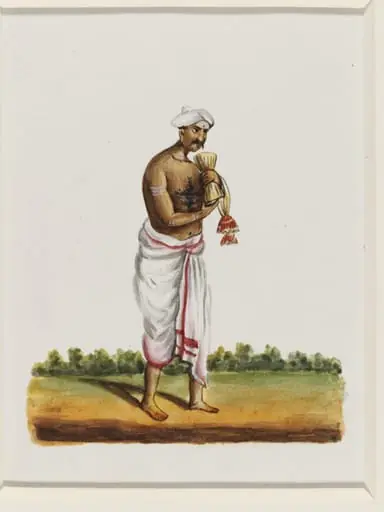
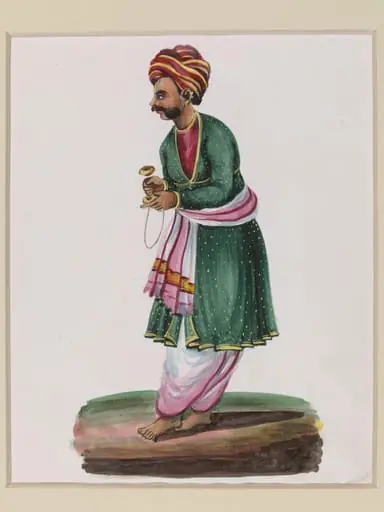
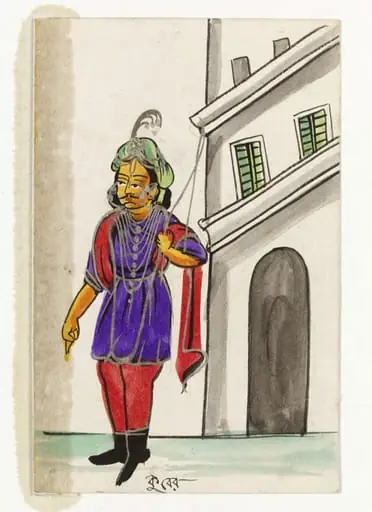
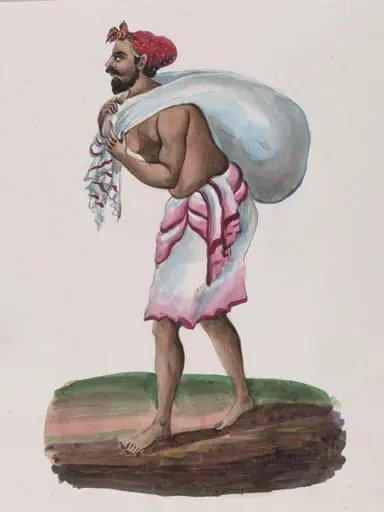
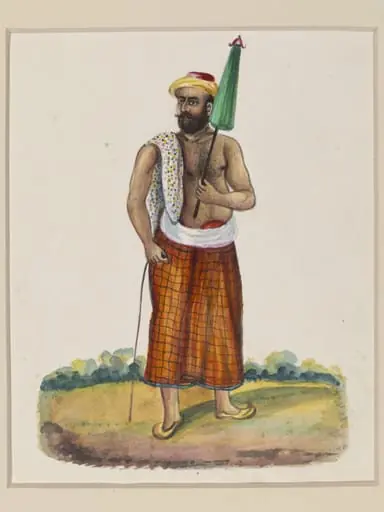
One of seventeen paintings of occupations, especially domestic servants.
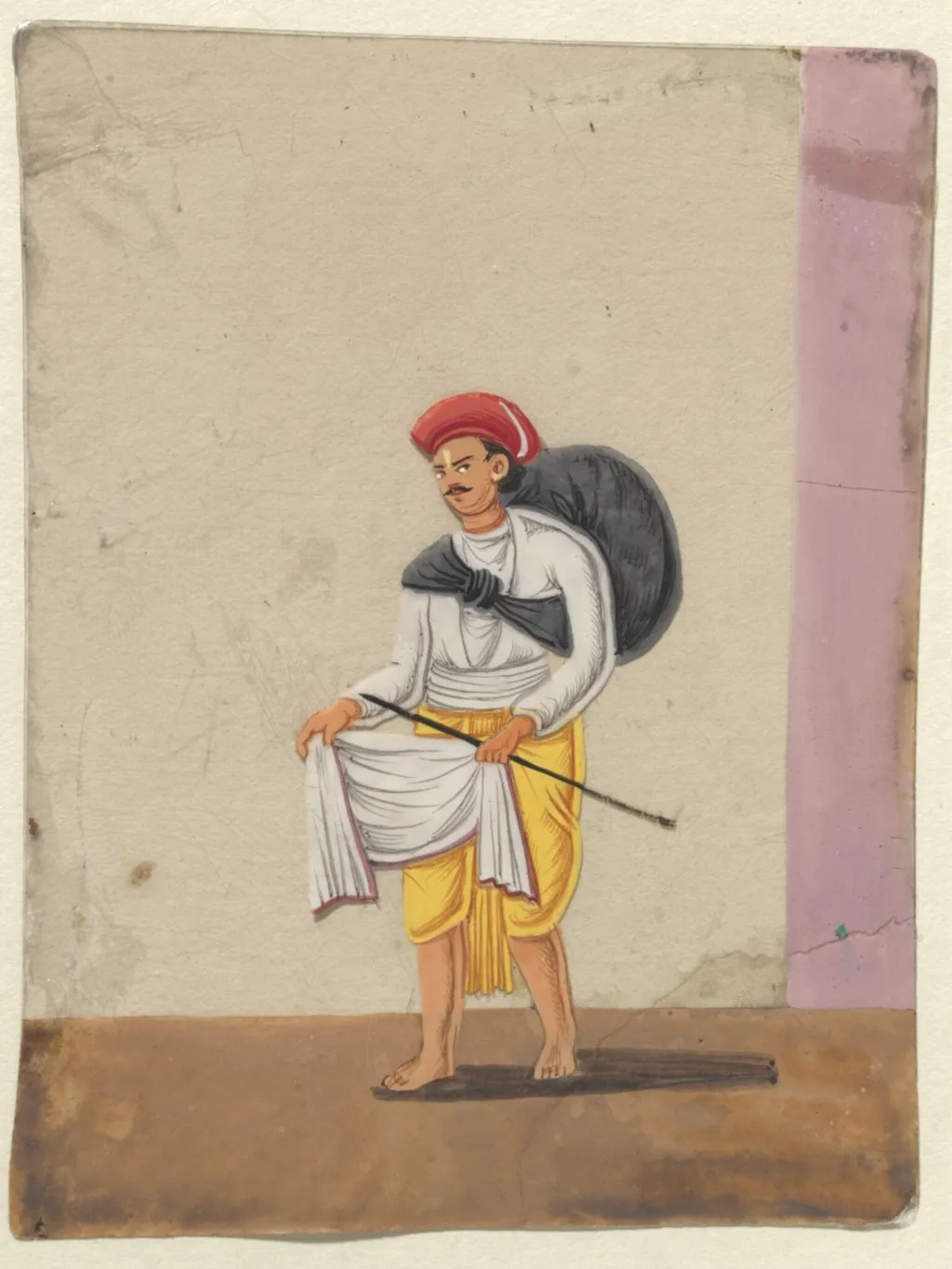
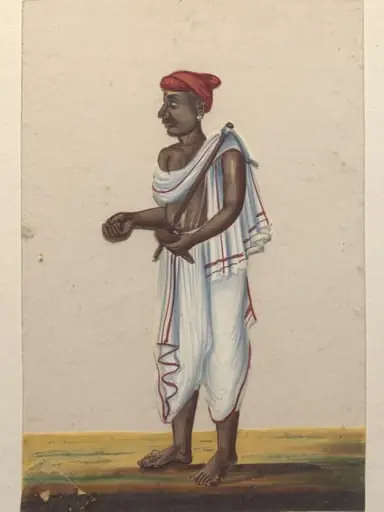
One of seventeen paintings of occupations, especially domestic servants. is a paint painting by the Impressionist artist Unknown. It dates from 1880 and is held in the collection of the Victoria and Albert Museum. Created in 1880, this oil painting portrays a dhobi, a traditional washerman, at work.
About this work
Overview
Created in 1880, this oil painting portrays a dhobi, a traditional washerman, at work. The figure is rendered in modest, muted tones and stands on a brown floor before a beige wall, his posture suggesting quiet concentration as he handles a cloth and a stick while a bag rests on his shoulder.
Subject & Meaning
The work belongs to a series of seventeen images that document everyday occupations, emphasizing the role of domestic servants in Indian society. By focusing on the dhobi, the artist highlights a common yet essential labor, presenting it with dignity and calm.
Technique & Style
The composition relies on chiaroscuro, employing stark light‑dark contrasts to model the figure and give it a three‑dimensional presence. The artist’s restrained palette—reds, whites, yellows, and earth tones—reinforces a sense of serenity and understated elegance.
History & Provenance
The painting’s creator remains unidentified, and it has been catalogued as part of the larger occupational series since its emergence in the late nineteenth century. Its provenance traces back to private collections before entering a public institution.
Context
Produced during a period when colonial interest in documenting Indian daily life was high, the series reflects both ethnographic curiosity and an artistic effort to record the visual culture of laborers within the domestic sphere.
Artist & collection

 Domestic Scene
 Giacomo and Cardinal Marco, investing Andrea, Abbot of San Zeno, with his Benefice
 The Nymph of Fontainebleau
 Portrait of a Woman
 Madonna and Child with Saints in the Enclosed Garden
 Venus and Minerva
 Family Group of Four on Sofa
 Wall painting from Room H of the Villa of P. Fannius Synistor at Boscoreale