Artwork
A servant holding an umbrella
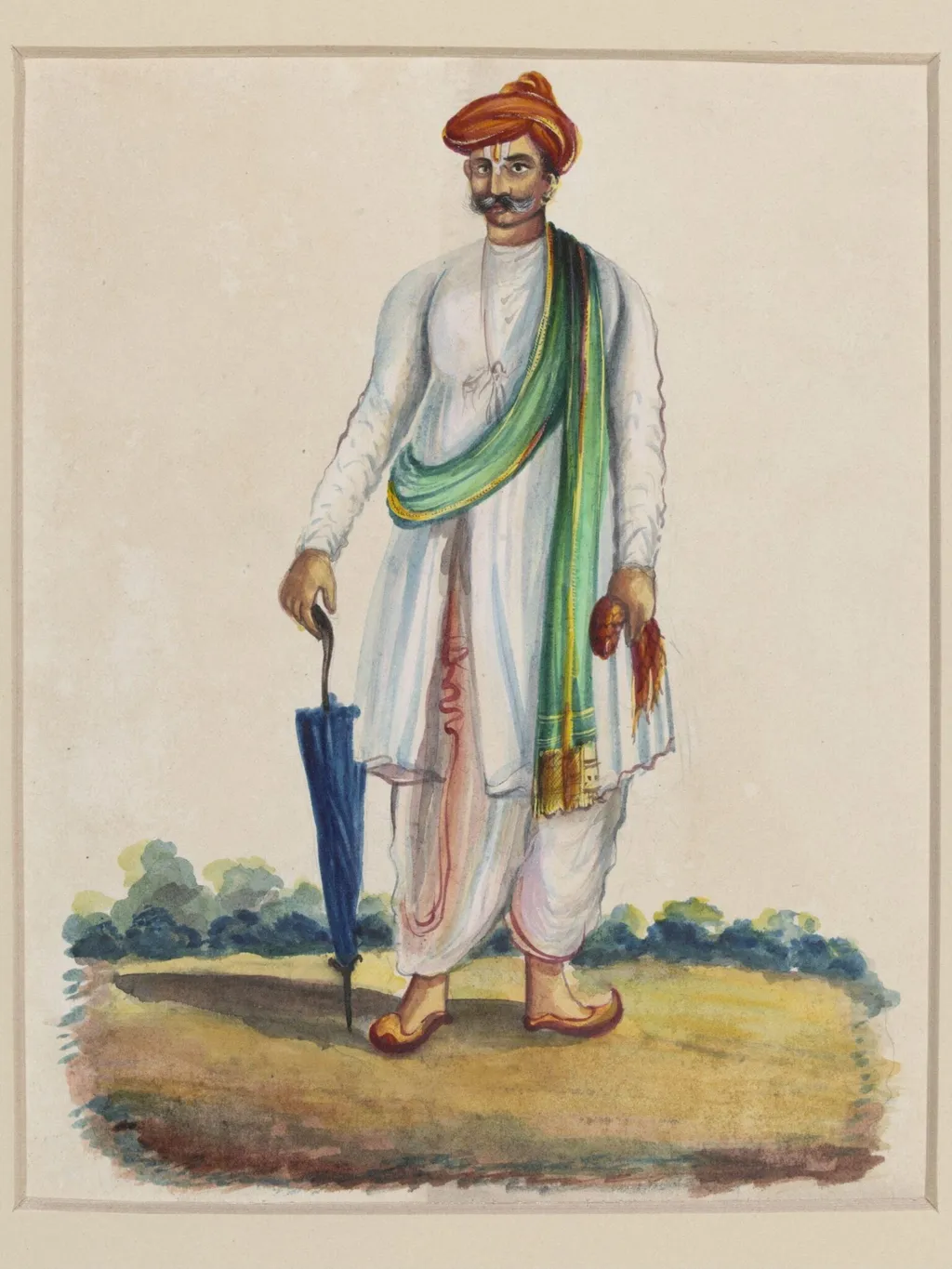
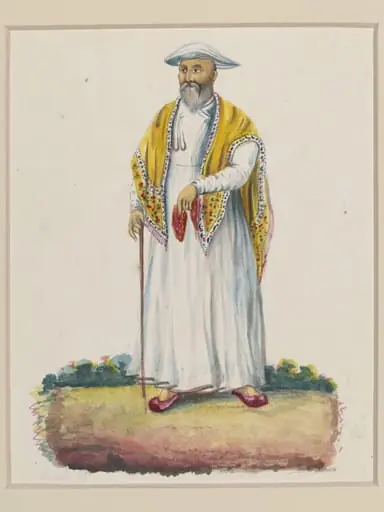
A servant holding an umbrella is a paint painting by the Impressionist artist Unknown. It dates from 1860 and is held in the collection of the Victoria and Albert Museum.
About this work
Overview
This 1860 painting depicts a servant holding an umbrella and a cloth, rendered on paper as part of a series documenting occupational roles in South India.
This 1860 painting depicts a servant holding an umbrella and a cloth, rendered on paper as part of a series documenting occupational roles in South India. Created in Trichinopoly under British colonial influence, it belongs to the Company painting tradition, where Indian artists adapted European techniques to meet the tastes of East India Company patrons. The composition isolates the figure against a bare white ground, emphasizing form and attire over environment.
Subject & Meaning
The figure is a domestic servant, likely employed by a British household or local elite under colonial administration. His posture—hand on hip, gaze steady—suggests dignity within a subordinate role. The umbrella and cloth imply duties tied to personal service, such as shielding employers from sun or dust. The neatness of his attire reflects personal pride, subtly challenging stereotypes of servitude through quiet self-possession.
Technique & Style
The artist employs watercolor and ink with precise linework and flat, unmodulated color, characteristic of Company painting. Bright hues—red hat, green scarf, blue umbrella—contrast sharply against the neutral background, enhancing visual clarity. Shading is minimal, and perspective is flattened, blending Indian miniature traditions with European naturalism. The dry, sparse ground and distant hill hint at regional geography without detailed rendering.
History & Provenance
Created in Trichinopoly during the mid-19th century, this work is one of fifteen in a documented series commissioned to record local occupations. Likely produced for a British official or collector, such albums served as ethnographic records. The painting’s survival suggests it was preserved in private or institutional collections, possibly in Britain or India, though its exact provenance before modern archives remains partially undocumented.
Context
Company painting emerged as Indian artists adapted indigenous styles to European expectations, often under direct patronage from British officials. This work reflects a broader trend: the documentation of Indian life through a hybrid visual language. While rooted in local observation, the format—single figures on plain grounds—mirrors Western portraiture and scientific illustration, illustrating cultural negotiation under colonial rule.
Legacy
These works now serve as historical records of labor, dress, and cross-cultural artistic exchange in colonial India. Though once viewed as decorative or ethnographic curiosities, they are increasingly studied for their nuanced representation of agency and identity. The series contributes to understanding how Indian artists navigated patronage, preserving local aesthetics while accommodating foreign frameworks.
Artist & collection

 Domestic Scene
 Giacomo and Cardinal Marco, investing Andrea, Abbot of San Zeno, with his Benefice
 The Nymph of Fontainebleau
 Portrait of a Woman
 Madonna and Child with Saints in the Enclosed Garden
 Venus and Minerva
 Family Group of Four on Sofa
 Wall painting from Room H of the Villa of P. Fannius Synistor at Boscoreale
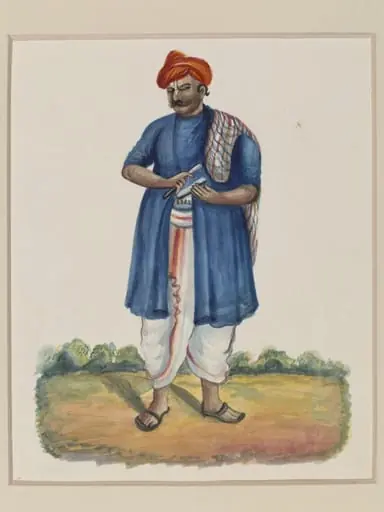 A Barber
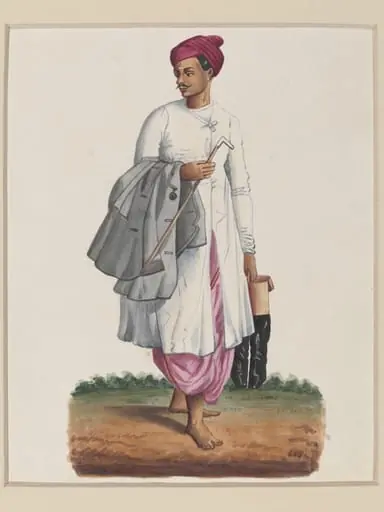 A Bearer
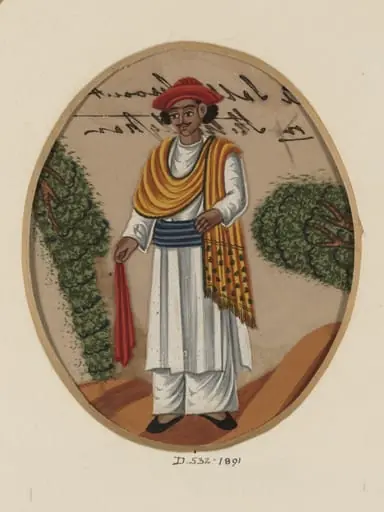 One of Fifteen drawings depicting household servants
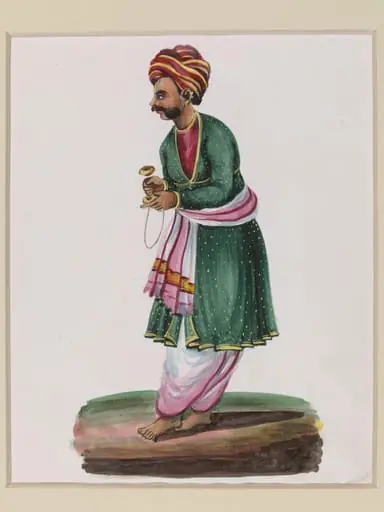 Musician with cymbals
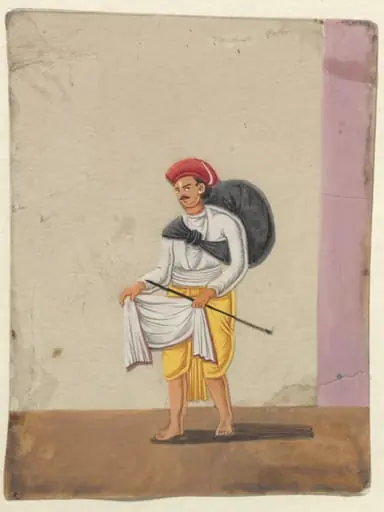 One of seventeen paintings of occupations, especially domestic servants.
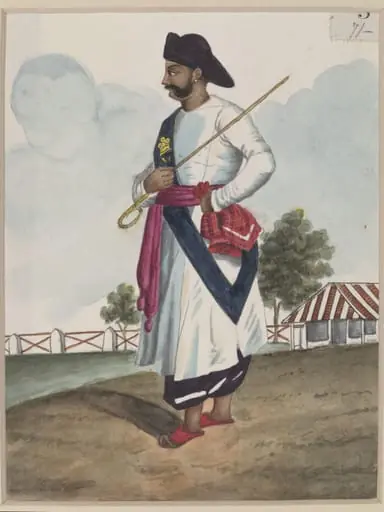 A chaprasi
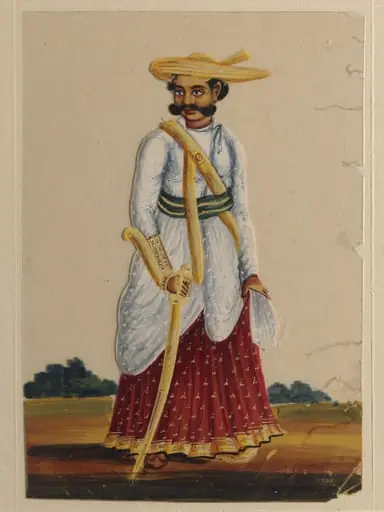 One of twelve paintings depicting occupations.
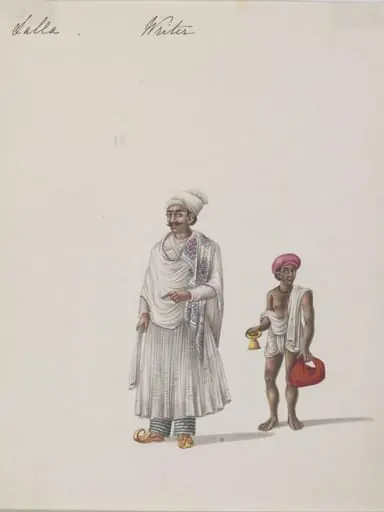 A scribe
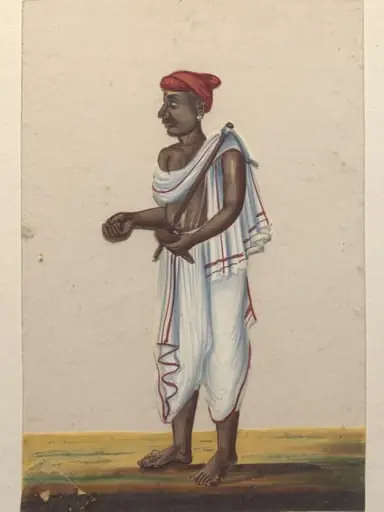 One of seventy-two paintings of occupations.
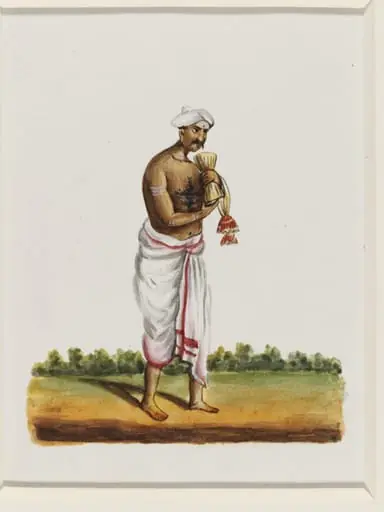 An Ascetic
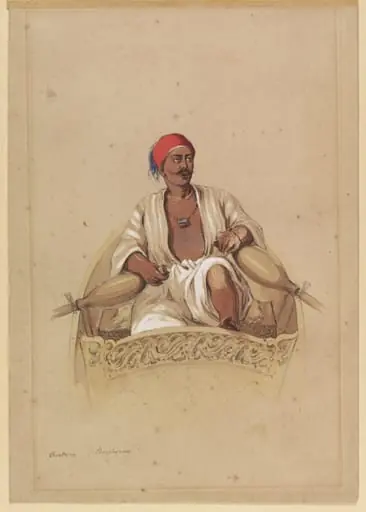 Boatman/ Bosphorus
 An Indian gentleman