Artwork
十二天像(火天)|One of the Twelve Devas: Katen
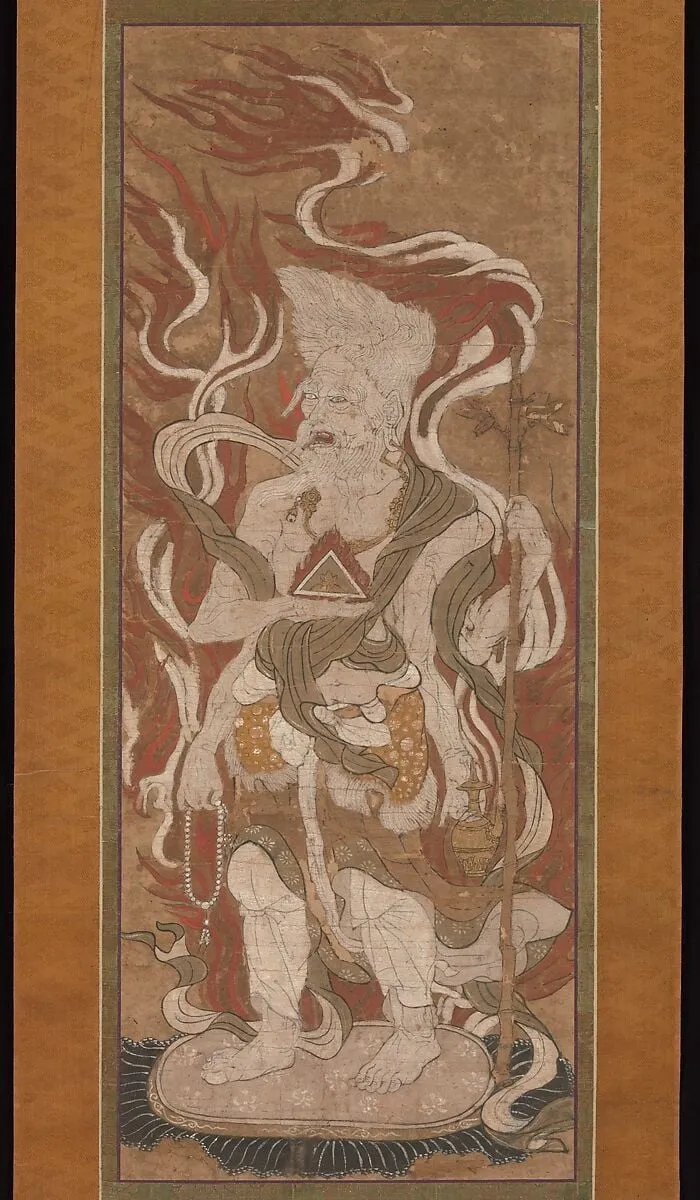
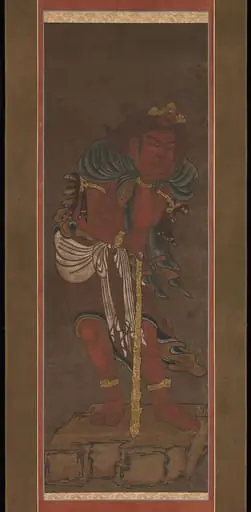
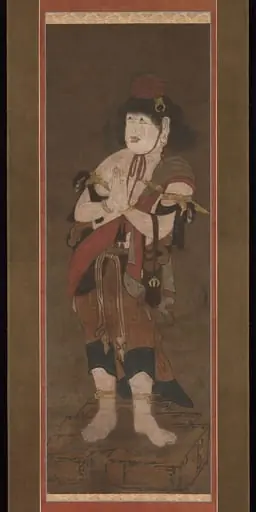
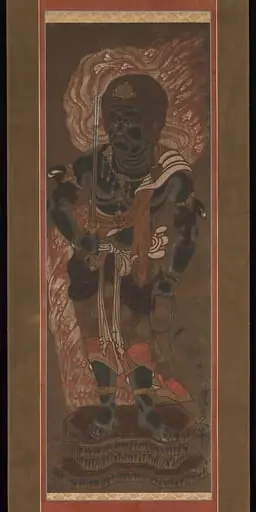
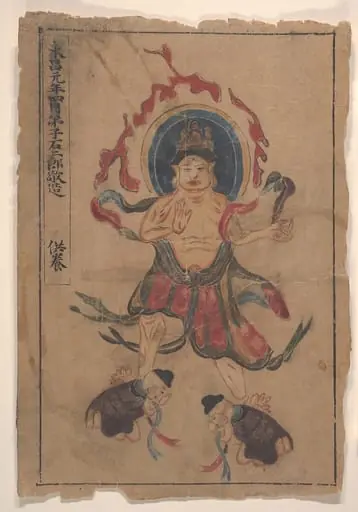
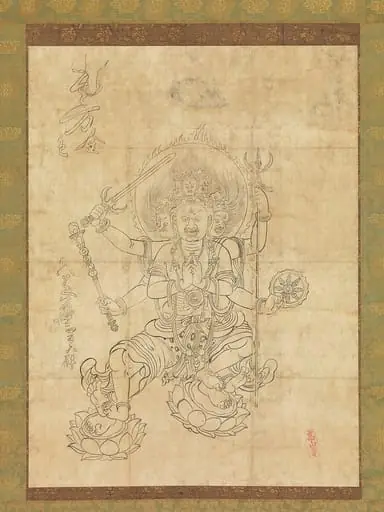
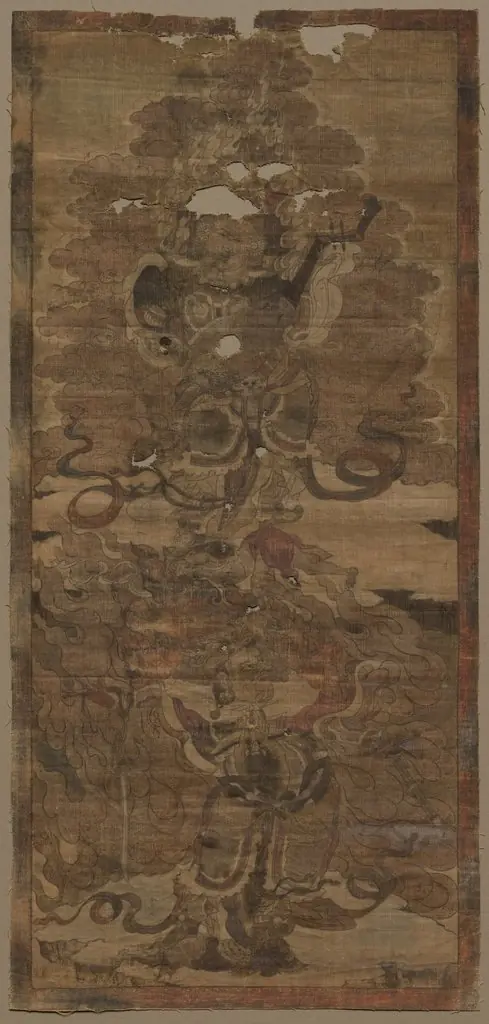
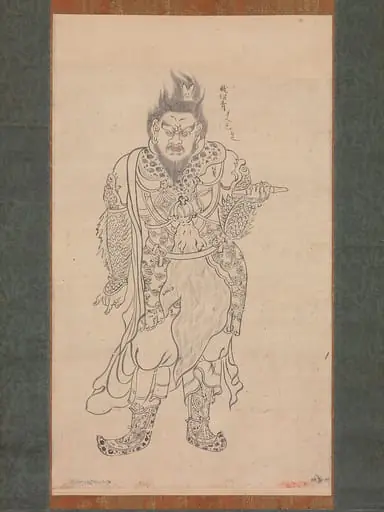
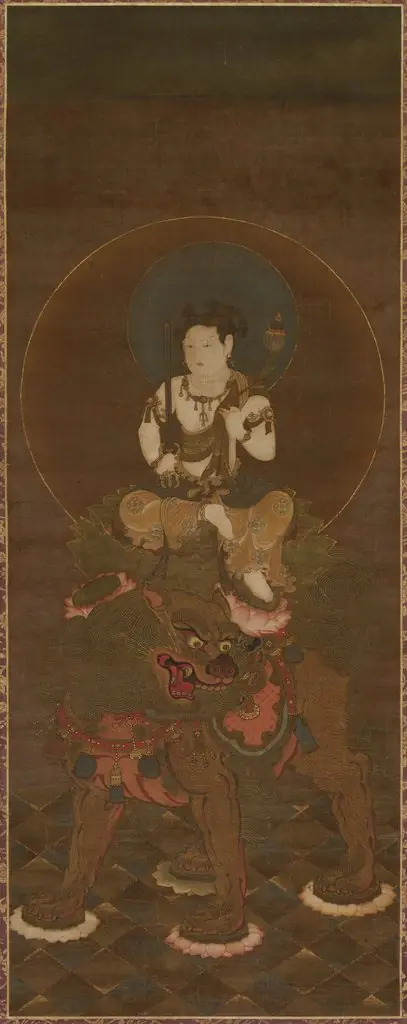
十二天像(火天)|One of the Twelve Devas: Katen is a paint painting. It dates from 1346 and is held in the collection of the Metropolitan Museum of Art. The work is a hand‑colored paper print mounted as a hanging scroll, titled “One of the Twelve Devas: Katen.
About this work
Overview
The work is a hand‑colored paper print mounted as a hanging scroll, titled “One of the Twelve Devas: Katen.” It portrays a bearded figure in a brown robe, seated on a circular mat with his right leg crossed over his left, holding a staff in his right hand and a rosary in his left. A triangular motif appears on his chest, and the background is composed of red and white patterned fields.
Subject & Meaning
The seated individual, distinguished by a long white beard and religious accoutrements, is identified as Katen, one of the twelve celestial guardians in Buddhist tradition. The staff and rosary signify his spiritual authority, while the triangular emblem may reference a doctrinal symbol associated with his role among the devas.
Technique & Style
Executed as a hand‑colored woodblock print, the image employs flat areas of color and bold outlines characteristic of Japanese ukiyo‑e and devotional painting. The composition balances a central figure against a patterned backdrop, using limited tonal contrast—primarily reds, whites, and earthy browns—to emphasize the figure’s serene posture.
History & Provenance
The scroll is part of a series depicting the twelve devas, a subject popular in Japanese Buddhist art from the Edo period onward. While the precise date and original patron are not recorded, the piece reflects the conventional iconography and printing methods used in temple and private devotional contexts.
Context
In Japanese Buddhist visual culture, the twelve devas serve as protectors of the Dharma, each associated with specific virtues and iconographic attributes. Katen’s representation aligns with other contemporary depictions that combine didactic symbolism with aesthetic restraint, intended for contemplation within a domestic or temple setting.
Artist & collection