Artwork
Opening Page of Book VIII of Valerius Maximus's Facta et dicta memorabilia
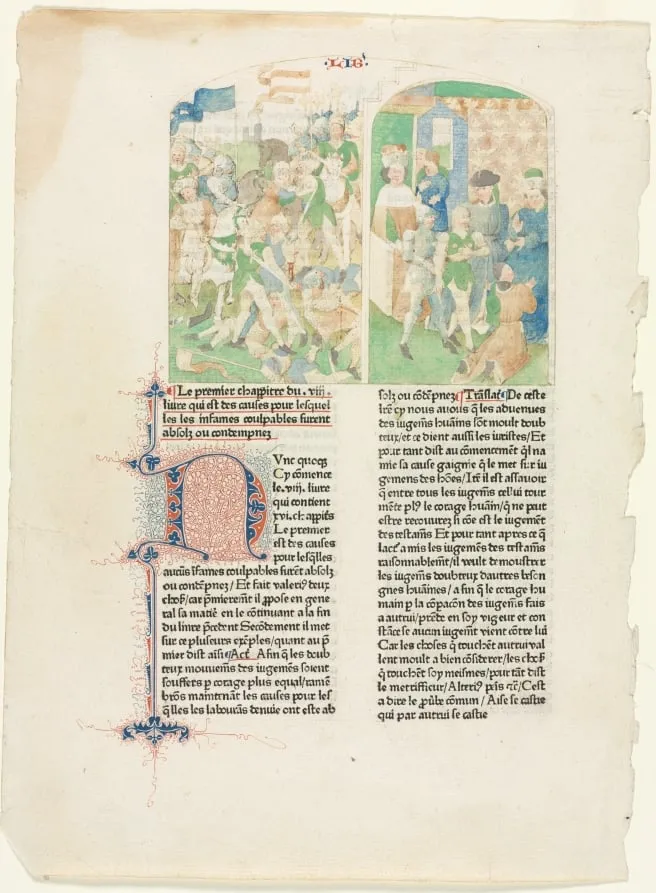
Opening Page of Book VIII of Valerius Maximus's Facta et dicta memorabilia is a drawing by the Renaissance artist Unknown. It dates from 1476 and is held in the collection of the Cleveland Museum of Art.
About this work
Overview
Created during the Renaissance, it features two miniature scenes flanking a large decorated initial.
This illuminated manuscript page originates from Book VIII of Valerius Maximus’s Facta et dicta memorabilia, a collection of historical anecdotes compiled in the first century CE. Created during the Renaissance, it features two miniature scenes flanking a large decorated initial. The page combines text and imagery in a format typical of scholarly manuscripts, where visual elements reinforce the narrative content of the Latin passage beneath.
Subject & Meaning
The left scene depicts armed combat on a grassy field, likely illustrating a military anecdote from Valerius’s text. The right shows a civic gathering in a market setting, suggesting a story of public virtue or social order. Together, they visualize contrasting themes of martial valor and communal harmony, reflecting the moral lessons Valerius intended to convey through historical examples.
Technique & Style
The page employs tempera and gold leaf on parchment, with vivid blues, greens, and reds applied in fine detail. The figures and architecture are rendered with precision, emphasizing texture in fabric and stonework. The initial 'L' is elaborately ornamented with interlaced patterns and a small anthropomorphic face, a common feature in late medieval and early Renaissance book illumination.
History & Provenance
This page likely comes from a humanist manuscript produced in the 15th century, when classical texts were being revived and copied for scholarly use. Its style suggests a northern European origin, possibly from the Low Countries or France, where manuscript production remained vibrant even as printing emerged. The craftsmanship indicates it was made for a wealthy or institutional patron.
Context
During the Renaissance, classical texts like Valerius Maximus’s were studied for moral and rhetorical instruction. Manuscripts such as this served as teaching tools, blending textual authority with visual aid. While printed books were gaining ground, hand-illuminated volumes still held prestige, especially for works valued for their educational and ethical content.
Legacy
This page exemplifies the transitional phase between medieval manuscript culture and early print. Its detailed miniatures and decorative initials influenced later book design, even as the rise of the printing press gradually replaced hand-illumination. Surviving examples like this remain key to understanding how classical learning was visually mediated in the centuries before mass production.
Artist & collection

 Domestic Scene
 Giacomo and Cardinal Marco, investing Andrea, Abbot of San Zeno, with his Benefice
 The Nymph of Fontainebleau
 Portrait of a Woman
 Madonna and Child with Saints in the Enclosed Garden
 Venus and Minerva
 Family Group of Four on Sofa
 Wall painting from Room H of the Villa of P. Fannius Synistor at Boscoreale
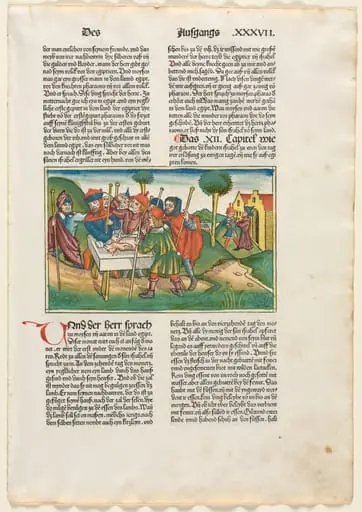 Offering of the Paschal Lamb from the German Bible published by Anton Koberger, Nürnberg
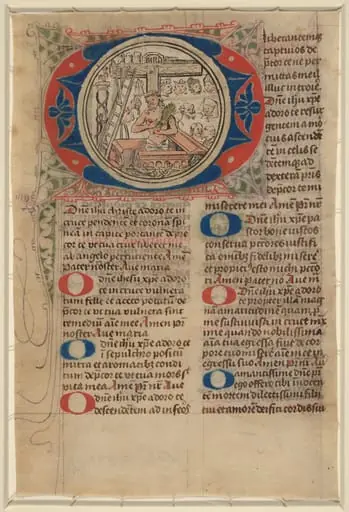 Christ as the Man of Sorrows
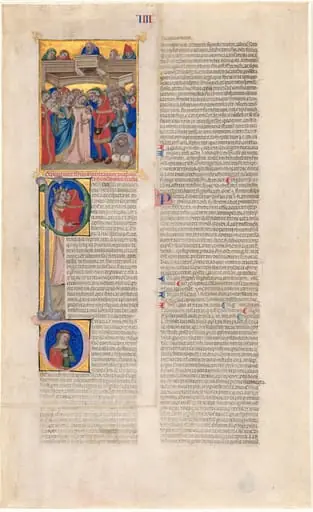 The Marriage; the Kiss of the Bride (initial P); the Bride Abandoned (initial D)
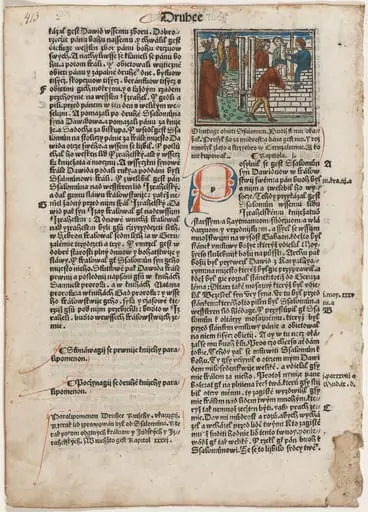 page from the Holy Bible in Bohemian
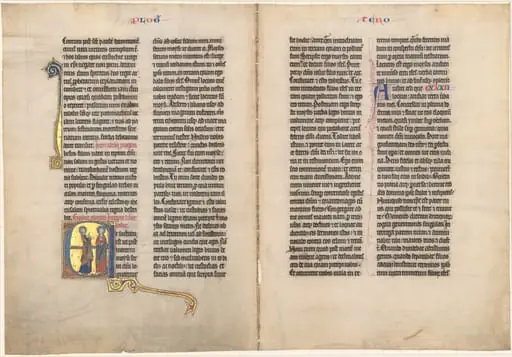 Joshua before the Lord
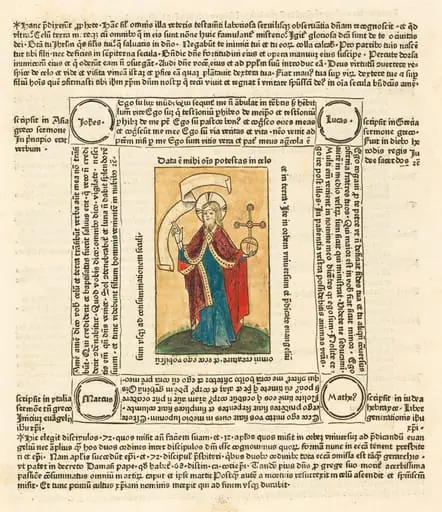 Christ as Salvator Mundi
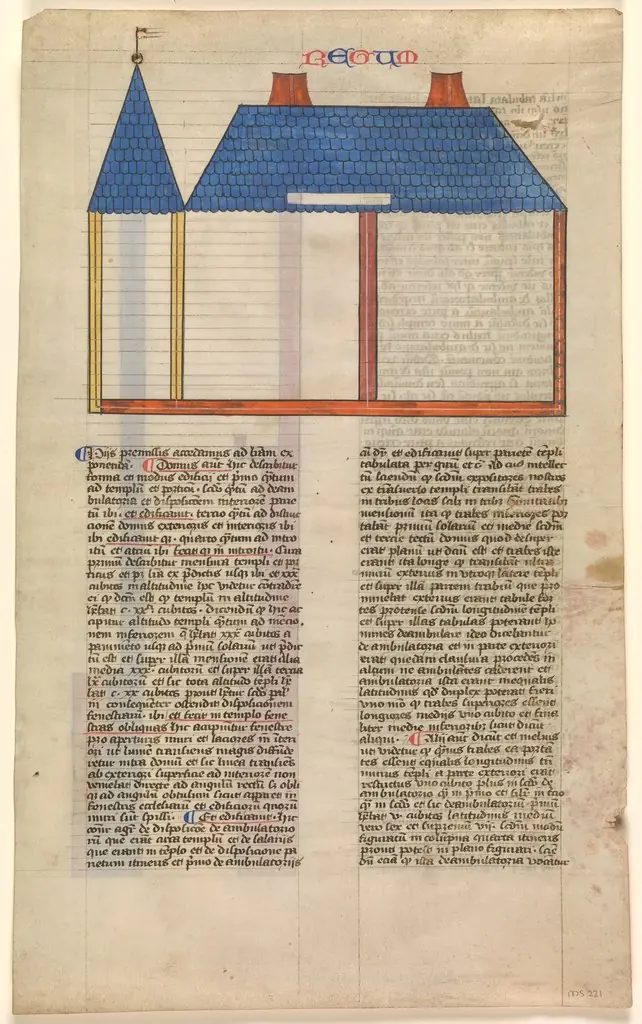 Elevation of Solomon's Temple, one of six illustrated leaves from the Postilla Litteralis (Literal Commentary) of Nicholas of Lyra
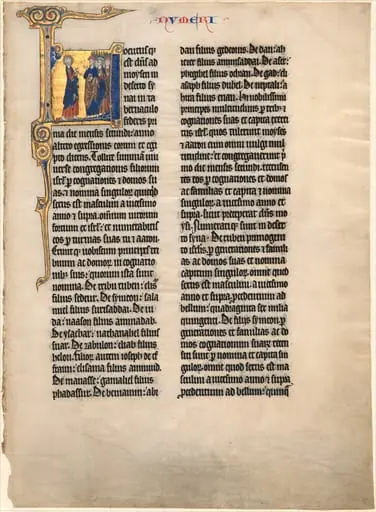 Moses Counting the Children of Israel
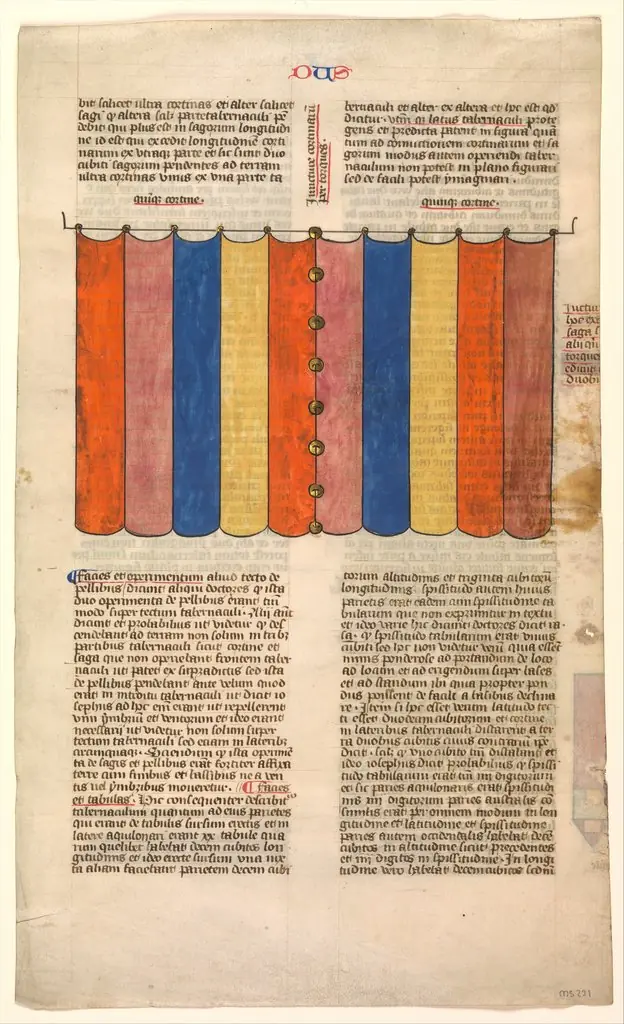 Curtain of the Tabernacle, one of six illustrated leaves from the Postilla Litteralis (Literal Commentary) of Nicholas of Lyra
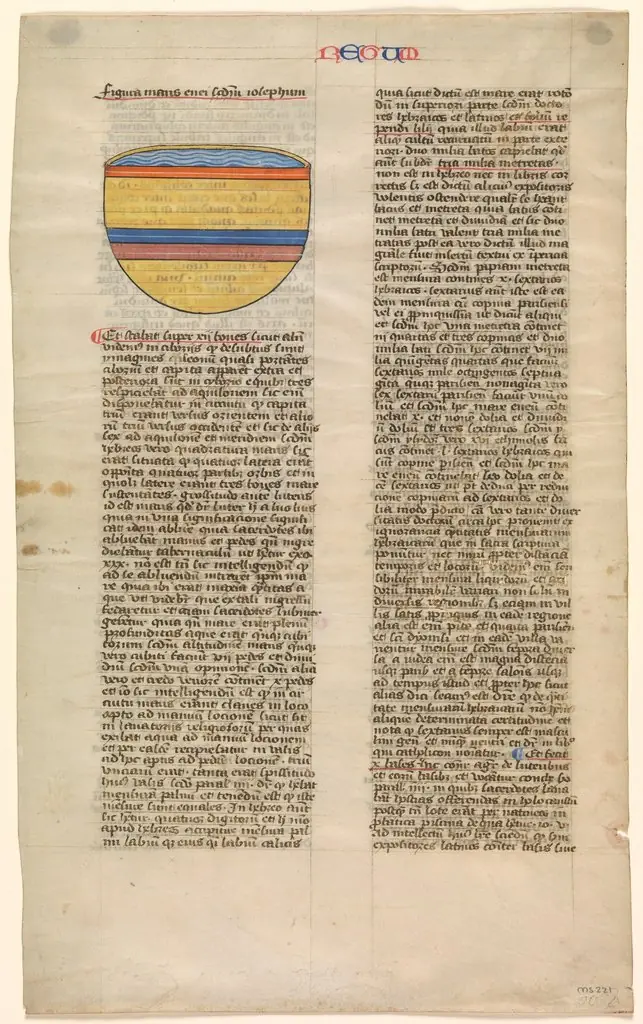 Brazen Sea, one of six illustrated leaves from the Postilla Litteralis (Literal Commentary) of Nicholas of Lyra