Artwork
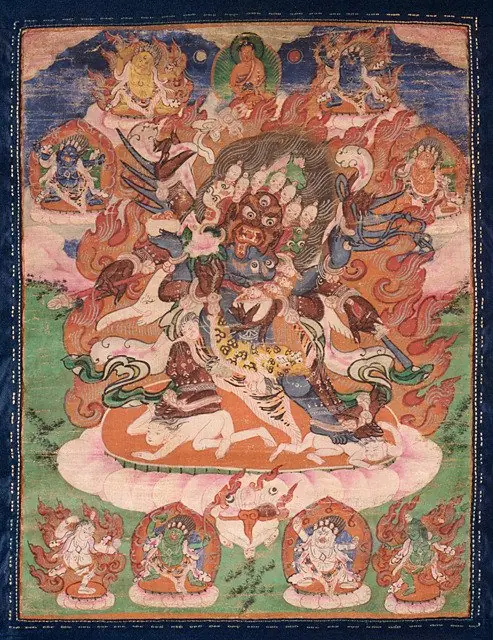
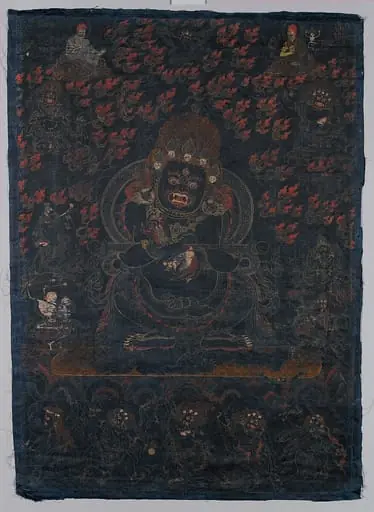
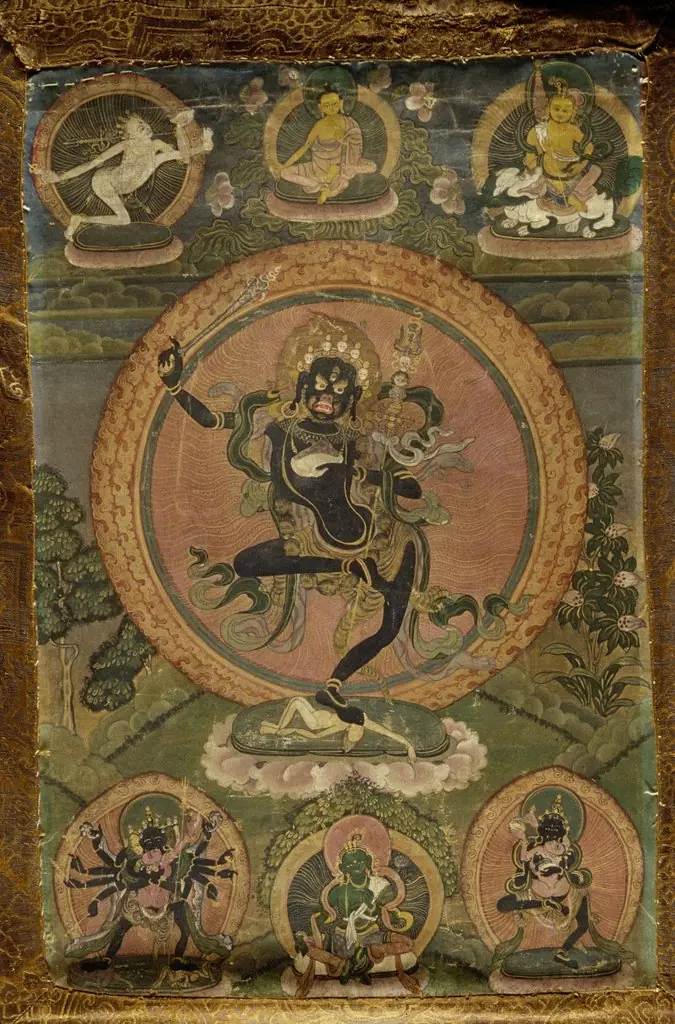
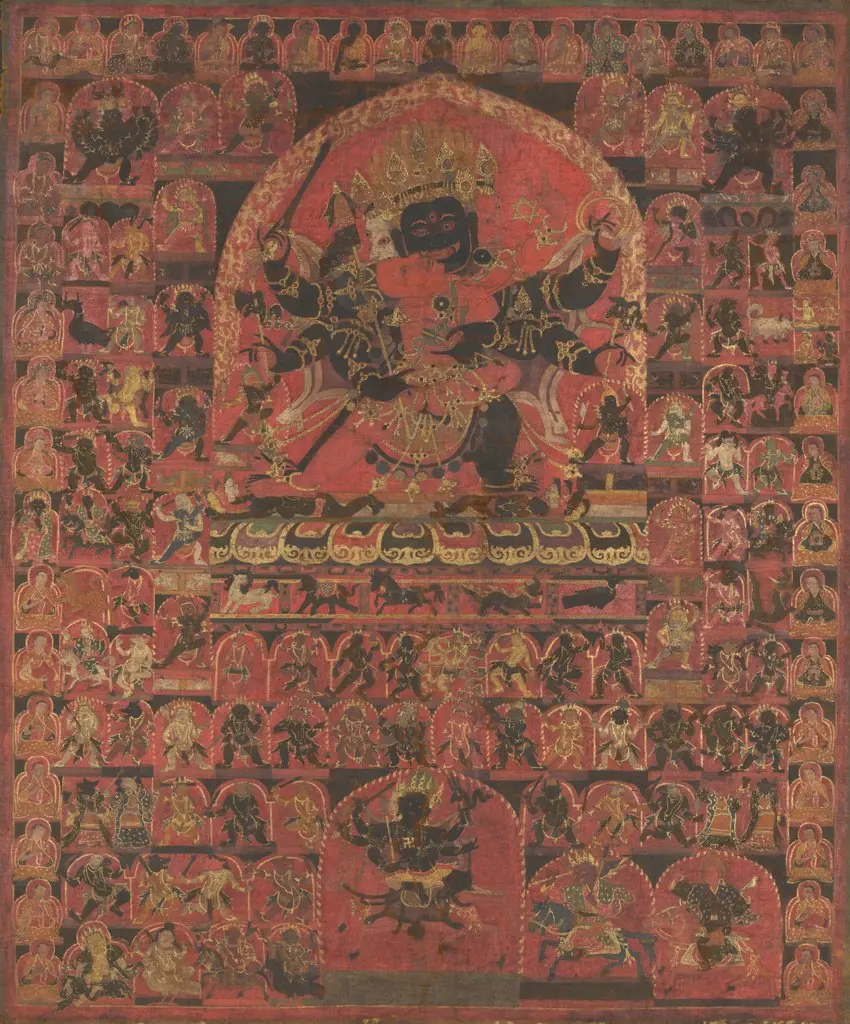
Painted Banner (Thangka) with Guru Dragpur, a Wrathful Form of Padmasambhava
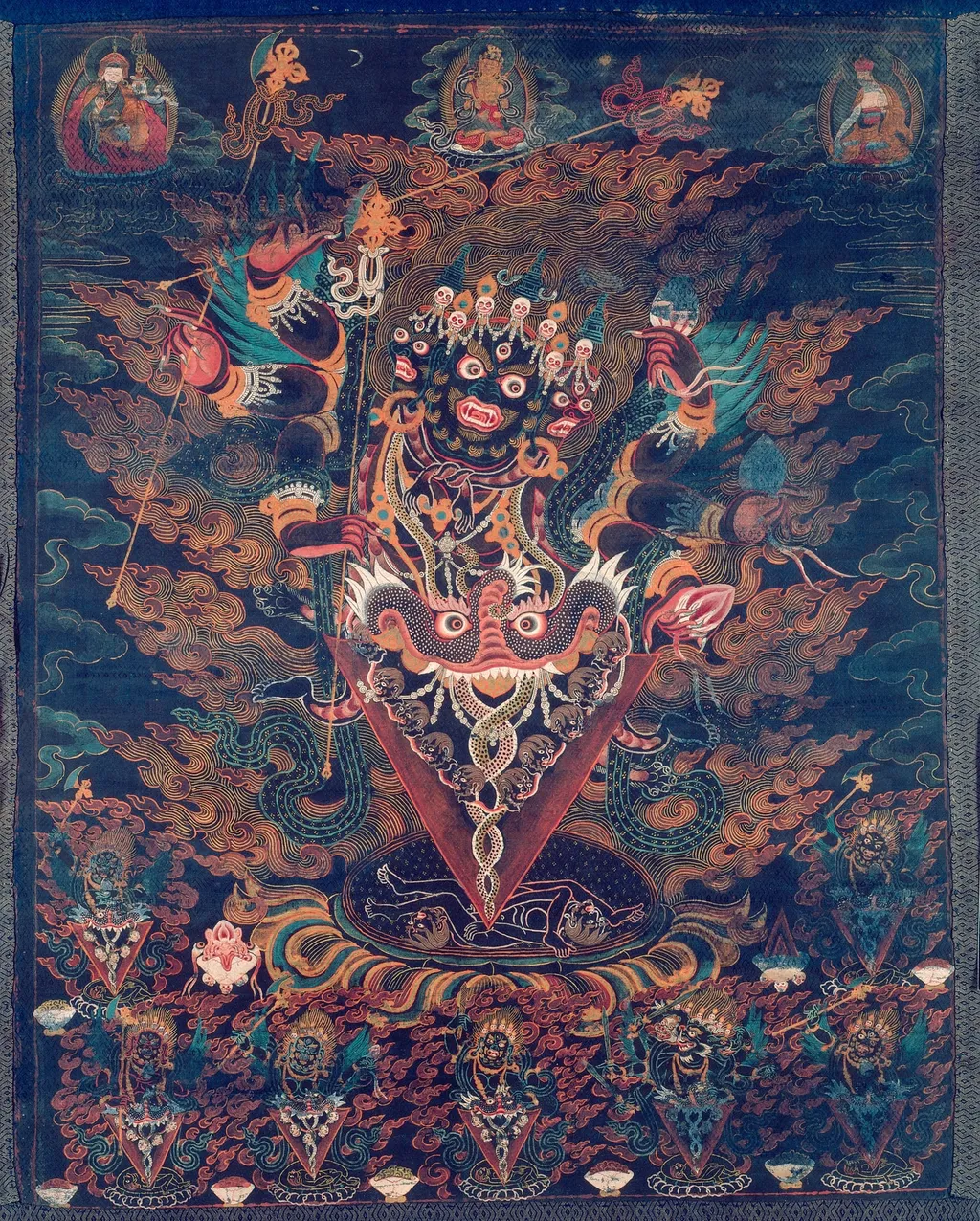
Painted Banner (Thangka) with Guru Dragpur, a Wrathful Form of Padmasambhava is an unspecified painting by the Baroque artist Unknown. It dates from 1799 and is held in the collection of the Art Institute of Chicago. This painted thangka, executed on silk with pigment, presents a tall, vertical composition dominated by a vivid blue deity.
About this work
Overview
The figure is depicted with blazing hair, a skull cup in one hand and a ritual dagger in the other, standing triumphantly atop a subjugated demon.
This painted thangka, executed on silk with pigment, presents a tall, vertical composition dominated by a vivid blue deity. The figure is depicted with blazing hair, a skull cup in one hand and a ritual dagger in the other, standing triumphantly atop a subjugated demon. Surrounding him are smaller divine beings and stylized flames, creating a dynamic, protective tableau typical of Tibetan religious banners.
Subject & Meaning
The central figure is Guru Dragpur, a wrathful emanation of Padmasambhava, the 8th‑century master credited with establishing Buddhism in Tibet. In this form, he embodies the power to overcome obstacles and protect the dharma, his fierce expression and weaponry symbolizing the destruction of ignorance and the safeguarding of practitioners during meditation.
Technique & Style
Rendered with mineral pigments on silk, the work employs bold, saturated colors and crisp, linear outlines to emphasize the deity’s intensity. The use of flat areas of hue and decorative motifs reflects the traditional thangka aesthetic, designed for clear visual impact and to serve as a meditative aid for monks who contemplate the figure’s attributes.
History & Provenance
Although the precise origin is undocumented, the banner likely dates from the later medieval period of Tibetan thangka production, when such portable silk paintings were employed in ritual processions and temple display. Its provenance suggests use in monastic settings, where it would have been unfurled during protective rites or placed on altars as a visual focus.
Artist & collection

 Domestic Scene
 Giacomo and Cardinal Marco, investing Andrea, Abbot of San Zeno, with his Benefice
 The Nymph of Fontainebleau
 Portrait of a Woman
 Madonna and Child with Saints in the Enclosed Garden
 Venus and Minerva
 Family Group of Four on Sofa
 Wall painting from Room H of the Villa of P. Fannius Synistor at Boscoreale