Artwork
Panoramic view of the Fort at Agra.
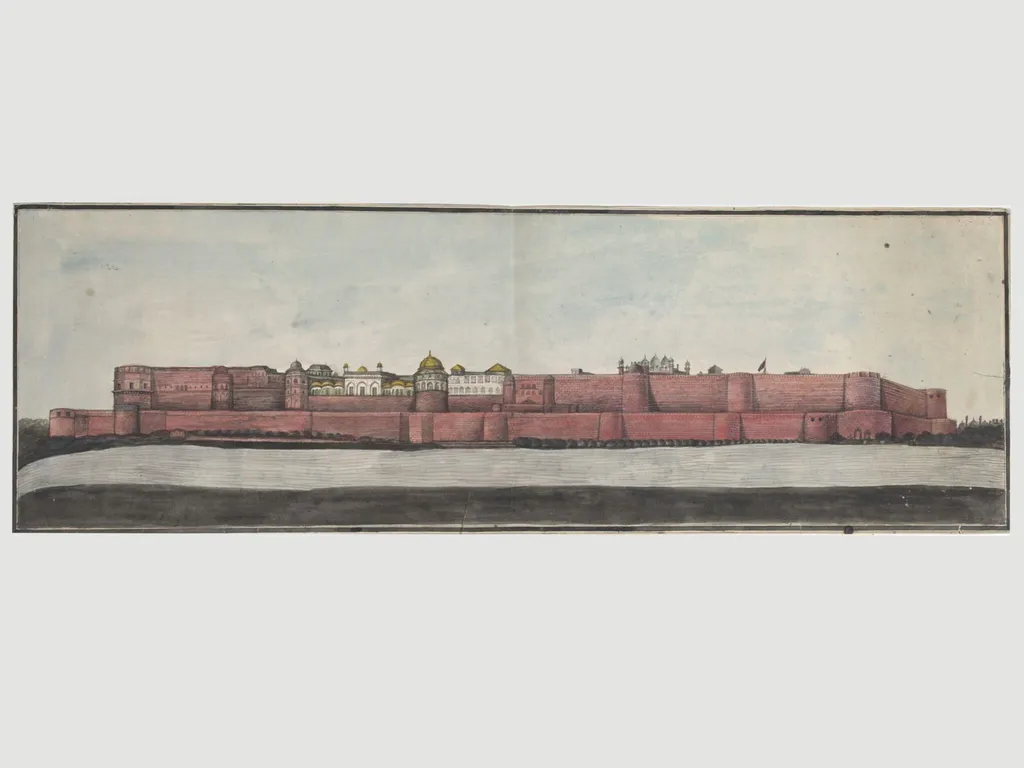
Panoramic view of the Fort at Agra. is a paint painting by the Romanticist artist Unknown. It dates from 1840 and is held in the collection of the Victoria and Albert Museum. Painted in 1840, this work captures the Agra Fort as a vast, linear composition stretching across the canvas.
About this work
Overview
The architecture within is rendered with precise geometry, emphasizing symmetry and scale rather than atmospheric depth.
Painted in 1840, this work captures the Agra Fort as a vast, linear composition stretching across the canvas. The fort’s imposing red sandstone walls dominate the scene, flanked by still water that mirrors its form. The architecture within is rendered with precise geometry, emphasizing symmetry and scale rather than atmospheric depth. The sky is muted, and the water’s dark surface enhances the fort’s solidity, creating a sense of quiet permanence.
Subject & Meaning
The Agra Fort, a Mughal imperial stronghold, is depicted not as a bustling palace but as a monumental structure frozen in stillness. Its orderly arrangement of domes, arches, and golden roofs suggests imperial order and endurance. The absence of human figures and the calm waters imply a contemplative tone, perhaps reflecting the fort’s transition from active seat of power to a symbol of historical legacy under British colonial observation.
Technique & Style
The artist employs flat, even brushwork to render the fort’s surfaces, avoiding chiaroscuro in favor of clear, saturated color. Red walls contrast sharply with pale skies and dark water, reinforcing structural clarity. Architectural details are rendered with precision, but without individualized texture, suggesting a topographical intent. The composition prioritizes spatial order over naturalistic lighting, aligning with documentary traditions of colonial-era Indian topographical painting.
History & Provenance
Created in 1840, the painting likely emerged during the British East India Company’s administrative presence in northern India. It may have been commissioned for colonial records or private collections interested in imperial architecture. Its survival in institutional collections, such as the Victoria and Albert Museum, reflects its value as a visual archive of Mughal-era structures under colonial documentation practices.
Context
In the mid-19th century, British artists and surveyors systematically recorded Indian monuments as part of colonial ethnographic and architectural projects. This painting fits within that trend—its emphasis on structure over atmosphere, and its omission of contemporary life, aligns with a broader effort to classify and preserve perceived historical relics, detached from their living cultural contexts.
Legacy
The painting endures as a record of Agra Fort’s architectural form during a period of political transition. It contributes to the visual historiography of Mughal sites under colonial gaze, offering insight into how imperial structures were perceived and represented by outsiders. Its restrained aesthetic continues to inform scholarly interpretations of 19th-century Indian topographical art.
Artist & collection

 Domestic Scene
 Giacomo and Cardinal Marco, investing Andrea, Abbot of San Zeno, with his Benefice
 The Nymph of Fontainebleau
 Portrait of a Woman
 Madonna and Child with Saints in the Enclosed Garden
 Venus and Minerva
 Family Group of Four on Sofa
 Wall painting from Room H of the Villa of P. Fannius Synistor at Boscoreale
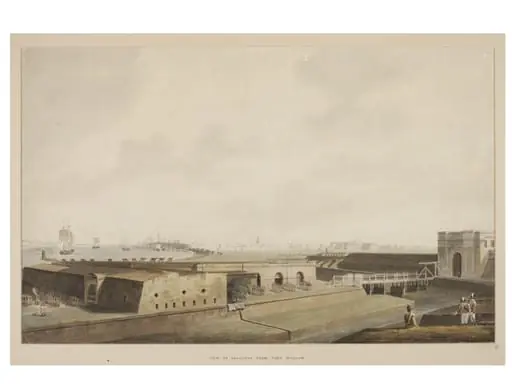 View of Calcutta from Fort William
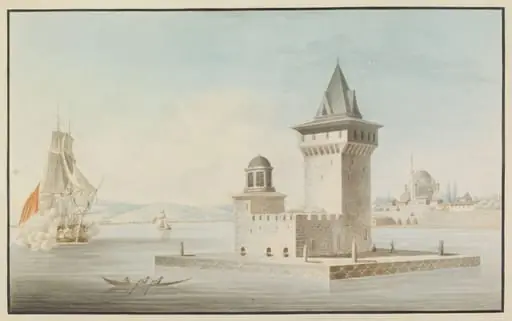 Kiz Kulesi (Leander's or Maiden's Tower) in the Bosphorus with Ayazma Camii near the shore at Üsküdar (Scutari)
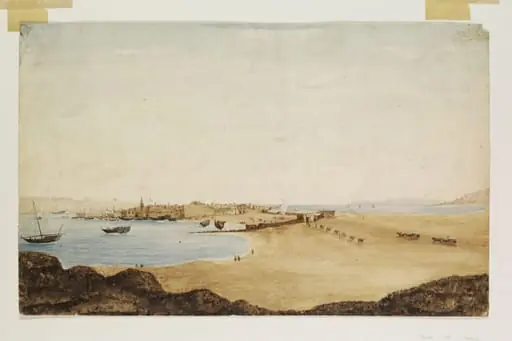 Suez from the Ruins of Colsum
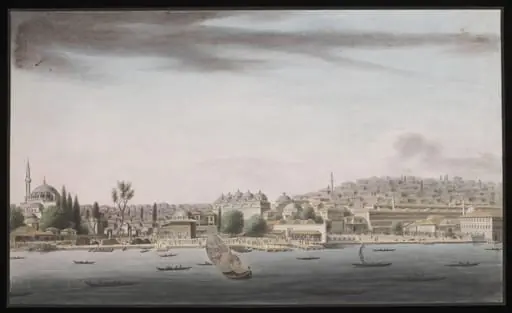 Panoramic view of the buildings on the shore at Tophane
![Rathgar Castle, 1 1/2 miles from Dublin [...], by Gabriel, ca.1729-1817 Beranger](https://artifactworldgallery.com/img/gabriel-ca-1729-1817-beranger--rathgar-castle-1-1-2-miles-from-dublin--17cfe3f4e70405c2-w320.webp) Rathgar Castle, 1 1/2 miles from Dublin [...]
Rathgar Castle, 1 1/2 miles from Dublin [...]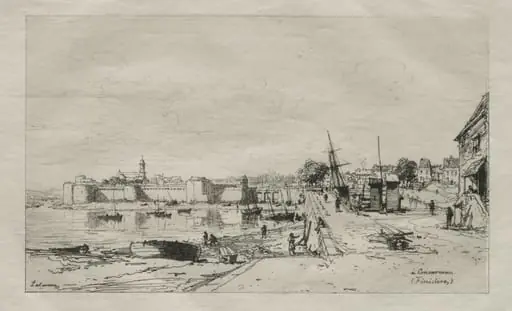 À Concarneau (Finistère)
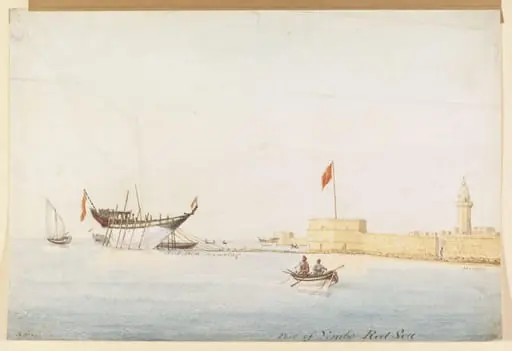 Port of Yembo, Red Sea
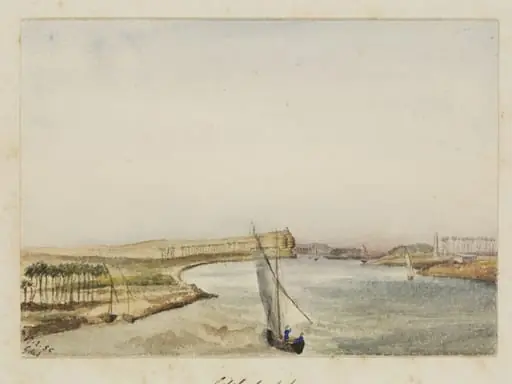 `Gibel-el-dab'
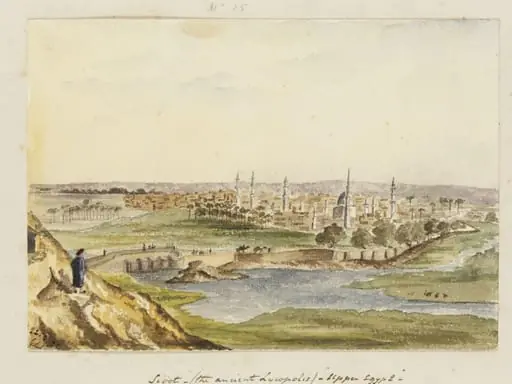 `Sioot - (the ancient Lycopolis.) - "Upper Egypt." from the Stabl-Antar Hill'