Artwork
`Sioot - (the ancient Lycopolis.) - "Upper Egypt." from the Stabl-Antar Hill'
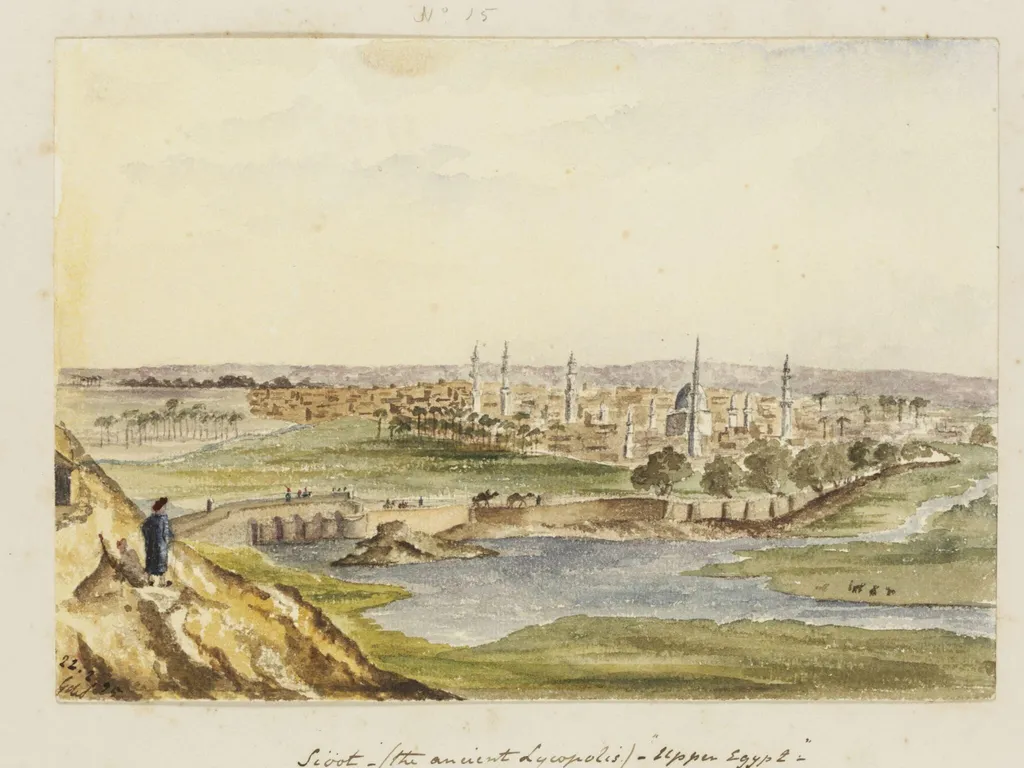
`Sioot - (the ancient Lycopolis.) - "Upper Egypt." from the Stabl-Antar Hill' is a watercolor work on paper by the Impressionist artist George de Sausmarez. It dates from 1855 and is held in the collection of the Victoria and Albert Museum. The watercolour, dated 1855, records a stretch of the Nile near the ancient site of Lycopolis, known locally as Sioot, in Upper Egypt.
About this work
Overview
The watercolour, dated 1855, records a stretch of the Nile near the ancient site of Lycopolis, known locally as Sioot, in Upper Egypt. Executed by General George de Sausmarez, it forms one of a larger collection of forty‑five images mounted on thirty‑five sheets that document his travels through Egypt and Nubia that year.
Subject & Meaning
The scene portrays a tranquil riverbank where a solitary traveler walks a dusty track beside the water. Across the channel, a settlement rises, its skyline marked by slender towers and domed roofs, suggesting a blend of historic architecture and contemporary habitation within the Upper Egyptian landscape.
Technique & Style
Saumsarez employs a muted palette and fluid brushwork, allowing atmospheric perspective to convey distance. Soft washes define the rocky foreground, a modest bridge, and scattered trees, while the delicate handling of light hints at the hazy heat of the Nile valley.
History & Provenance
The image is part of an album bound in half‑bound crimson morocco leather, stamped "EGYPT" on its cover. The album contains loose sheets gathered during Saumsarez’s upstream and downstream journey along the Nile in 1855, reflecting his systematic visual record of the region.
Context
Created during a period of heightened European interest in Egyptian antiquities, the work aligns with mid‑nineteenth‑century efforts to document the country's geography and monuments for scholarly and diplomatic audiences.
Artist & collection
Artist
George de Sausmarez painted watercolors of Egypt’s Nile in the 1850s, recording river scenes and landmarks with quick, transparent washes.

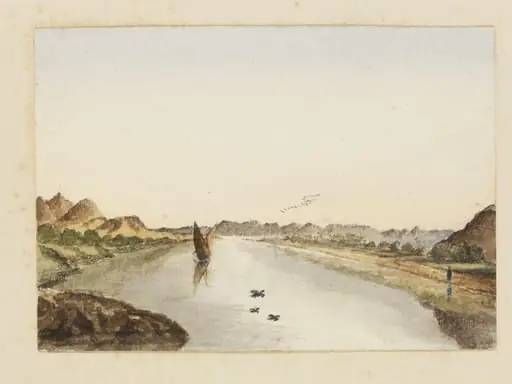 View of the Nile
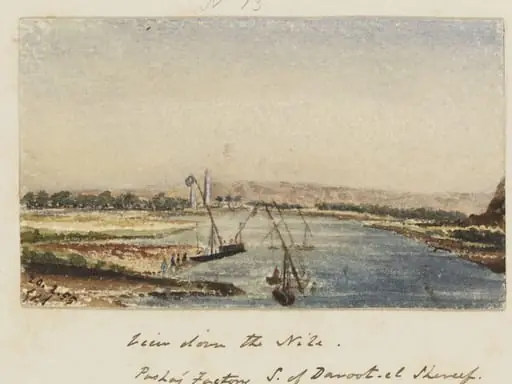 `View down the Nile. Pasha's Factory S.of Daroot-el Shereef. Upper Egypt'
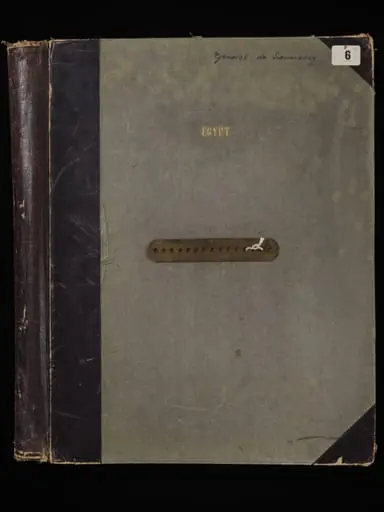 Album
Album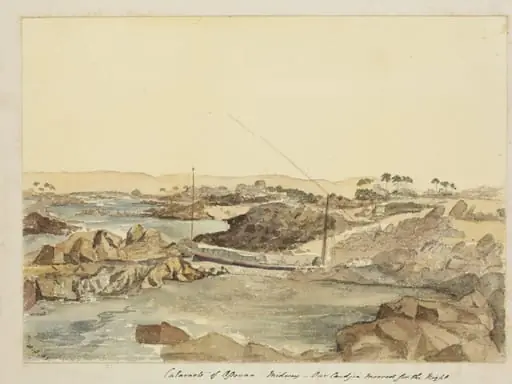 `Cataracts of Assouan. Midway. - Our Candjia Moored for the Night - On the Nile'
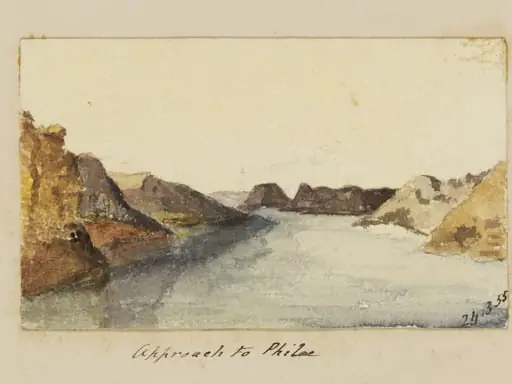 `Approach to Philae'
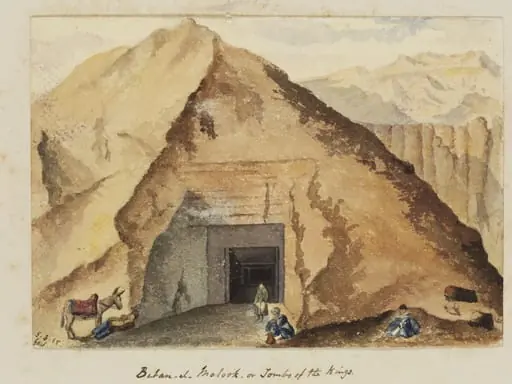 Biban-el-Molook, or Tombs of the Kings. Belzoni's Tomb. Thebes
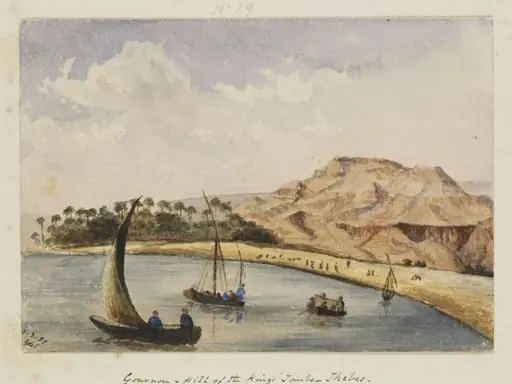 `Gournou & Hill of the Kings' Tombs - Thebes'
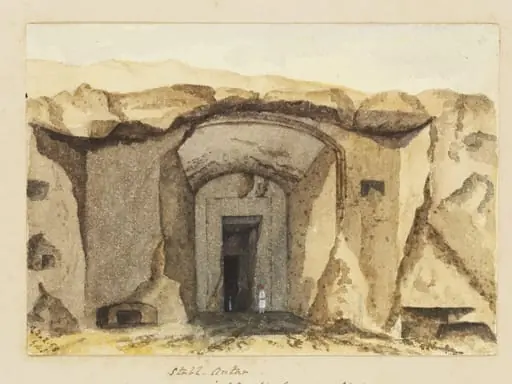 `Stabl-Antar. Ancient Egyptian Cave near Siout. Upper Egypt'
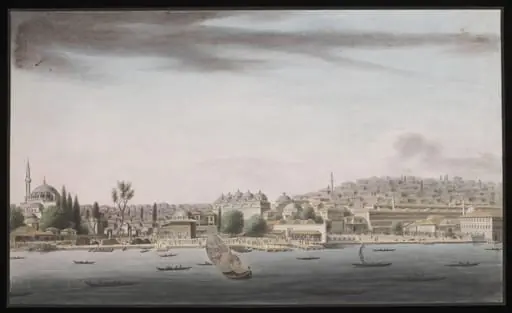 Panoramic view of the buildings on the shore at Tophane
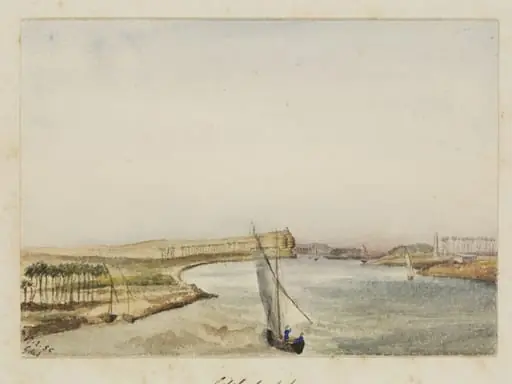 `Gibel-el-dab'
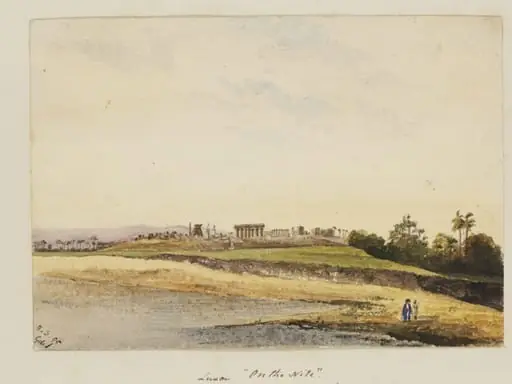 `Luxor "On the Nile" - from the Gournou Bank'
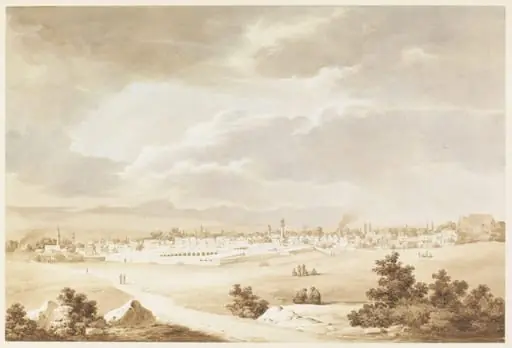 Tarsus
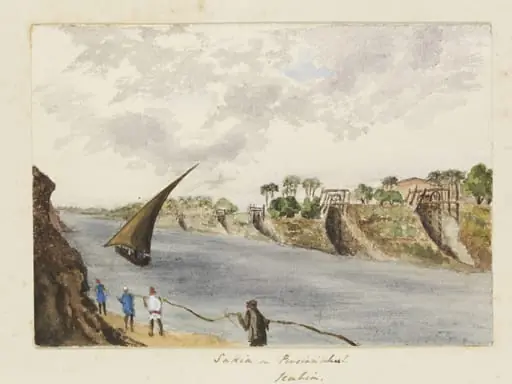 `Sakia or Persian wheel Nubia'
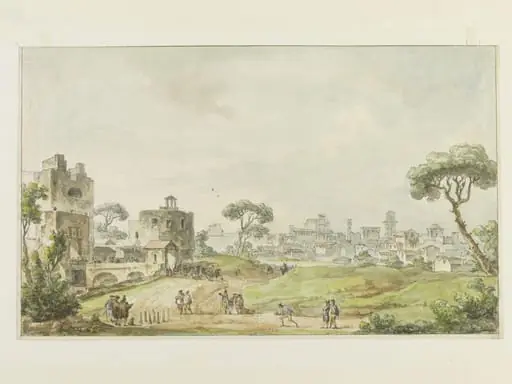 Untitled
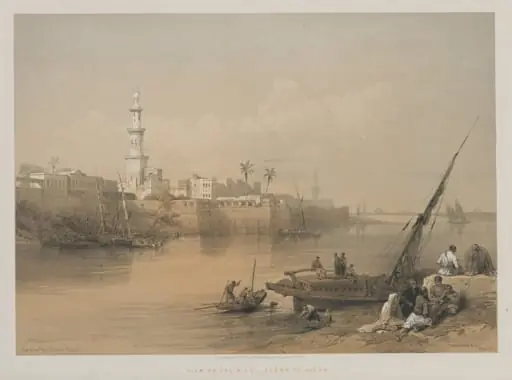 Egypt and Nubia, Volume III: View on the Nile, Ferry to Gizeh
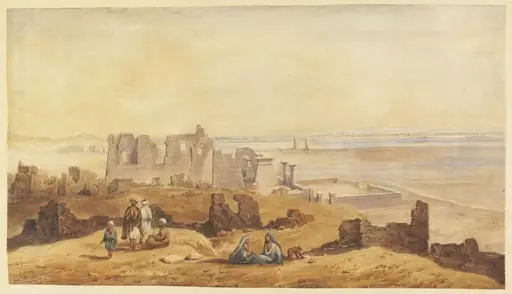 Luxor: the West Bank, with the Temple of Ramesses III at Madinat Habu; looking east towards the Nile
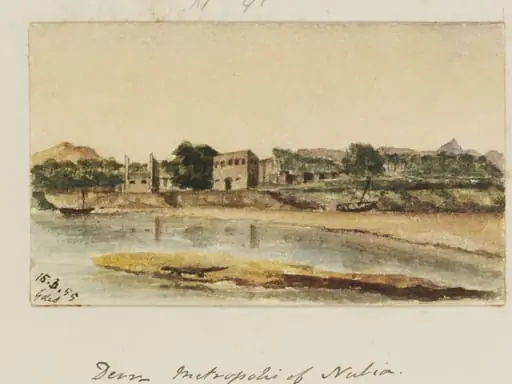 'Derr - Metropolis of Nubia'