Artwork
Parasurama and Rama
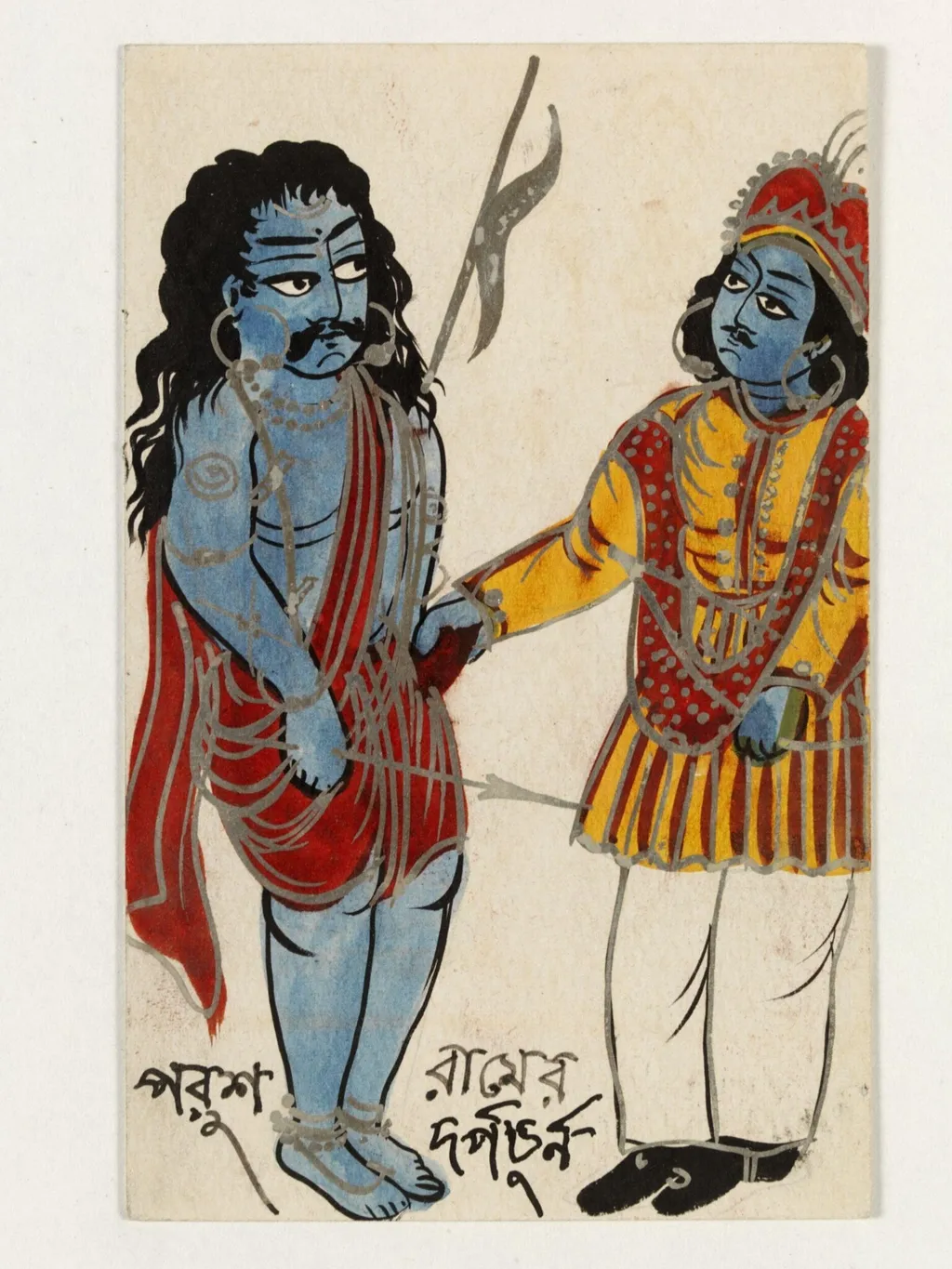
Parasurama and Rama is a paint painting by the Impressionist artist Unknown. It dates from 1890 and is held in the collection of the Victoria and Albert Museum.
About this work
Overview
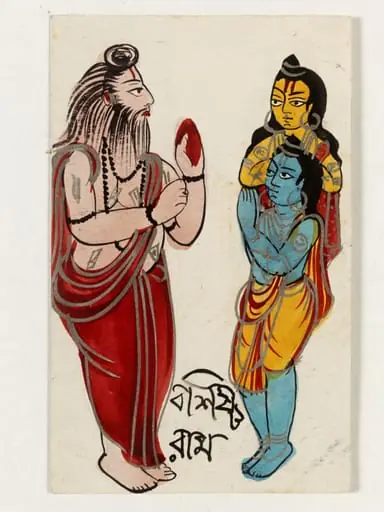
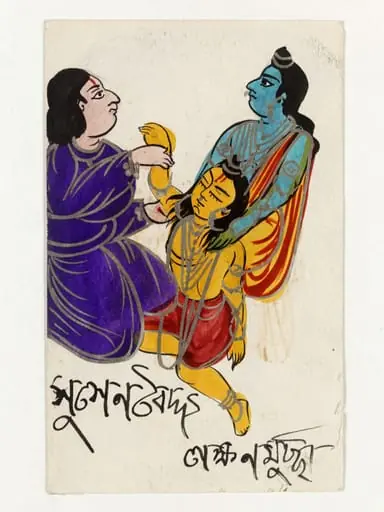
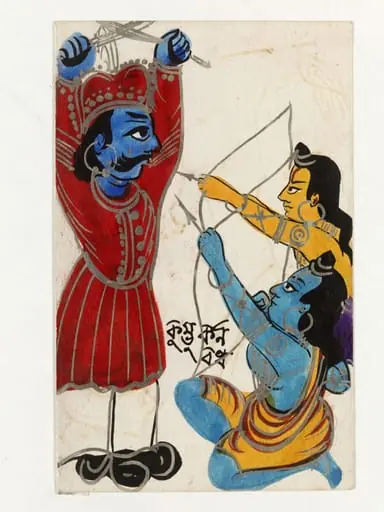
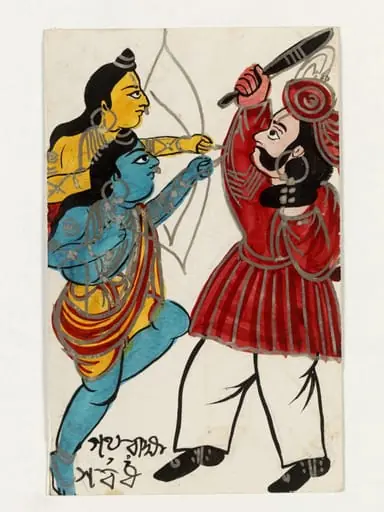
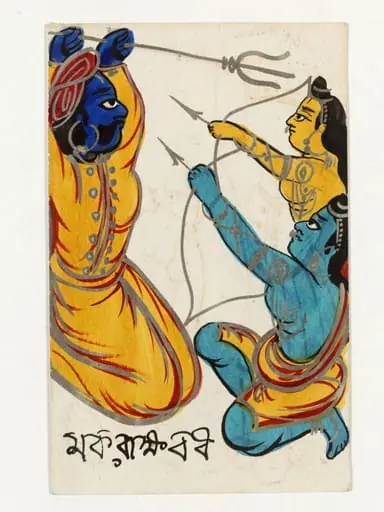
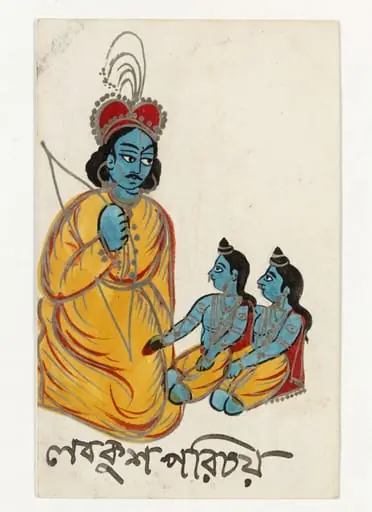
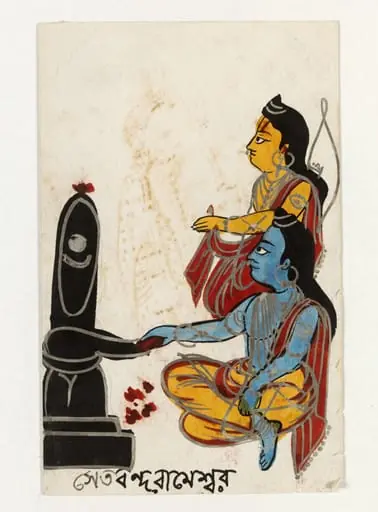
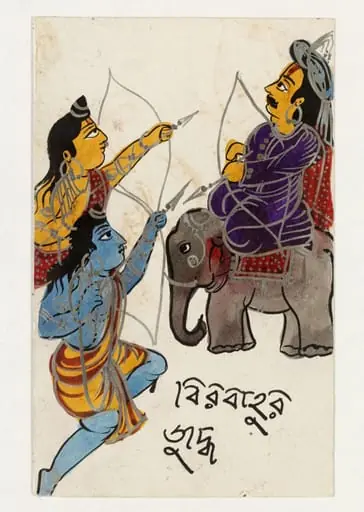
Created in 1890, this watercolor and tin alloy painting on paper captures a moment from Hindu mythology: the encounter between Parasurama and Rama.
Created in 1890, this watercolor and tin alloy painting on paper captures a moment from Hindu mythology: the encounter between Parasurama and Rama. Executed in the Kalighat style, it reflects the brisk, affordable art produced near Kolkata’s Kalighat temple for pilgrims. The use of flat pigments and minimal detail aligns with the tradition’s emphasis on immediacy and visual clarity over naturalism.
Subject & Meaning
The scene depicts the legendary test of strength between Parasurama, an avatar of Vishnu known for his warrior asceticism, and Rama, another incarnation of the same deity. Their confrontation centers on the bow of Vishnu, symbolizing divine authority. The painting frames their meeting not as conflict but as a ritual of legitimacy, affirming Rama’s rightful place as the next divine embodiment.
Technique & Style
The work employs bold, unmodulated colors—red, yellow, and blue—applied in flat planes with little shading or perspective. Figures are rendered with simplified contours, resembling cut-out silhouettes. Brushwork is swift and direct, typical of Kalighat artists who painted quickly for mass appeal. Tin alloy was occasionally mixed into pigments to add subtle shimmer, enhancing the devotional quality.
History & Provenance
Produced in mid-to-late 19th-century Calcutta, the painting emerged from a community of artists who migrated to the city’s outskirts to serve pilgrims and urban patrons. Kalighat paintings were sold as souvenirs and devotional objects, often responding to contemporary social themes. This piece likely originated in one of the workshops near the Kalighat temple, where traditional narratives met the rhythms of colonial urban life.
Context
During British rule, Kalighat art evolved as a vernacular response to changing cultural dynamics. While rooted in religious iconography, these works subtly engaged with modernity, class, and shifting moral values. The depiction of divine figures in contemporary attire and settings mirrored the blending of myth and everyday reality in colonial Calcutta, making sacred stories accessible and immediate to a broad audience.
Legacy
Kalighat paintings like this one helped preserve and reinterpret Hindu epics for a new generation of viewers. Though later overshadowed by mechanical reproduction, the style influenced modern Indian art movements that sought to reclaim indigenous aesthetics. Today, such works are studied for their visual economy and their role in documenting the cultural life of 19th-century Bengal.
Artist & collection

 Domestic Scene
 Giacomo and Cardinal Marco, investing Andrea, Abbot of San Zeno, with his Benefice
 The Nymph of Fontainebleau
 Portrait of a Woman
 Madonna and Child with Saints in the Enclosed Garden
 Venus and Minerva
 Family Group of Four on Sofa
 Wall painting from Room H of the Villa of P. Fannius Synistor at Boscoreale