Artwork
Rama and Sita
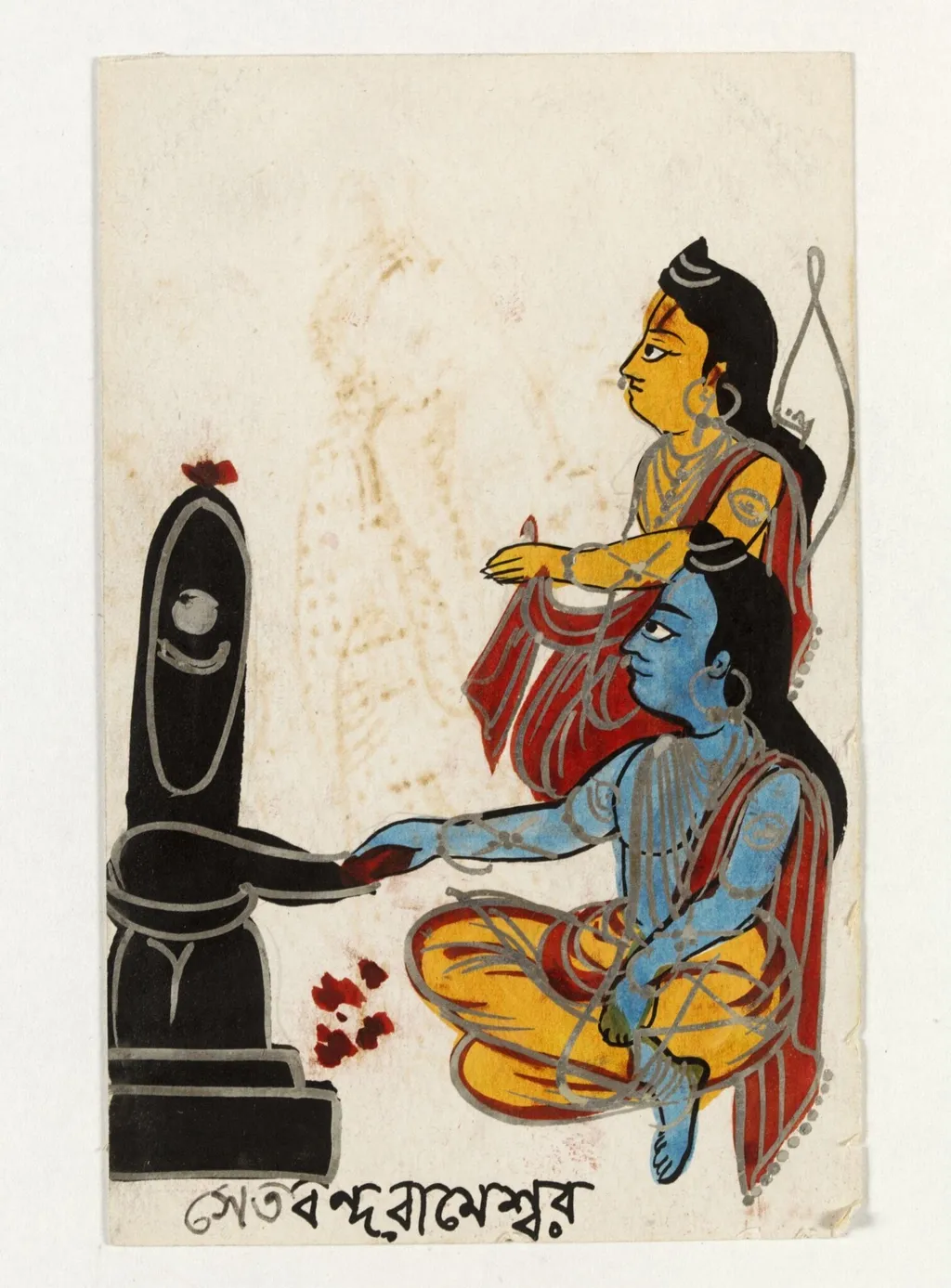
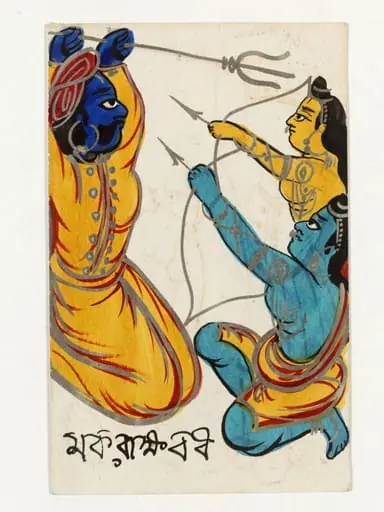
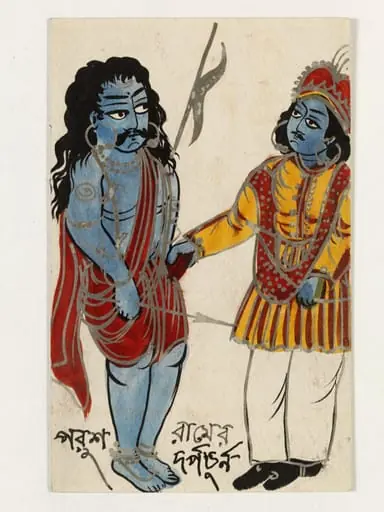
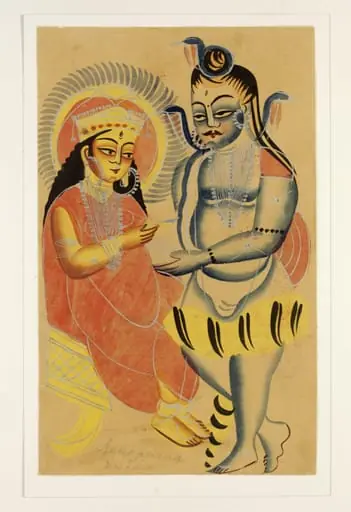
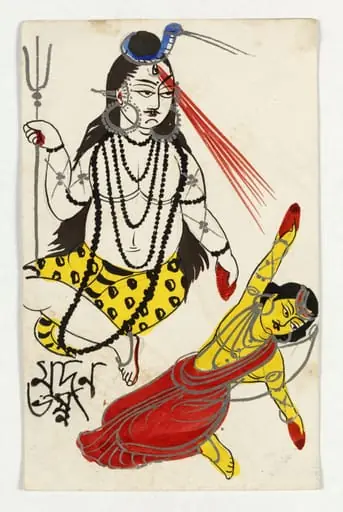
Rama and Sita is a paint painting by the Impressionist artist Unknown. It dates from 1890 and is held in the collection of the Victoria and Albert Museum. This late 19th-century Indian painting on paper combines watercolour and tin-alloy to depict a serene scene from the Ramayana.
About this work
Overview
This late 19th-century Indian painting on paper combines watercolour and tin-alloy to depict a serene scene from the Ramayana. Created circa 1890, it showcases Rama and Sita in a moment of devotion at Cape Comorin (Kanyakumari), seeking safe passage.
Subject & Meaning
The painting illustrates a specific Ramayana episode where Rama and Sita worship at a lingam shrine. The scene conveys a sense of quiet connection between the two figures, with Rama (blue body) touching Sita's hand, set before a distinctive black pillar with a curved top and red ritual marks on the ground.
Technique & Style
Executed in the Kalighat painting tradition, this work features bold, vibrant colours and simplified forms, characteristic of this 19th-century Calcutta-based style. Quick, expressive brushwork is also evident.
History & Provenance
Created during the British colonial era, the painting is part of a broader artistic response incorporating local mythology amidst social and political change. Its specific provenance details are not provided here.
Context
Similar works can be found at institutions like the Victoria and Albert Museum, highlighting the painting's connection to a larger body of colonial-era Indian art that blended traditional themes with the influences of the time.
Artist & collection

 Domestic Scene
 Giacomo and Cardinal Marco, investing Andrea, Abbot of San Zeno, with his Benefice
 The Nymph of Fontainebleau
 Portrait of a Woman
 Madonna and Child with Saints in the Enclosed Garden
 Venus and Minerva
 Family Group of Four on Sofa
 Wall painting from Room H of the Villa of P. Fannius Synistor at Boscoreale