Artwork
Patamanjari Ragini
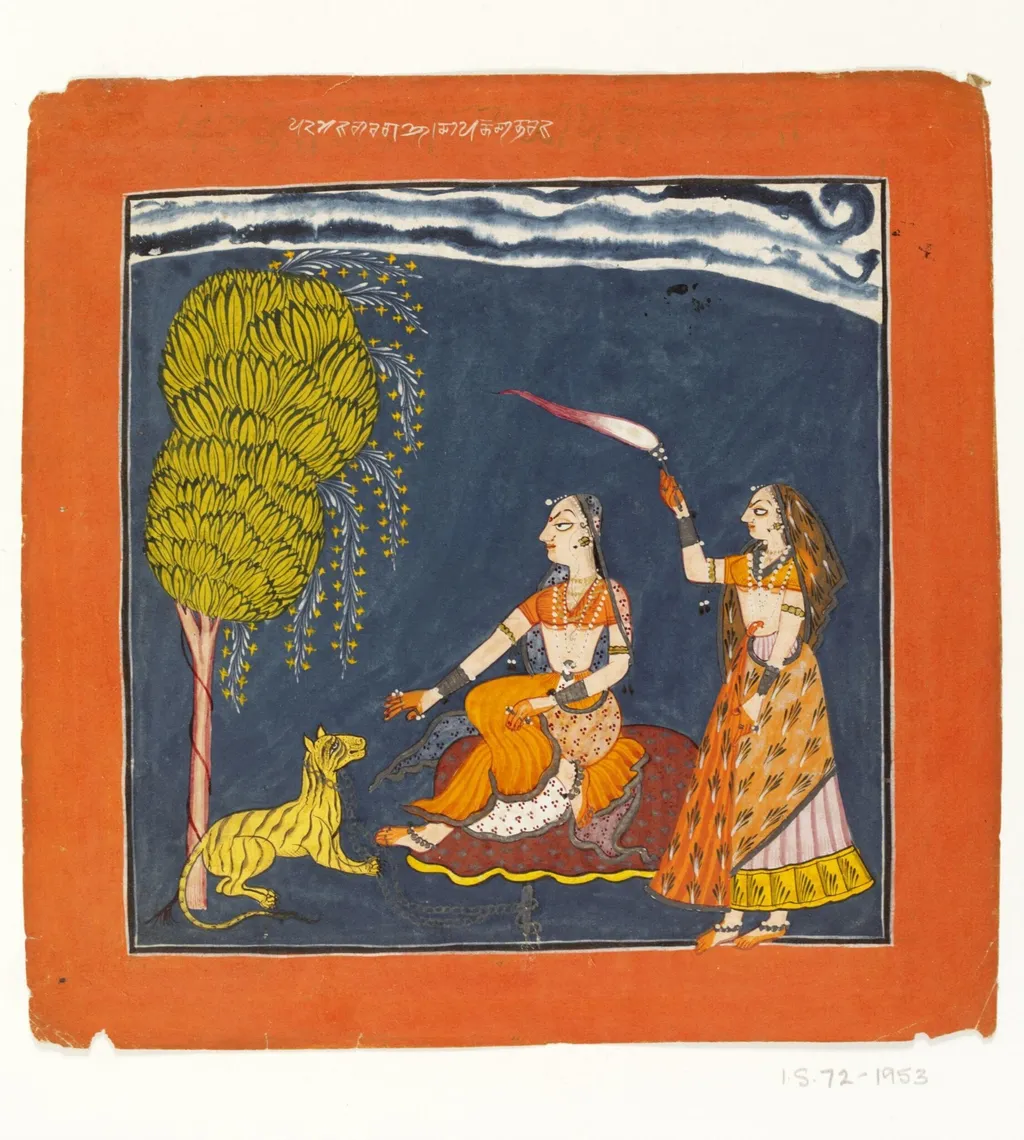
Patamanjari Ragini is a paint painting by the Baroque artist Unknown. It dates from 1700 and is held in the collection of the Victoria and Albert Museum. Created around 1700, this opaque watercolor on paper belongs to a series illustrating ragamala musical modes.
About this work
Overview
Created around 1700, this opaque watercolor on paper belongs to a series illustrating ragamala musical modes. It visually interprets Patamanjari Ragini, a feminine-associated raga, through a quiet domestic scene. The work was once in the collection of Michael Rothenstein and entered the Victoria and Albert Museum’s holdings in 1953, where it remains part of its South Asian art collection.
Subject & Meaning
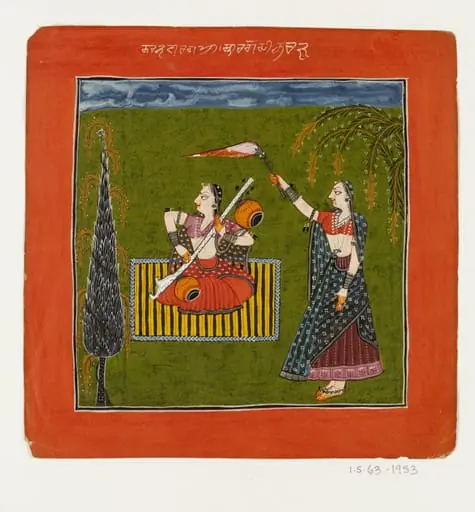
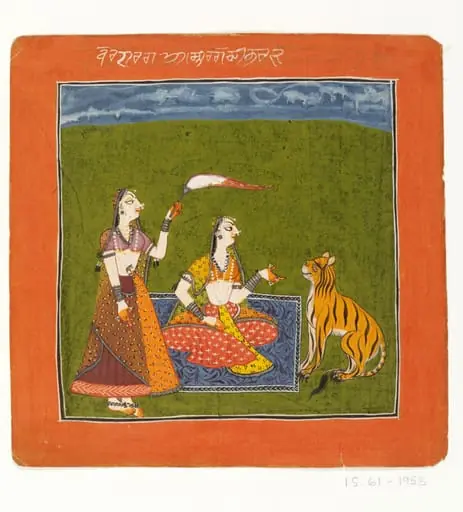
The scene portrays a woman seated on a red cushion, attended by a maidservant who holds a fan and reaches toward a calm, chained tiger. The tiger’s presence, neither threatening nor wild, suggests symbolic harmony between human and natural forces. The imagery evokes the raga’s emotional tone—serene yet charged—linking musical mood to visual narrative through gesture and stillness.
Technique & Style
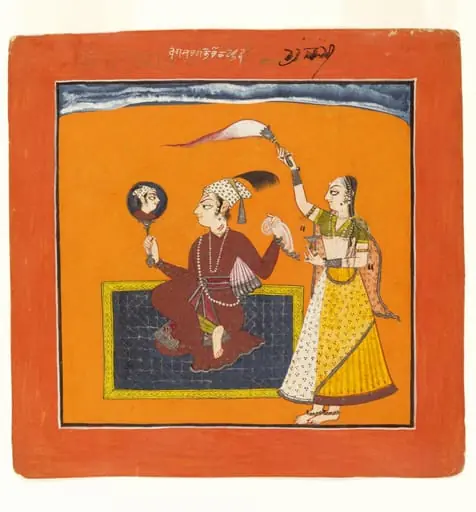
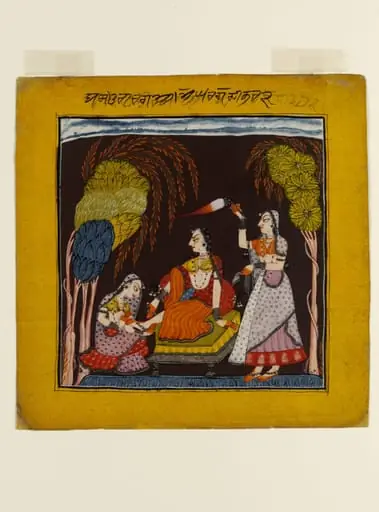
Executed in opaque watercolor, the painting employs vivid hues—orange, yellow, and red—against a deep blue sky to heighten visual contrast. Gold leaf accents mimic glowing leaves and luminous sparks, while fine brushwork defines jewelry and fur. The flattened perspective and decorative patterning reflect the Pahari school’s conventions, emphasizing symbolic expression over naturalistic space.
History & Provenance
The painting was part of Michael Rothenstein’s personal collection of Indian miniatures before being acquired by the Victoria and Albert Museum in 1953. Its journey from private hands to public institution reflects broader 20th-century efforts to preserve and contextualize South Asian artistic traditions within Western museum frameworks.
Context
As part of a ragamala series, this work translates musical modes into visual allegories, a practice common in 17th- and 18th-century North Indian courts. Patamanjari Ragini, associated with devotion and tenderness, is rendered through intimate domestic imagery. Such paintings were often used in courtly performances or private contemplation, bridging auditory and visual arts.
Legacy
The painting contributes to the understanding of how Indian musical traditions were visually codified in early modern art. Its preservation in the Victoria and Albert Museum allows ongoing scholarly and public engagement with Pahari miniature painting. It remains a quiet example of how emotion, music, and symbolism converged in regional artistic practices.
Artist & collection

 Domestic Scene
 Giacomo and Cardinal Marco, investing Andrea, Abbot of San Zeno, with his Benefice
 The Nymph of Fontainebleau
 Portrait of a Woman
 Madonna and Child with Saints in the Enclosed Garden
 Venus and Minerva
 Family Group of Four on Sofa
 Wall painting from Room H of the Villa of P. Fannius Synistor at Boscoreale