Artwork
picture roller, duck, painting, painting,
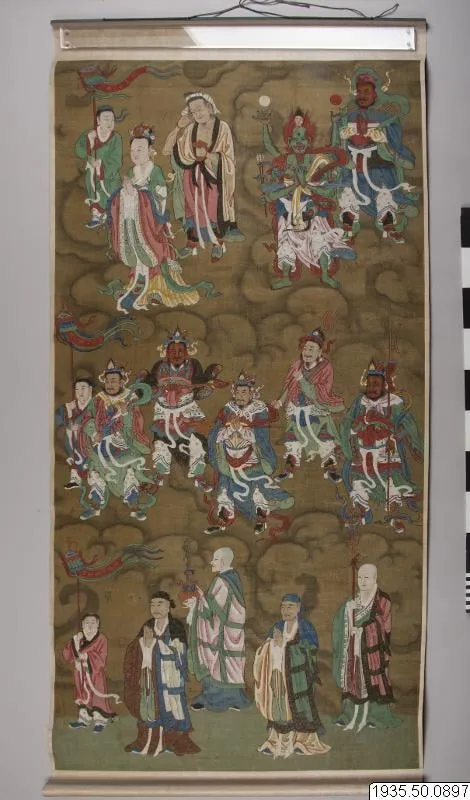
picture roller, duck, painting, painting, is a paint painting by Unknown. It dates from 1850 and is held in the collection of the ethnographic museum.
About this work
Overview
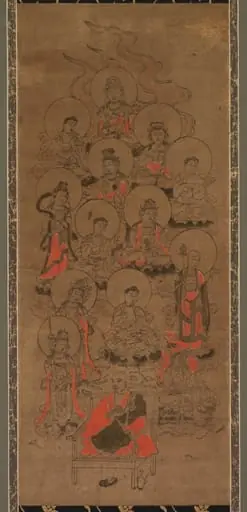
This painting depicts a vibrant, otherworldly gathering of figures in elaborate robes and headwear, arranged across earthly and celestial planes.
This painting depicts a vibrant, otherworldly gathering of figures in elaborate robes and headwear, arranged across earthly and celestial planes. Bright hues of blue, red, and green dominate the palette, while swirling clouds and a golden ambient light suggest a realm beyond the ordinary. The composition lacks a single focal point, instead inviting the viewer to explore multiple narrative threads among the clustered figures.
Subject & Meaning
The figures appear to represent characters from a mythological or historical narrative, possibly drawn from Eastern or syncretic traditions. Their varied poses—some standing, others riding a white animal, a few holding fans or scrolls—hint at ritual, procession, or divine assembly. The presence of clouds as platforms implies a celestial setting, suggesting themes of transcendence, hierarchy, or spiritual journey.
Technique & Style
The work employs flat, decorative patterning rather than naturalistic perspective, with figures rendered in bold outlines and saturated colors. Background clouds are rendered in fluid, rhythmic strokes, creating a sense of motion and ethereality. Light is diffused rather than directional, avoiding sharp shadows and emphasizing symbolic atmosphere over physical realism.
History & Provenance
The painting’s origins are undocumented in public records, and no known artist, date, or cultural source has been verified. Its style suggests possible influence from East Asian scroll painting or folk religious art, though it lacks clear ties to established traditions. Its current location and acquisition history remain unspecified.
Context
The imagery aligns loosely with depictions of celestial courts or mythic processions found in Buddhist, Daoist, or regional folk art, where deities and immortals traverse earthly and heavenly realms. The absence of textual or stylistic markers makes precise cultural attribution difficult, but the visual language evokes a broader tradition of sacred storytelling through imagery.
Legacy
Though not part of a recognized artistic canon, the painting contributes to a broader interest in non-Western visual narratives and symbolic composition. Its emphasis on color, movement, and layered meaning resonates with contemporary explorations of myth and identity in art, encouraging viewers to consider alternative modes of visual storytelling beyond naturalism.
Artist & collection
 Domestic Scene
 Giacomo and Cardinal Marco, investing Andrea, Abbot of San Zeno, with his Benefice
 The Nymph of Fontainebleau
 Portrait of a Woman
 Madonna and Child with Saints in the Enclosed Garden
 Venus and Minerva
 Family Group of Four on Sofa
 Wall painting from Room H of the Villa of P. Fannius Synistor at Boscoreale
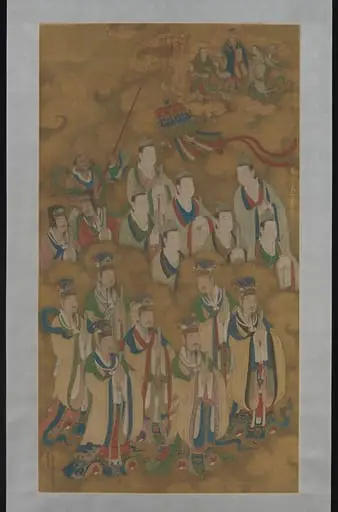 明景泰 佚名 北斗中斗本命星君圖 軸|Star deities of the northern and central dippers
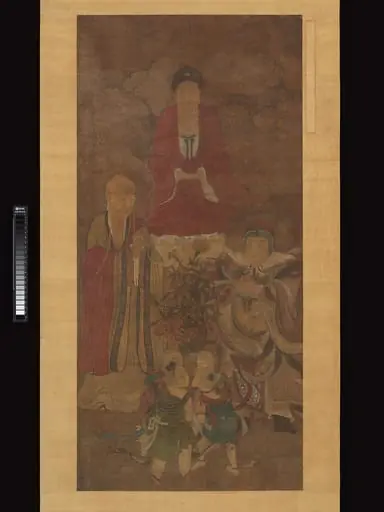 明 佚名 禮佛圖 軸|Shakyamuni with luohan, heavenly king, and boys
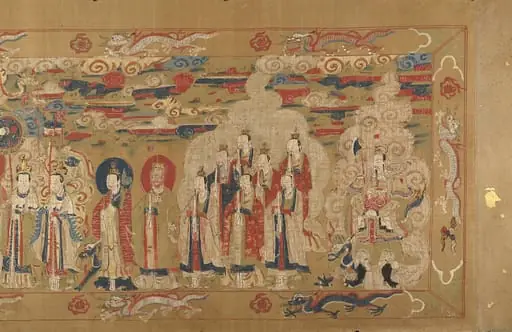 明 佚名 奉神圖 卷|Canonization scroll of Li Zhong
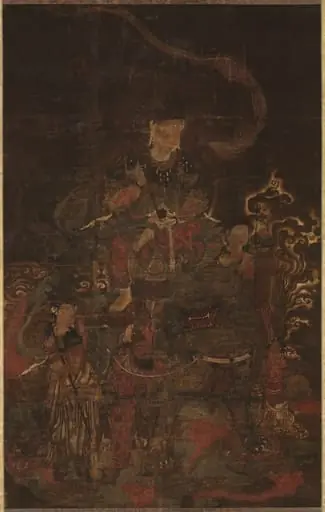 Monju Riding Lion with Attendants
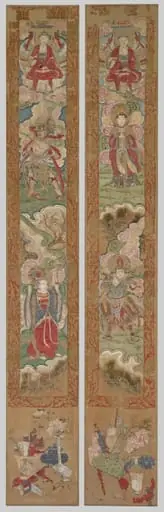 Buddhist Panel
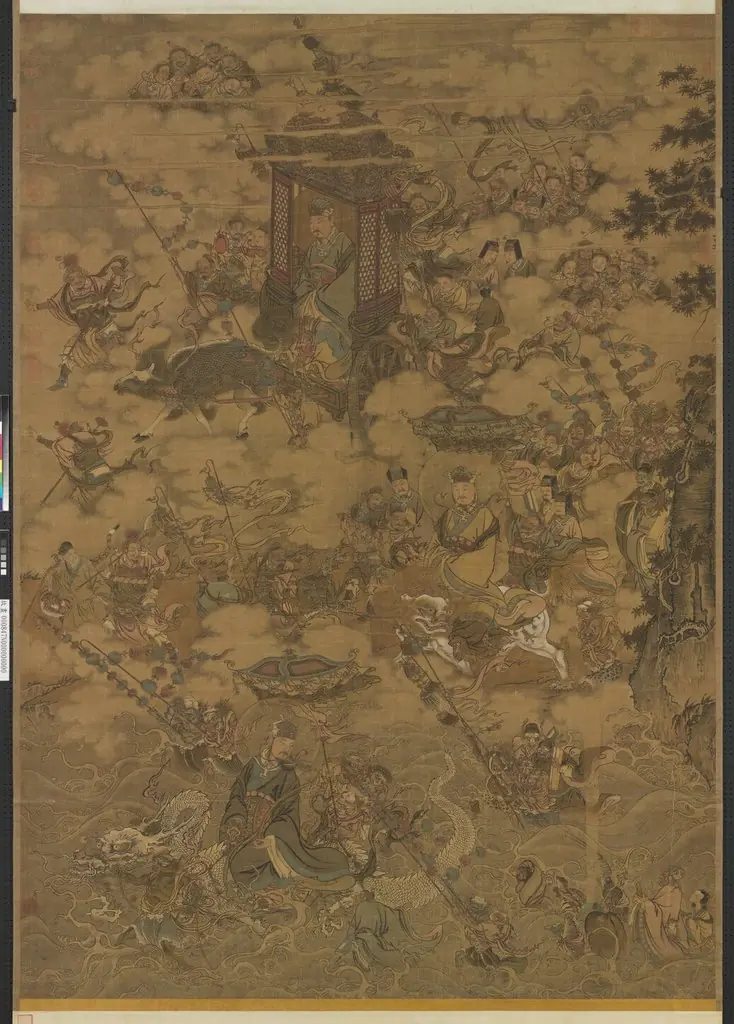 宋馬麟三官出巡圖 軸
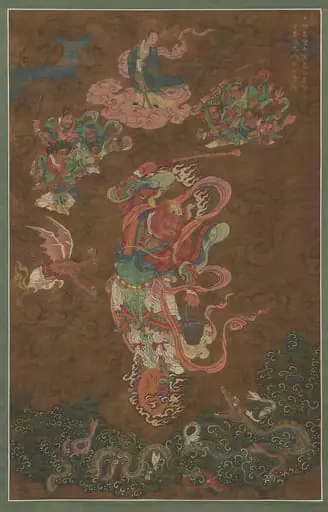 明嘉靖 佚名 王元帥圖 軸|Marshal Wang
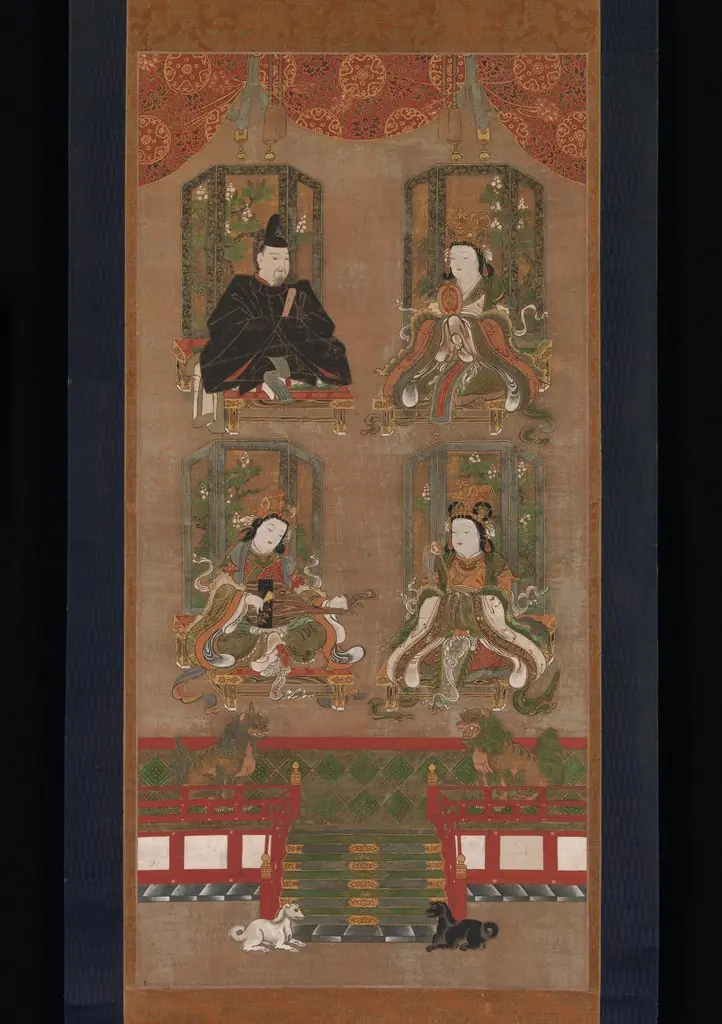 The Four Deities of Mount Kōya
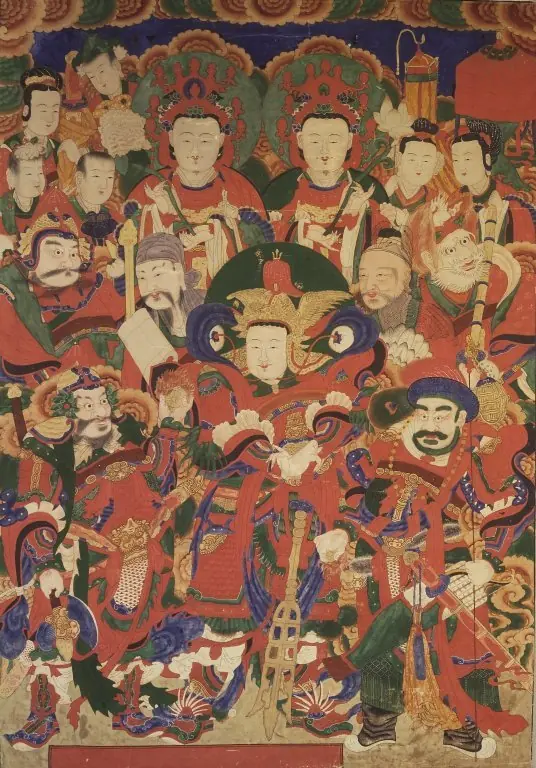 The Five Guardian Generals (O Bang Jang Kun)
 Untitled
 元? 佚名 仿李公麟 屈原九歌圖 卷|The Nine Songs: Illustrations to the poems of Qu Yuan (343–277 B.C.)
 Twelve Buddhas and Kobo Daishi (Jusanbutsu)