Artwork
Monju Riding Lion with Attendants
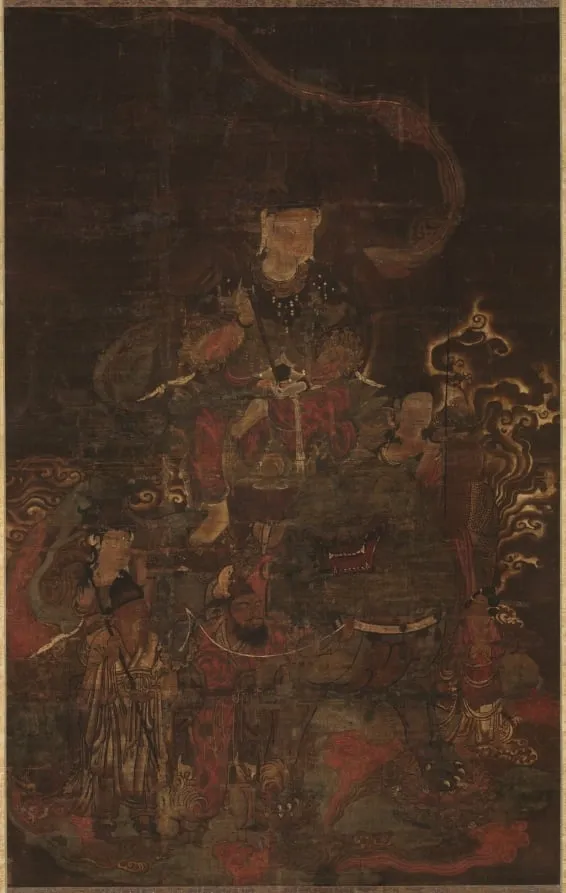
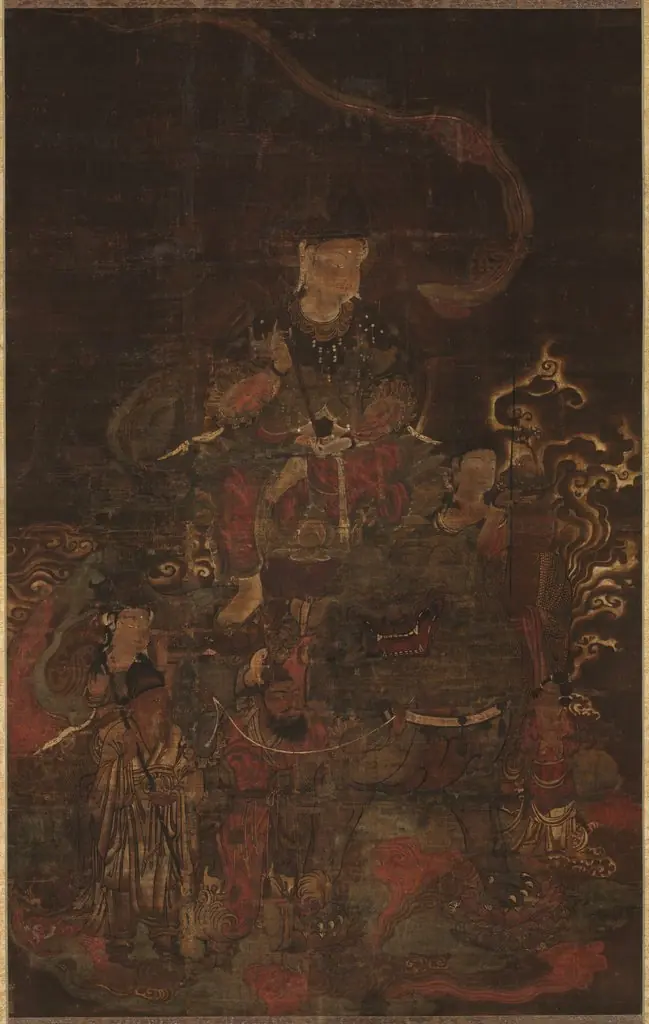
Monju Riding Lion with Attendants is an unspecified painting by Unknown. It dates from 1204 and is held in the collection of the Cleveland Museum of Art. This ink-and-color painting depicts Monju, the Bodhisattva of Wisdom, mounted on a roaring lion, flanked by two attendants.
About this work
Overview
This ink-and-color painting depicts Monju, the Bodhisattva of Wisdom, mounted on a roaring lion, flanked by two attendants.
This ink-and-color painting depicts Monju, the Bodhisattva of Wisdom, mounted on a roaring lion, flanked by two attendants. Rendered in subdued earth tones—browns and deep reds—the composition emphasizes motion and tension. The dark background isolates the figures, heightening their presence. The scene conveys spiritual authority through dynamic posture and restrained palette, typical of Kamakura-period religious art that favored expressive realism over ornamental detail.
Subject & Meaning
Monju, symbolizing enlightened wisdom in Mahayana Buddhism, is shown astride a lion, a traditional emblem of fearless teaching. The open mouth of the lion suggests the power of the Dharma being proclaimed. The attendants, dressed plainly, serve as witnesses or disciples, reinforcing Monju’s role as a guide. The sword in his hand represents the cutting through ignorance. Together, the imagery communicates the active, transformative nature of wisdom in Buddhist practice.
Technique & Style
The painting employs fine ink lines and layered washes to define form, with minimal color applied to robes and lion’s mane. Shading is subtle, relying on tonal variation rather than bold contrasts. The figures are rendered with a sense of kinetic energy—muscles tensed, drapery flowing—as if caught mid-motion. The dark, unmodeled background enhances focus on the central group, reflecting the Kamakura period’s shift toward direct, emotionally resonant religious imagery.
History & Provenance
Created during the Kamakura period (1185–1333), this work likely originated in a temple or monastic context, possibly as part of a devotional set. Its style aligns with Chinese-influenced ink painting traditions adapted by Japanese monks and artists of the time. While its exact origin and early ownership are undocumented, similar works were used in ritual spaces to aid meditation and convey doctrinal themes to lay and monastic audiences alike.
Context
During the Kamakura period, Japanese Buddhism shifted toward more accessible, emotionally engaging forms. Depictions of deities like Monju became more dynamic and humanized, moving away from the serene idealism of earlier Heian art. This painting reflects a broader trend: religious imagery designed to inspire devotion through immediacy and vigor, often influenced by Chinese Song dynasty painting techniques transmitted through monastic networks.
Legacy
This work exemplifies the Kamakura era’s contribution to Japanese religious art—emphasizing movement, psychological presence, and narrative clarity. Though not widely known outside specialized circles, its stylistic choices influenced later depictions of Buddhist figures in both painting and sculpture. It remains a quiet testament to how spiritual ideals were rendered with renewed vigor during a time of social and religious transformation in Japan.
Artist & collection

 Domestic Scene
 Giacomo and Cardinal Marco, investing Andrea, Abbot of San Zeno, with his Benefice
 The Nymph of Fontainebleau
 Portrait of a Woman
 Madonna and Child with Saints in the Enclosed Garden
 Venus and Minerva
 Family Group of Four on Sofa
 Wall painting from Room H of the Villa of P. Fannius Synistor at Boscoreale
 Shakyamuni with two attendants
 Bishamonten, the Guardian of the North, with his Retinue
 Buddha Amitābha with Two Attending Bodhisattvas
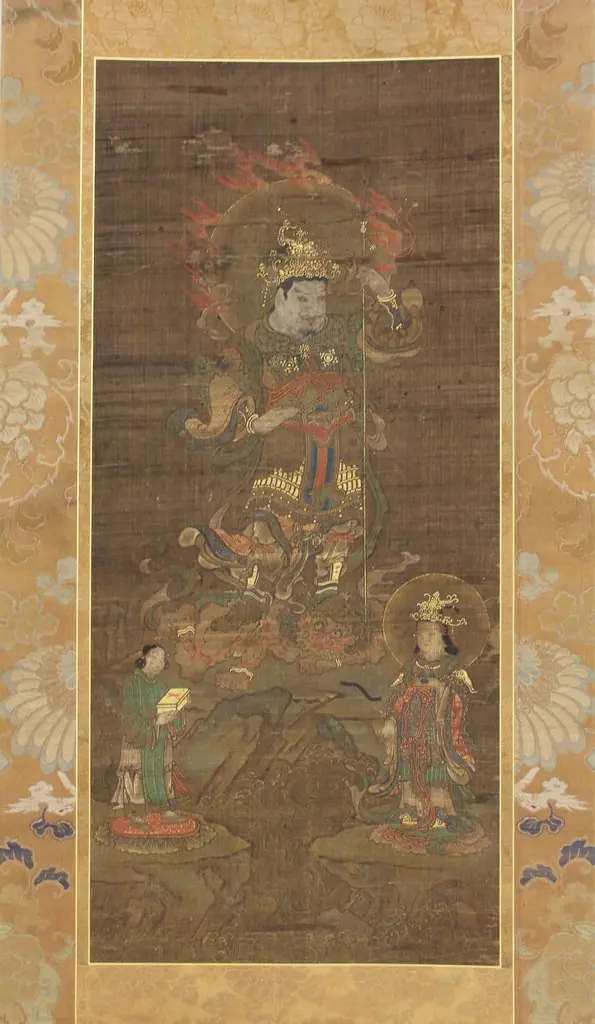 Mount Kurama Mandala: Bishamonten Triad (Kuramayama mandara: Bishamonten sanzonzō)
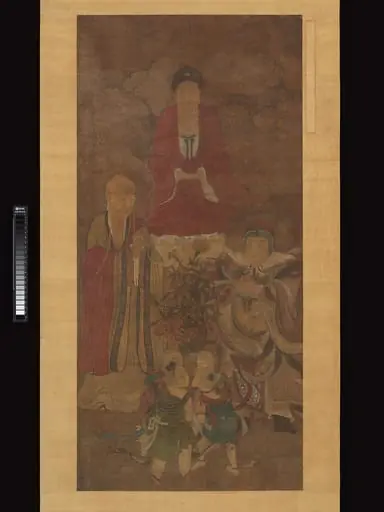 明 佚名 禮佛圖 軸|Shakyamuni with luohan, heavenly king, and boys
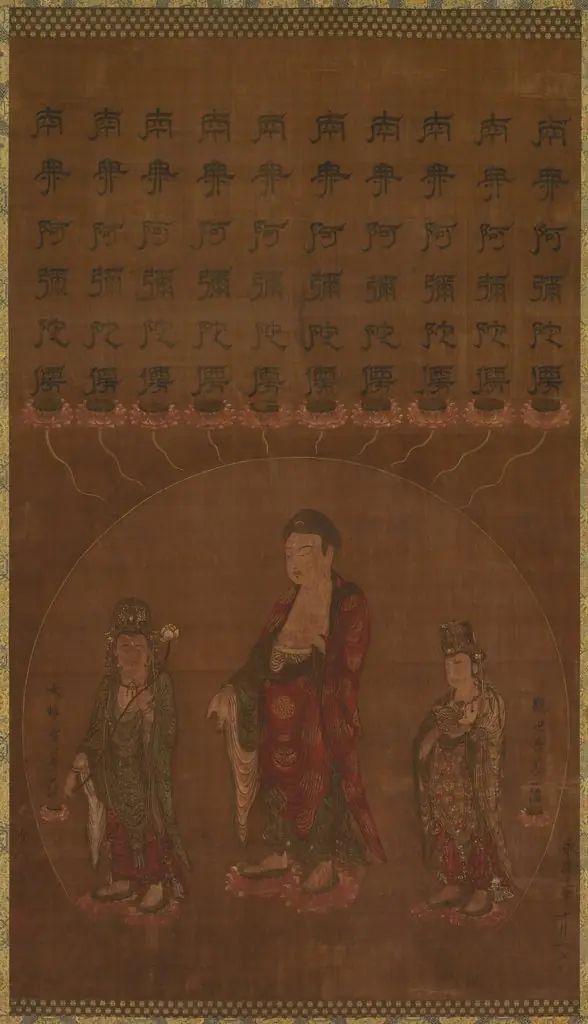 Buddha Amitābha with Two Attending Bodhisattvas
 Buddhist Panel
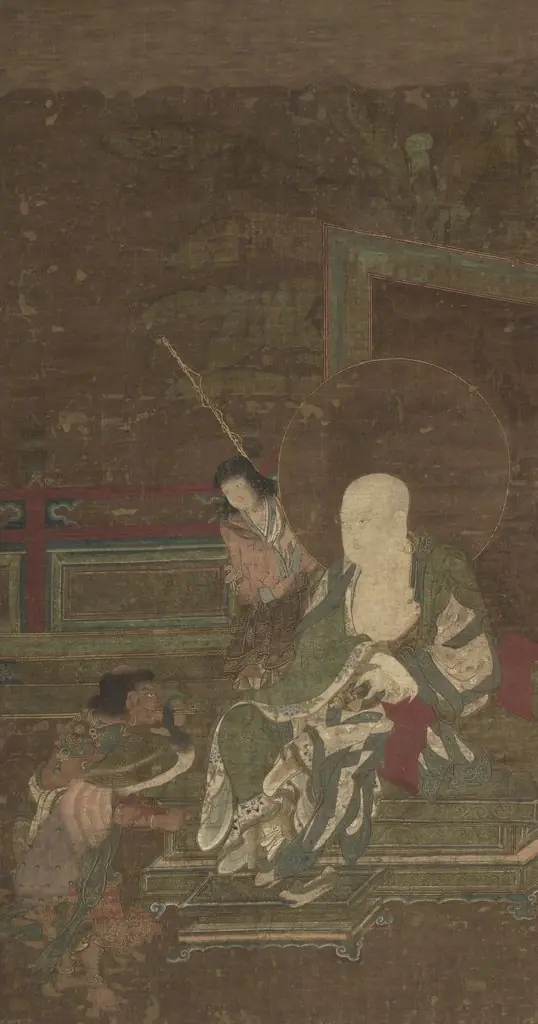 Seated Arhat with Two Attendants
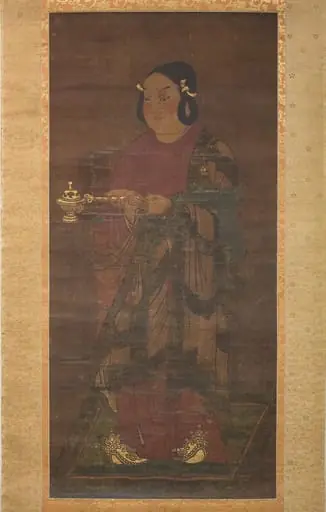 聖徳太子孝養図 (Shotoku Taishi kōyō zu)"|Prince Shōtoku at Age Sixteen
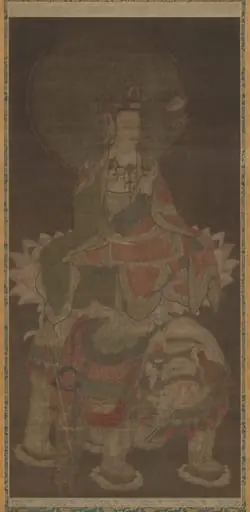 Samantabhadra
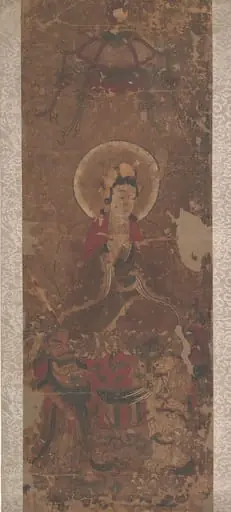 Untitled
 Monju Riding Lion with Attendants