Artwork
Plângerea lui Iisus Hristos (Prohodul)
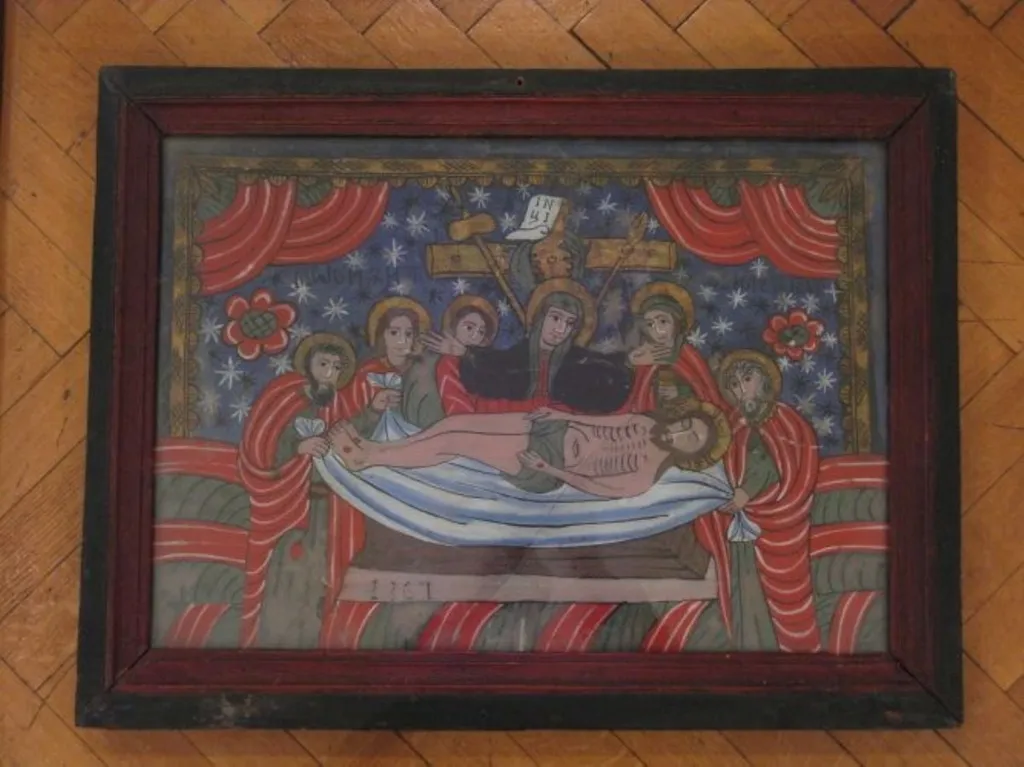
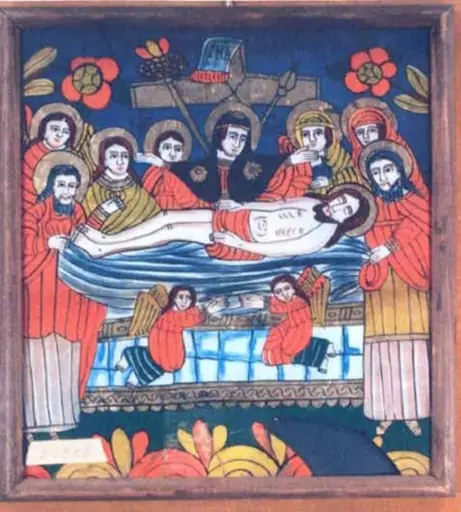
Plângerea lui Iisus Hristos (Prohodul) is a drawing by the Impressionist artist Unknown. It dates from 1867 and is held in the collection of the Vasile Grigore - Painter and Collector Art Museum. This painting depicts a moment of mourning following the deposition of Christ, rendered in a stylized, non-naturalistic manner.
About this work
Overview
Six figures surround a lifeless body laid upon a cloth, their elongated forms and flat, saturated colors emphasizing ritual over realism.
This painting depicts a moment of mourning following the deposition of Christ, rendered in a stylized, non-naturalistic manner. Six figures surround a lifeless body laid upon a cloth, their elongated forms and flat, saturated colors emphasizing ritual over realism. The dark blue sky with scattered stars and red drapes frame the scene, creating a solemn, otherworldly atmosphere. No perspective or shading is used to model form, reinforcing its symbolic intent.
Subject & Meaning
The central figure, identified as Christ, lies exposed with pallid skin and visible ribs, conveying physical vulnerability after crucifixion. Surrounding figures, marked by golden halos, represent mourners from the Gospel narrative—likely the Virgin Mary, John the Apostle, and others. One holds a cross, another a cloth bearing an image, possibly the sudarium. The composition reflects liturgical mourning, emphasizing communal grief and sacred presence.
Technique & Style
The painting employs flat, unmodulated colors and sharp outlines, rejecting Renaissance modeling in favor of Byzantine and folk iconographic traditions. Forms are simplified, with no chiaroscuro or spatial depth. Gold halos signify sanctity, while the bold reds, blues, and greens serve symbolic rather than naturalistic purposes. The lack of cross-hatching or texture suggests an intentional avoidance of realism, prioritizing spiritual clarity over physical detail.
History & Provenance
The work originates from a Romanian Orthodox devotional context, likely created in the 19th or early 20th century by an anonymous iconographer. It belongs to a regional tradition that preserved medieval compositional forms despite Western artistic influences. Its survival suggests continued use in private or parish worship, where such images served as aids to prayer and remembrance during Holy Week observances.
Context
This image aligns with Eastern Christian liturgical practices that emphasize Christ’s suffering as a moment of divine solidarity. Unlike Western depictions that often focus on the crucifixion itself, this scene captures the quiet aftermath—emphasizing reverence over drama. The inclusion of red drapes and starry sky echoes liturgical textiles and celestial symbolism common in Orthodox iconography, reinforcing the sacredness of the moment.
Legacy
The painting exemplifies a persistent regional iconographic tradition that resisted academic naturalism well into the modern era. It remains a testament to the endurance of devotional aesthetics in rural and ecclesiastical settings. Though not widely exhibited in major museums, such works continue to inform contemporary Orthodox icon painting and serve as cultural touchstones in Romanian religious communities.
Artist & collection
Museum
Vasile Grigore - Painter and Collector Art Museum
Continue through works from the same source collection.
 Domestic Scene
 Giacomo and Cardinal Marco, investing Andrea, Abbot of San Zeno, with his Benefice
 The Nymph of Fontainebleau
 Portrait of a Woman
 Madonna and Child with Saints in the Enclosed Garden
 Venus and Minerva
 Family Group of Four on Sofa
 Wall painting from Room H of the Villa of P. Fannius Synistor at Boscoreale
 Îngroparea lui Iisus Hristos (Plângerea; Prohodul)
 Plângerea lui Iisus (Prohodul)
 Învierea lui Lazăr
 Punerea în mormânt
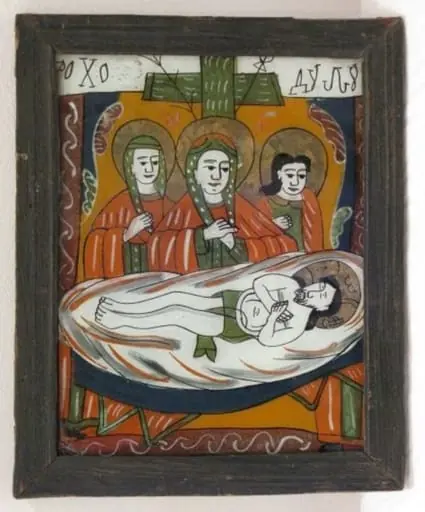 Plângerea lui Iisus
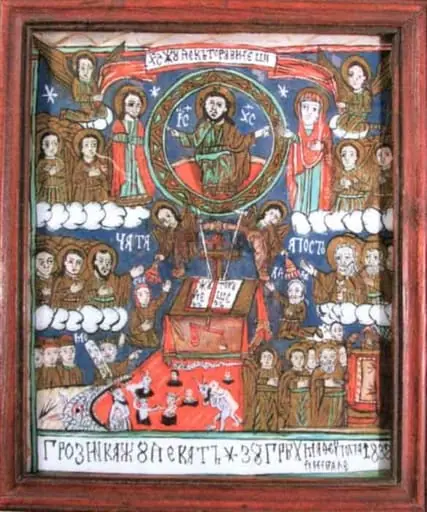 Judecata de Apoi
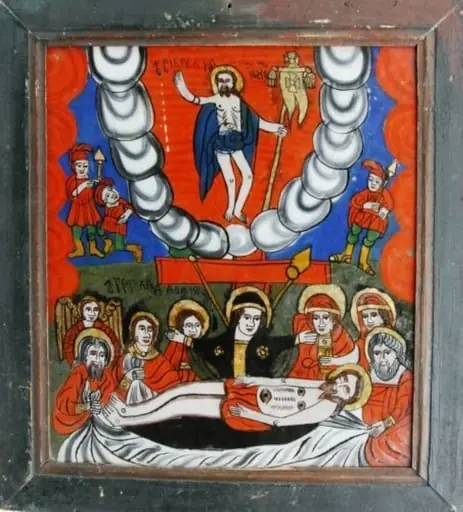 Îngroparea lui Iisus Hristos; Înălțarea lui Iisus Hristos la ceruri (Plângerea, Prohodul)
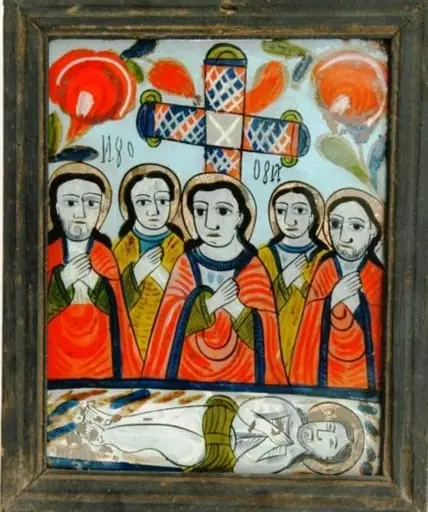 Plângerea lui Iisus Hristos (Prohodul)
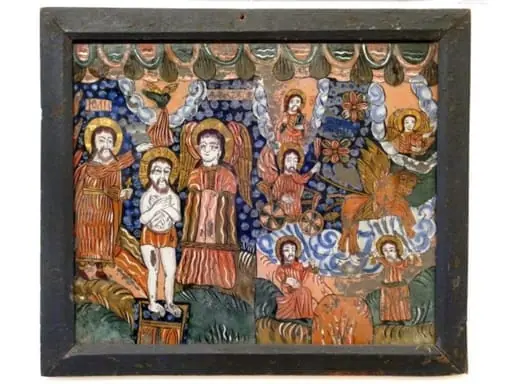 Botezul lui Iisus Hristos; Sfântul Proroc Ilie
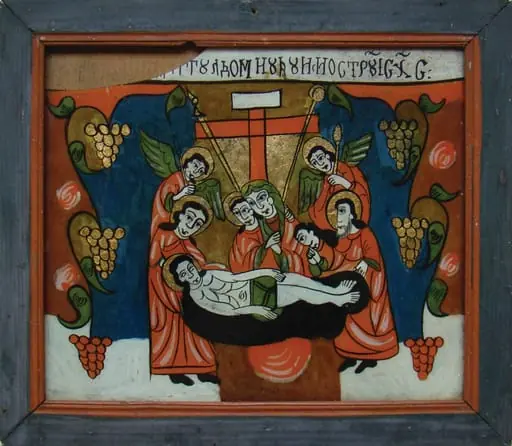 Prohodul lui Iisus