Artwork
Plângerea lui Iisus
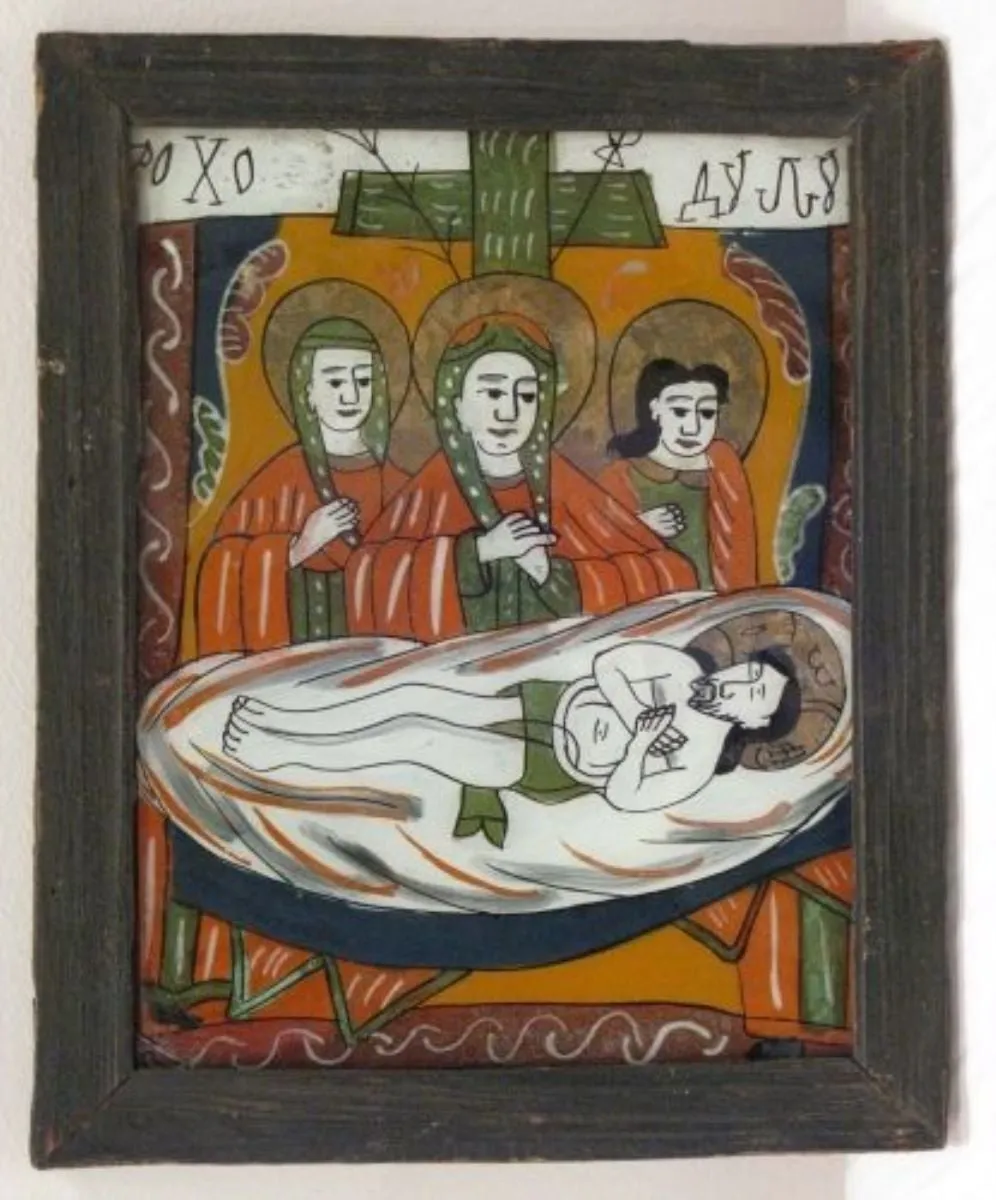
Plângerea lui Iisus is a drawing by Unknown. It dates from 1850 and is held in the collection of the Vasile Grigore - Painter and Collector Art Museum. This devotional image depicts a moment of quiet mourning around a reclining figure wrapped in cloth, accompanied by a small child.
About this work
Overview
This devotional image depicts a moment of quiet mourning around a reclining figure wrapped in cloth, accompanied by a small child.
This devotional image depicts a moment of quiet mourning around a reclining figure wrapped in cloth, accompanied by a small child. Three robed individuals, marked by halos, stand in silent contemplation, their hands clasped and gazes lowered. The composition is flattened, with no perspective, and the background features a green cross and a warm, non-naturalistic sky, reinforcing its symbolic rather than realistic intent.
Subject & Meaning
The scene likely represents the lamentation over Christ’s body after the Crucifixion, with the child possibly symbolizing the soul or a figure like the infant John the Baptist. The calm expressions and clasped hands suggest acceptance rather than anguish, aligning with Eastern Orthodox traditions that emphasize spiritual peace in death. The presence of the cross in the background anchors the event within Christian salvific narrative.
Technique & Style
The figures are rendered with minimal facial detail, their halos and robes rendered in flat, saturated hues—orange over green—creating rhythmic visual harmony. The background lacks depth, using bold, unnatural colors to evoke a sacred space. The forms are simplified, with no modeling or shadow, emphasizing spiritual presence over physical realism, typical of medieval iconographic conventions.
History & Provenance
The work appears to derive from a Byzantine or post-Byzantine devotional tradition, possibly produced in the Balkans or Eastern Mediterranean during the late medieval period. Its stylistic features suggest it was created for private or monastic use, not public display. No documented provenance is available, but similar compositions appear in church frescoes and portable icons from the 13th to 16th centuries.
Context
In medieval Christian art, scenes of lamentation served as aids for prayer and meditation on Christ’s sacrifice. The use of symbolic color, flattened space, and frontal figures followed established iconographic rules meant to transcend earthly reality. Nature was rarely depicted realistically; instead, elements like the cross and sky functioned as theological signs, guiding the viewer’s contemplation toward divine truths.
Legacy
This image reflects a sustained tradition of Eastern Christian iconography that prioritized spiritual resonance over naturalism. Though largely replaced by Renaissance naturalism in the West, such works continued to influence Orthodox liturgical art into the modern era. Their enduring presence in churches and homes underscores their role as vessels of communal memory and devotional practice.
Artist & collection
Museum
Vasile Grigore - Painter and Collector Art Museum
Continue through works from the same source collection.
 Domestic Scene
 Giacomo and Cardinal Marco, investing Andrea, Abbot of San Zeno, with his Benefice
 The Nymph of Fontainebleau
 Portrait of a Woman
 Madonna and Child with Saints in the Enclosed Garden
 Venus and Minerva
 Family Group of Four on Sofa
 Wall painting from Room H of the Villa of P. Fannius Synistor at Boscoreale
 Prohodul Domnului
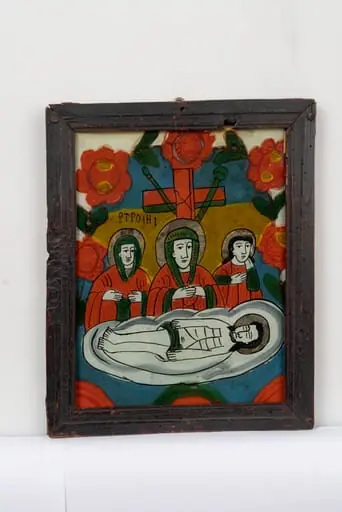 Tema icoanei face parte din ciclul Patimilor Mântuitorului și înfățișează Prohodul Domnului. Alături de Hristos așezat pe piatră sunt reprezentate doar trei personaje. Maica Domnului, în centru, cu mâinile împreunate la piept, are de-o parte un apostol, iar de cealaltă parte una dintre femeile mironosițe, probabil Maria Magdalena. În spate se profilează crucea lui Hristos și însemnele patimilor - sulița și buretele. Un șirag de rozete ornamentează fondul icoanei. Cromatica icoanei se compune din tonuri de roșu vermillon, ocru galben, alb, verde, albastru, negru și gri. Rama icoanei e profilată, băițuită și e formată din îmbinarea a patru baghete de lemn.
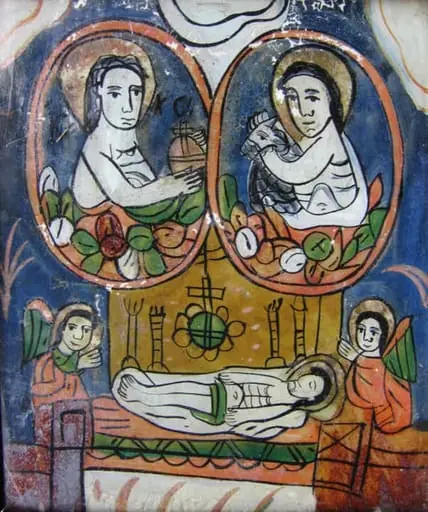 Ioan Botezătorul cu mielul și Iisus; Îngroparea lui Iisus
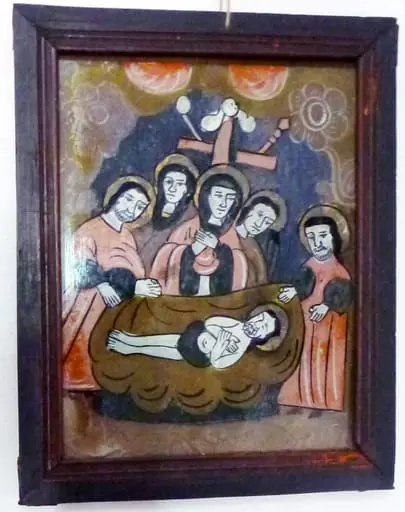
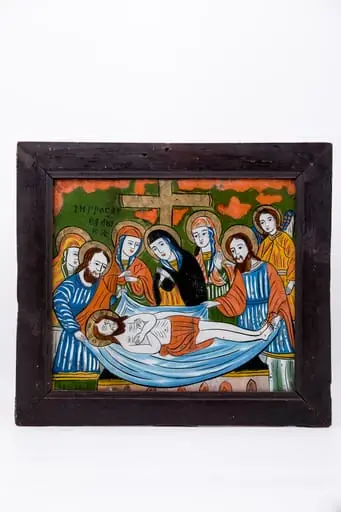 Icoana reprezintă Prohodul Domnului. Punerea în mormânt a Mântuitorului Iisus Hristos. Trupul Mântuitorului Iisus Hristos, fiind coborât de pe cruce, este învelit în țesătura giulgiului alb-albastru. Maica Domnului împreună cu Sfinții Iosif din Arimateea, Nicodim și trei femei mironosițe aducătoare de mir țin în brațe trupul Mântuitorului. Martor și aproape este Îngerul care va striga bucuria Învierii Domnului. Compozițional se creează astfel o imagine concentrică de corabie, cu Crucea Răstignirii ca și catarg, corabia prefigurând Biserica. Giulgiul și îmbrățișarea celor apropiați, uniți întru dragoste și suferință, reprezintă axa orizontală, perpendiculară pe Cruce. Compoziția este echilibrată, simetrică și circulară. Maica Domnului este îmbrăcată în veșmânt cu maforiom negru, cu sacos galben și interiorul căptușit cu albastru ceruleum. Veșmintele Sfinților și Mironosițelor sunt în combinație de roșu vermillon, albastru cu linii albe, galben solar și verde-văratic. Fondul icoanei este văzduhul verde-văratic, plin de Duhul Sfânt și un chenar decorativ sugerat ca și ancadrament, format din elemente florale stilizate - ruje roșii. Cromatica este armonioasă: roșu vermillon, albastru cobalt, ceruleum, verde văratic-forest, galben solar-chihlimbar, alb și negru. Inscripția din româno-chirilică se traduce Îngroparea Lui IC XC Iisus Hristos. Icoana este din Țara Oltului.
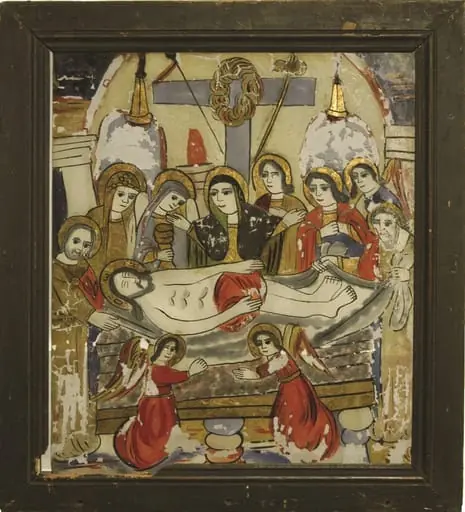 Prohodul lui Iisus
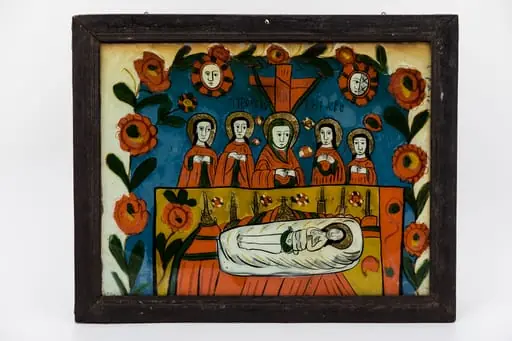 Icoana reprezintă Punerea în mormânt a Mântuitorului Iisus Hristos. Prohodul Domnului. Trupul Mântuitorului Iisus Hristos, fiind coborât de pe cruce, este învelit în țesătura giulgiului alb-gri, cu fire diafane galbene de lumină, amintind de Lumina Învierii. Maica Domnului împreună cu Sfinții Iosif din Arimateea, Nicodim și două femei mironosițe aducătoare de mir țin în brațe trupul Mântuitorului. Compozițional se creează astfel o imagine concentrică de corabie, cu Crucea Răstignirii ca și catarg, corabia prefigurând Biserica. Giulgiul și îmbrățișarea celor apropiați, uniți întru dragoste și suferință, reprezintă axa orizontală perpendiculară pe Cruce. Compoziția este echilibrată, simetrică și circulară. Maica Domnului este îmbrăcată în veșmânt cu maforiom roșu vermillon, cu sacos roșu vermillon și interiorul căptușit cu verde văratic. Fondul icoanei este cerul albastru ceruleum-cobalt, în registrul superior și de mijloc și un spațiu de galben-chihlmbar, în registrul inferior, în jurul mormântului Mântuitorului Iisus Hristos. Întreaga compoziție iconografică este încadrată de un chenar decorativ geometrizant alb, dublat de un chenar fitomorf, format dintr-o ghirlandă de 10-12 ruje roșii vermillon, cu interiorul galben-verde. În ghirlanda de ruje, sunt intercalate cele două elemente astrale martore: Soarele și Luna. Simetric și armonios, sunt 6 sfeșnice cu lumânări arzânde, lângă Trupul Mântuitorului Iisus Hristos, învăluit în giulgiu. Cromatica este armonioasă și luminos-pastelată: roșu vermillon, albastru cobalt, ceruleum, verde văratic-forest, galben chihlimbar, alb și negru. Inscripția din româno-chirilică se traduce Îngroparea Lui IC XC Iisus Hristos. Icoana este din Țara Oltului, Șcheii Brașovului.
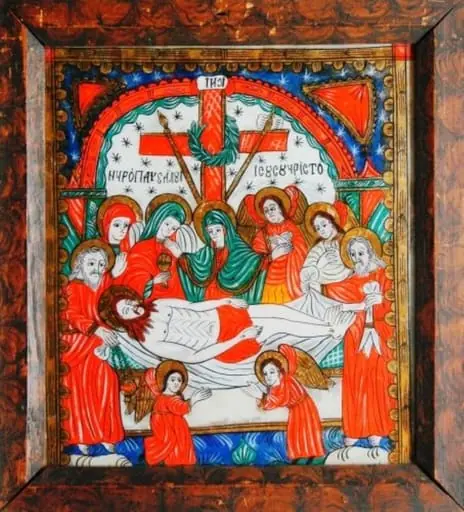 Îngroparea lui Iisus Hristos (Plângerea; Prohodul)