Artwork
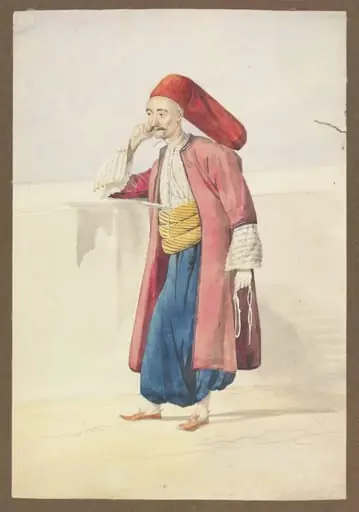
Portrait, full-length, facing right, of a Man in Arab dress, possibly smoking a cheroot
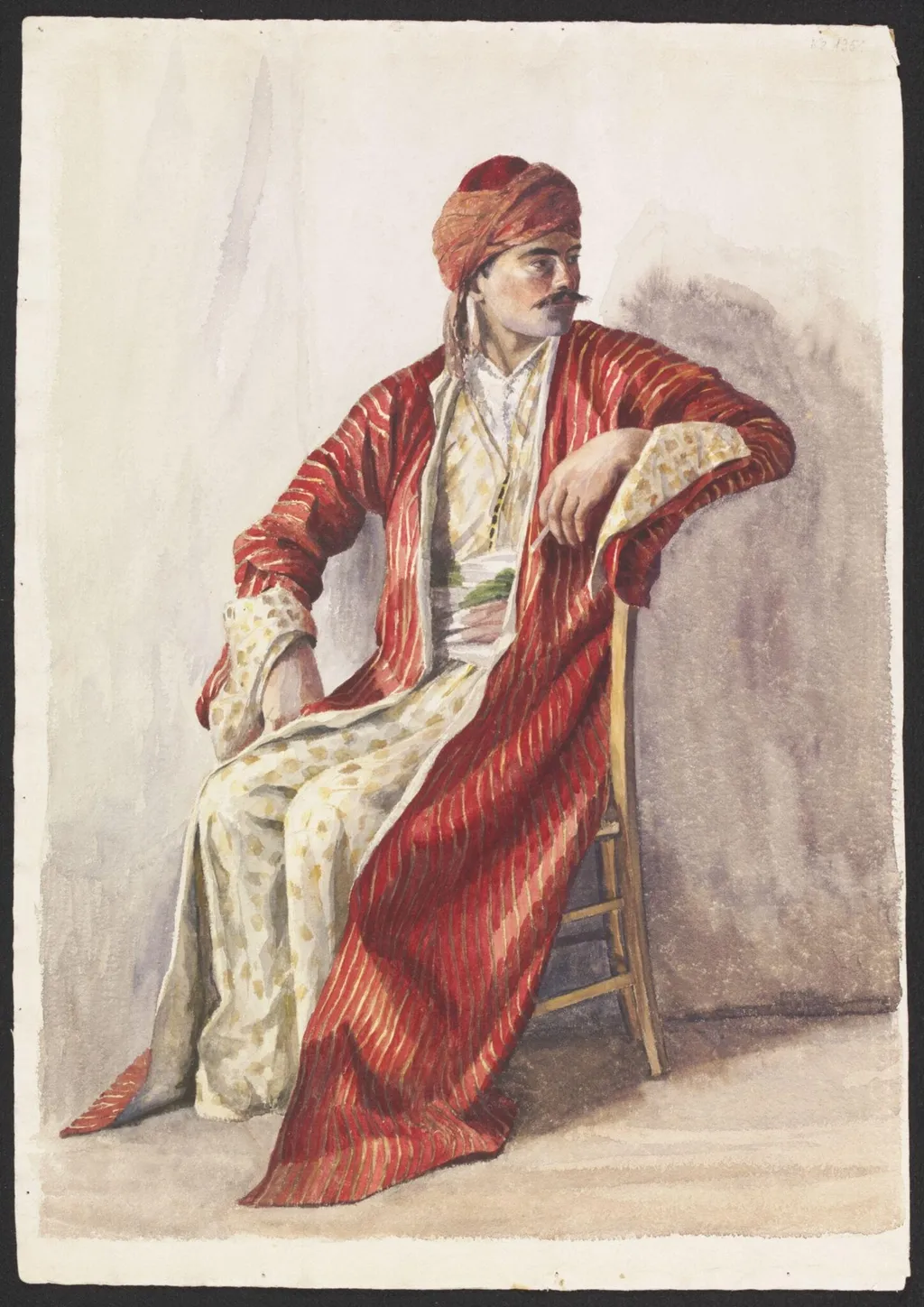
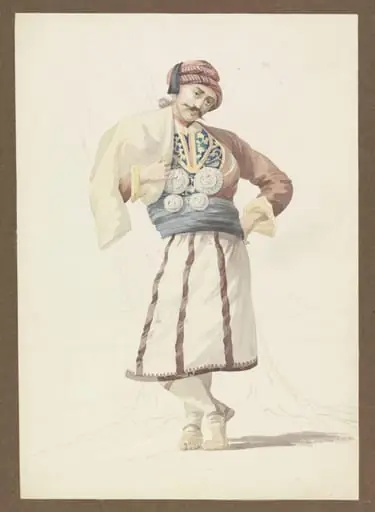
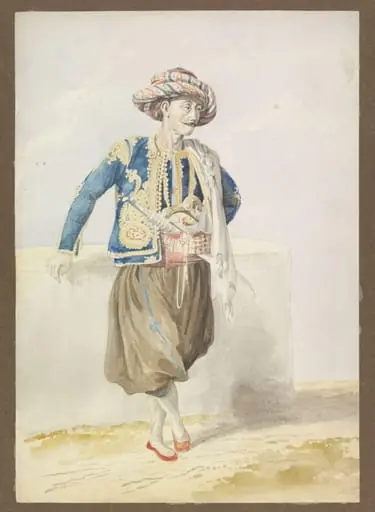
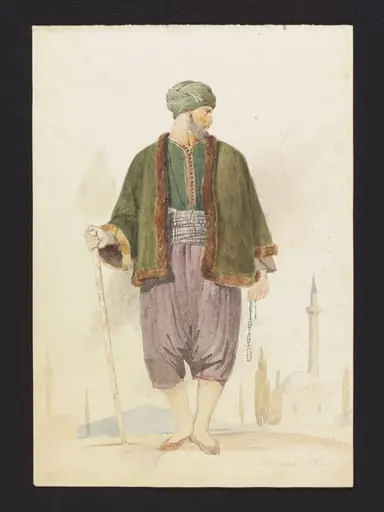
Portrait, full-length, facing right, of a Man in Arab dress, possibly smoking a cheroot is a watercolor work on paper by the Impressionist artist Unknown. It dates from 1850 and is held in the collection of the Victoria and Albert Museum. This watercolour portrait captures a full-length figure of a man in Arab clothing, facing right, seated on a wooden chair.
About this work
Overview
This watercolour portrait captures a full-length figure of a man in Arab clothing, facing right, seated on a wooden chair.
This watercolour portrait captures a full-length figure of a man in Arab clothing, facing right, seated on a wooden chair. The work, dated circa 1850, is unsigned and attributed to an unknown artist. It was acquired at Bonham’s in December 1971 alongside another piece for £8. The composition is restrained, with minimal background detail and a focus on the subject’s attire and posture, suggesting a documentary or ethnographic intent rather than a commissioned portrait.
Subject & Meaning
The figure, dressed in a red-and-white striped robe, white shirt and trousers, and a red turban, appears in quiet repose. His gaze is directed left, away from the viewer, and his right hand rests on the chair’s back, possibly holding a cheroot. The posture and expression convey introspection rather than performance, hinting at a private moment. The absence of identifying markers or context leaves his identity and role open, possibly reflecting 19th-century European curiosity about Eastern dress and demeanor.
Technique & Style
Executed in watercolour on paper, the painting employs transparent washes to define the folds of fabric and the texture of the turban. The palette is limited but deliberate, with the red-and-white stripes standing out against the plain white background. Brushwork is precise yet loose, emphasizing form over detail. The lack of shading or atmospheric perspective aligns with observational watercolour traditions of the period, prioritizing clarity of costume over emotional depth.
History & Provenance
The painting’s documented history begins with its acquisition at Bonham’s in December 1971, where it was purchased for £8 alongside another work. No earlier ownership records are publicly known. Its creation around 1850 suggests it may have originated in a British colonial or travel context, possibly by an artist documenting regional dress during the height of Orientalist interest. Its survival in modest condition reflects its status as a minor, uncommissioned work.
Context
Created during a period of heightened European fascination with the Middle East, the portrait aligns with a broader trend of ethnographic imagery. Unlike grand Orientalist paintings, this work lacks theatricality or narrative, suggesting it may have been a sketch or study rather than a finished piece for public display. Its simplicity contrasts with the elaborate fantasies common in contemporary art, offering a quieter, more direct observation of dress and presence.
Legacy
The portrait remains an unassuming example of 19th-century watercolour portraiture, valued today for its unembellished depiction of cultural attire. It contributes to the record of how non-European figures were visually recorded by Western artists, not as exoticized symbols but as individuals in quiet moments. Its modest provenance and lack of attribution underscore the many anonymous works that document cross-cultural encounters without fanfare.
Artist & collection

 Domestic Scene
 Giacomo and Cardinal Marco, investing Andrea, Abbot of San Zeno, with his Benefice
 The Nymph of Fontainebleau
 Portrait of a Woman
 Madonna and Child with Saints in the Enclosed Garden
 Venus and Minerva
 Family Group of Four on Sofa
 Wall painting from Room H of the Villa of P. Fannius Synistor at Boscoreale