Artwork
Moullah Chéite - (à Gandjà ou Elisavetopol.)
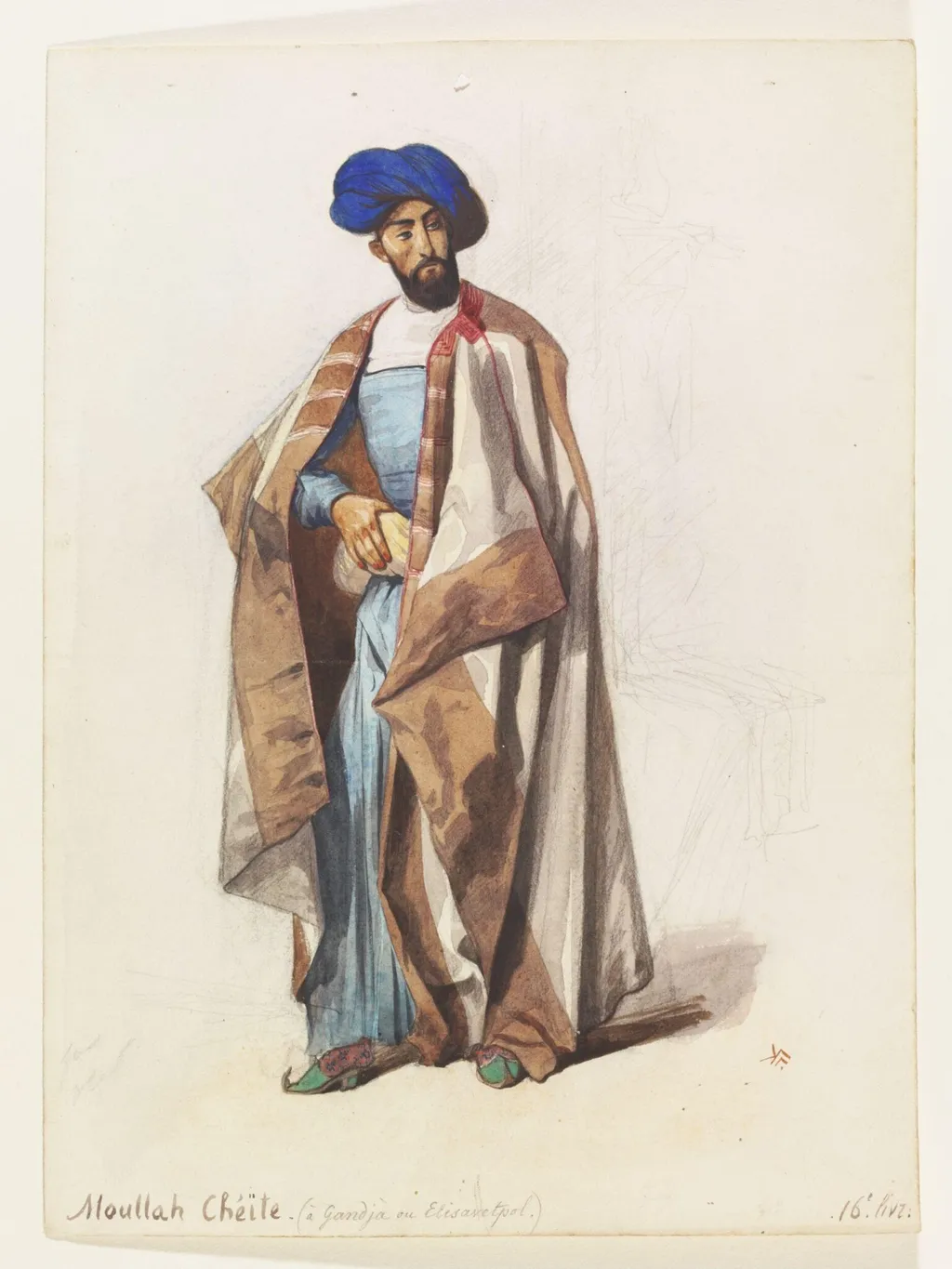
Moullah Chéite - (à Gandjà ou Elisavetopol.) is a watercolor work on paper by the Romanticist artist Grigoriy Grigorievich Gagarin. It dates from 1842 and is held in the collection of the Victoria and Albert Museum.
About this work
Overview
Prince Grigoriy Gagarin’s watercolour portrays a figure identified as Moullah Chéite, situated in the Caucasian town known as Gandja or Elisavetopol. Executed in a swift, sketch‑like manner, the image combines modest tonal ranges of brown, blue and a hint of red, emphasizing the subject’s attire and posture rather than detailed background.
Subject & Meaning
The central figure wears a long, flowing robe, a blue turban, and a red sash visible beneath a draped cloak, holding a folded piece of paper or cloth in one hand. The composition highlights traditional dress and personal bearing, offering a glimpse into local costume and social identity within the 19th‑century Caucasian milieu.
Technique & Style
Rendered in watercolour, the work relies on loose washes and minimal shading to suggest form. The palette is restrained, with earthy browns and muted blues dominating, while a splash of red draws attention to the sash. The rapid execution and sketch‑like quality align the piece with the Romantic era’s interest in spontaneous, on‑site observation.
History & Provenance
The image first appeared in Gagarin’s 19th‑century volume *Scènes, paysages, moeurs et costumes du Caucase*, a survey of Caucasian life. Decades later, it entered the art market, being offered at Sotheby’s Islamic art auction on 19 April 1978 as part of a larger collection of related works.
Artist & collection
Artist
This Russian prince-turned-diplomat sketched the Caucasus like a tourist with a sharp eye.

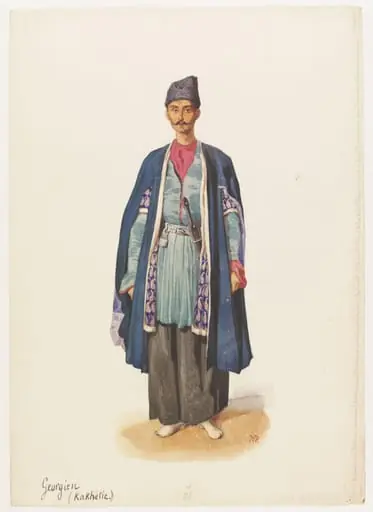
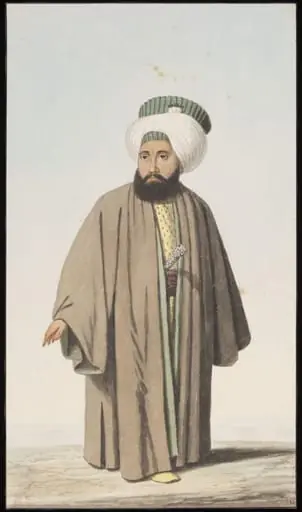 Defterdar, or Minister of Finance
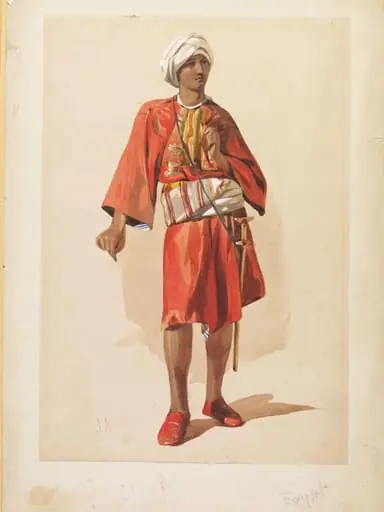 Young Soldier
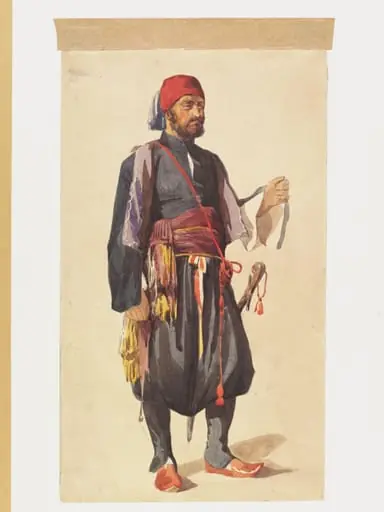 Officer, possibly a Spahi
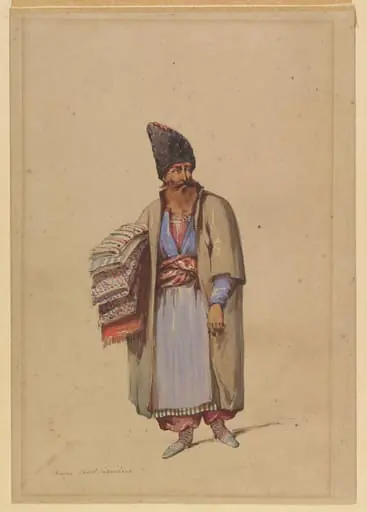 Persian Shawl-Merchant
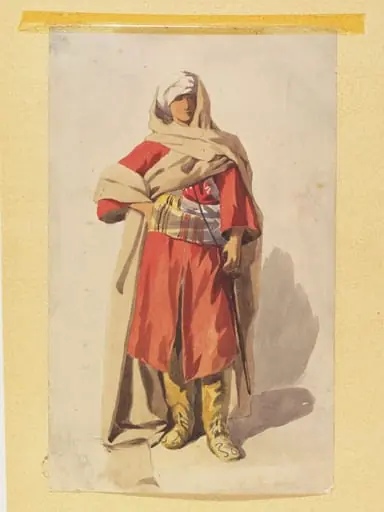 Soldier
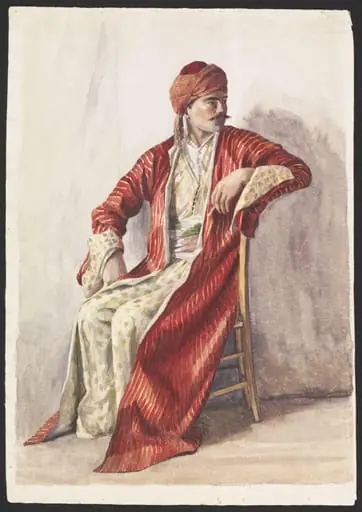 Portrait, full-length, facing right, of a Man in Arab dress, possibly smoking a cheroot
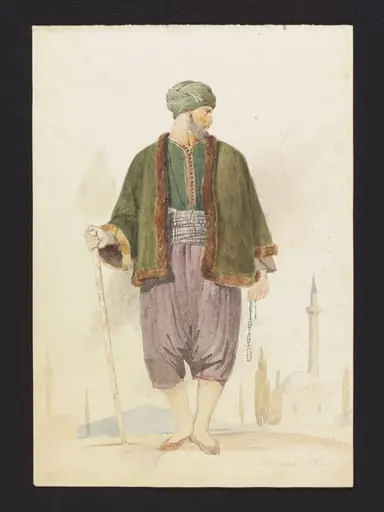 Mahmoud - Athens -
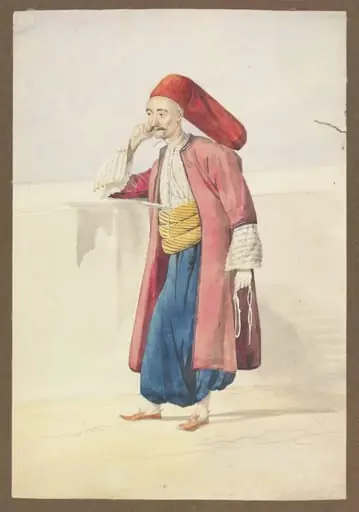 An Official at the Court of the Sultan
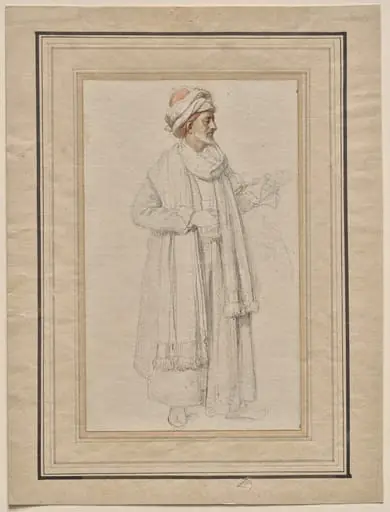 Sidi Hadji Abdurrahman Adja (1720–1792)
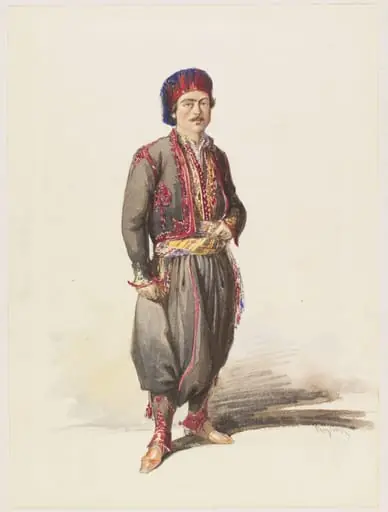 A Tatar, or Government Courier
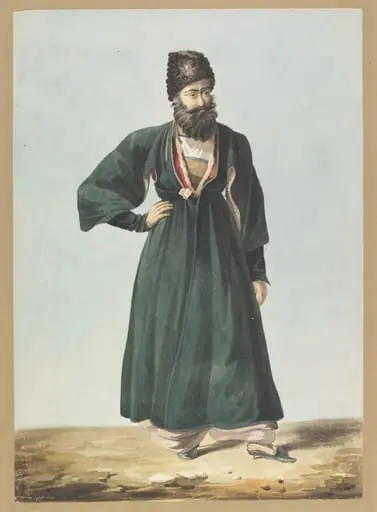 Persian