Artwork
Portrait of a Gentleman
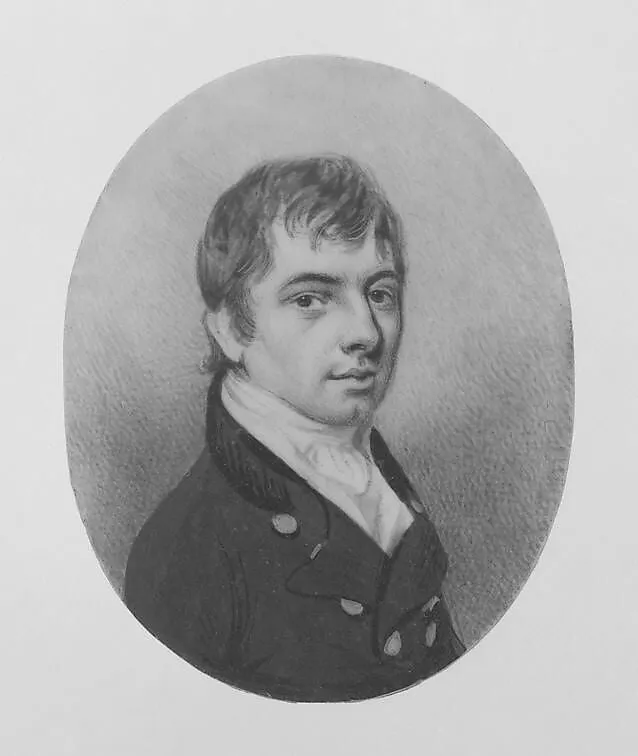
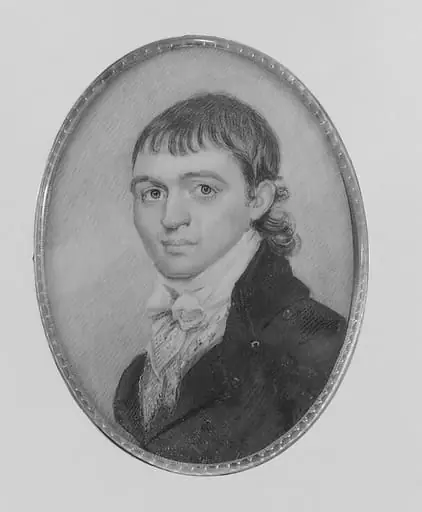
Portrait of a Gentleman is a watercolor painting. It dates from 1802 and is held in the collection of the Metropolitan Museum of Art.
About this work
Overview
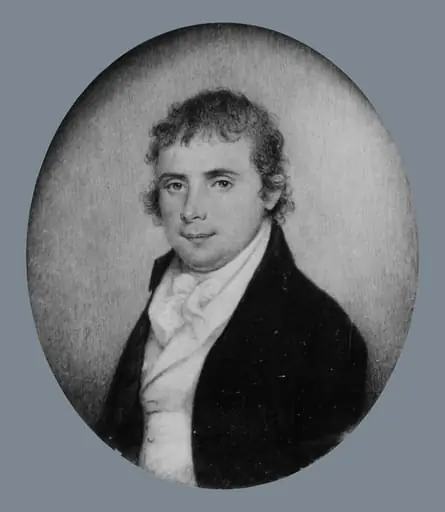
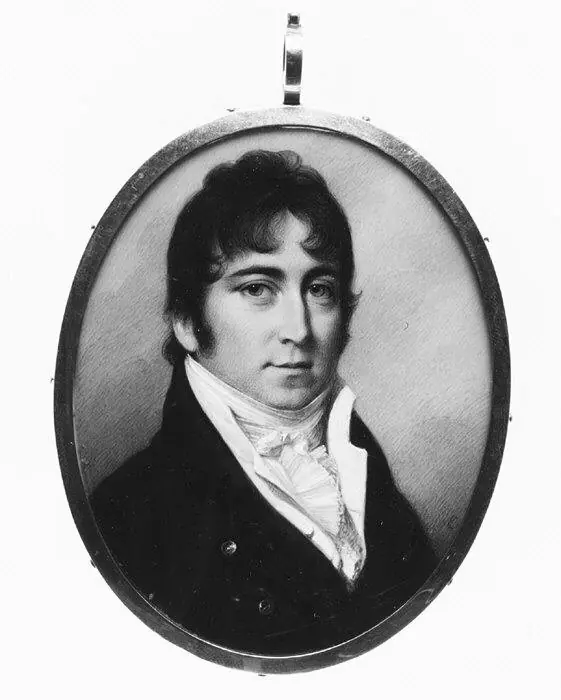
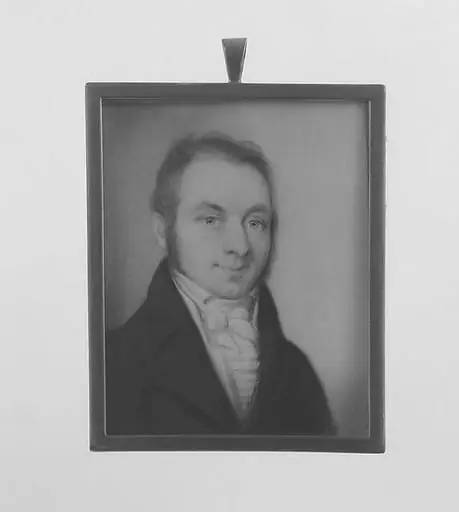
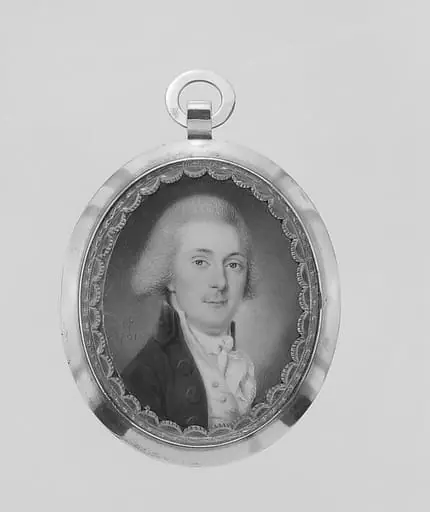
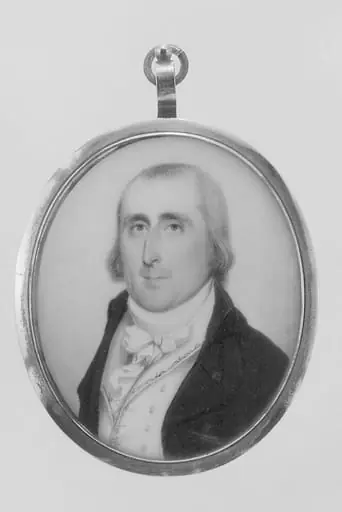
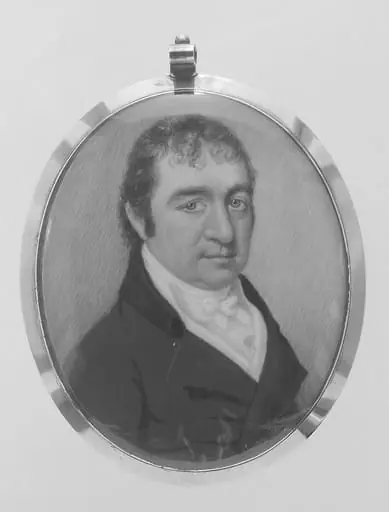
This miniature, titled Portrait of a Gentleman, is rendered in watercolor on ivory. It depicts a man with a direct gaze, his features subtly illuminated against a muted background. The small scale and intimate presentation suggest it was intended for private viewing rather than public display. Its delicate execution highlights the skill involved in this specialized form of portraiture.
Subject & Meaning
The subject, a gentleman dressed in a dark coat and white cravat, engages the viewer with a direct stare. His features are rendered with a smooth, luminous quality that stands out against the soft gray backdrop. This immediate connection, combined with the portrait's diminutive size, emphasizes its personal and private nature, likely intended for a close acquaintance or family member.
Technique & Style
The use of ivory, rather than traditional paper, allowed for a distinctive luminosity and smooth finish.
Executed in watercolor on a thin piece of ivory, this portrait showcases a refined technique. The use of ivory, rather than traditional paper, allowed for a distinctive luminosity and smooth finish. Despite the artist remaining anonymous, the meticulous application of paint and precise detailing demonstrate considerable skill, characteristic of the era's miniature painters. The small format further contributes to its delicate aesthetic.
Context
Miniature portraits on ivory gained widespread popularity in the 18th and 19th centuries, serving as cherished personal mementos. Their small size made them ideal for carrying or wearing, allowing individuals to keep images of loved ones close. These intimate objects functioned similarly to later photographic lockets, providing a tangible connection to absent family or friends before the advent of widespread photography.
Artist & collection