Artwork
Portrait of Dom Augusto, Duke of Leuchtenberg
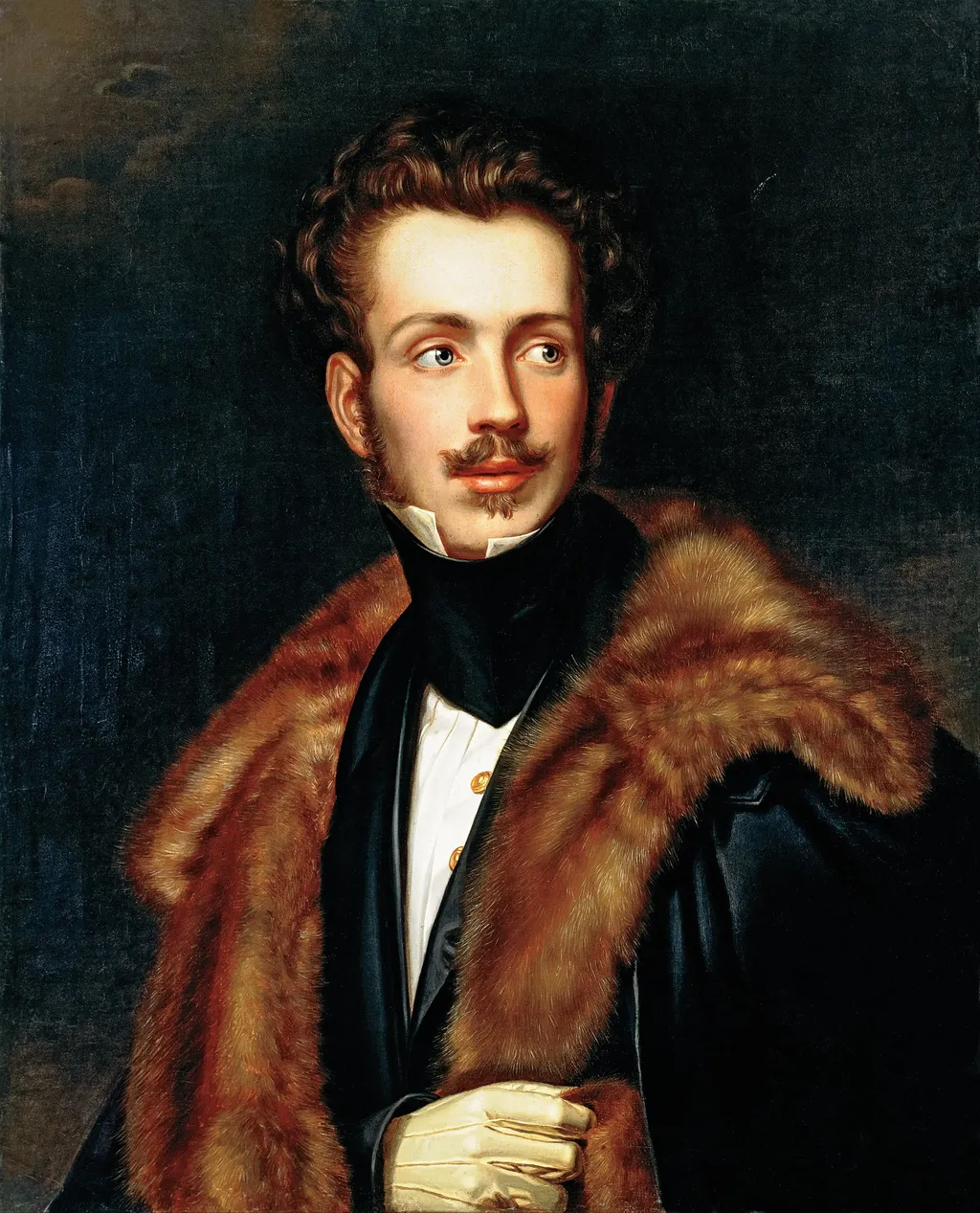
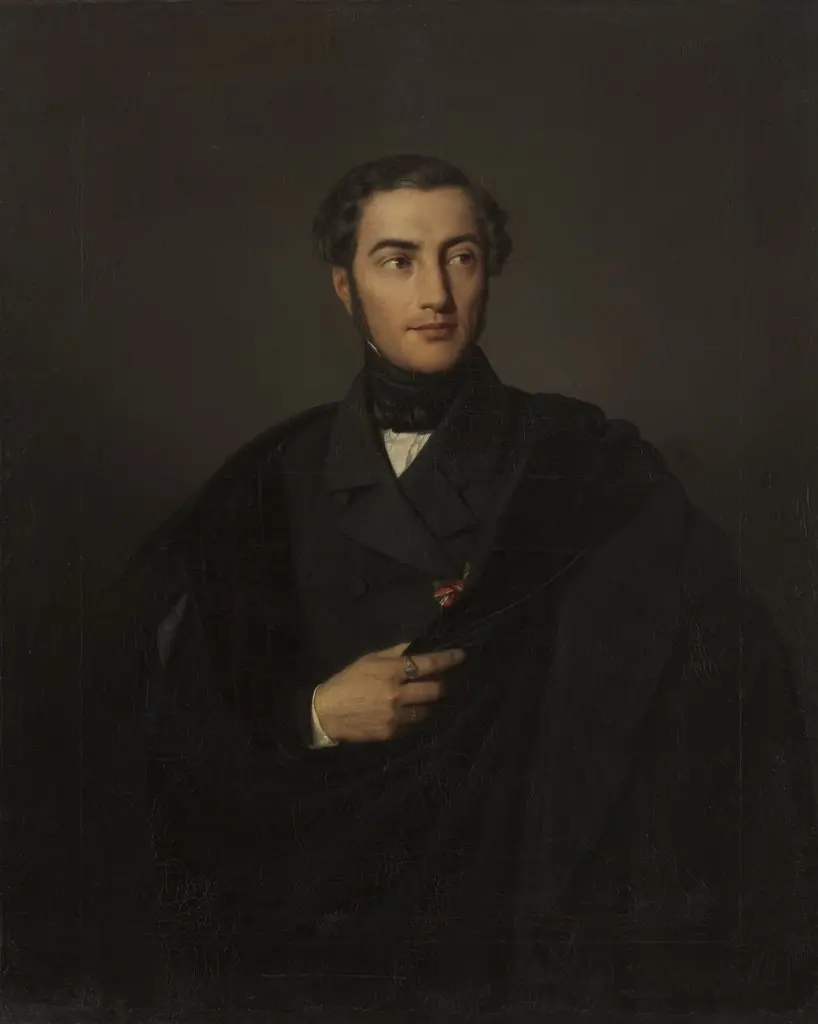
Portrait of Dom Augusto, Duke of Leuchtenberg is an oil painting by the Biedermeier artist Unknown. It dates from 1835 and is held in the collection of the Pinacoteca de São Paulo.
About this work
Overview
His dark, curly hair and mustache are carefully detailed, and his attire—black coat with fur trim and white shirt—signals aristocratic status.
This oil painting presents a formal half-length portrait of Dom Augusto, Duke of Leuchtenberg, rendered with restrained elegance. The subject is depicted from the chest upward, facing the viewer with a slight turn of the head to the right. His dark, curly hair and mustache are carefully detailed, and his attire—black coat with fur trim and white shirt—signals aristocratic status. The deep, unbroken background isolates the figure, emphasizing his presence without distraction.
Subject & Meaning
Dom Augusto, a member of European nobility through marriage to a Brazilian imperial princess, is portrayed with quiet dignity. The portrait conveys status through clothing and posture rather than symbols of power. His direct gaze and composed expression suggest authority tempered by restraint. The absence of regalia or heraldic elements shifts focus to personal bearing, reflecting a shift in 19th-century portraiture toward individual presence over inherited emblematics.
Technique & Style
The artist employs a muted palette dominated by blacks, grays, and whites, with subtle tonal variations to model the face and fabric. Brushwork is precise but not overly refined, particularly in the rendering of the fur collar and shirt ruffles. The dark background enhances contrast, drawing attention to the subject’s facial features and the texture of his garments. Lighting is even and frontal, avoiding dramatic chiaroscuro in favor of clarity and solemnity.
History & Provenance
The painting’s origins are undocumented, with no known record of the artist or commissioning party. It likely dates to the mid-19th century, coinciding with Dom Augusto’s time in Europe after his marriage. Its survival suggests it remained within family circles or private collections, though no public exhibition history or documented ownership chain has been established. The attribution to 'Unknown' reflects the absence of archival evidence linking it to a specific hand.
Context
Created during a period when European aristocracy maintained visual traditions of portraiture, this work aligns with conservative styles favored by minor royal houses. Unlike grand state portraits, it avoids overt political messaging, instead focusing on personal identity. Dom Augusto’s position as a bridge between Brazilian and European nobility may explain the portrait’s understated tone—intended for private rather than public display.
Legacy
The portrait remains a quiet artifact of 19th-century aristocratic identity, notable for its anonymity and restraint. Its value lies not in artistic fame but in its testimony to the private lives of lesser-known nobles. As the lineage of the Leuchtenberg family faded from prominence, such portraits became relics of a social order that no longer exists, preserved more for historical continuity than artistic acclaim.
Artist & collection

 Domestic Scene
 Giacomo and Cardinal Marco, investing Andrea, Abbot of San Zeno, with his Benefice
 The Nymph of Fontainebleau
 Portrait of a Woman
 Madonna and Child with Saints in the Enclosed Garden
 Venus and Minerva
 Family Group of Four on Sofa
 Wall painting from Room H of the Villa of P. Fannius Synistor at Boscoreale
 The painter Leopold Brunner the Younger
 El escritor José de Espronceda
 Portrait of a Man
 Portrait of N. A. Okhotnikov
 Portrait of Józef Węgleński
 Portrait of Prince Nikolai Yusupov
 Self Portrait
 Henri Herz, Pianist
 Louis-Félix Amiel (1802–1864)
 Vapaaherra Rabbe Wreden muotokuva
 Portrait of a man in a fur
 Alberto Cavos