Artwork
Portrait of Emperor Jahangir Riding an Elephant
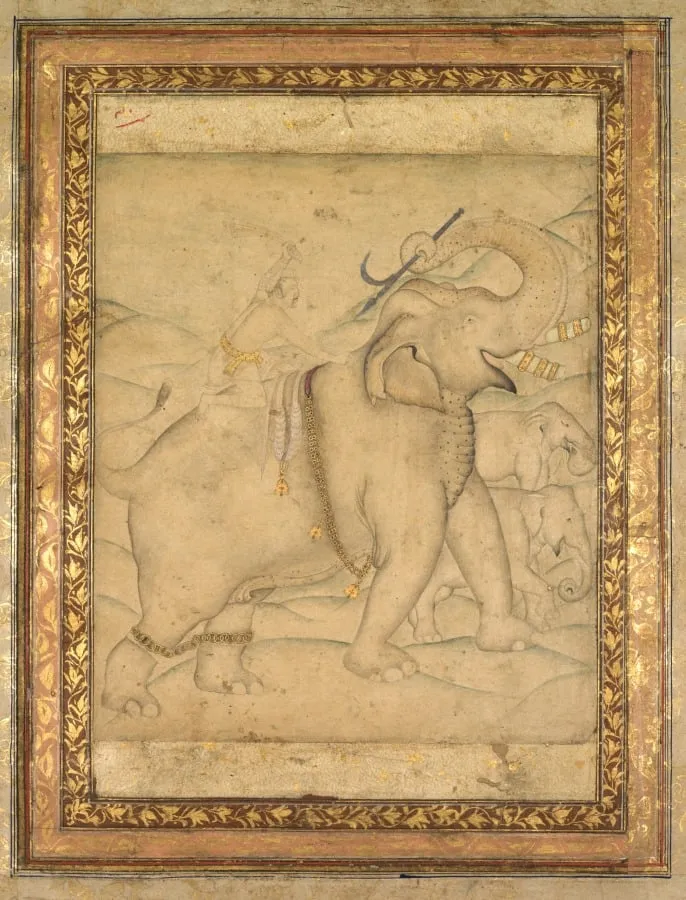
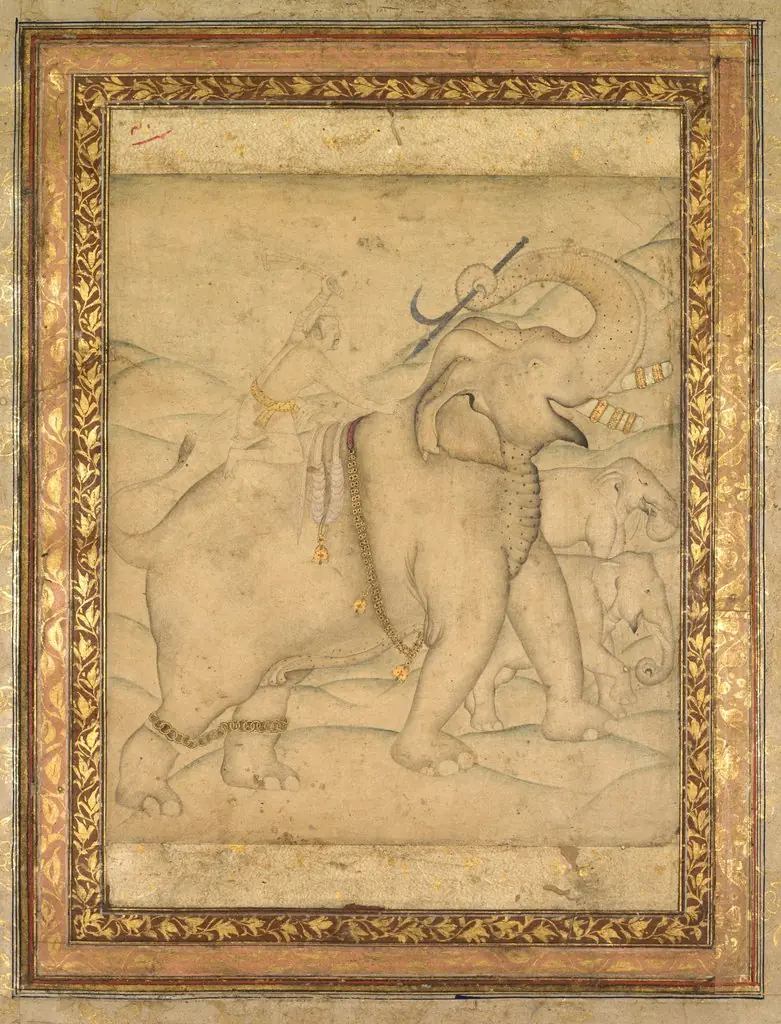
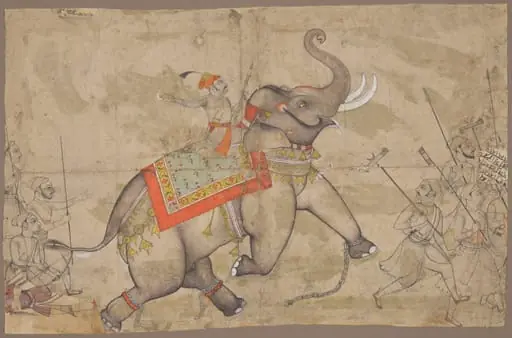
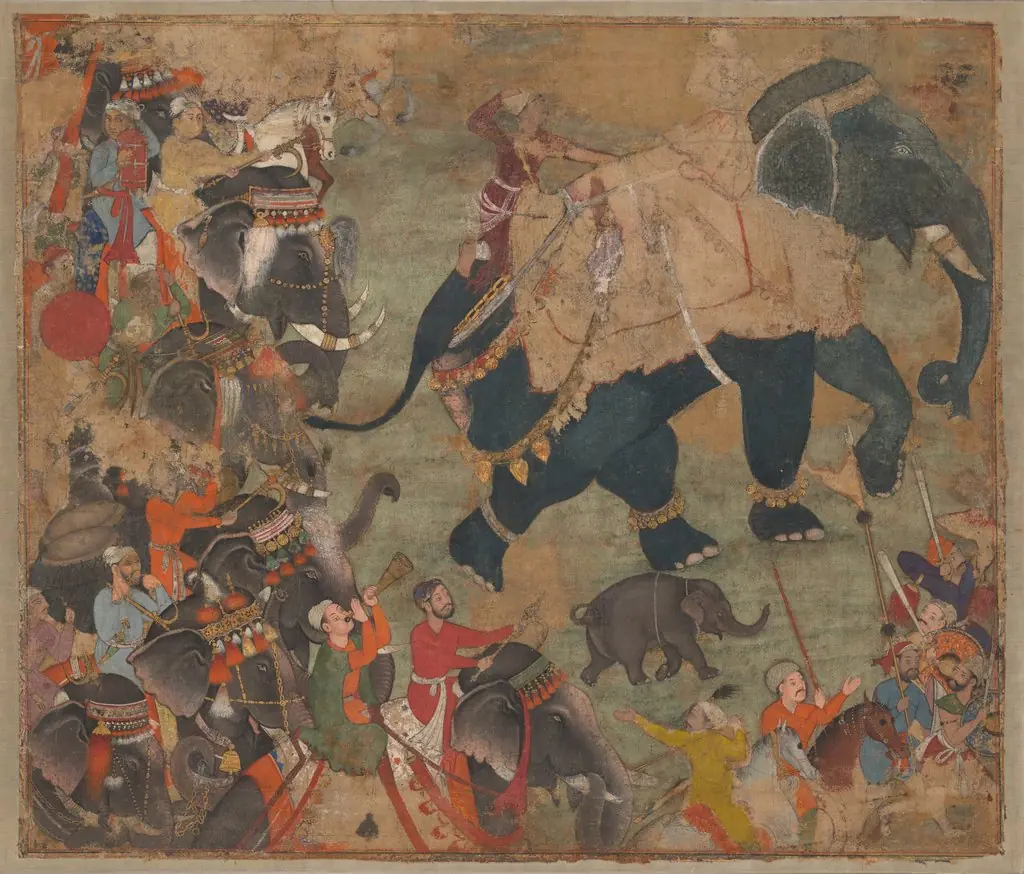
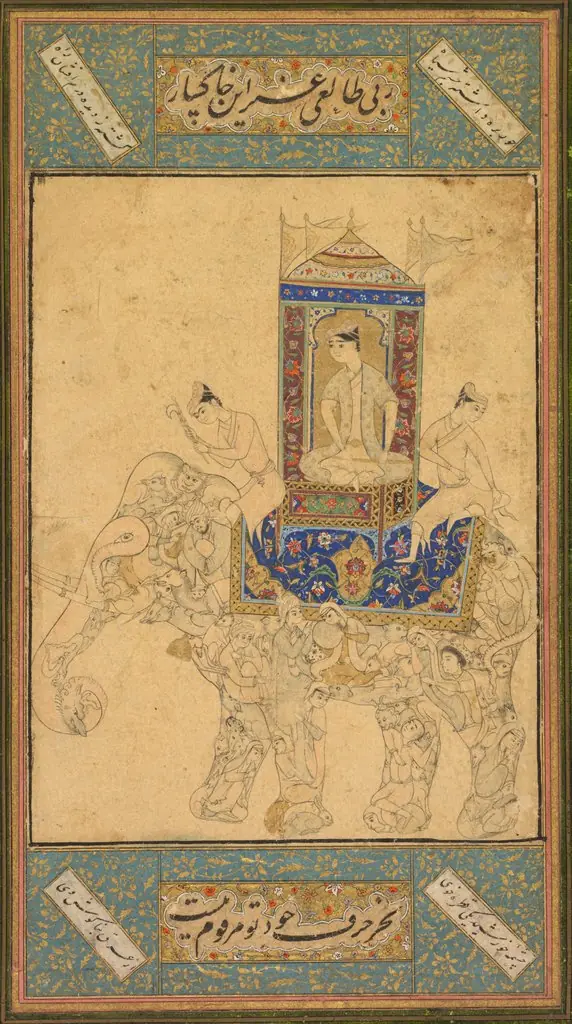
Portrait of Emperor Jahangir Riding an Elephant is an unspecified painting by the Baroque artist Unknown. It dates from 1724 and is held in the collection of the Cleveland Museum of Art. This painting depicts Emperor Jahangir mounted on an elephant, crossing a turbulent river under a dramatic sky.
About this work
This painting was made for the Mughal court, where artists worked in teams—one person drew the lines, another painted the colors.
You see a king in gold armor riding a gray elephant through a stormy river. Lightning cracks the sky, and tiny soldiers march behind him.
This painting was made for the Mughal court, where artists worked in teams—one person drew the lines, another painted the colors. The unknown artist gave the elephant wrinkles and the king’s robe tiny flowers, showing off skill without needing a signature.
Look up mughal dynasty (1526-1756) to see more of these royal scenes.
Overview
This painting depicts Emperor Jahangir mounted on an elephant, crossing a turbulent river under a dramatic sky. Executed for the Mughal imperial atelier, it reflects the court’s tradition of collaborative artistry, where specialists handled drawing, coloring, and detail work. The absence of a signature is typical; artistic credit was subsumed within the imperial workshop’s collective output.
Subject & Meaning
Jahangir’s elevated position on the elephant symbolizes sovereign authority, while the stormy landscape suggests divine favor or triumph over chaos. The small retinue of soldiers reinforces his command, and the natural elements—lightning, rushing water—frame his rule as both powerful and harmonious with cosmic forces.
Technique & Style
Artists employed fine brushwork to render the elephant’s textured skin and the emperor’s robe, adorned with minute floral patterns. The composition balances grandeur with delicate detail, characteristic of Mughal miniature painting. Color application was layered and precise, with atmospheric effects like lightning achieved through subtle washes and controlled pigments.
History & Provenance
Created during Jahangir’s reign (1605–1627), the work originated in the imperial painting studio, likely in Agra or Lahore. It was part of a broader visual program documenting royal life and power. Its survival suggests it was preserved in royal collections, possibly later entering private or institutional holdings through inheritance or acquisition.
Context
Mughal court paintings blended Persian, Indian, and European influences, emphasizing realism and symbolic narrative. Portraits of rulers on elephants were common, reinforcing imperial presence in both natural and political landscapes. This piece reflects Jahangir’s personal interest in naturalism and the arts, which flourished under his patronage.
Legacy
The painting exemplifies the sophistication of Mughal visual culture, where technical precision served ideological ends. Though unsigned, its craftsmanship influenced later regional styles and remains a reference for understanding how power was visually constructed in early modern South Asia.
Artist & collection

 Domestic Scene
 Giacomo and Cardinal Marco, investing Andrea, Abbot of San Zeno, with his Benefice
 The Nymph of Fontainebleau
 Portrait of a Woman
 Madonna and Child with Saints in the Enclosed Garden
 Venus and Minerva
 Family Group of Four on Sofa
 Wall painting from Room H of the Villa of P. Fannius Synistor at Boscoreale