Artwork
A prince riding a composite elephant
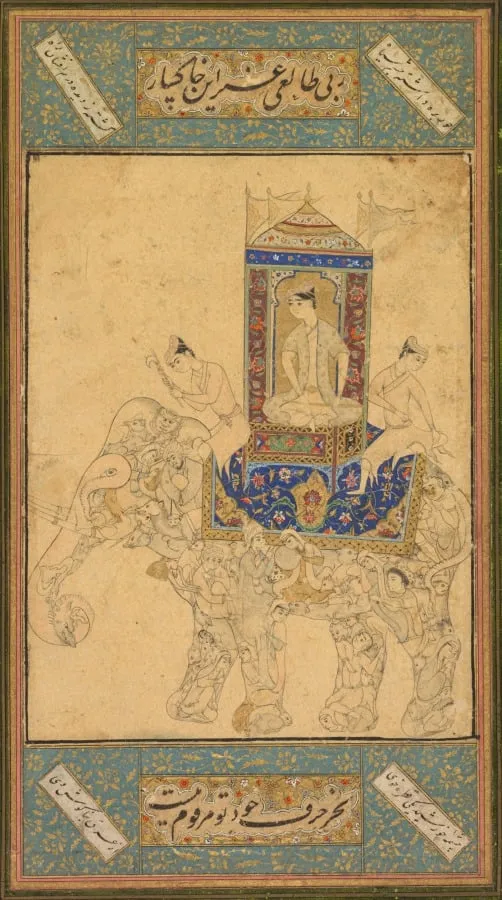
A prince riding a composite elephant is an unspecified painting by the Renaissance artist Unknown. It dates from 1590 and is held in the collection of the Cleveland Museum of Art. The miniature depicts a young prince seated cross‑legged in a covered howdah that rests on the back of a richly ornamented elephant.
About this work
You see a prince riding an elephant made of other animals—tiny deer, fish, and birds all fit together like a puzzle.
You see a prince riding an elephant made of other animals—tiny deer, fish, and birds all fit together like a puzzle. Golden rings decorate the tusks, and attendants guide the creature with a long pole.
This painting comes from the Deccan region of India, where artists loved hidden images. The elephant isn’t just an elephant; it’s a game of "find the creatures inside." The prince sits calmly, as if this were normal.
To see more like this, look up subject: india, golconda, deccan, 16th century.
Overview
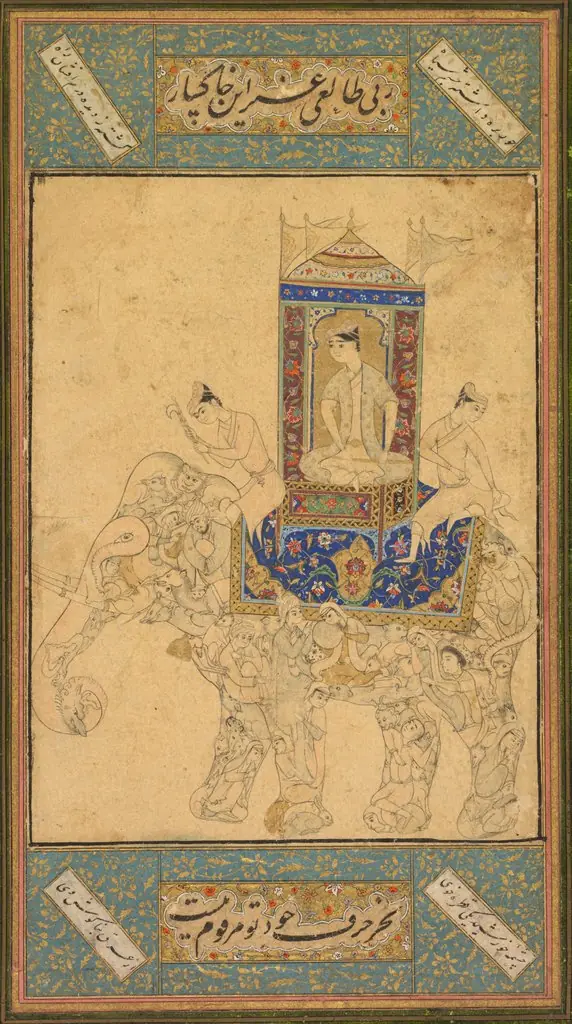
The miniature depicts a young prince seated cross‑legged in a covered howdah that rests on the back of a richly ornamented elephant. The animal’s tusks are bound with golden rings, and a pair of attendants guide it, one holding a goad. The composition is framed within a landscape typical of Deccan courtly albums, intended for private viewing.
Subject & Meaning
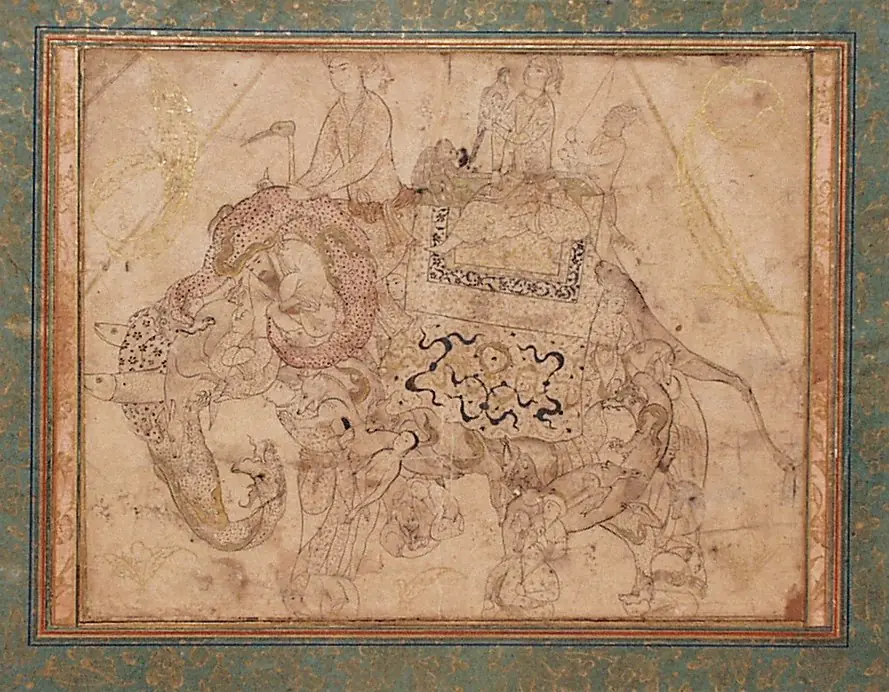
Beyond the literal scene of royal travel, the work functions as a visual puzzle: the elephant’s body is assembled from smaller creatures—deer, fish, birds—each concealed within the larger form. This double‑layered imagery invites the viewer to search for hidden figures, reflecting a courtly taste for intellectual amusement and symbolic display of power.
Technique & Style
Executed in the fine brushwork of Deccan miniature painting, the piece blends Persian compositional conventions with local decorative motifs. Gold leaf accents highlight the tusks and the prince’s attire, while the intricate rendering of the composite animal demonstrates a meticulous attention to detail characteristic of 16th‑century southern Indian workshops.
History & Provenance
The painting originates from the Deccan region of India, likely produced for an elite patron’s album (muraqqa) used in intimate gatherings. Such albums circulated among the courts of Golconda and surrounding states, serving both as entertainment and as a record of artistic innovation during the period.
Artist & collection

 Domestic Scene
 Giacomo and Cardinal Marco, investing Andrea, Abbot of San Zeno, with his Benefice
 The Nymph of Fontainebleau
 Portrait of a Woman
 Madonna and Child with Saints in the Enclosed Garden
 Venus and Minerva
 Family Group of Four on Sofa
 Wall painting from Room H of the Villa of P. Fannius Synistor at Boscoreale
 A prince riding a composite elephant
 A composite elephant ridden by a prince - 17th century
 Portrait of Emperor Jahangir Riding an Elephant
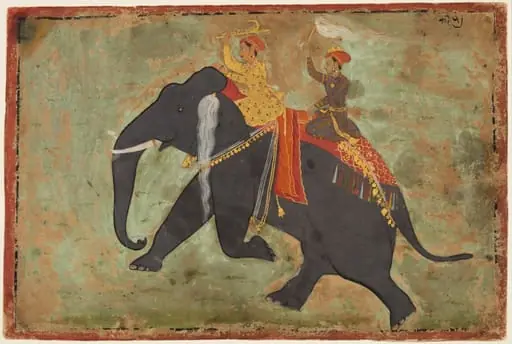 Prince Amar Singh (1672–1710) Drives His Own Elephant
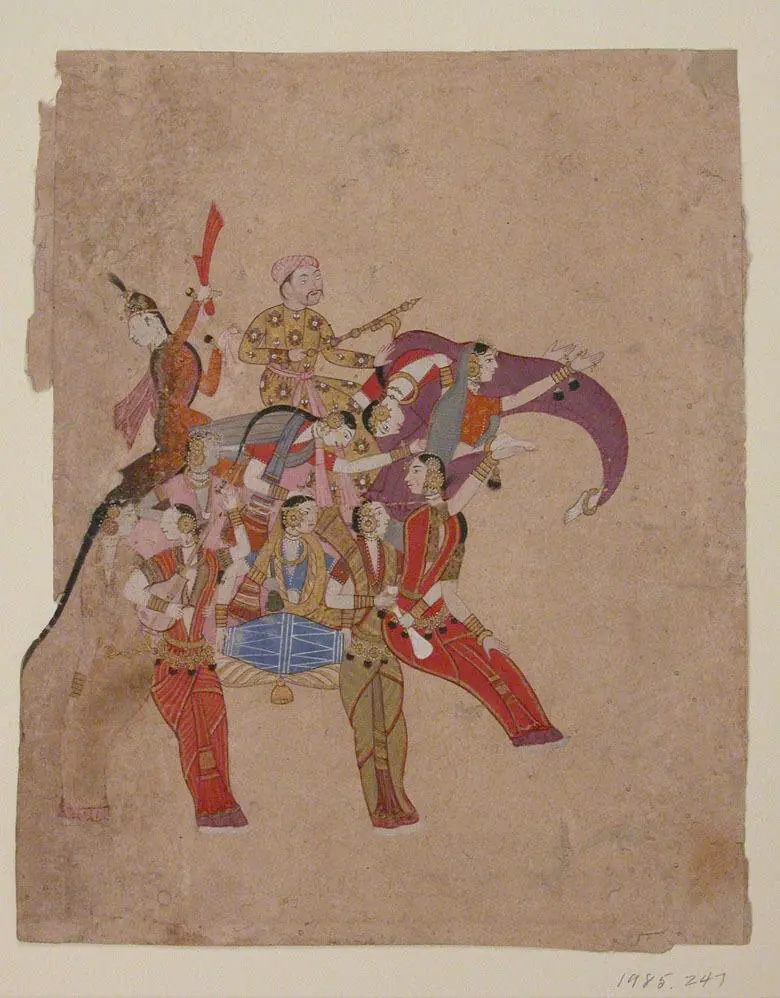 Composite Elephant - Deccan Painting Early 17th Century
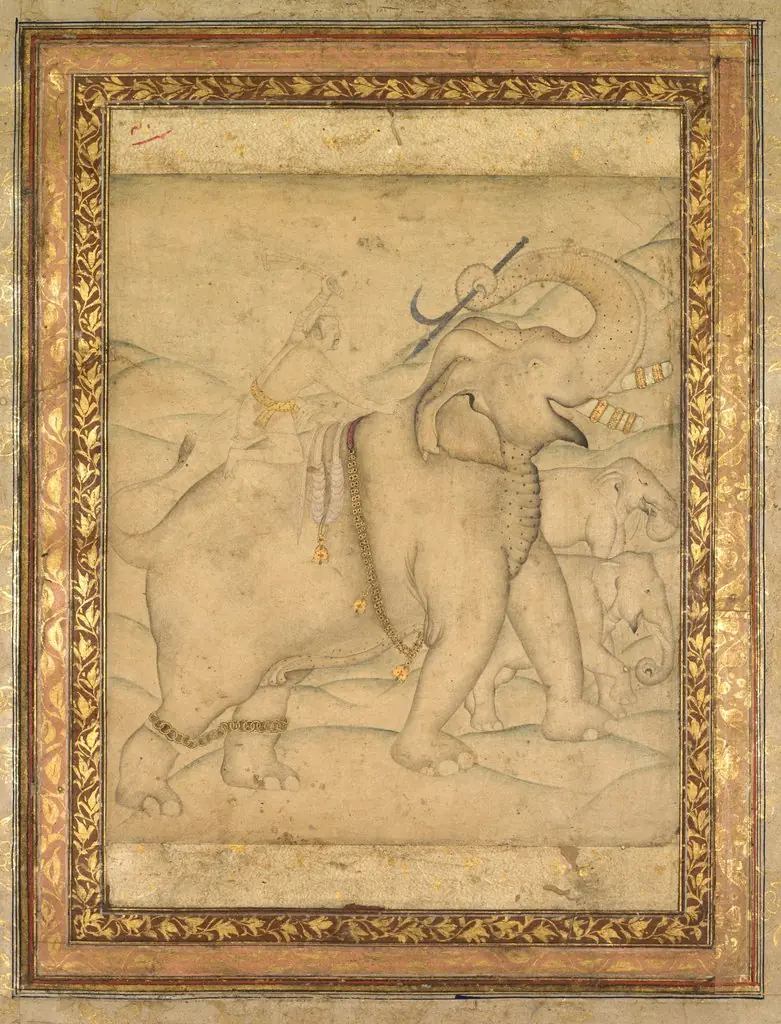 Portrait of Emperor Jahangir Riding an Elephant
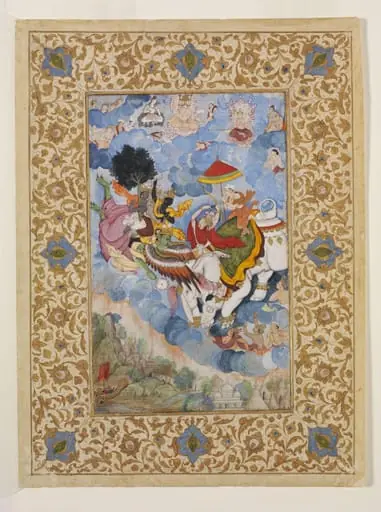 Krishna and Indra
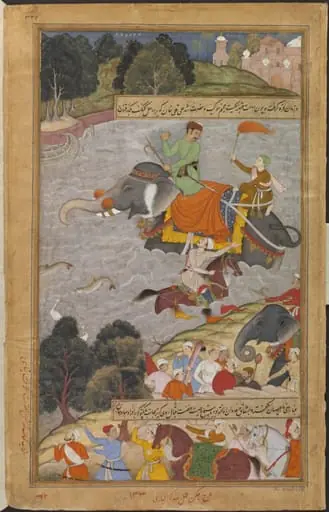 Akbar Crosses the Ganges on an Elephant
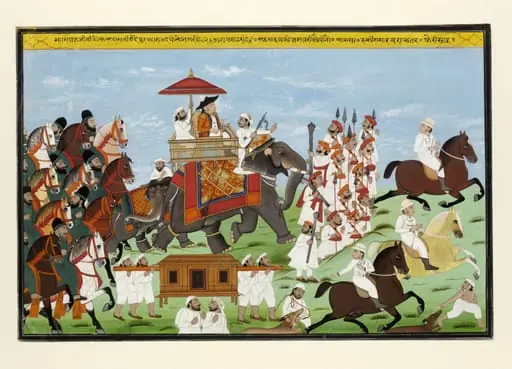 Captain James Tod riding an elephant with his companions and escort
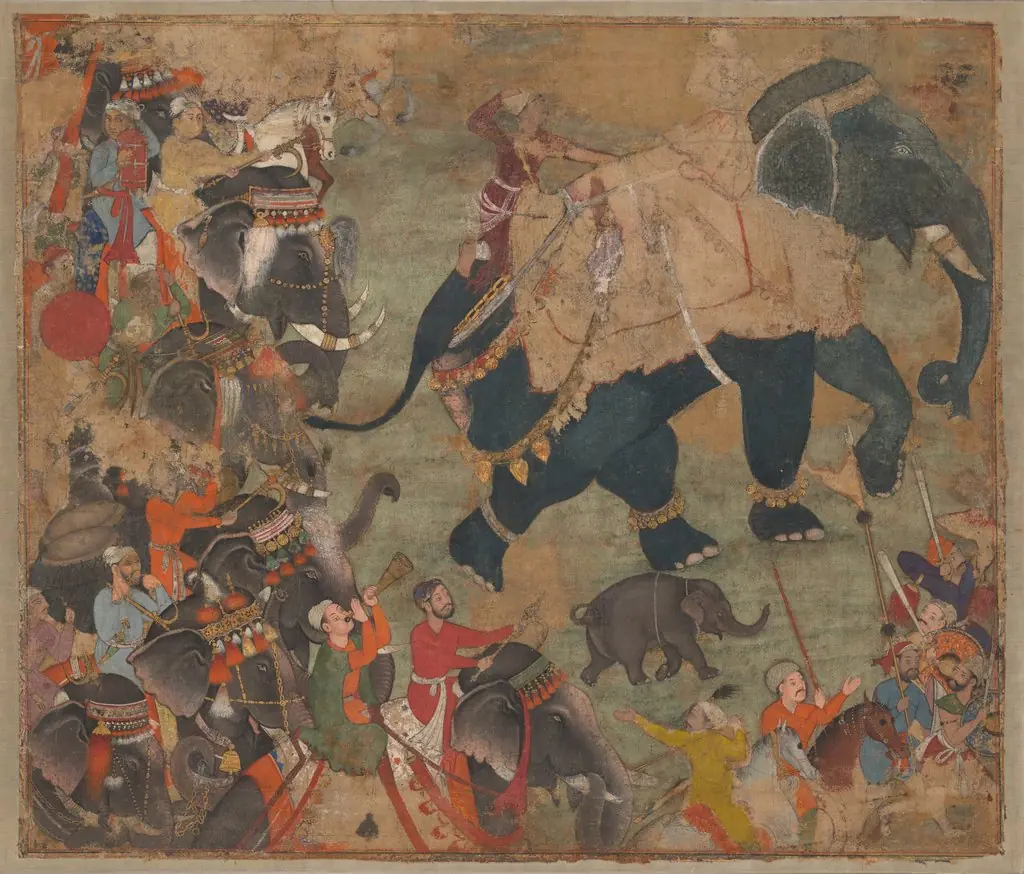 A Prince Riding an Elephant in Procession