Artwork
Portrait of Floris Gerritsz van Schoterbosch (c. 1562-1618)
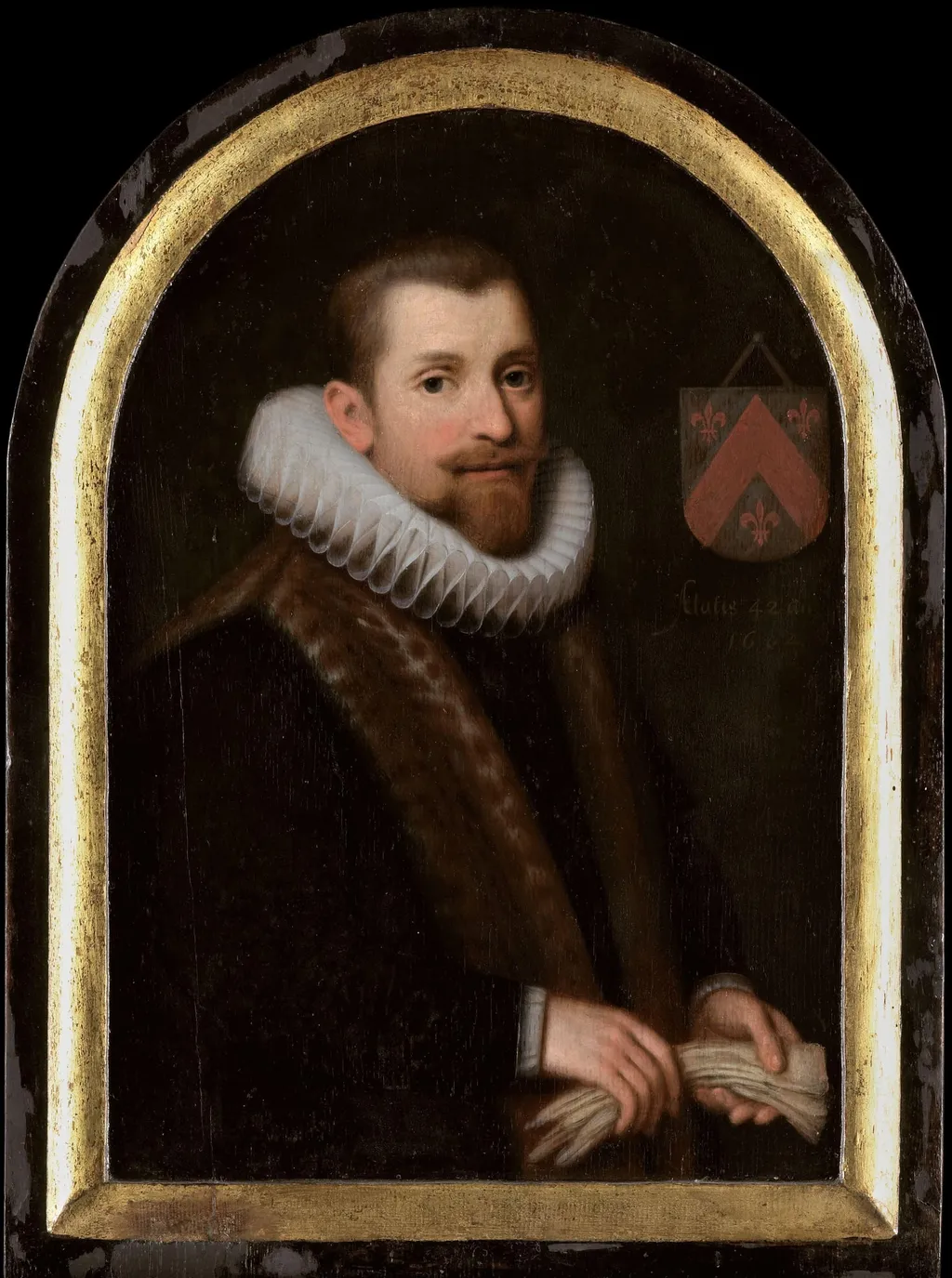
Portrait of Floris Gerritsz van Schoterbosch (c. 1562-1618) is an unspecified painting by the Dutch Golden Age artist Unknown. It dates from 1620 and is held in the collection of the Rijksmuseum. The work depicts Floris Gerritsz van Schoterbosch, a Dutch gentleman who lived from roughly 1562 to 1618.
About this work
The original artist is unknown, but the copyist added a family crest in the corner—tiny proof of who this man was.
A man in a black coat looks straight at you, gloves in one hand. His face is calm, but the light catches the wrinkles around his eyes.
This painting might be a copy of an earlier portrait from 1604. The original artist is unknown, but the copyist added a family crest in the corner—tiny proof of who this man was. It’s one of many similar portraits in the same museum, all showing people from the same time.
To see more faces like this, look up the Rijksmuseum.
Overview
The work depicts Floris Gerritsz van Schoterbosch, a Dutch gentleman who lived from roughly 1562 to 1618. Executed as a half‑length portrait, the sitter is shown turned toward his right, his gaze meeting the viewer. He holds a pair of gloves in one hand, and a small family coat of arms occupies the upper‑right corner of the canvas.
Subject & Meaning
Van Schoterbosch is presented in a calm, dignified manner, his facial expression softened by the play of light on the wrinkles around his eyes. The inclusion of the family crest signals his social standing and lineage, a common practice in early‑seventeenth‑century portraiture to affirm identity and status.
Technique & Style
The painting employs a restrained palette dominated by a dark coat, allowing subtle tonal variations to model the figure’s features. The handling of light suggests a careful observation of texture, particularly in the rendering of the gloves and the delicate folds of the garment.
History & Provenance
Scholars attribute the canvas to a copy made by Cornelis Engelsz, who reproduced an otherwise unknown original dated 1604. The work now belongs to a series of related portraits catalogued under inventory numbers SK‑A‑4753 through SK‑A‑4775, indicating it was part of a larger collection assembled by the museum.
Context
Portraits of this type were common among the Dutch mercantile and professional classes in the early 1600s, serving both as personal commemoration and as visual affirmation of family heritage. The presence of the coat of arms aligns the piece with contemporary practices of displaying heraldic symbols in private portraiture.
Artist & collection

 Domestic Scene
 Giacomo and Cardinal Marco, investing Andrea, Abbot of San Zeno, with his Benefice
 The Nymph of Fontainebleau
 Portrait of a Woman
 Madonna and Child with Saints in the Enclosed Garden
 Venus and Minerva
 Family Group of Four on Sofa
 Wall painting from Room H of the Villa of P. Fannius Synistor at Boscoreale
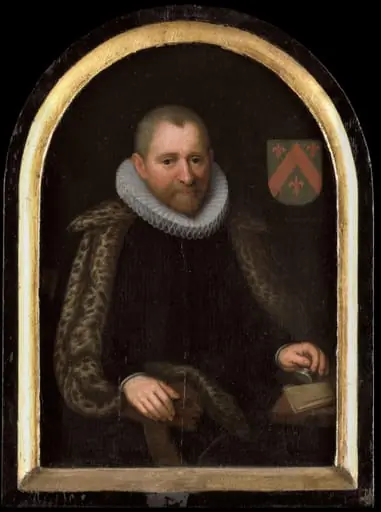 Portrait of Gerrit Willemsz van Schoterbosch (c. 1538-1611)
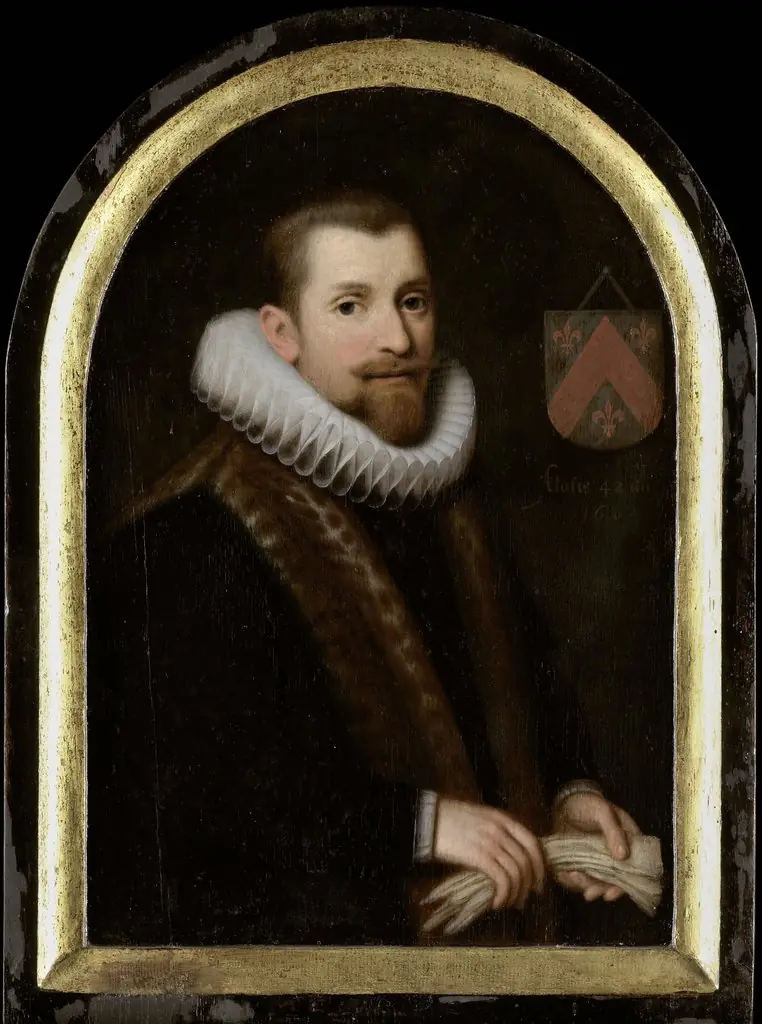 Portrait of Floris Gerritsz Overrijn van Schoterbosch (c. 1562-1618)
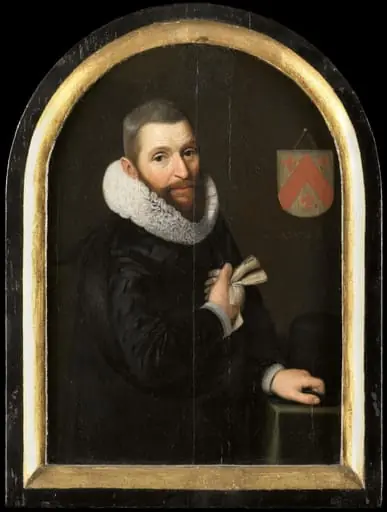 Portrait of Johan Gerritsz van Schoterbosch (c. 1564-1654)
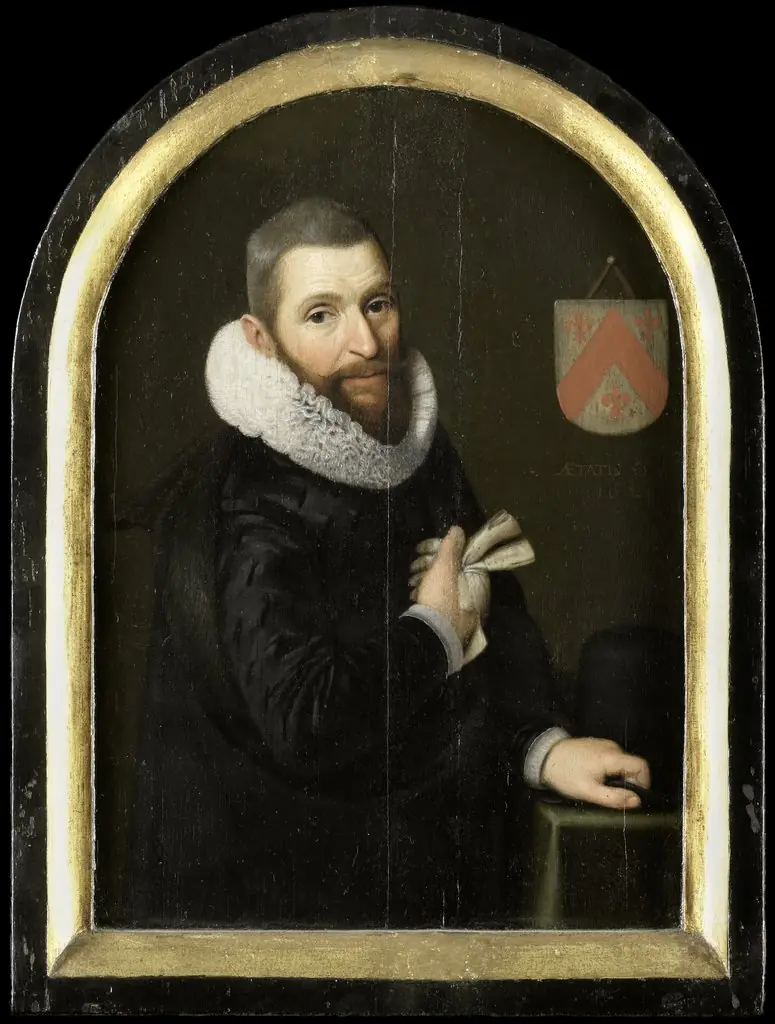 Portrait of Johan Gerritsz van Schoterbosch (c. 1564-1654)
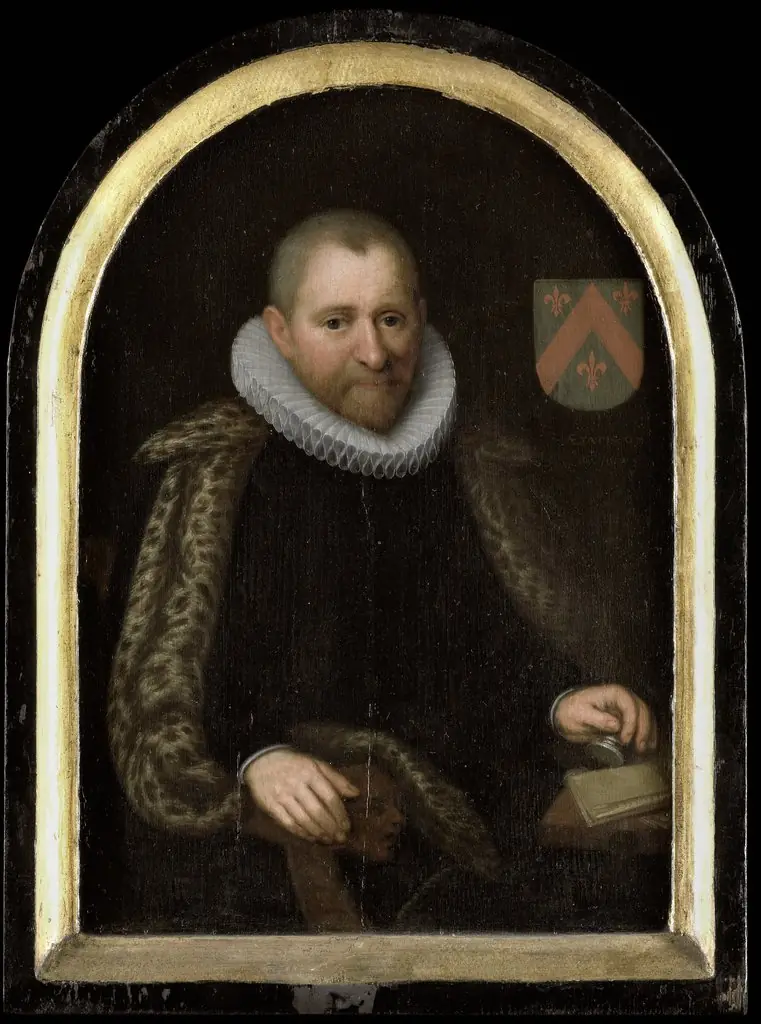 Portrait of Gerrit Willemsz Overrijn van Schoterbosch (c. 1538-1611)
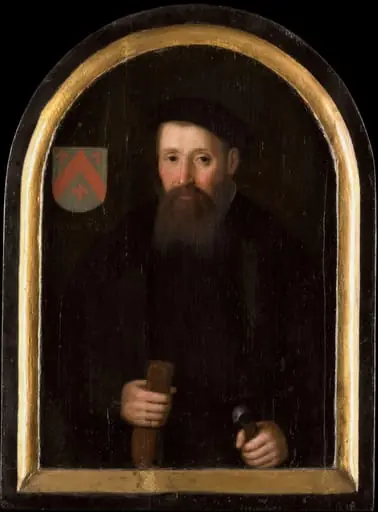 Portrait of Willem Fransz van Schoterbosch (c. 1510-?)
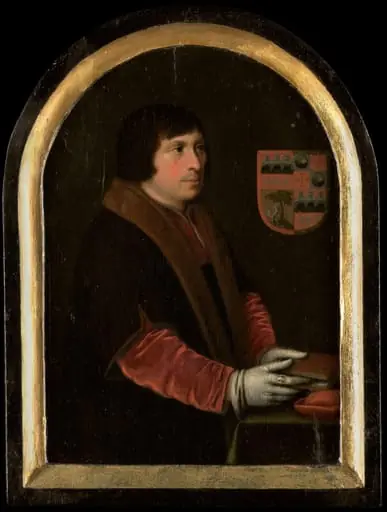 Portrait of Pieter Salina