Artwork
Portrait of Gengis Khan
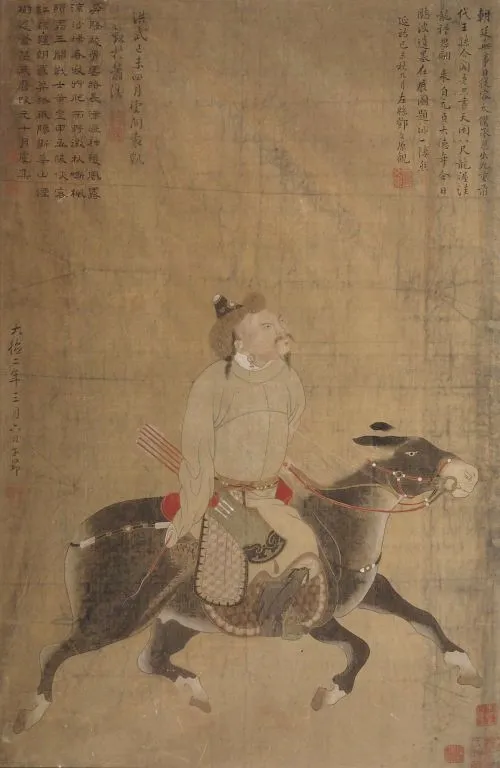
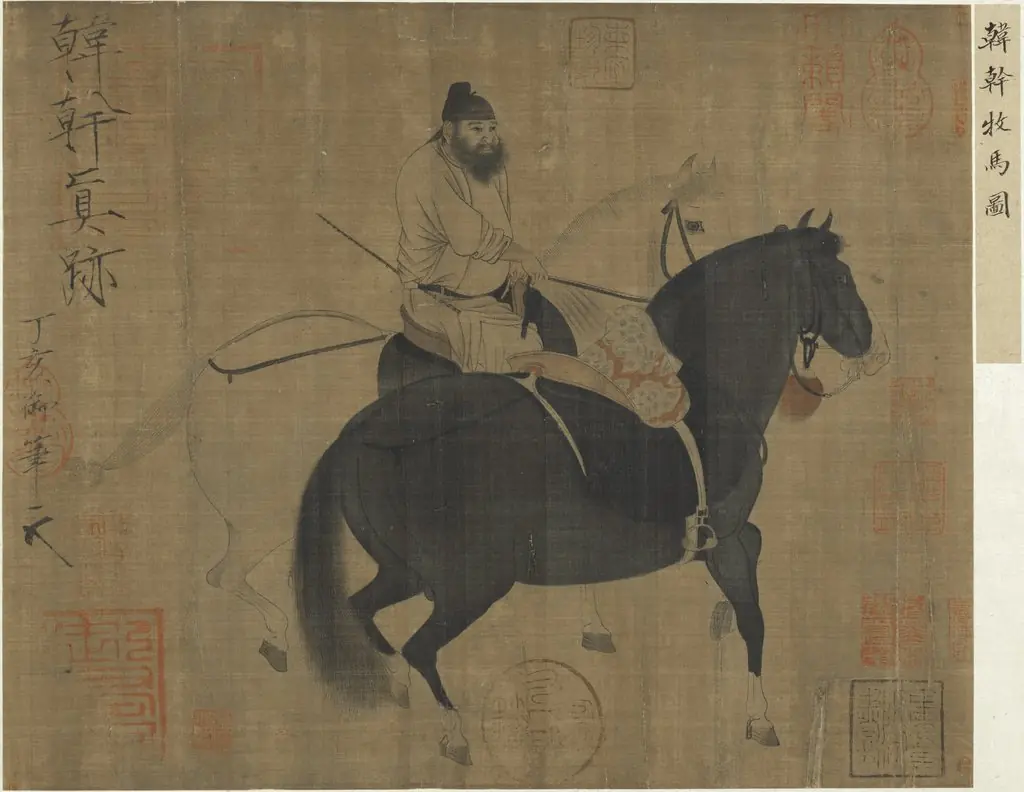
Portrait of Gengis Khan is an unspecified painting by Unknown. It dates from 1850 and is held in the collection of the Brooklyn Museum. This painting portrays a mounted figure, likely intended as Genghis Khan, captured in dynamic motion.
About this work
Overview
The rider, clad in traditional attire, holds a bow and quiver, while the horse—black with distinctive white markings—moves with limbs extended in mid-stride.
This painting portrays a mounted figure, likely intended as Genghis Khan, captured in dynamic motion. The rider, clad in traditional attire, holds a bow and quiver, while the horse—black with distinctive white markings—moves with limbs extended in mid-stride. A muted brown background frames the scene, and Chinese script appears in the upper left, suggesting cultural or textual context. The composition emphasizes motion and vigilance, aligning with equestrian traditions in Central Asian portraiture.
Subject & Meaning
The figure is presented as a warrior-leader, composed and alert, gazing into the distance as if surveying terrain or preparing for action. The bow and quiver signify readiness for conflict or hunt, while the horse’s powerful stance reinforces themes of mobility and authority. Though not definitively identified, the imagery aligns with historical depictions of Genghis Khan as a nomadic commander, embodying the martial ethos of the Mongol Empire.
Technique & Style
The artist employs simplified forms and restrained color to convey movement rather than detail. The horse’s anatomy is stylized, with exaggerated limb positioning to suggest speed. The red bridle and saddle contrast against the dark coat, drawing focus to the rider’s control. The background lacks depth, emphasizing the figure. Chinese characters imply a synthesis of Mongol and Chinese artistic traditions, possibly from a Yuan dynasty workshop.
History & Provenance
The painting’s origins are undocumented, but its stylistic elements—particularly the Chinese script and equestrian motif—suggest production in 13th- to 14th-century China under Mongol rule. It may have been created for a courtly or ceremonial context, reflecting the Yuan dynasty’s fusion of Mongol leadership and Chinese artistic practices. No verified provenance links it to imperial collections or known artists of the period.
Context
During the Yuan dynasty, Mongol rulers patronized art that celebrated their nomadic heritage while incorporating Chinese techniques. Equestrian portraits were common, symbolizing power and connection to steppe traditions. This work fits within a broader visual culture where rulers were depicted as warriors on horseback, blending Central Asian iconography with East Asian painting conventions to legitimize imperial authority.
Legacy
Though not attributed to a known school or artist, the painting contributes to a visual archive of Mongol leadership in Chinese artistic contexts. It reflects how imperial imagery was adapted across cultures, preserving the symbolic presence of Genghis Khan beyond historical records. Such works remain valuable for understanding the intersection of identity, power, and representation in multi-ethnic empires.
Artist & collection

 Domestic Scene
 Giacomo and Cardinal Marco, investing Andrea, Abbot of San Zeno, with his Benefice
 The Nymph of Fontainebleau
 Portrait of a Woman
 Madonna and Child with Saints in the Enclosed Garden
 Venus and Minerva
 Family Group of Four on Sofa
 Wall painting from Room H of the Villa of P. Fannius Synistor at Boscoreale
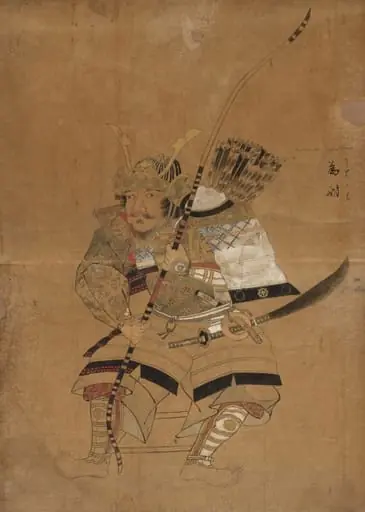 Sketch Model for Portraits of Minamoto Tametomo
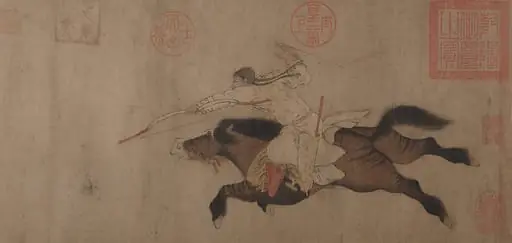 北宋/金 傳黃宗道 舊傳李贊華 獵鹿圖 卷|Stag Hunt
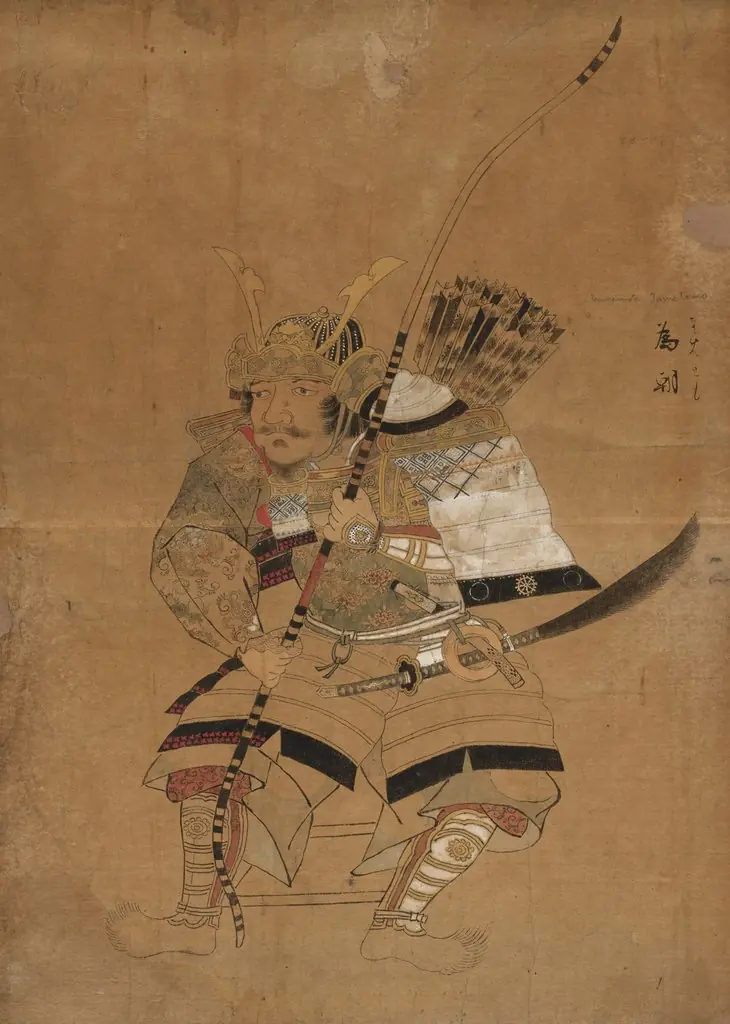 Sketch Model for Portraits of Minamoto Tametomo
 清 佚名 乾隆頭等侍衛占音保像 軸|Portrait of the Imperial Bodyguard Zhanyinbao
 Sketch Model for Portraits of Ashikaga Takauji
 Archer and Horse
 Warrior mounted on a Horse
 Sketch Model for Portraits of Ashikaga Takauji
 Orosia|Mounted Russian
 Portrait of Samurai-Official: Hirai Rinsei
 Man Herding Horses
 Paintings after Ancient Masters: Laozi Riding an Ox