Artwork
Portrait of Hendrik Merkus, Baron de Kock, Army Commandant and after 1826 Lieutenant Governor-General of the Dutch East Indies
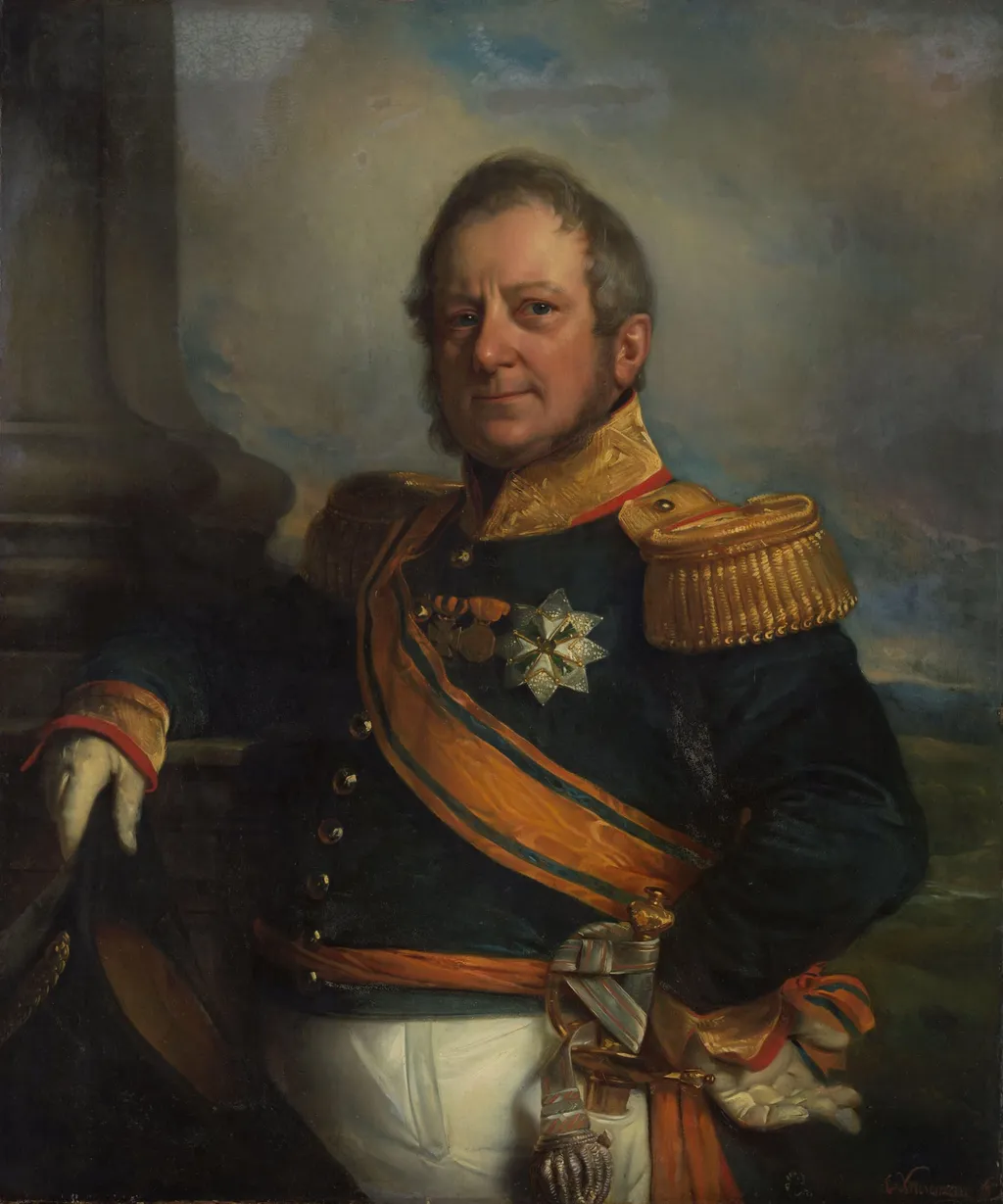
Portrait of Hendrik Merkus, Baron de Kock, Army Commandant and after 1826 Lieutenant Governor-General of the Dutch East Indies is an unspecified painting by the Biedermeier artist Unknown. It dates from 1842 and is held in the collection of the Rijksmuseum. The canvas depicts Hendrik Merkus baron de Kock (1779–1845), shown in his military attire as a standing half‑length figure.
About this work
Overview
The canvas depicts Hendrik Merkus baron de Kock (1779–1845), shown in his military attire as a standing half‑length figure. He rests a staff against the base of a stone column with his right hand, while his left hand rests at his side. A muted landscape unfolds behind him, situating the portrait within a series of images of Dutch colonial governors‑general.
Subject & Meaning
De Kock is presented as both military commander and, after 1826, lieutenant governor‑general of the Dutch East Indies. The formal pose, uniform, and the architectural element of the column convey authority and stability, while the distant landscape alludes to the far‑flung territories under his administration.
Technique & Style
Executed in oil on canvas, the work employs a restrained palette of dark blues and earth tones, emphasizing the subject’s uniform and the stone column. The half‑length format allows focus on facial expression and posture, while the softly rendered background provides depth without detracting from the figure.
History & Provenance
The portrait is part of a governmental commission that assembled likenesses of successive governors‑general of the former Dutch East Indies. The artist’s identity remains unknown, reflecting the practice of employing court painters or workshop assistants for official state portraiture in the early nineteenth century.
Context
Created during a period when the Netherlands sought to legitimize its colonial rule, the painting aligns with other official portraits that combined military regalia with symbolic architecture. Such images were displayed in colonial offices and later in Dutch museums to document the administrative history of the East Indies.
Artist & collection

 Domestic Scene
 Giacomo and Cardinal Marco, investing Andrea, Abbot of San Zeno, with his Benefice
 The Nymph of Fontainebleau
 Portrait of a Woman
 Madonna and Child with Saints in the Enclosed Garden
 Venus and Minerva
 Family Group of Four on Sofa
 Wall painting from Room H of the Villa of P. Fannius Synistor at Boscoreale
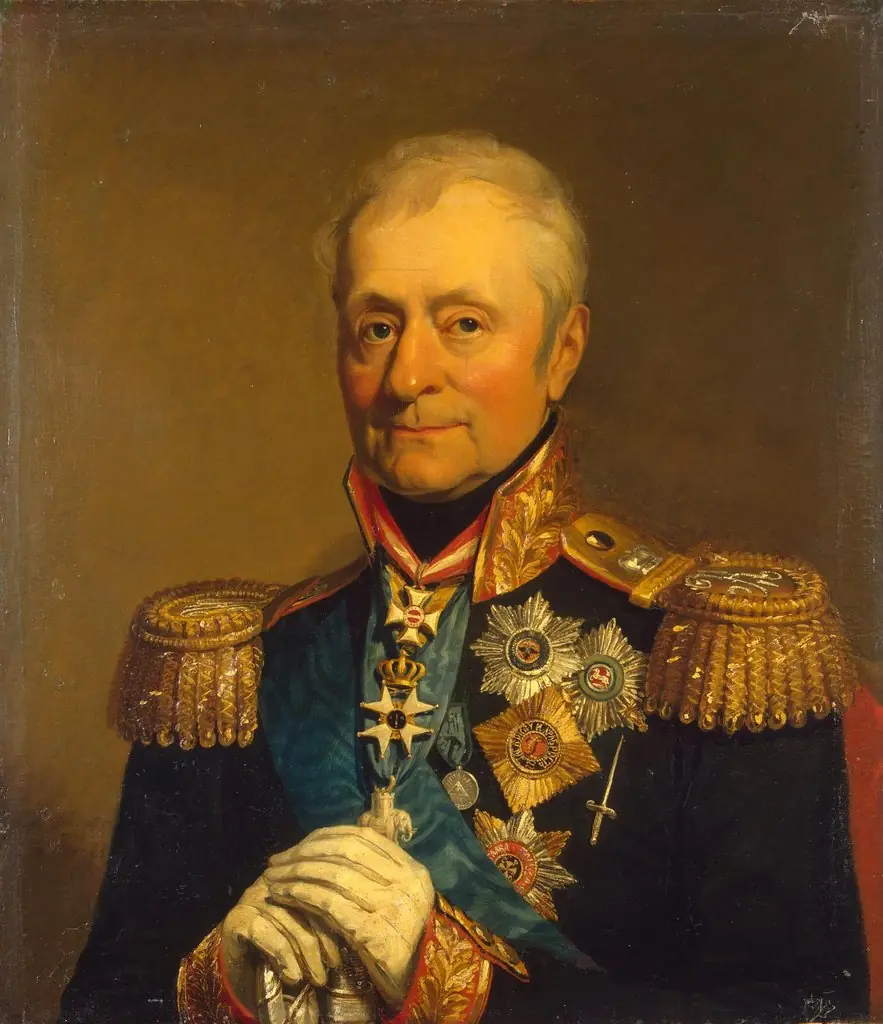 Portrait of Leonty L. Bennigsen (Levin) (1745-1826)
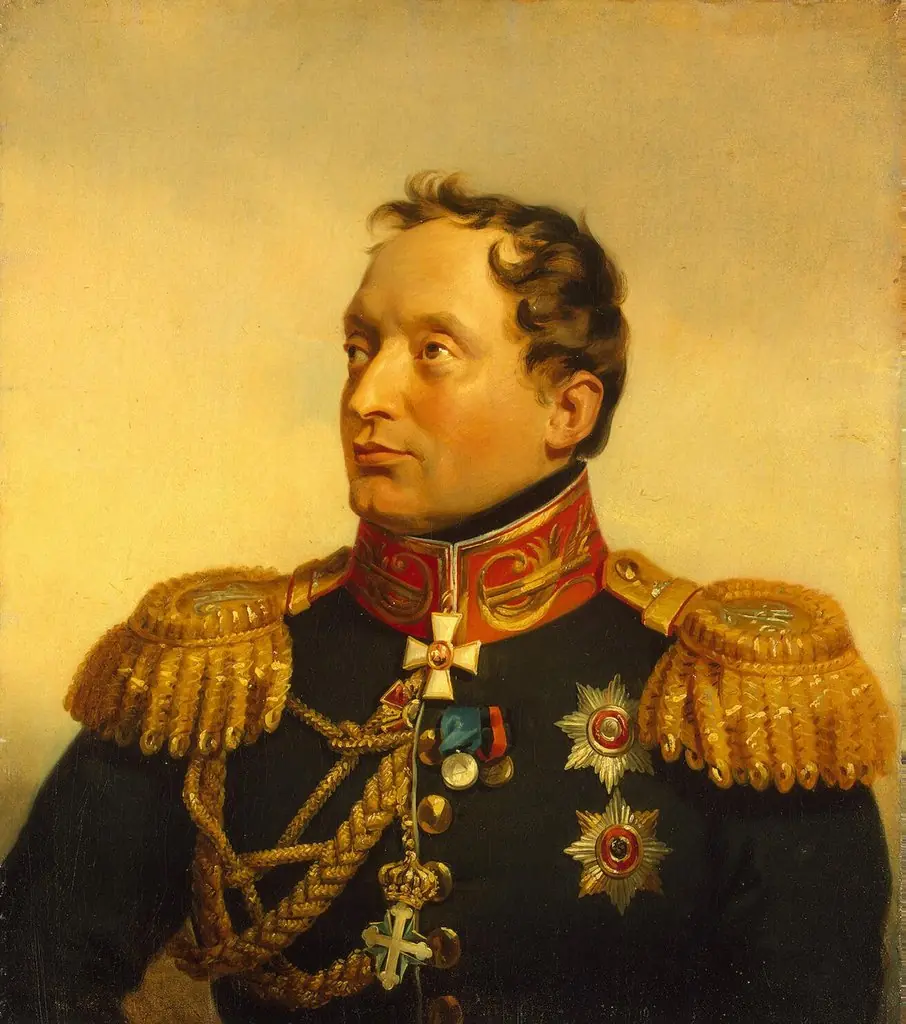 Portrait of Filippo (Filipp Osipovich) Paulucci (1779-1849)
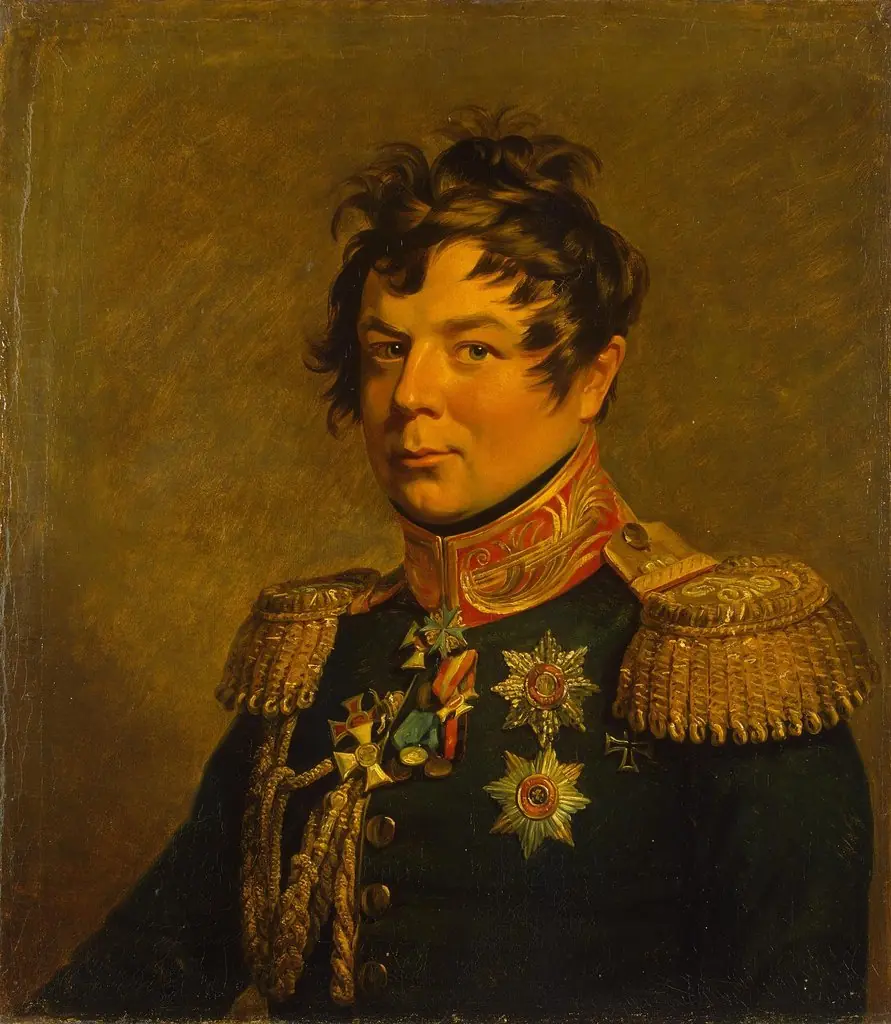 Portrait of Ivan I. Diebitsch-Zabalkansky (1785-1831)
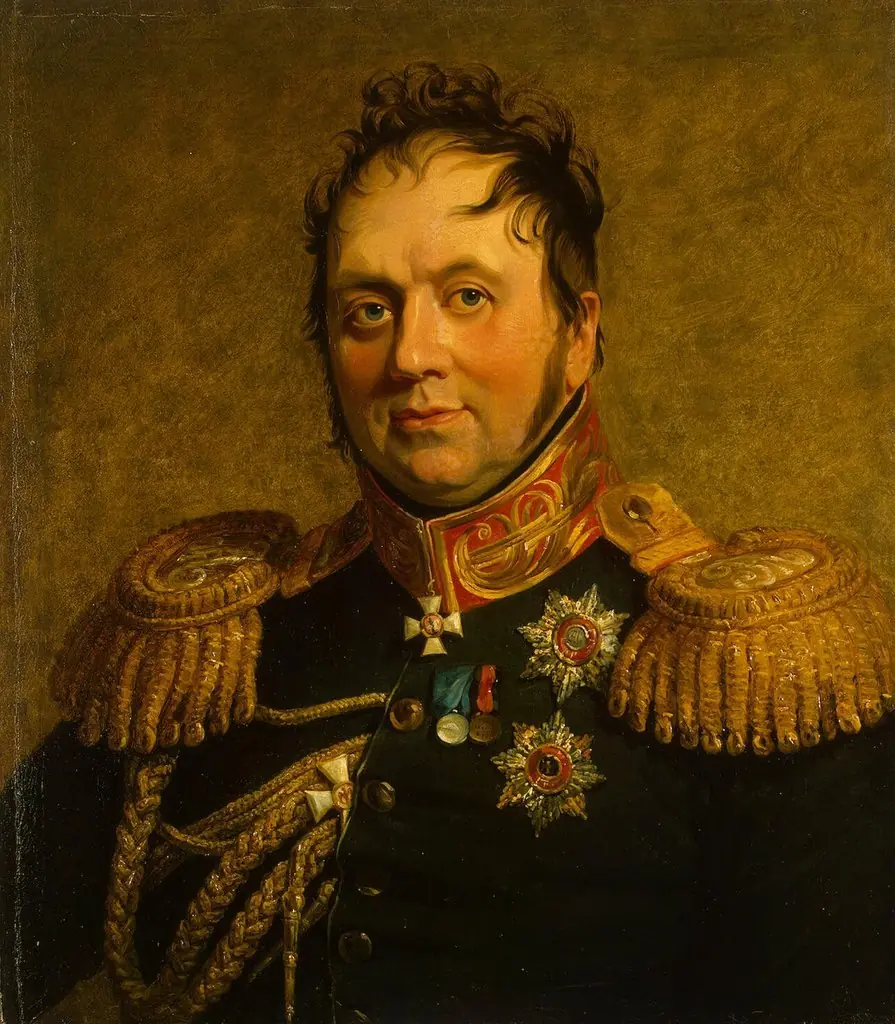 Portrait of Fyodor K. Korff (1773/74-1823)
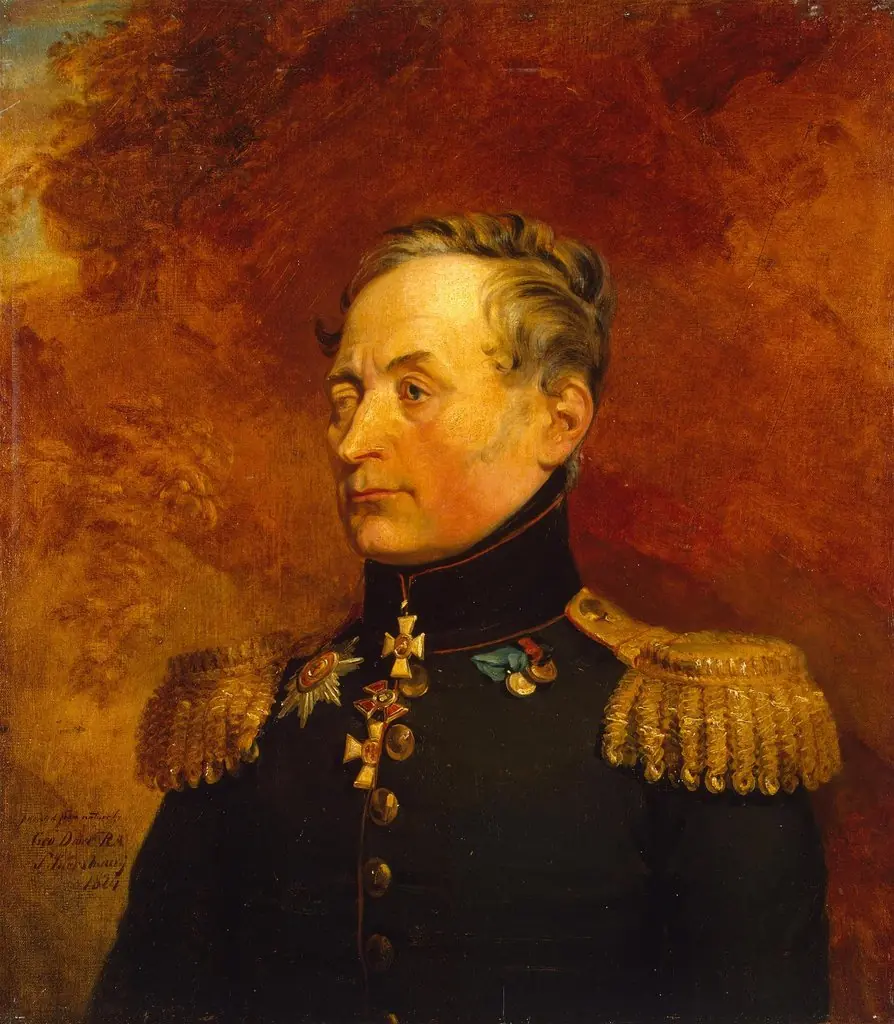 Portrait of Pavel I. Merlin (1769-1841/42)
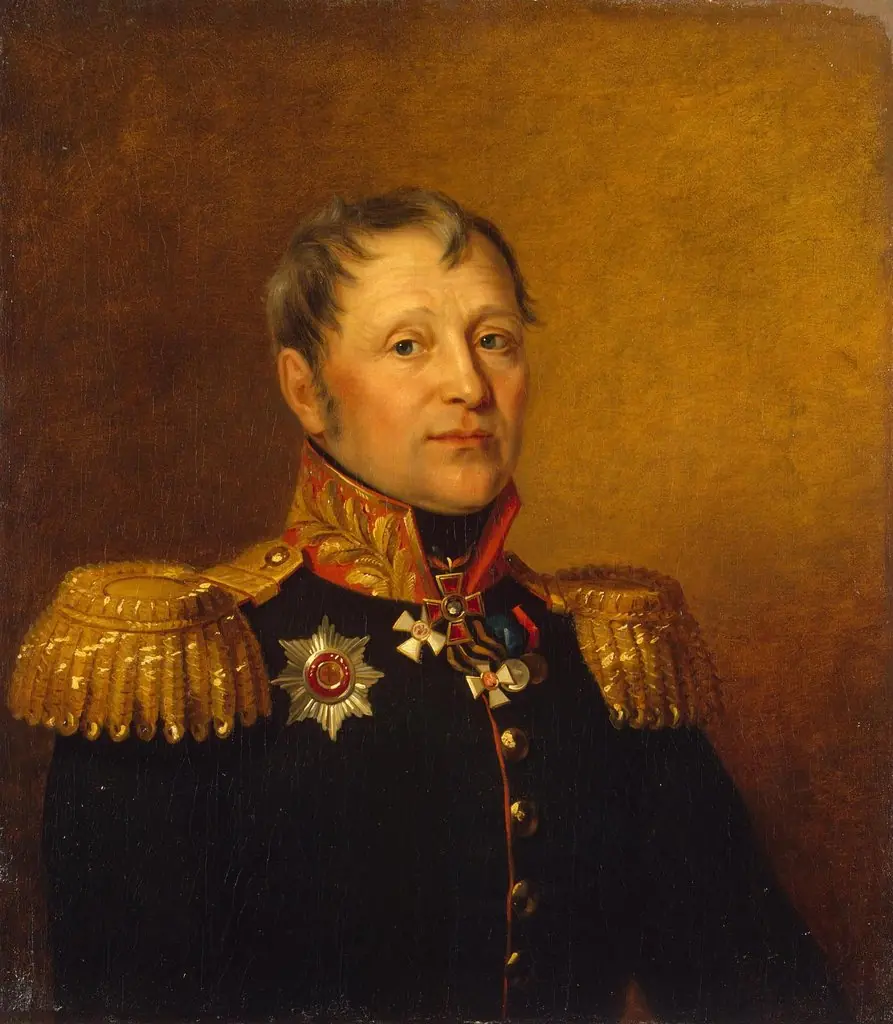 Portrait of Nikolai F. Yemelyanov (1768-1829)
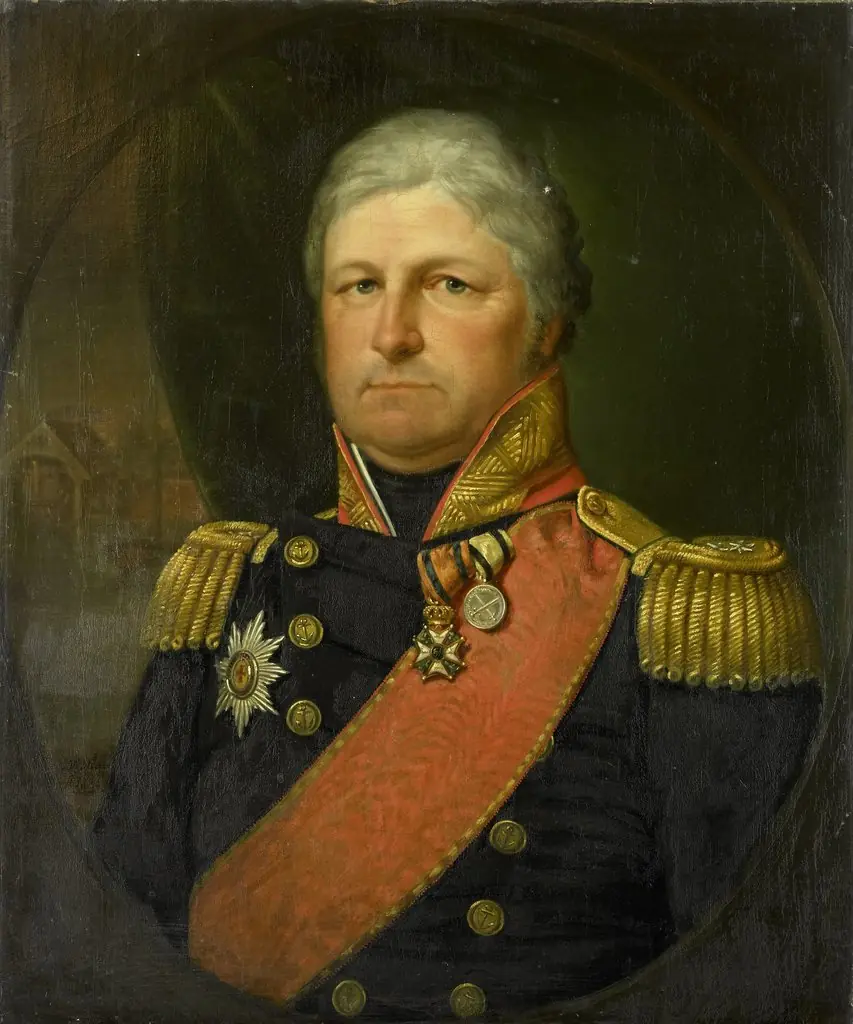 Portrait of Rear-Admiral Job Seaburne May
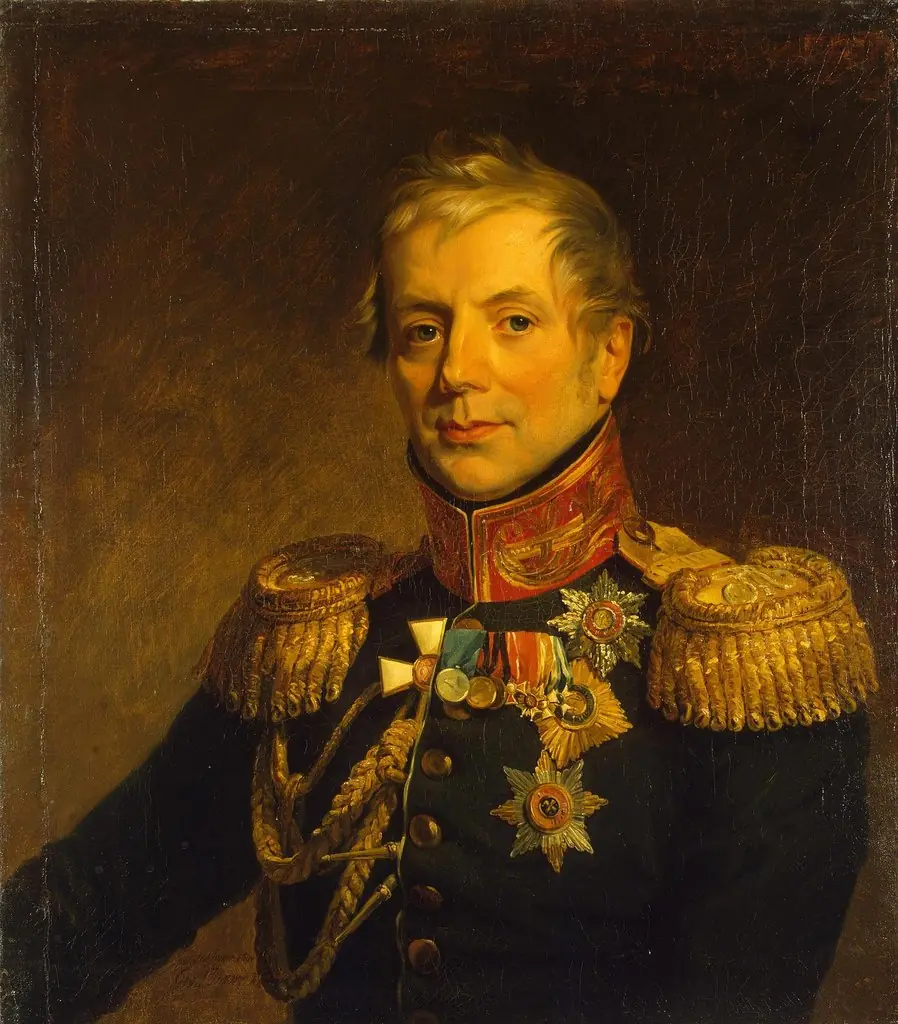 Portrait of Pyotr P. Konovnitsyn (1764-1822) (replica of the 1821 portrait)
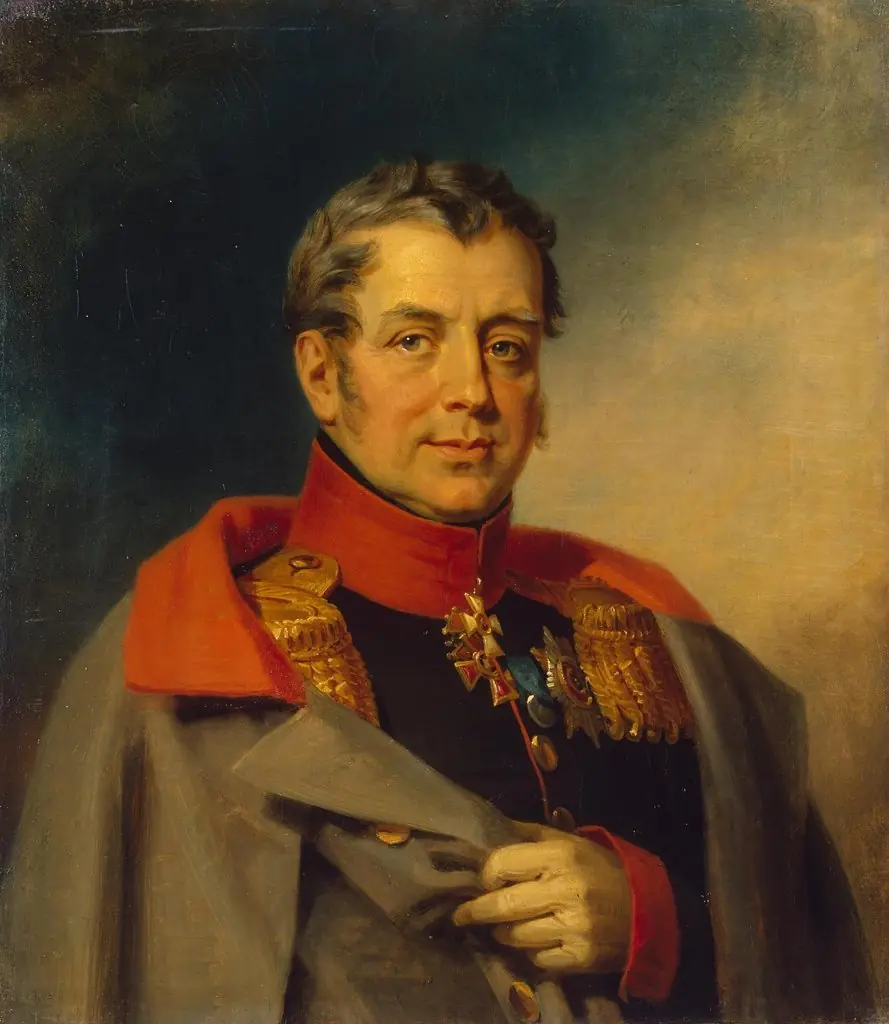 Portrait of Mikhail D. Balk (1764-1818)