Artwork
Processional scene with Amar Singh, ruler of Thanjavur (Tanjore), and Sarabhoji
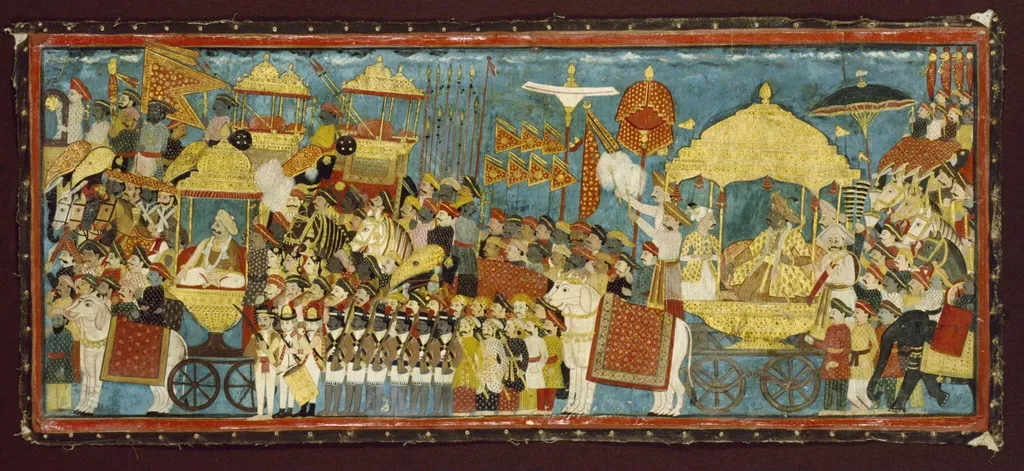
Processional scene with Amar Singh, ruler of Thanjavur (Tanjore), and Sarabhoji is a paint painting by the Patna School of Painting artist Unknown. It dates from 1797 and is held in the collection of the Victoria and Albert Museum. This painting is an example of Company painting, a style created by Indian artists for British patrons.
About this work
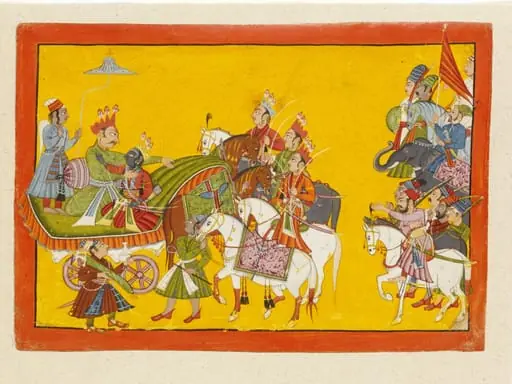
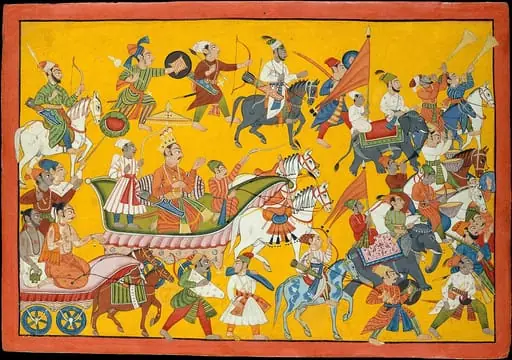
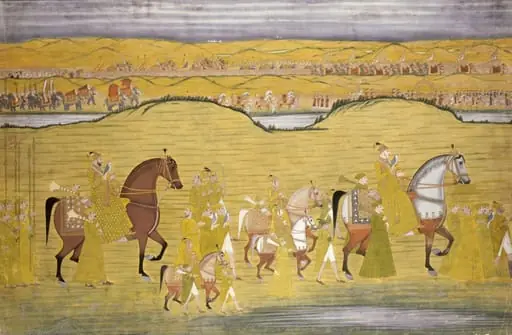
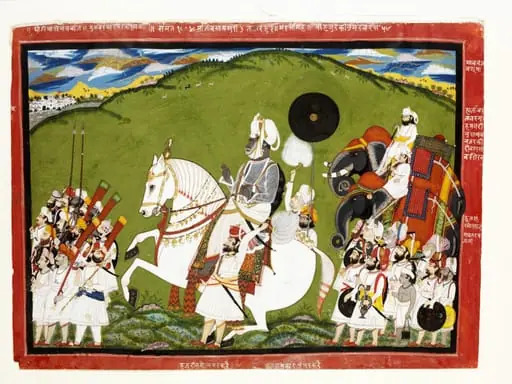
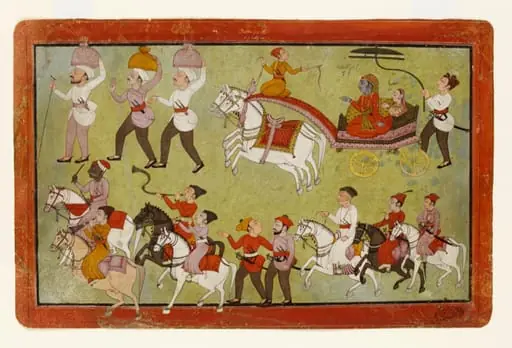
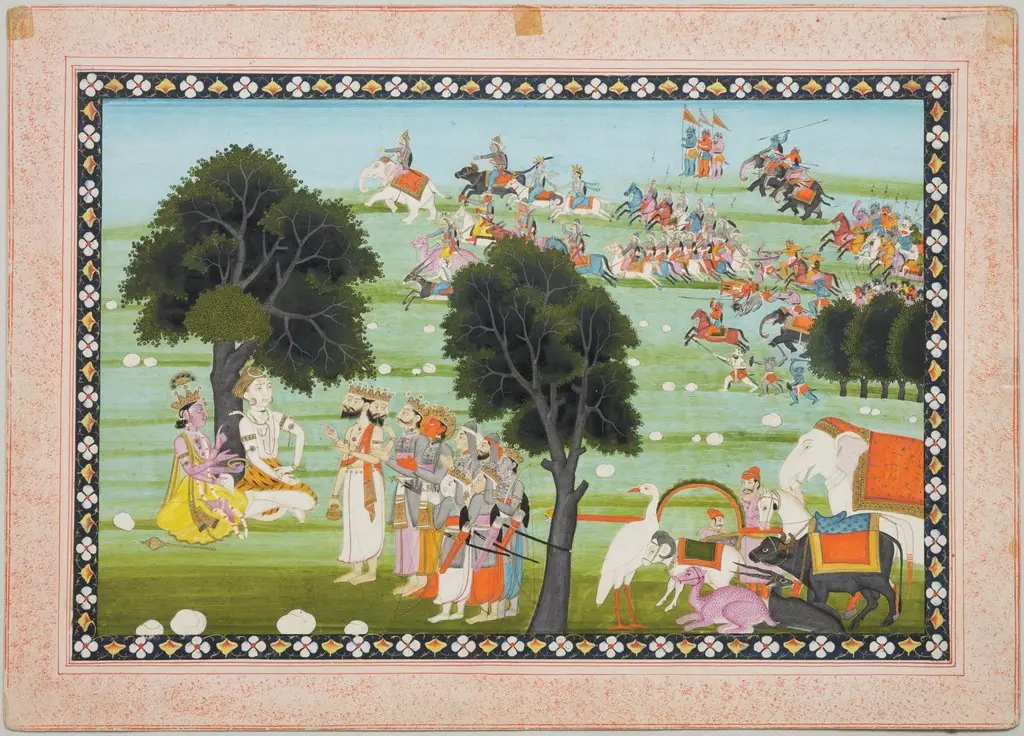
You see a scene with two carriages and many people.
The ruler, Amar Singh, is in a large gilded carriage. This painting is interesting because it shows the transfer of power. Amar Singh was ruler until 1798, then the British replaced him with Sarabhoji.
Check out the technique of chiaroscuro to learn more about how artists use light and dark.
Overview
This painting is an example of Company painting, a style created by Indian artists for British patrons. It depicts a processional scene featuring two prominent figures: Amar Singh and Sarabhoji, successive rulers of Thanjavur.
Subject & Meaning
The scene shows Amar Singh in a large gilded carriage and Sarabhoji in a smaller one, indicating a transfer of power. Amar Singh ruled from 1787 to 1798, when he was pensioned off by the British, who then recognized Sarabhoji as the new ruler.
Technique & Style
The painting employs chiaroscuro, a technique using contrasting light and dark to create depth and volume. This stylistic choice highlights the figures and carriages, drawing the viewer's attention to the central event.
History & Provenance
The painting likely dates to before 1798, the year Amar Singh was deposed. Its creation during this period suggests it may have been commissioned to mark the transition of power or to document the event for British patrons.
Artist & collection

 Domestic Scene
 Giacomo and Cardinal Marco, investing Andrea, Abbot of San Zeno, with his Benefice
 The Nymph of Fontainebleau
 Portrait of a Woman
 Madonna and Child with Saints in the Enclosed Garden
 Venus and Minerva
 Family Group of Four on Sofa
 Wall painting from Room H of the Villa of P. Fannius Synistor at Boscoreale