Artwork
Processional statuary group belonging to the Fraternity of the Parish of San Vicente, Seville
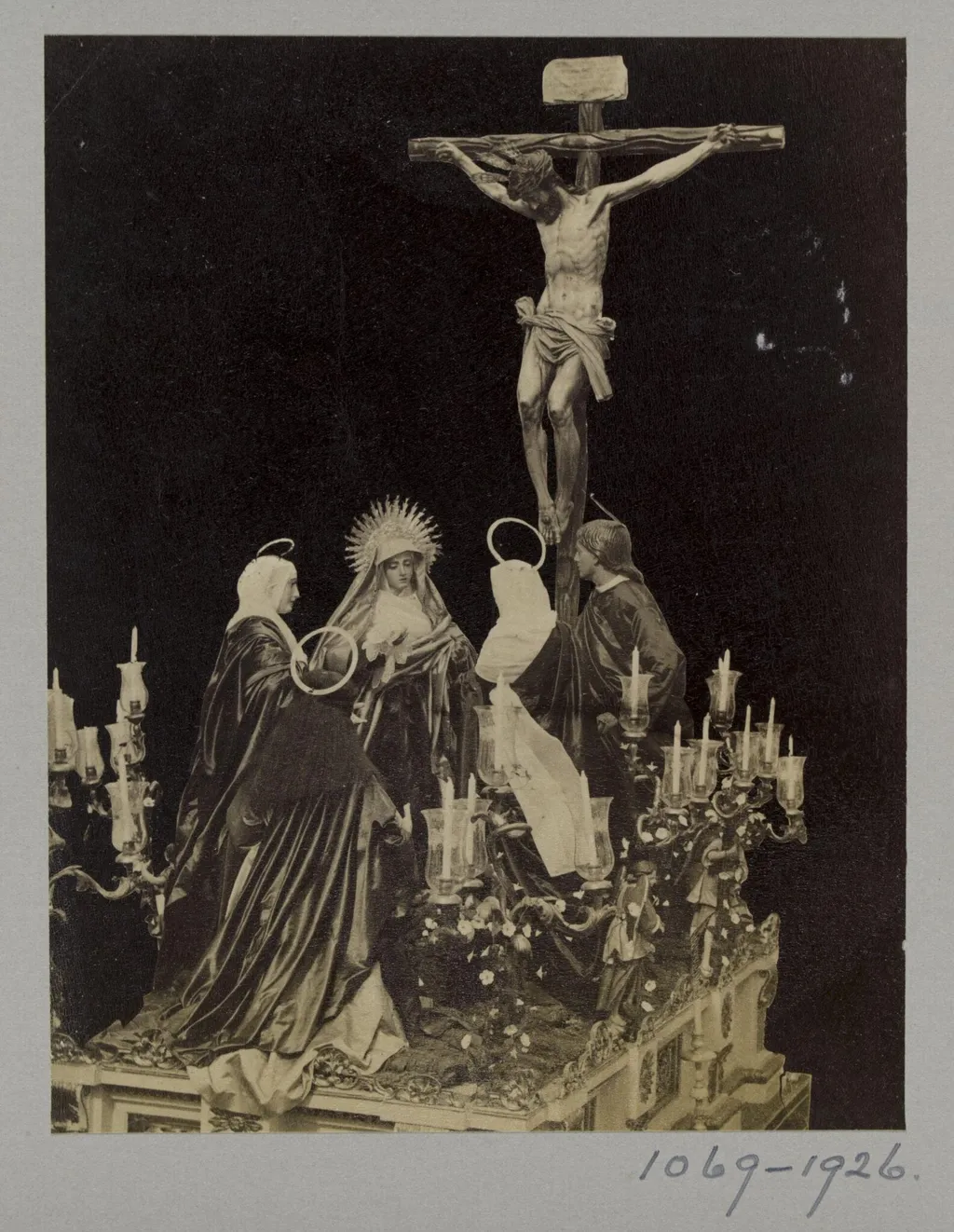
Processional statuary group belonging to the Fraternity of the Parish of San Vicente, Seville is a photographic photography by Unknown. It dates from 1850 and is held in the collection of the Victoria and Albert Museum.
About this work
Overview
The collection was initially valued for its scholarly potential and systematically organized by geographic origin.
This photograph is one of 611 images from the personal collection of John Singer Sargent, donated to the museum by his sisters in August 1925, two months after his death. The photographs, largely acquired during his extensive travels, document architecture, sculpture, and religious art across Europe, North Africa, and the Middle East. Though Sargent took some pictures himself, most were likely purchased from local professionals. The collection was initially valued for its scholarly potential and systematically organized by geographic origin.
Subject & Meaning
The image captures a procession of religious statues belonging to the Fraternity of the Parish of San Vicente in Seville. These figures, carried during Holy Week rituals, embody devotional traditions central to Andalusian Catholic culture. Their inclusion in Sargent’s collection reflects his interest in the visual language of Spanish religious practice, particularly as it related to his own mural work in Boston, where he sought to engage with sacred iconography and communal ritual.
Technique & Style
The photograph is a straightforward documentary record, likely made by a local professional using standard 19th-century photographic methods. Composition emphasizes clarity and detail, prioritizing the arrangement and texture of the statues over artistic manipulation. The lighting and framing suggest an intent to preserve architectural and sculptural context, aligning with the collection’s purpose as an educational reference rather than a creative statement.
History & Provenance
The photographs were assembled by Sargent during his travels between the 1880s and early 1900s. After his death, his sisters donated the entire collection to the museum, which had already received a watercolor and later a tapestry chair from them. The images were cataloged by region and distributed among departments for study. Their classification as an archival resource, rather than fine art, underscores their role in supporting research on global artistic traditions.
Context
Sargent’s interest in Spanish religious art was partly driven by his commission for The Triumph of Religion murals in the Boston Public Library. His photographs of Spanish processional statuary provided visual references for the composition and emotional tone of his own religious scenes. The collection as a whole reveals his broader engagement with European and Mediterranean visual culture, extending beyond portraiture into the study of public and sacred art forms.
Legacy
The photographs remain a resource for scholars studying the transmission of religious imagery across cultures and the role of photography in artistic research. Their preservation within institutional collections highlights early 20th-century museum practices that treated photographic documentation as essential to art historical study. The Seville procession image continues to inform understanding of Spanish devotional practices and their influence on transatlantic artistic projects.
Artist & collection

 Domestic Scene
 Giacomo and Cardinal Marco, investing Andrea, Abbot of San Zeno, with his Benefice
 The Nymph of Fontainebleau
 Portrait of a Woman
 Madonna and Child with Saints in the Enclosed Garden
 Venus and Minerva
 Family Group of Four on Sofa
 Wall painting from Room H of the Villa of P. Fannius Synistor at Boscoreale
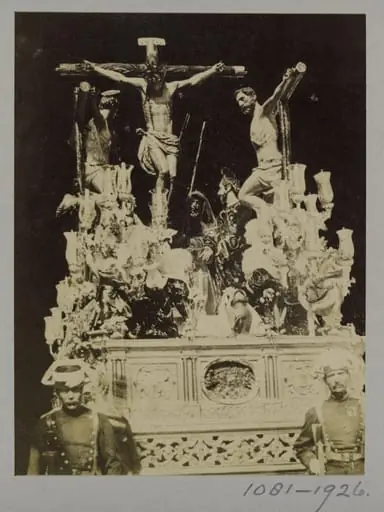 Processional statuary group belonging to the Fraternity of the Chapel of La Carretería, Seville
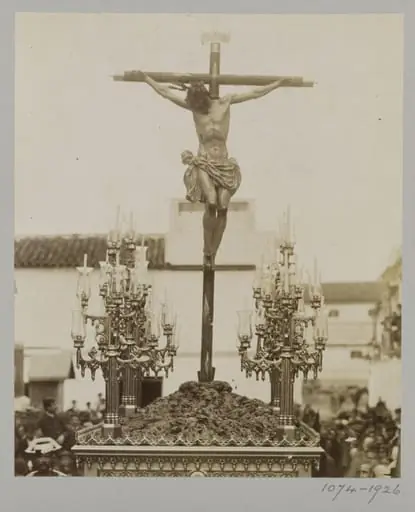 Processional statuary group belonging to the Fraternity of the Parish of San Bernardo, Seville', albumen print, late 19th century
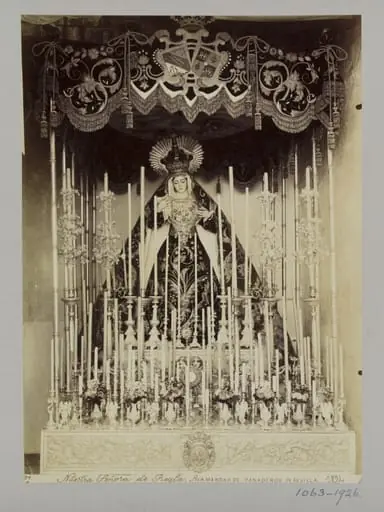 Processional sculpture of Our Lady of Regla, housed in the Chapel of San Andrés in Seville
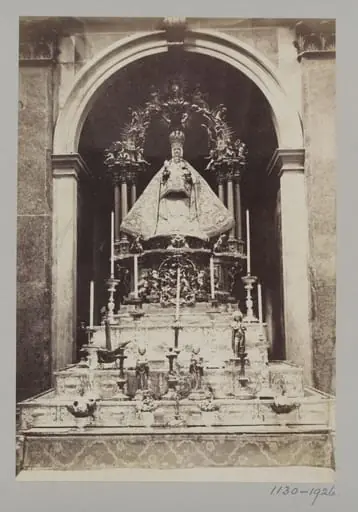 Sculpture of the Virgen del Sagrario, patron of Toledo, housed in the altarpiece of the Capilla del Sagrario in the Cathedral of Toledo
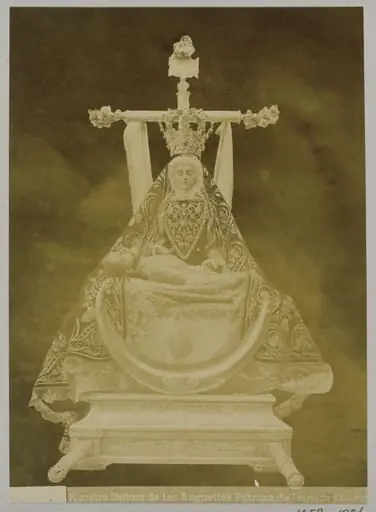
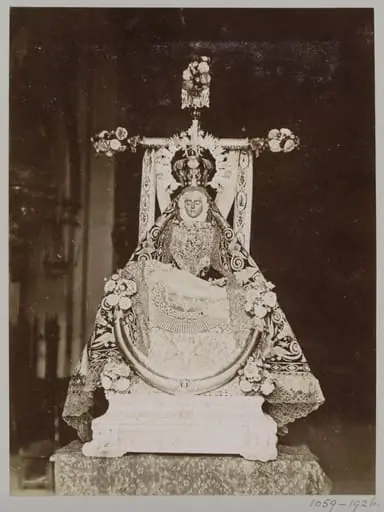 Sculpture of the Patroness of Granada, Nuestra Señora de las Angustias (Our Lady of Sorrows), housed in the altarpiece of the Basilica de las Angustias
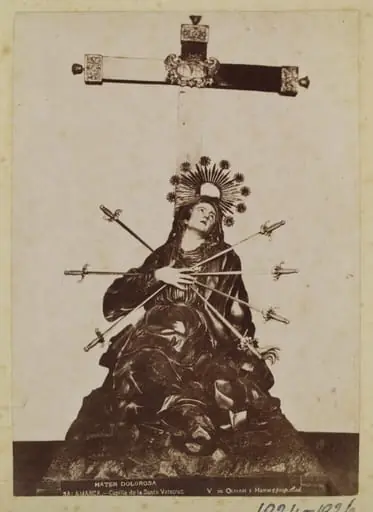 Mater Dolorosa sculpture from the Capilla de Vera Cruz
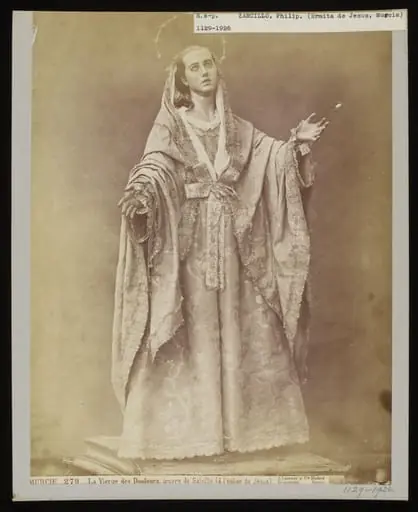 Untitled
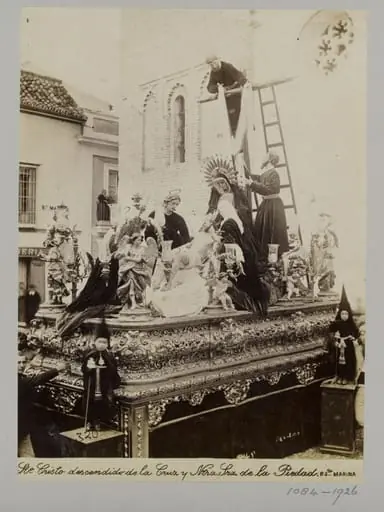 Processional statuary group belonging to the Fraternity of the Parish of Santa Marina, Seville, with children in special dress in the foreground
 Untitled