Artwork
Processional statuary group belonging to the Fraternity of the Parish of Santa Marina, Seville, with children in special dress in the foreground
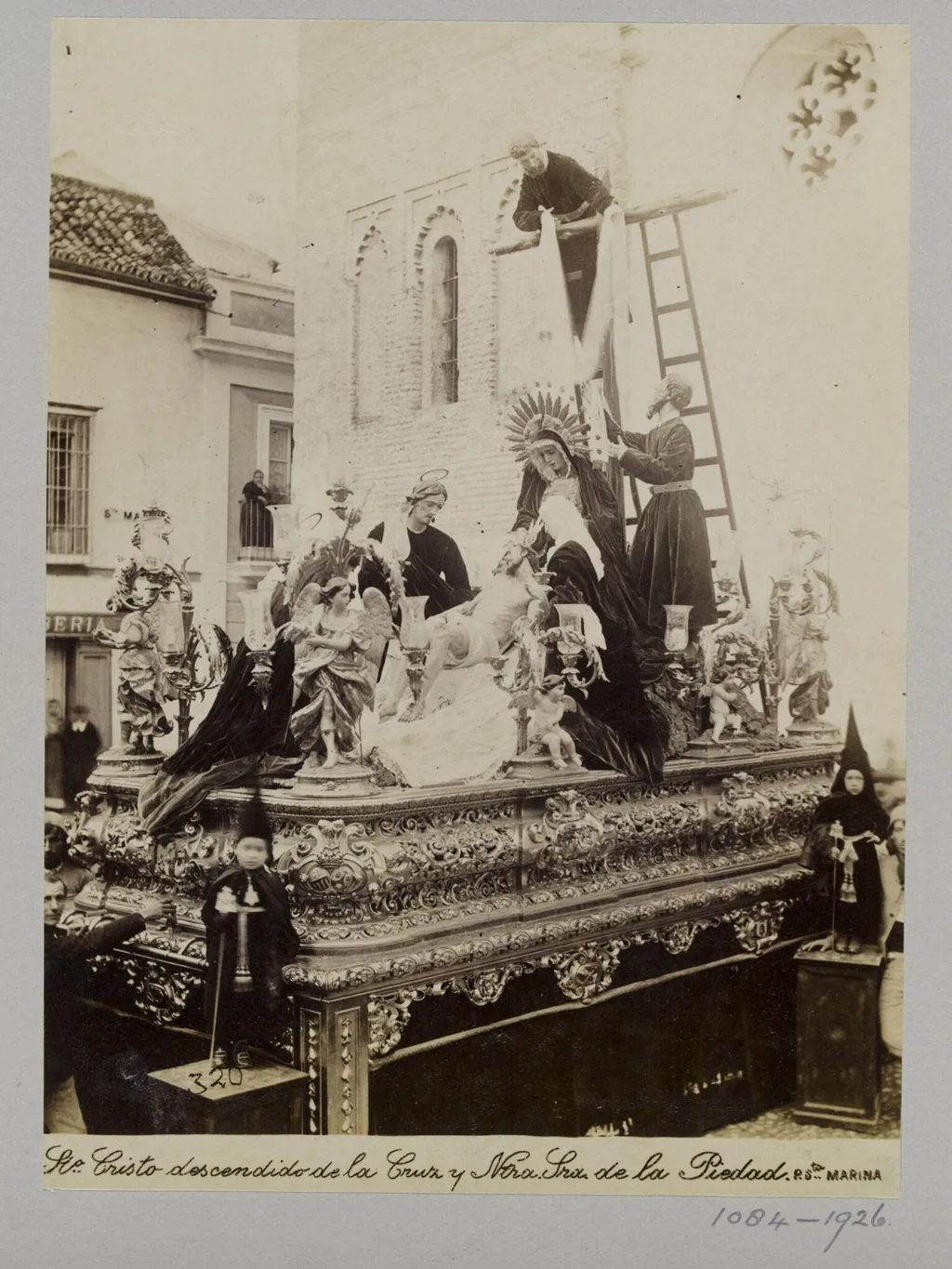
Processional statuary group belonging to the Fraternity of the Parish of Santa Marina, Seville, with children in special dress in the foreground is a photographic photography by Unknown. It dates from 1850 and is held in the collection of the Victoria and Albert Museum.
About this work
Overview
The black‑and‑white image captures a religious procession in Seville, featuring a statuary group belonging to the Fraternity of the Parish of Santa Marina. Children dressed in elaborate costume stand in the foreground, observing the procession, while participants behind them carry a large figure on a float.
Subject & Meaning
The photograph documents a traditional Catholic parade, highlighting the communal role of the fraternity and the involvement of local youth in the ritual. The presence of the children emphasizes the transmission of devotional practices across generations within the parish community.
Technique & Style
Taken in monochrome, the image employs a clear, documentary composition that balances the foreground figures with the larger procession behind. The focus on detail and the stark contrast typical of early 20th‑century photography convey both the solemnity and the festive atmosphere of the event.
History & Provenance
The picture is part of a larger set of 611 photographs once owned by American painter John Singer Sargent (1856–1925). After Sargent’s death, his sisters Emily Sargent and Violet Sargent Ormond donated the collection to the museum in August 1925, alongside a watercolor and a tapestry‑covered chair.
Context
Sargent’s photographic collection reflects his extensive travels and broad artistic interests, encompassing architecture, sculpture, and cultural scenes from Europe, the Middle East, the Americas, and Asia. Although an amateur photographer, many of the images were likely purchased from local professionals during his journeys.
Legacy
The museum classified the photographs geographically, recognizing their value as an educational resource for both the Library Photograph Collection and the Sculpture Department. The Seville procession image continues to serve scholars studying Spanish religious customs and the visual culture of early 20th‑century festivals.
Artist & collection

 Domestic Scene
 Giacomo and Cardinal Marco, investing Andrea, Abbot of San Zeno, with his Benefice
 The Nymph of Fontainebleau
 Portrait of a Woman
 Madonna and Child with Saints in the Enclosed Garden
 Venus and Minerva
 Family Group of Four on Sofa
 Wall painting from Room H of the Villa of P. Fannius Synistor at Boscoreale
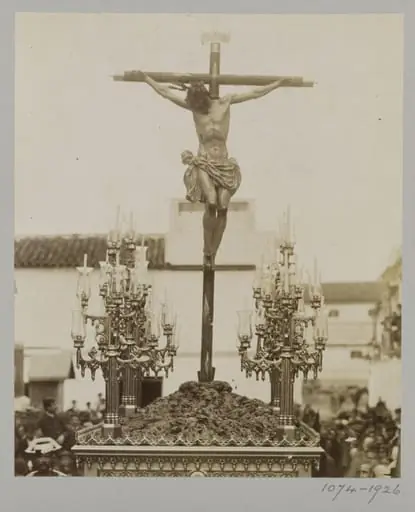 Processional statuary group belonging to the Fraternity of the Parish of San Bernardo, Seville', albumen print, late 19th century
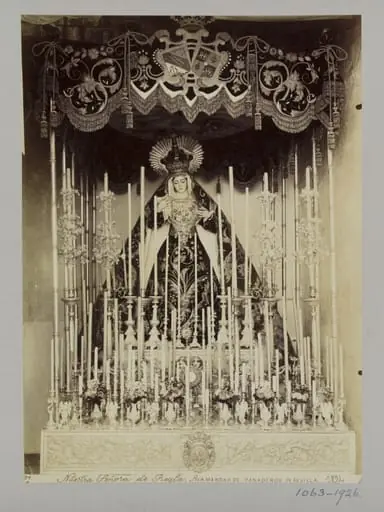 Processional sculpture of Our Lady of Regla, housed in the Chapel of San Andrés in Seville
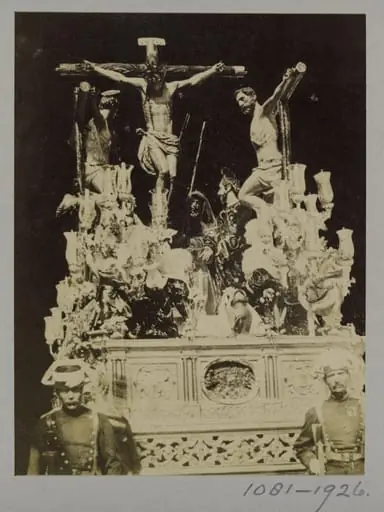 Processional statuary group belonging to the Fraternity of the Chapel of La Carretería, Seville
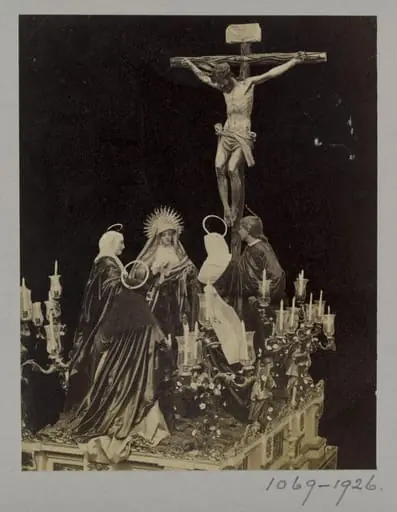 Processional statuary group belonging to the Fraternity of the Parish of San Vicente, Seville
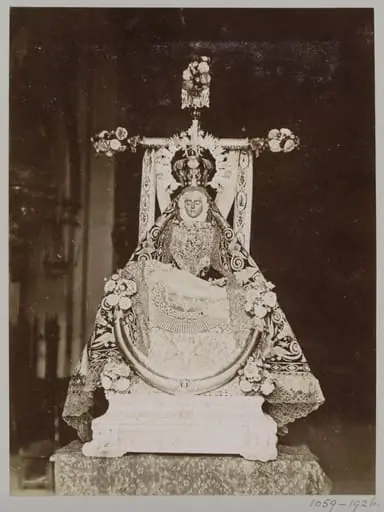 Sculpture of the Patroness of Granada, Nuestra Señora de las Angustias (Our Lady of Sorrows), housed in the altarpiece of the Basilica de las Angustias
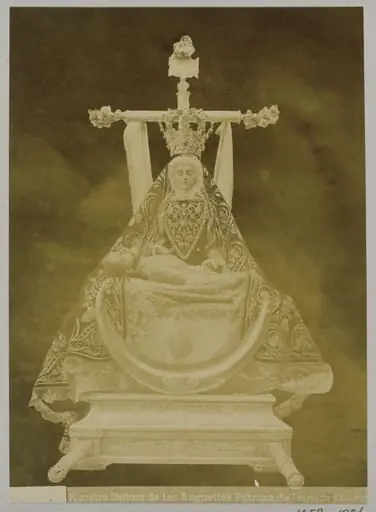 Untitled
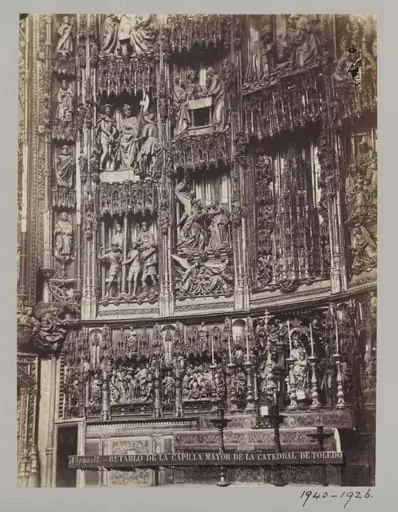 Altarpiece in Toledo Cathedral, Spain
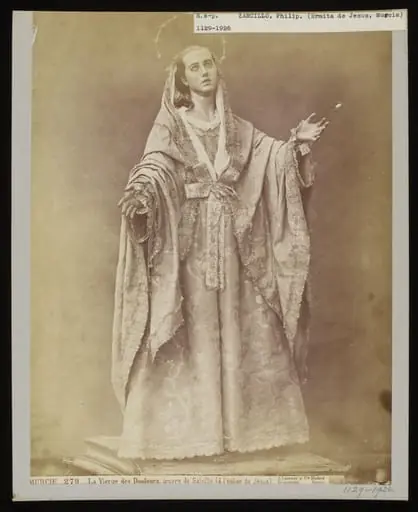 Untitled
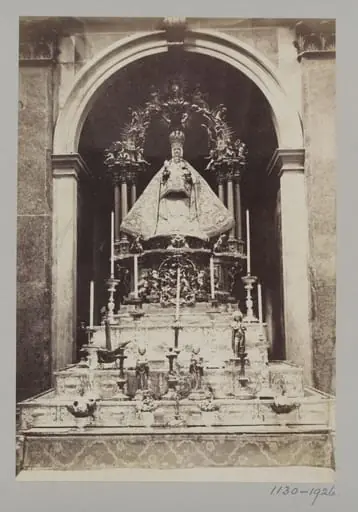 Sculpture of the Virgen del Sagrario, patron of Toledo, housed in the altarpiece of the Capilla del Sagrario in the Cathedral of Toledo
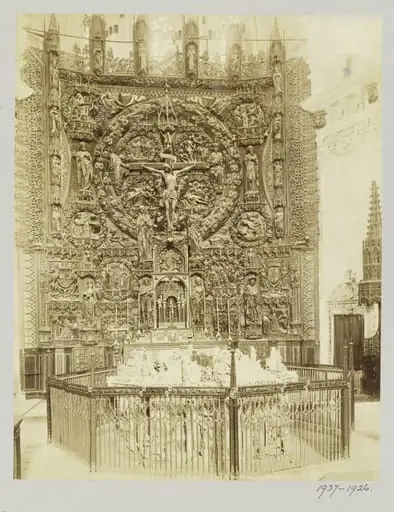 Interior of the Cartuja (Chapterhouse) de Miraflores, in Burgos
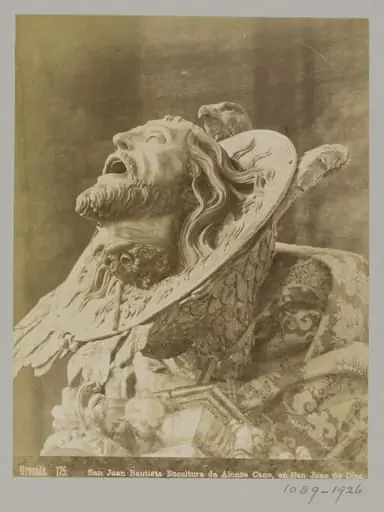 Untitled
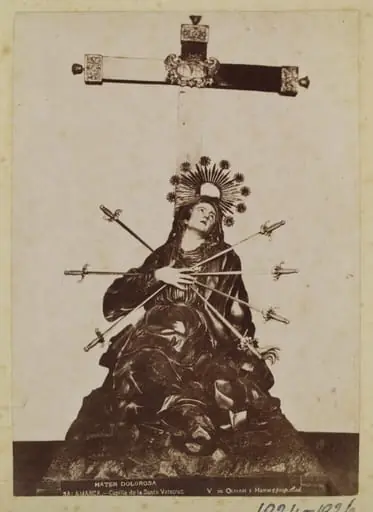 Mater Dolorosa sculpture from the Capilla de Vera Cruz