Artwork
元代后半身像册-仁宗皇帝后
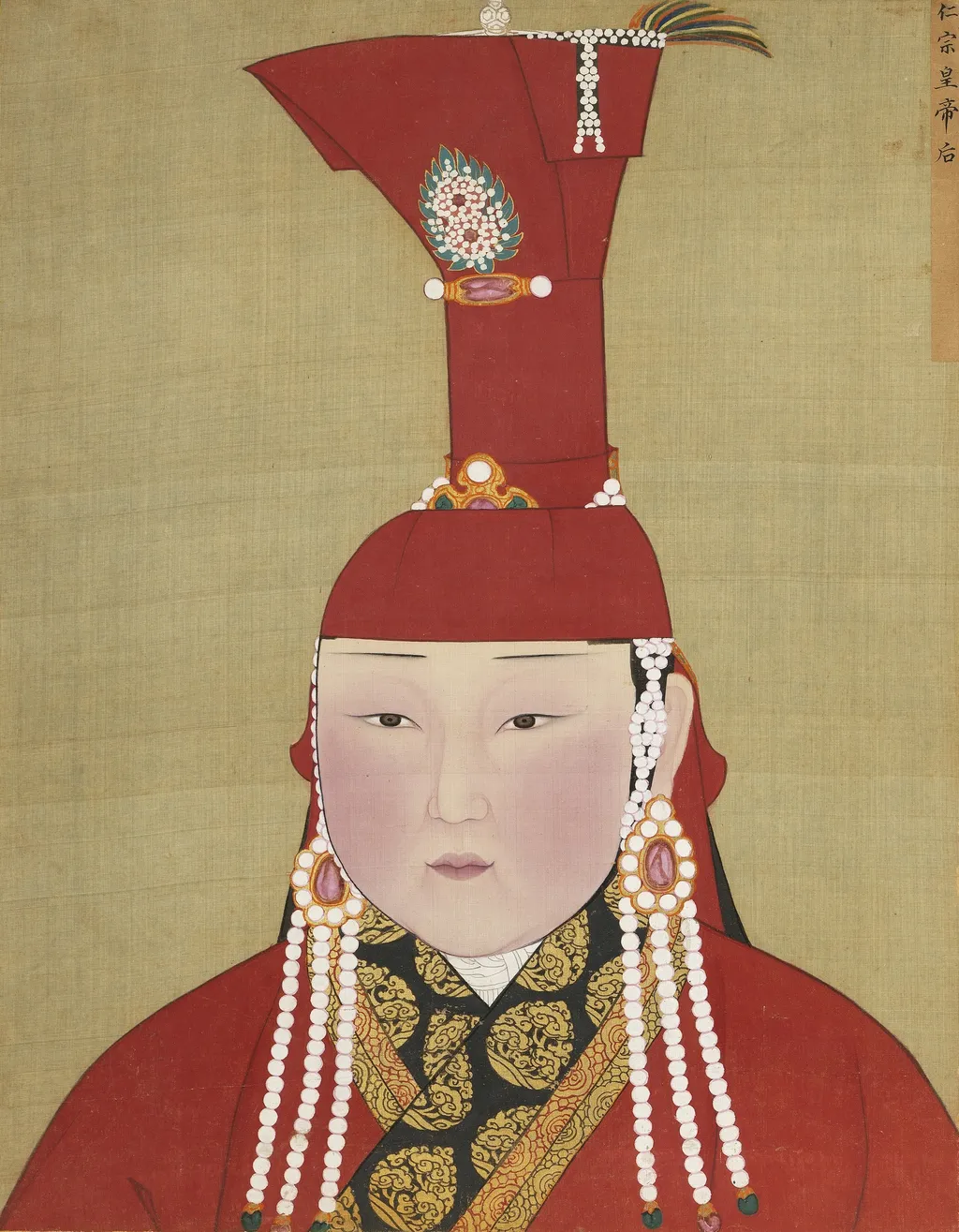
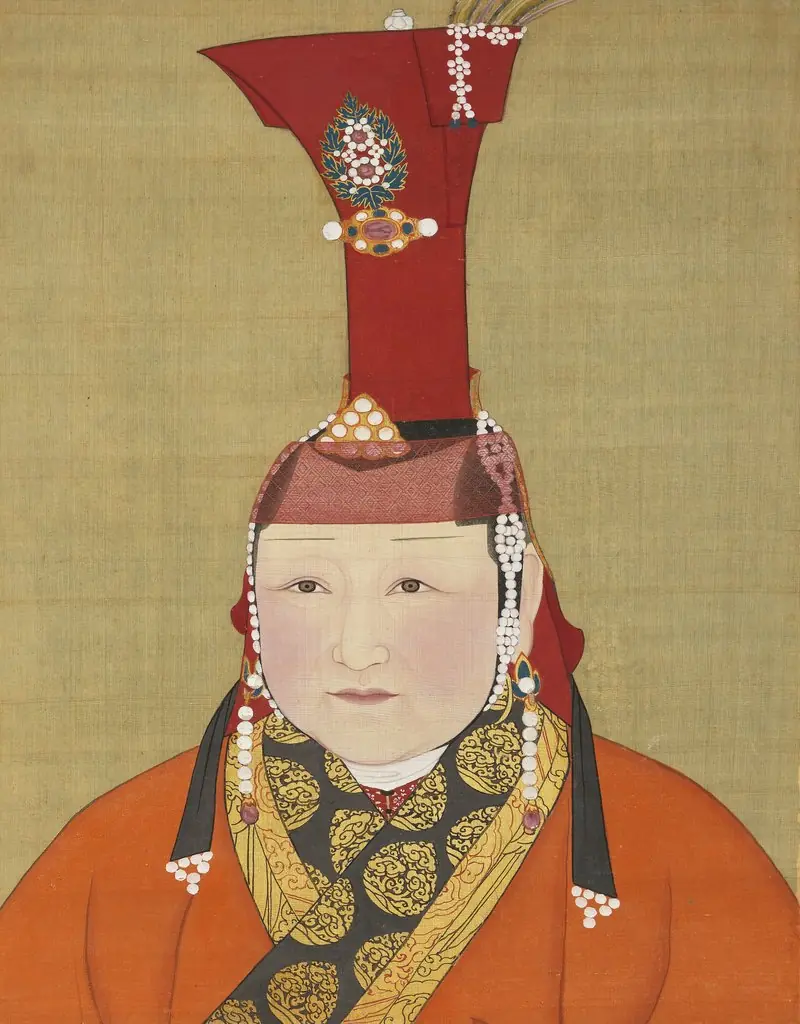
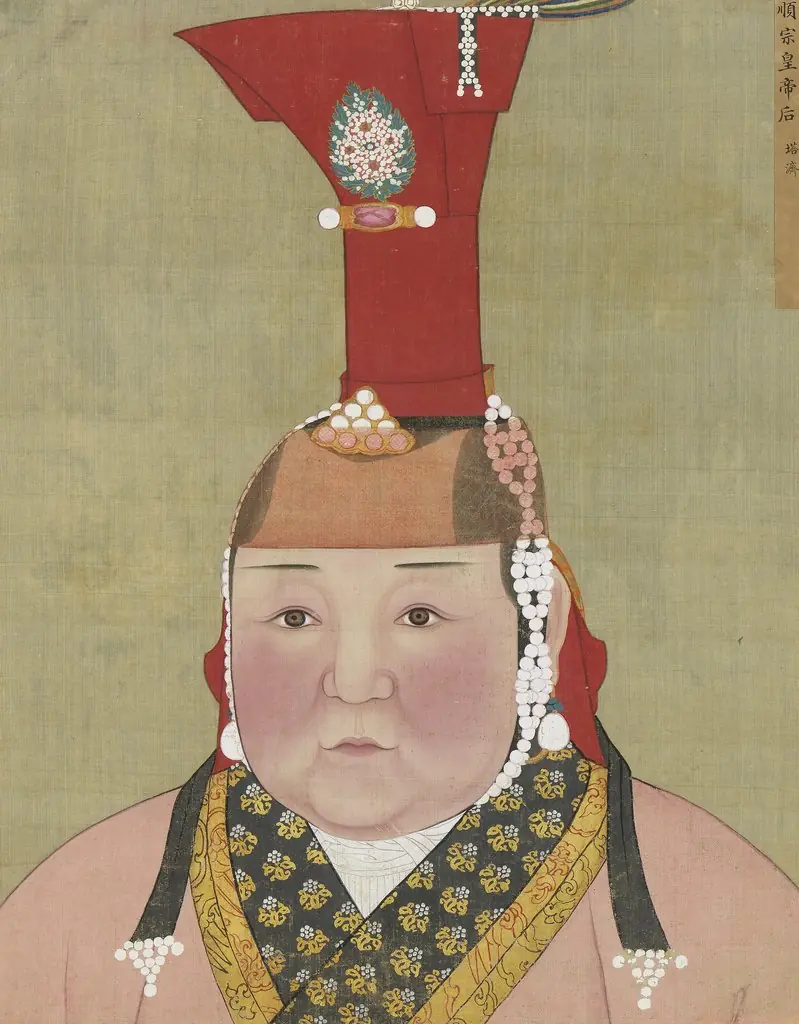
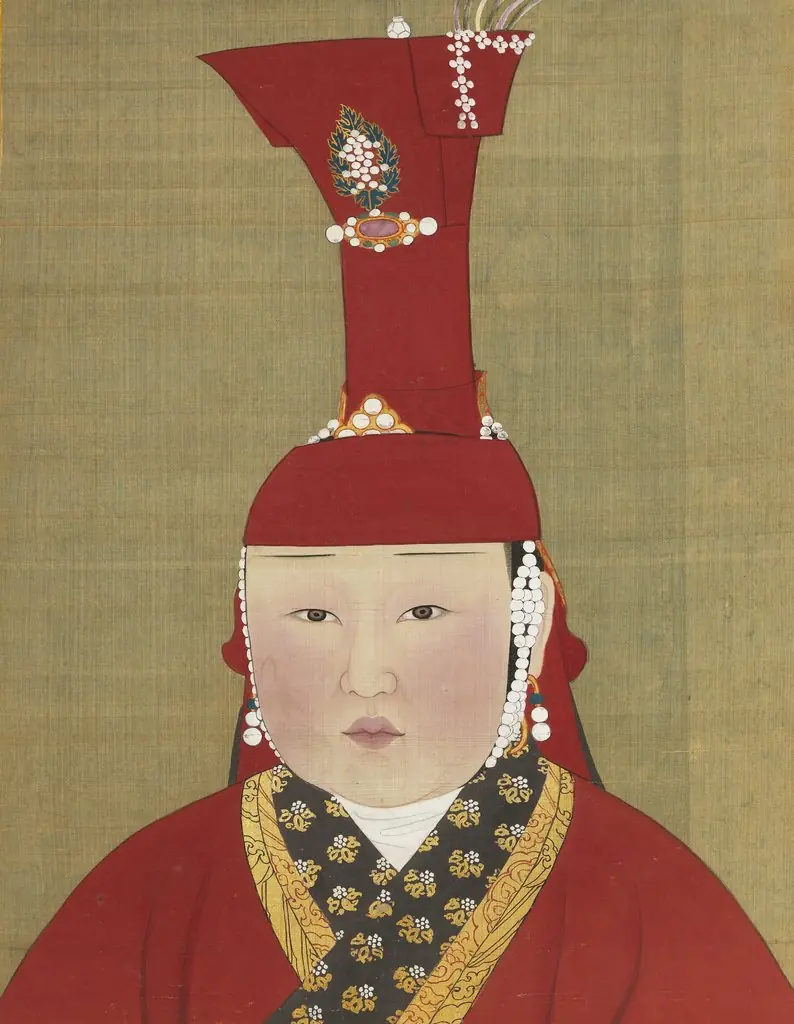
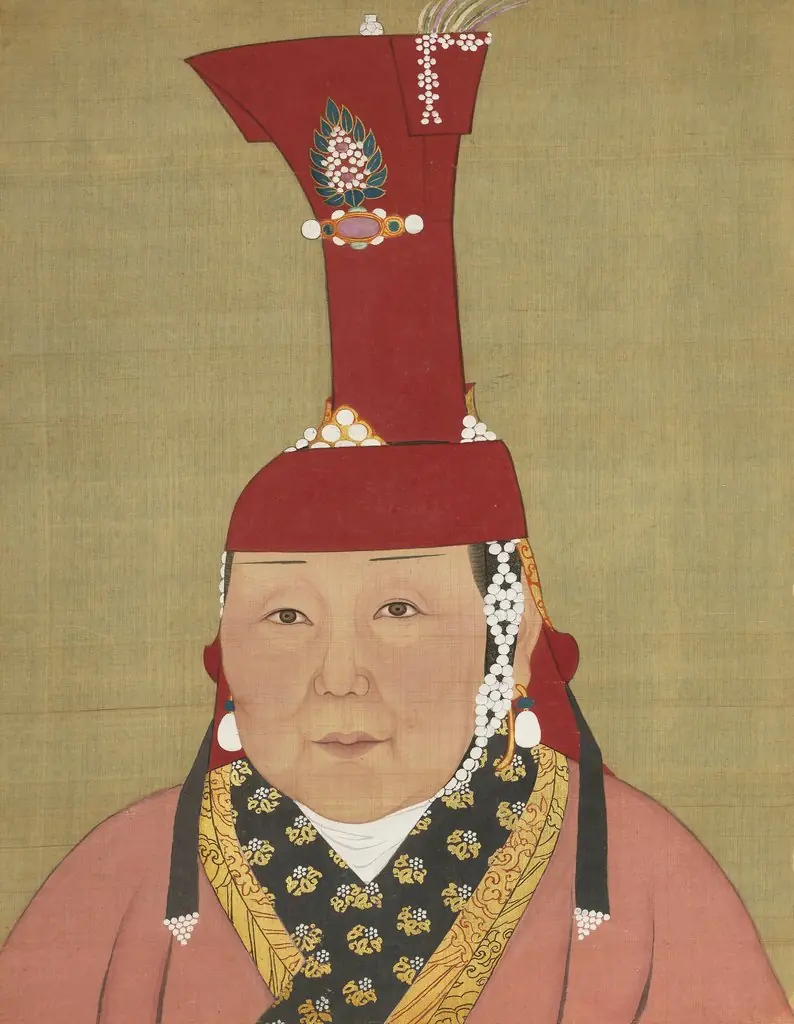
元代后半身像册-仁宗皇帝后 is an unspecified painting by Unknown. It dates from 1850 and is held in the collection of the National Palace Museum.
About this work
Overview
The painting is executed on silk with mineral pigments, preserved in the National Palace Museum's collection as part of a series of imperial family portraits.
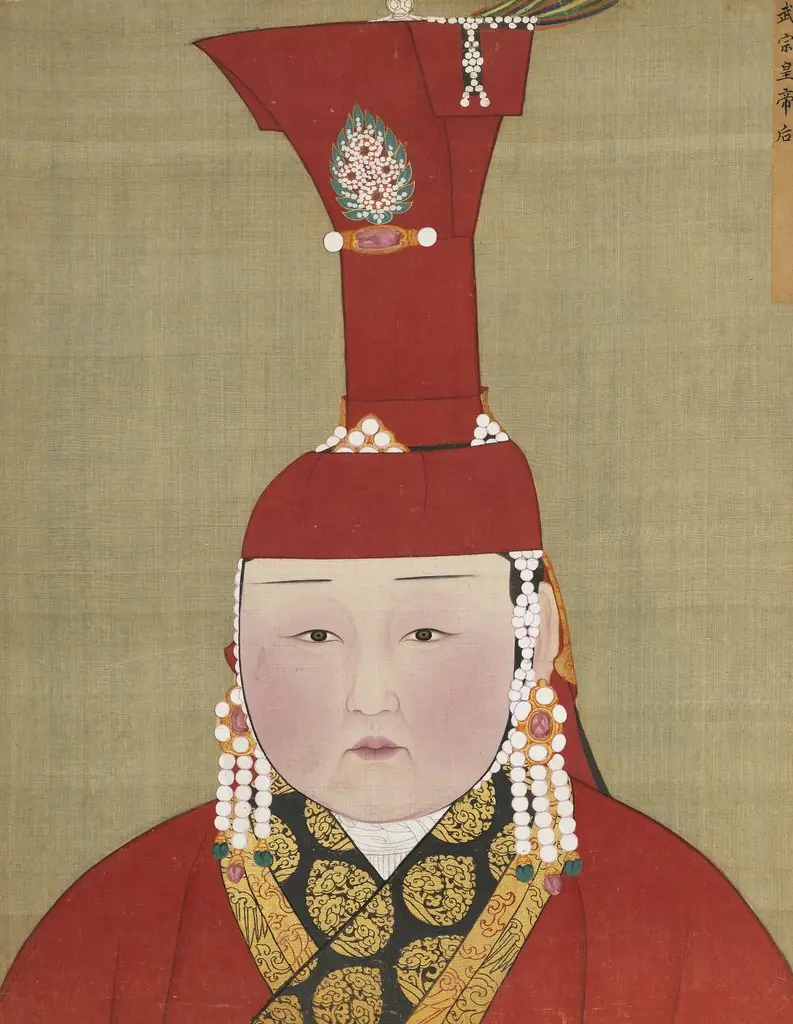
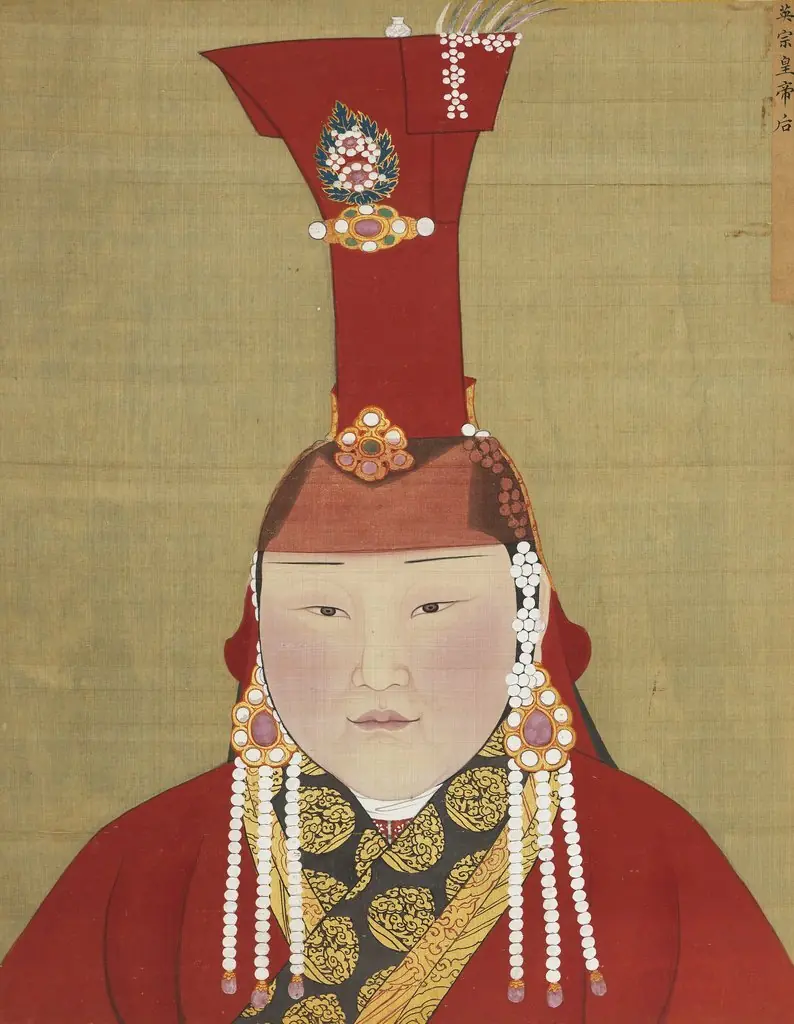
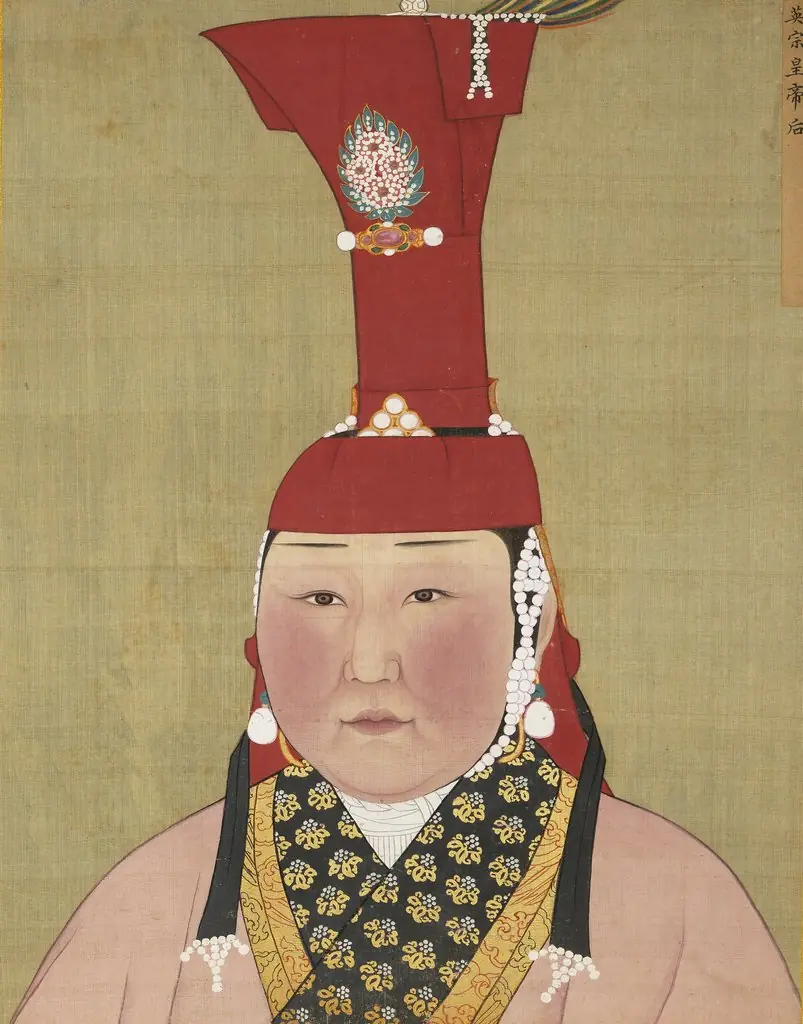
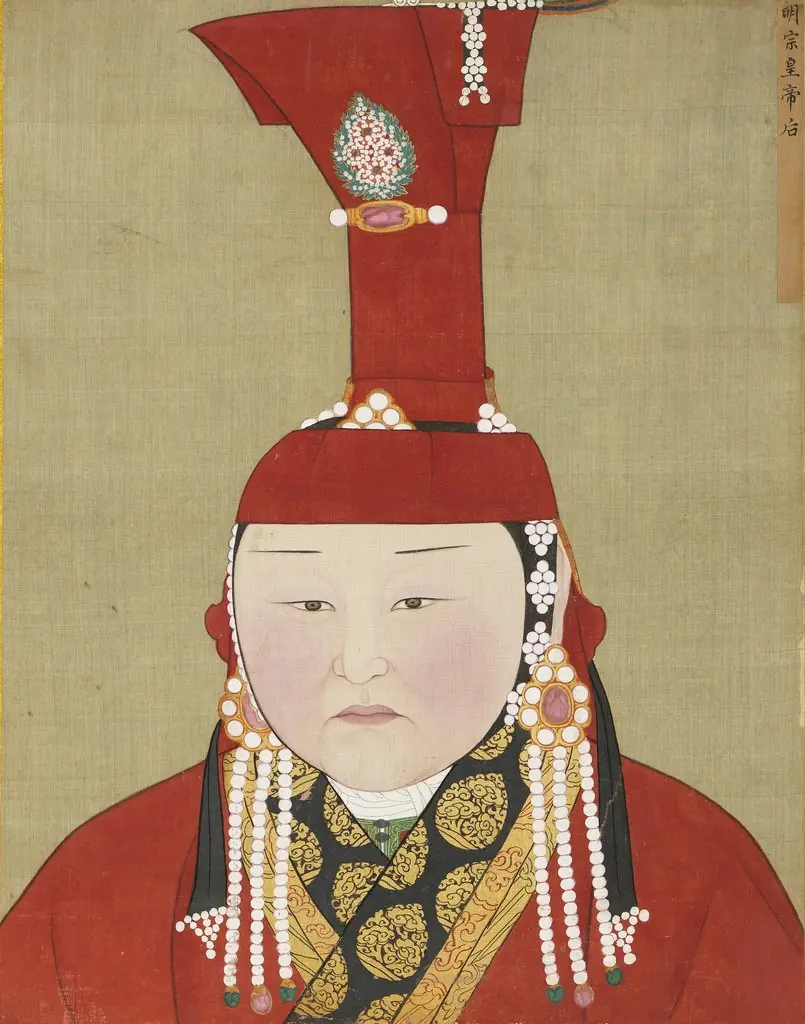
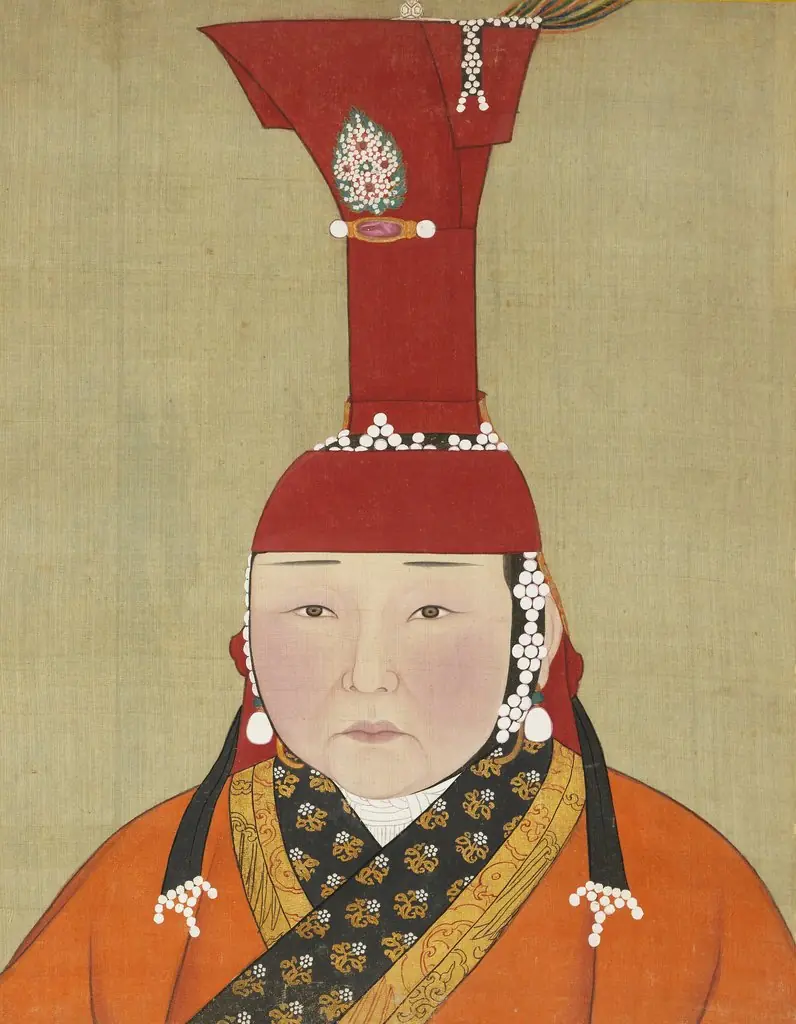
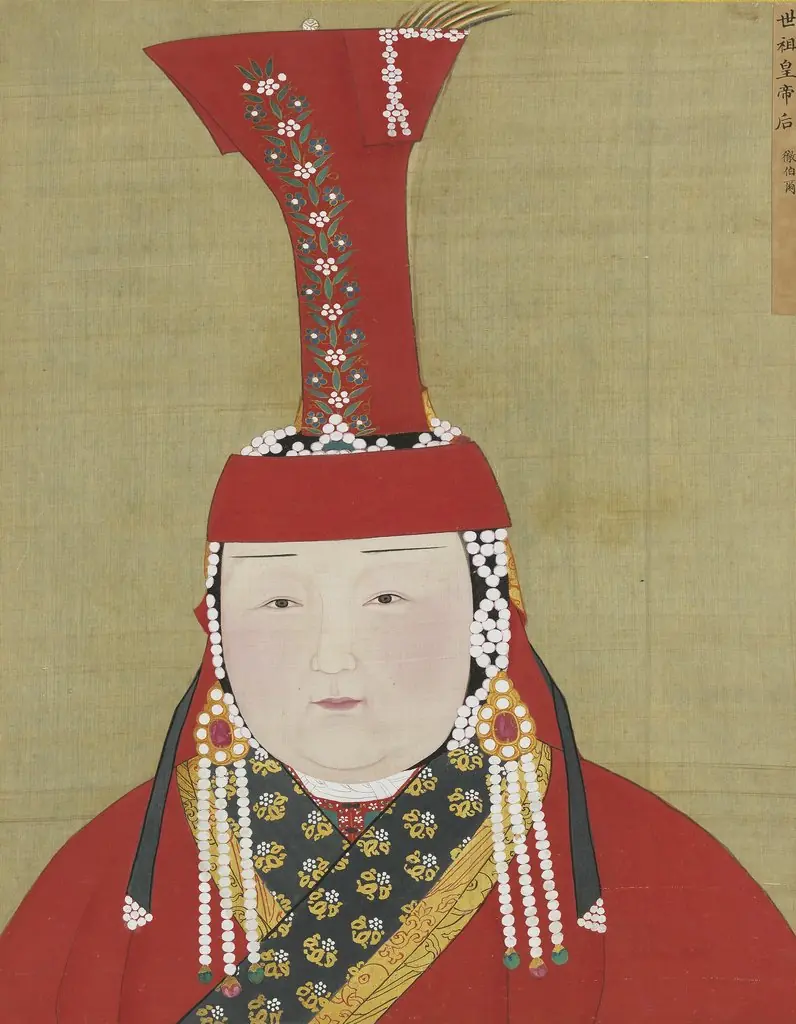
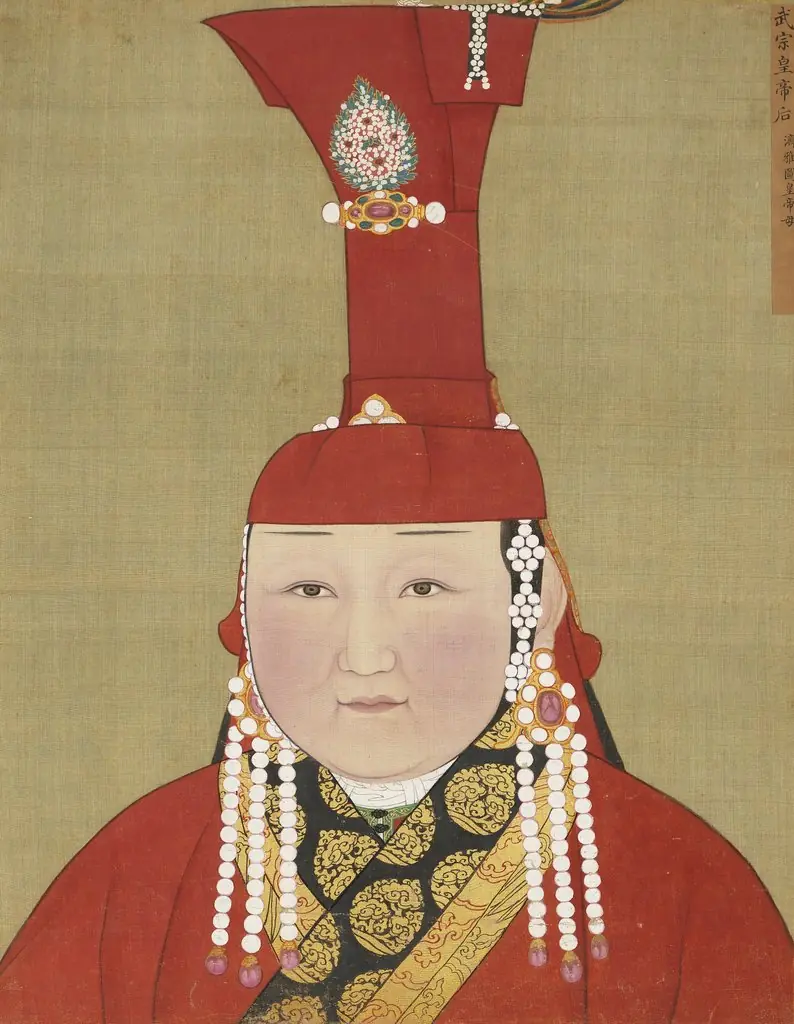
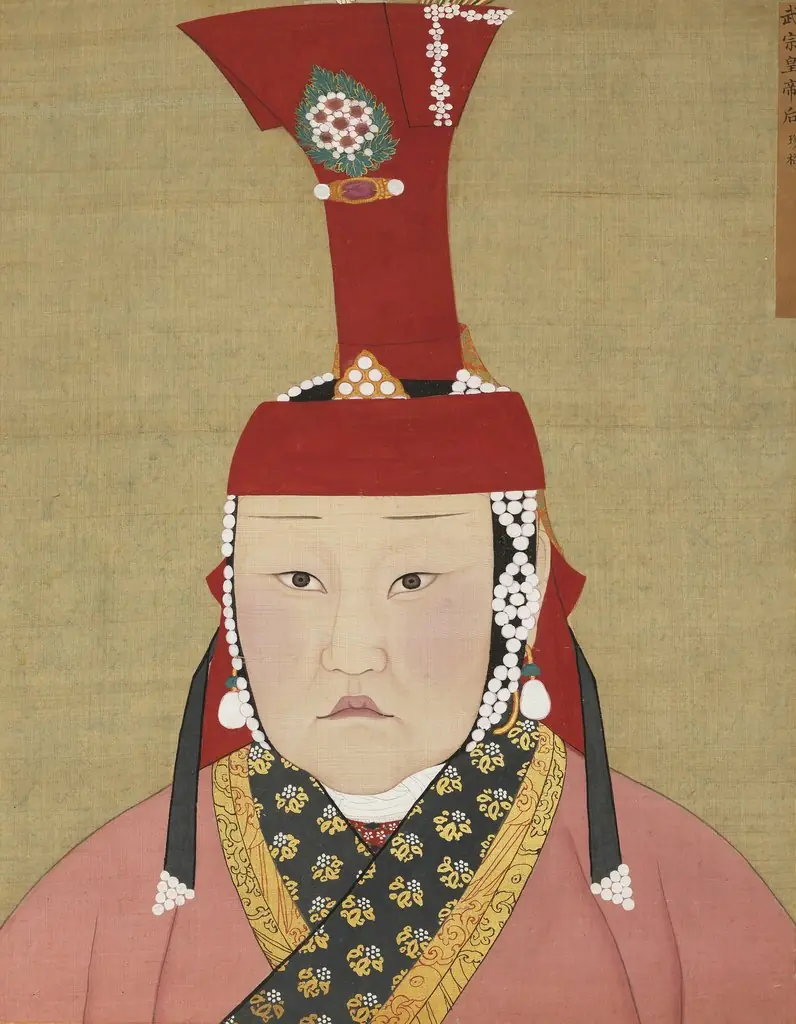
This portrait depicts Empress Dowager Renzong of the Yuan dynasty, rendered in a formal court style typical of late 14th-century Mongol imperial portraiture. The figure is presented frontally, with restrained posture and direct gaze, emphasizing dignity over individual expression. The painting is executed on silk with mineral pigments, preserved in the National Palace Museum's collection as part of a series of imperial family portraits.
Subject & Meaning
The subject is identified as the empress consort of Emperor Renzong, a key figure in Yuan court politics. Her attire and adornments reflect Mongol elite customs blended with Chinese imperial symbolism. The prominent teardrop jewel and beaded headdress signify status and lineage, while the solemn expression reinforces her role as a symbol of dynastic continuity rather than personal identity.
Technique & Style
The portrait employs fine brushwork to render textures of silk, beads, and metallic embroidery. Colors are muted yet precise: crimson robes contrast with black-and-gold collars, while the light brown background isolates the figure without distraction. Facial features are rendered with subtle modeling, avoiding idealization; the emphasis is on accurate representation of ceremonial dress and regalia.
History & Provenance
The painting originates from the Yuan imperial collection, likely commissioned during or shortly after Emperor Renzong’s reign (1311–1320). It passed through successive dynastic archives and was later incorporated into the Qing court’s holdings before being transferred to the National Palace Museum in Taipei following the mid-20th-century relocation of imperial artifacts.
Context
Portraits of Yuan empresses were rare and strictly regulated, produced only for ancestral rites or court records. This work aligns with a broader tradition of Mongol rulers commissioning formal likenesses to assert legitimacy within a multi-ethnic empire. The fusion of Central Asian jewelry styles with Chinese silk weaving techniques reflects the cultural syncretism characteristic of Yuan court aesthetics.
Legacy
As one of the few surviving portraits of Yuan empresses, it serves as a primary visual source for understanding Mongol elite dress and gendered representation in imperial China. Its preservation highlights the continuity of courtly portraiture traditions across dynasties, influencing later Ming and Qing depictions of royal women in ceremonial contexts.
Artist & collection

 Domestic Scene
 Giacomo and Cardinal Marco, investing Andrea, Abbot of San Zeno, with his Benefice
 The Nymph of Fontainebleau
 Portrait of a Woman
 Madonna and Child with Saints in the Enclosed Garden
 Venus and Minerva
 Family Group of Four on Sofa
 Wall painting from Room H of the Villa of P. Fannius Synistor at Boscoreale